Why Your Belly Doesn’t Go Down After Childbirth
Isn’t Just Because of Fat

�a0
Many people find that even after their weight has recovered to some extent after childbirth, they still feel like only their belly has been left behind. If abdominal changes are slow even when diet control and exercise are combined, it is easy to think, “Isn’t the fat just not gone yet?” However, changes in the abdomen after childbirth are often difficult to explain as a simple fat issue alone. This is because several structural changes are working together behind the visible shape of the belly.
�a0
How Does the Abdomen Change After Childbirth?

�a0
As the uterus grows during pregnancy, the abdominal skin and muscles remain stretched for a long period of time. In this process, not only the skin but also the abdominal muscles and the fascia structure are affected. Some recovery occurs over time after childbirth, but not all changes naturally return to their original state.
�a0
In particular, the abdomen is not simply an area where fat is gained and lost; it is an area whose shape is formed by the combined action of skin, fat, muscles, and fascia. That is why the speed and degree of recovery vary greatly from person to person.
�a0
Factors to Consider Beyond Fat
�a0
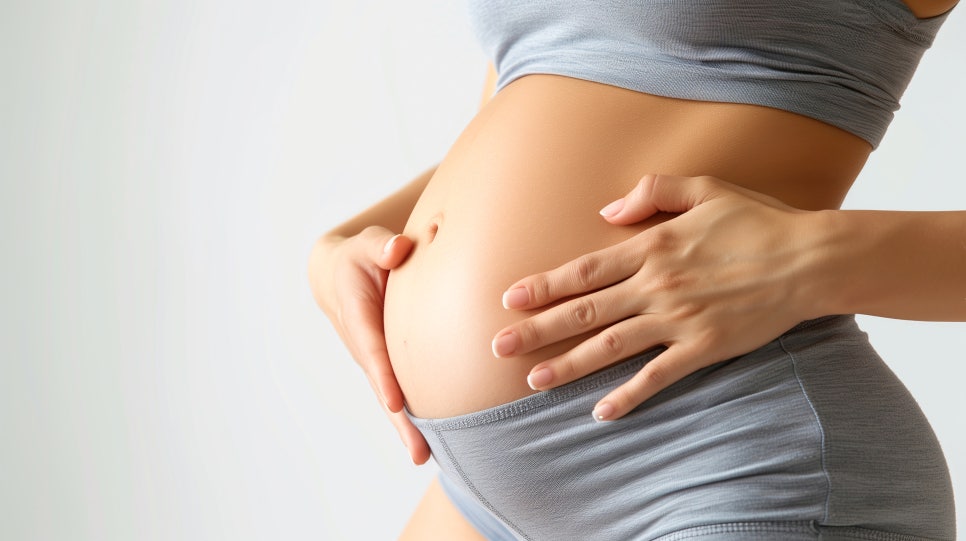
The appearance of a lingering belly after childbirth can be influenced by several factors working together, such as:
�a0
- Abdominal muscle relaxation
If the rectus abdominis muscles stretched during pregnancy do not fully return after childbirth, the belly may appear to protrude forward.
Skin that has stretched significantly over a short period may lose elasticity, leaving sagging behind.
- Changes in the abdominal fascia
If the structure surrounding the muscles becomes loose, the belly may not look flat even if there is not much fat.
- Skin texture changes caused by stretch marks
Areas with stretch marks may have thinner skin and a different texture, making the abdominal line appear more pronounced.
�a0
In this way, it is not uncommon to feel like the belly is not going down even when there is not much fat.
�a0
Why Exercise and Dieting May Not Solve It

�a0
The first methods people usually think of for managing the abdomen after childbirth are exercise and weight loss. Of course, these can help with overall body shape management, but there may be limits to how much they can address skin that has already stretched or structural changes.
�a0
In particular, if your weight has decreased but the lower abdomen still folds or shows wrinkles, this may be interpreted as a change in skin and muscle structure rather than a simple body fat issue. In that case, instead of repeating the same methods, it may be necessary to take time to assess your current condition.
�a0
Will Time Fix Postpartum Abdominal Changes?

�a0
Many people ask, “Will it get better with time?” but some changes may recover slowly on their own. Right after childbirth, some recovery may progress, but after a certain point, the changes can feel as if they have plateaued.
�a0
At this time, what matters is not comparing yourself to others, but objectively looking at your own condition based on factors such as:
-
The degree of skin sagging
-
Changes in abdominal elasticity
-
Discomfort felt in daily life
�a0
Abdominal Concerns Should Not Be Reduced to a Single Cause

�a0
It is difficult to say that there is only one reason your belly does not go down after childbirth. That is because the current abdominal shape is formed by the combined action of several factors, including fat, skin, muscles, and stretch marks. For that reason, management or treatment approaches may also differ depending on the cause, rather than trying to solve everything with just one method.
�a0
Postpartum abdominal changes are a natural process that can happen to anyone, but the appearance and pattern of recovery differ from person to person. Rather than blaming yourself for simply having lost less weight, it may be better to first understand the current condition of your abdomen. Since the approach may vary depending on the various causes, if necessary, it can also be an option to calmly consider the direction that suits your condition through consultation with a medical professional.
�a0

�a0