How to Increase Butt Size,
Through the Use of Biocompatible ADM
�
The desire to increase butt size often goes beyond simply wanting more volume; in many cases, it starts from the goal of improving overall body balance and the line of the back view. However, because the buttocks are an area that repeatedly bears movement and body weight, a method that simply makes them larger can lead to lower satisfaction or discomfort. For this reason, more biocompatible approaches have been increasingly emphasized in recent years.
�
�
The size and shape of the buttocks are not determined solely by the amount of fat. They are influenced by a combination of factors, including the position and degree of development of the gluteal muscles, skin thickness and elasticity, and the structural connection between the pelvis and thigh line. The reason the results can look different from person to person even when the same size increase is achieved is due to these structural differences, and buttock surgery should be approached as a concept of structural improvement rather than a simple enlargement procedure in order to expect a natural result.
�
�
Traditional butt augmentation surgeries using fat grafting or implants can offer relatively immediate volume changes, but they have long had several limitations, such as absorption rate, sagging, and an unfamiliar feel. In particular, because the buttocks are an area where pressure is concentrated when sitting or moving, there have been many cases in which the shape changes over time or satisfaction declines. These issues have highlighted the need for more stable materials and methods.
�

�
Recently, the method attracting attention for increasing butt size is the use of acellular dermal matrix, or ADM (Acellular Dermal Matrix). ADM is a structure from human tissue in which the cellular components have been removed, and after being inserted into the body, it gradually becomes replaced by the body's own tissue. This makes it advantageous for reducing foreign-body reactions and promoting integration with the tissue. These characteristics are especially important in an area with a lot of movement, such as the buttocks.
�
�
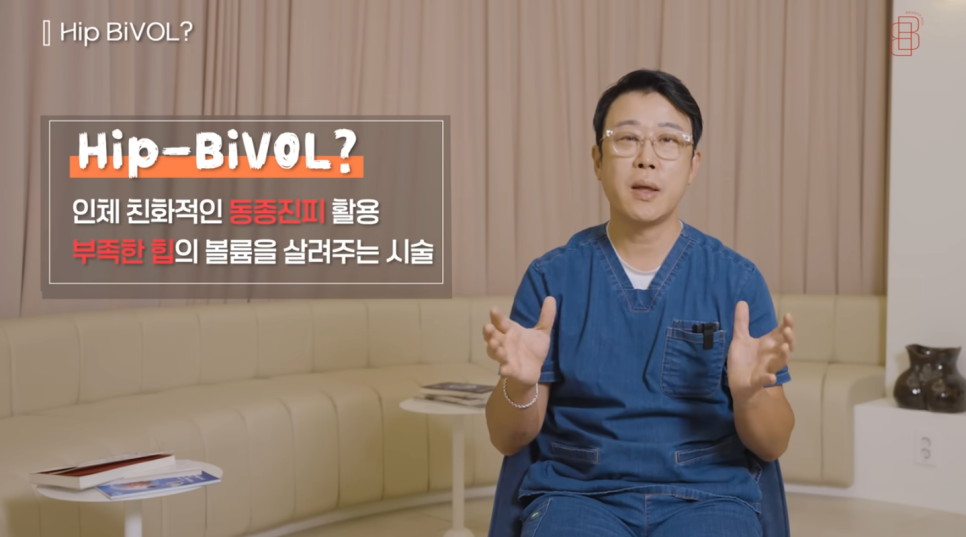
HipByVol, which is based on ADM, can be described as a fourth-generation hip lift and hip augmentation method that considers not only simply increasing butt size but also the quality and durability of the volume. Over time, HipByVol naturally integrates with the surrounding tissue and may help create a texture similar to the buttocks' natural elasticity, making it a suitable option when both size increase and natural-looking results are desired.
�

�
What matters in butt size augmentation is not simply an increase in volume, but the balance between upper fullness and lower sagging, the natural connection of the side line, and the flow of the curve from the waist to the buttocks. Methods that use ADM have the advantage of reflecting these design elements in detail, and a customized plan tailored to the individual's body shape greatly affects satisfaction with the result.
�

�
ADM is based on materials whose safety has already been verified through use in various medical fields, so when applied to buttock surgery, it has been positively evaluated in terms of tissue adaptation and long-term maintenance. In particular, the fact that a relatively stable shape can be expected even under repeated pressure and movement is an important consideration for those thinking about increasing butt size.
�

�
Methods for increasing butt size are now moving beyond simple volume enhancement, and the key criterion has become how naturally and stably the result can settle in as part of the body. An approach using biocompatible ADM reflects this trend, and through sufficient consultation and planning that take an individual's body shape and lifestyle into account, a more satisfying result can be expected.
�


�