[봉봉성형외과]
Causes and Management of Midlife Abdominal Sagging,
and Why It Is Difficult to Fix with Exercise
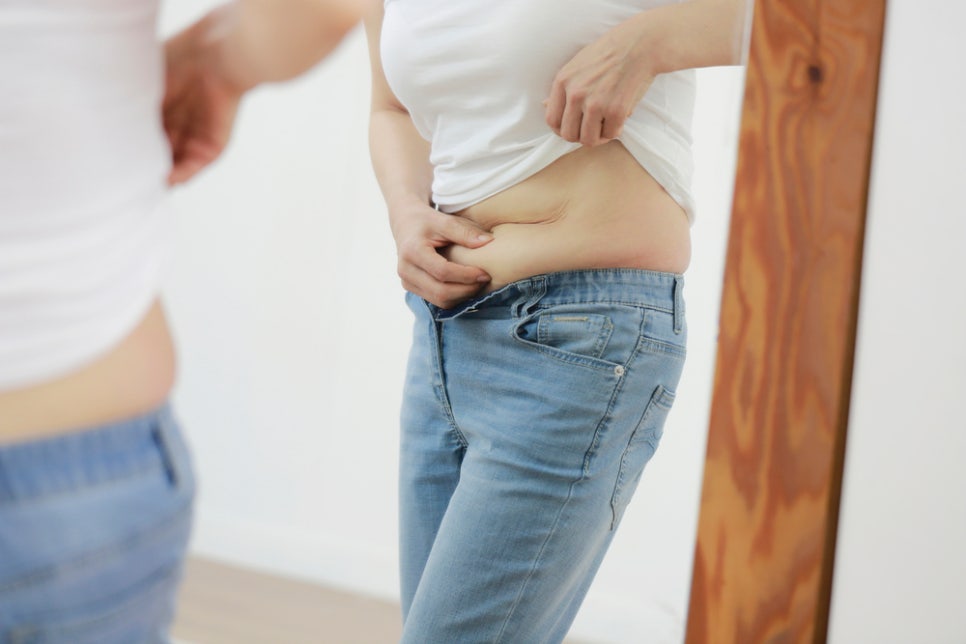
Many people reach middle age and, even while maintaining the same weight as before, notice that the lower abdomen looks more prominent or that the abdomen seems to sag downward. They may think it is simply weight gain and try reducing food intake and increasing exercise, but when the results are not as expected, their concerns can deepen.
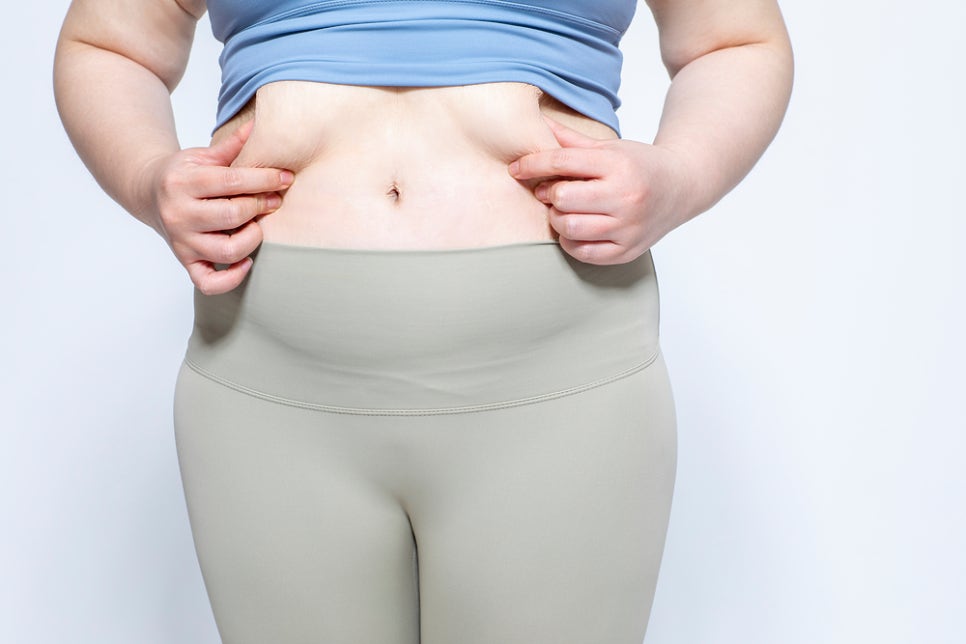
Midlife abdominal sagging is not caused by weight gain alone. It is a phenomenon that results from a combination of factors such as reduced skin elasticity, weakened muscles, and hormonal changes. Therefore, understanding the exact cause is the first step in managing it.
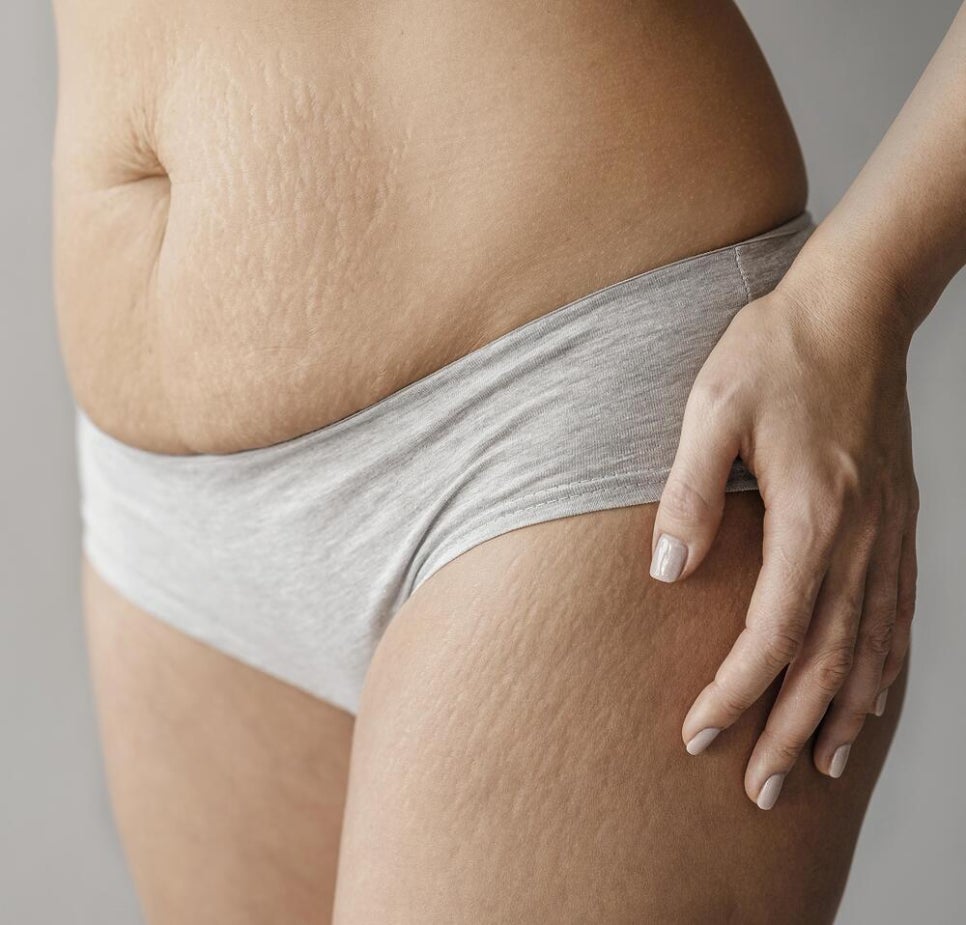
First, reduced skin elasticity is one of the major causes of abdominal sagging after middle age. As we age, the production of collagen and elastin decreases, and the skin’s ability to recover declines. In youth, even if weight goes up and then comes down a little, the skin contracts relatively quickly. But after middle age, stretched skin often does not fully return to its original state and instead remains sagging.
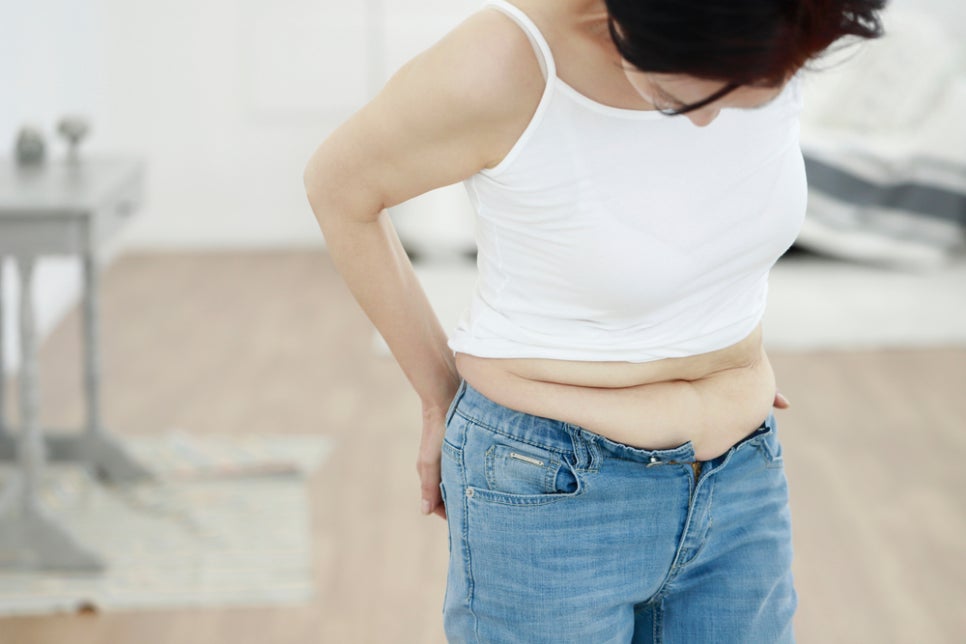
In particular, if you have gone through repeated dieting and rebound weight gain, skin elasticity is likely to decrease further, making the abdomen look more stretched and sagging.
Changes in muscle are also an important factor. The muscles that support the abdomen tend to naturally decrease as we age. If physical activity decreases and strength training is lacking, the abdominal wall becomes weaker, and the abdomen may appear to protrude forward. If you have given birth, you may also experience diastasis recti, where the rectus abdominis muscles separate, leaving a feeling that the belly will not go in. In such cases, simple aerobic exercise alone may not be enough to bring meaningful improvement.
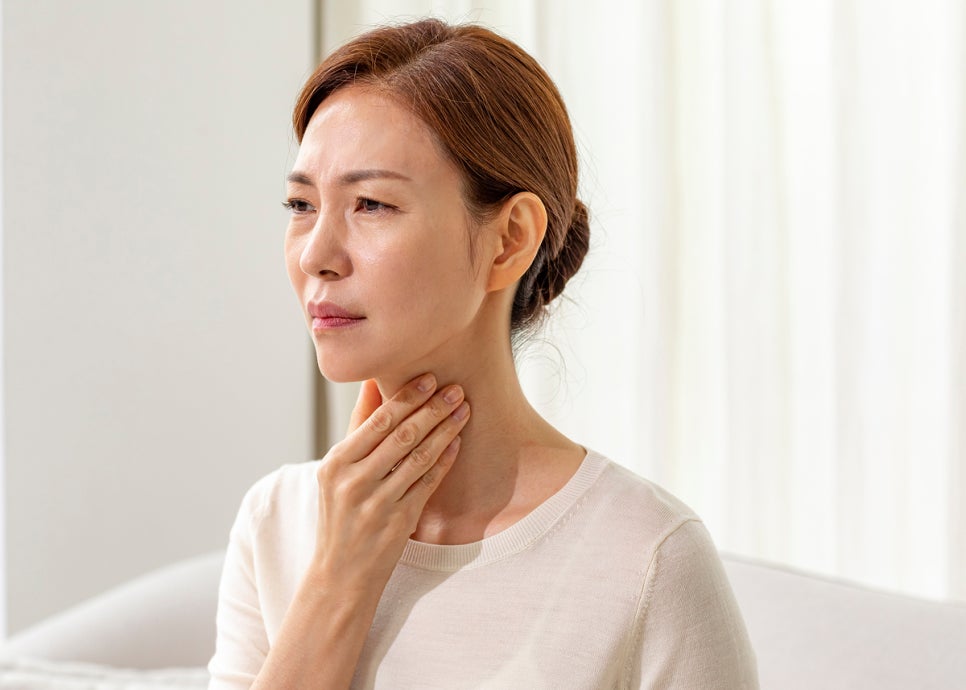
Hormonal changes cannot be overlooked either. After middle age, women experience changes in hormonal balance around menopause, and men also tend to accumulate more fat around the abdomen due to hormonal changes. Fat that was previously distributed around the thighs or hips may shift toward the abdomen, making body shape changes more noticeable. When changes in fat distribution occur alongside weakened skin and muscles, abdominal sagging can become even more pronounced.
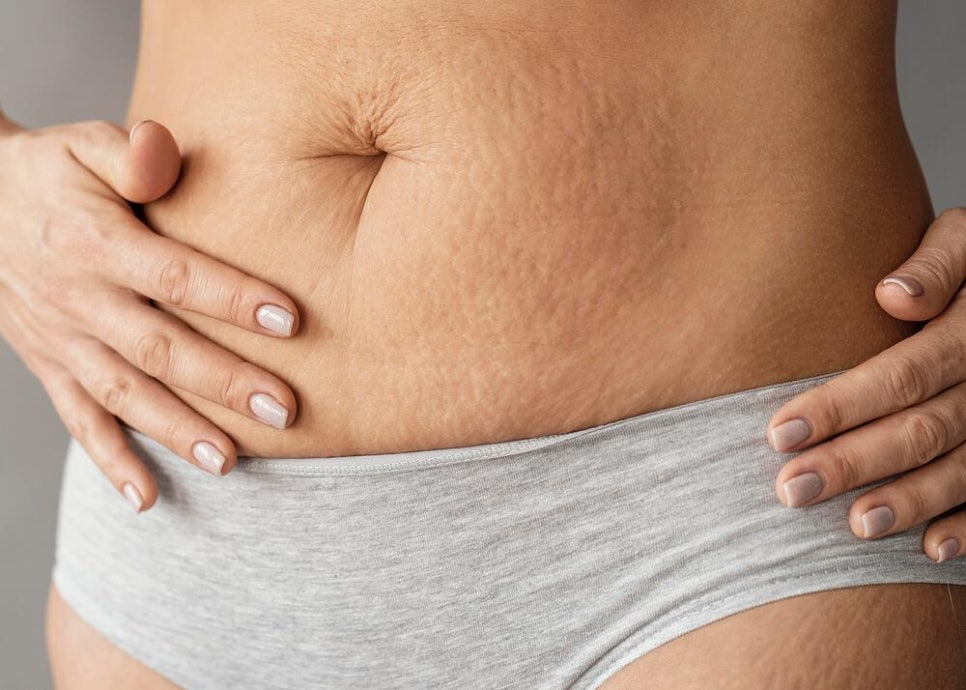
So how should midlife abdominal sagging be managed? The most basic approach is consistent strength training. In addition to aerobic exercise such as walking or running, it is helpful to combine exercises that strengthen the abdominal and core muscles. However, if the skin is already significantly stretched, it is important to understand that even if the muscles become firmer, the visible sagging may not change much.
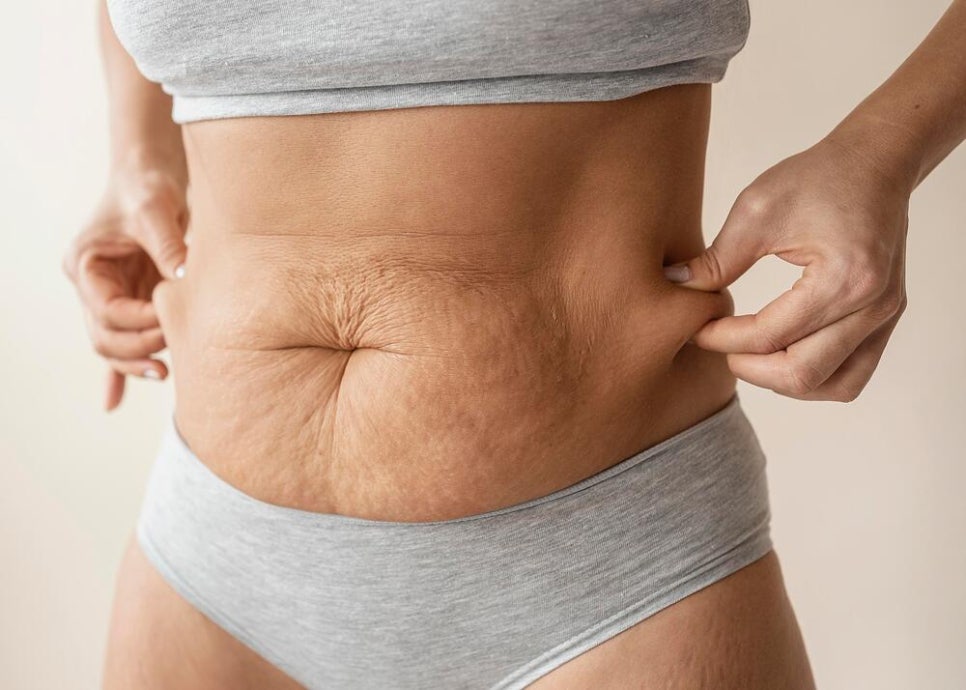
Weight management is also important. Rapid weight loss can actually worsen skin sagging, so gradual weight reduction is preferable. Adequate protein intake and hydration help maintain skin health, and smoking can reduce skin elasticity, so it is best to avoid it. Simply maintaining proper posture in daily life can also help to some extent in reducing abdominal protrusion.

However, if excess skin remains despite exercise and dietary management, and it causes discomfort in daily life or makes hygiene care difficult, surgical methods may also be considered. Abdominoplasty is performed by removing loose skin and, when necessary, correcting the abdominal muscles as well. That said, suitability can vary depending on the individual’s health condition, the degree of skin sagging, fat distribution, and other factors, so a thorough consultation and review process is necessary.
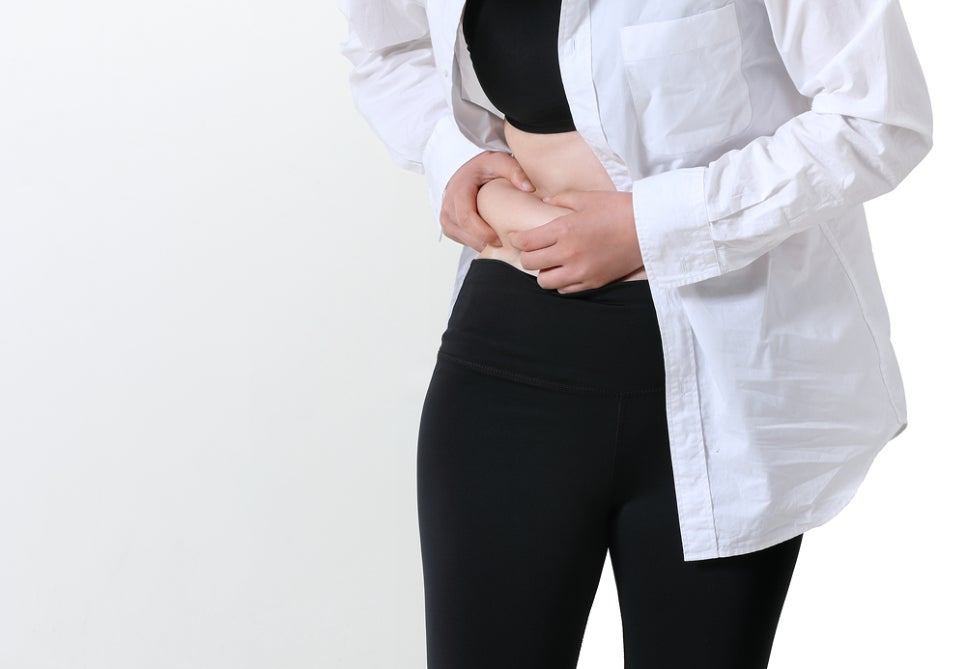
Midlife abdominal sagging may be part of the natural aging process, but the degree and causes differ from person to person. Rather than dismissing it as simply due to age, it is important to determine whether your current abdominal condition is primarily a skin issue, fat accumulation, or muscle weakness.
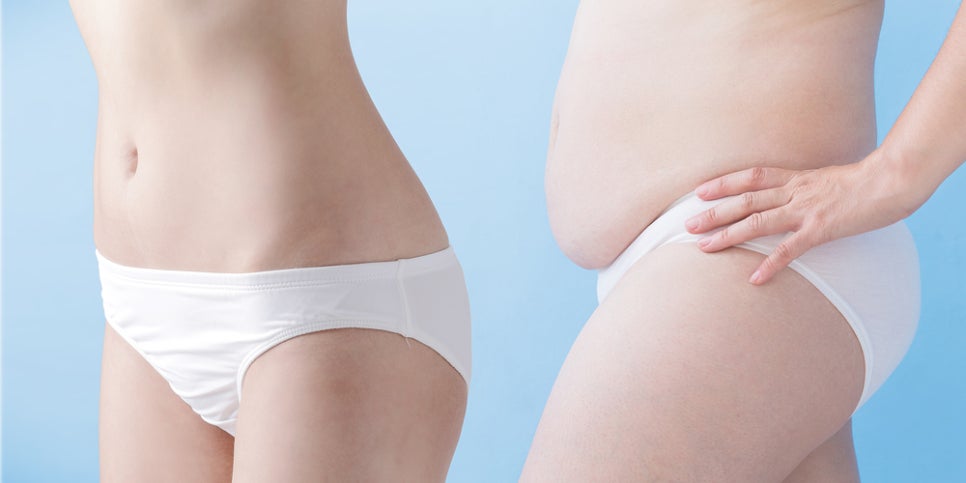
If you understand the exact cause and combine lifestyle improvements with appropriate management methods, you can move toward healthier changes. The key to managing abdominal sagging is to choose a sustainable approach rather than expecting rapid change.

 #midlifeabdominalsagging #causesofabdominalsagging #abdominalsaggingmanagement #midlifebodyshapechanges #reducedabdominalelasticity #weakenedabdominalmuscles #diastasisrecti #postpartumabdomen #menopausalbodyshapechanges #abdominalfatmanagement #corestrengthening #abdominoplastyinformation #bodyshapecontrolmethods #skinelasticitycare #healthyaging