An implant and autologous fat combined
What Is Hybrid Hip Augmentation Surgery?

As interest in body contour correction has recently increased, more people are looking for a more balanced silhouette beyond simple weight loss. In particular, the hip line is directly related to the overall body proportion, and there is a clear tendency to prefer a firm, voluminous shape.
The surgical method that emerged in response to this trend is “hybrid hip augmentation surgery.” It combines implants and autologous fat grafting to create a more natural and three-dimensional hip line.

Hybrid hip augmentation surgery is a method in which implant volume is used to secure fullness in the center of the buttocks, while autologous fat grafting is used to softly connect the surrounding contours. The implant maintains a consistent size and shape to provide definite volume, while the fat plays the role of creating natural curves.
It is a way to compensate for the sense of boundary that can appear with implant-only surgery or the absorption-rate issues of fat grafting alone. The key point is that it combines the advantages of both methods.
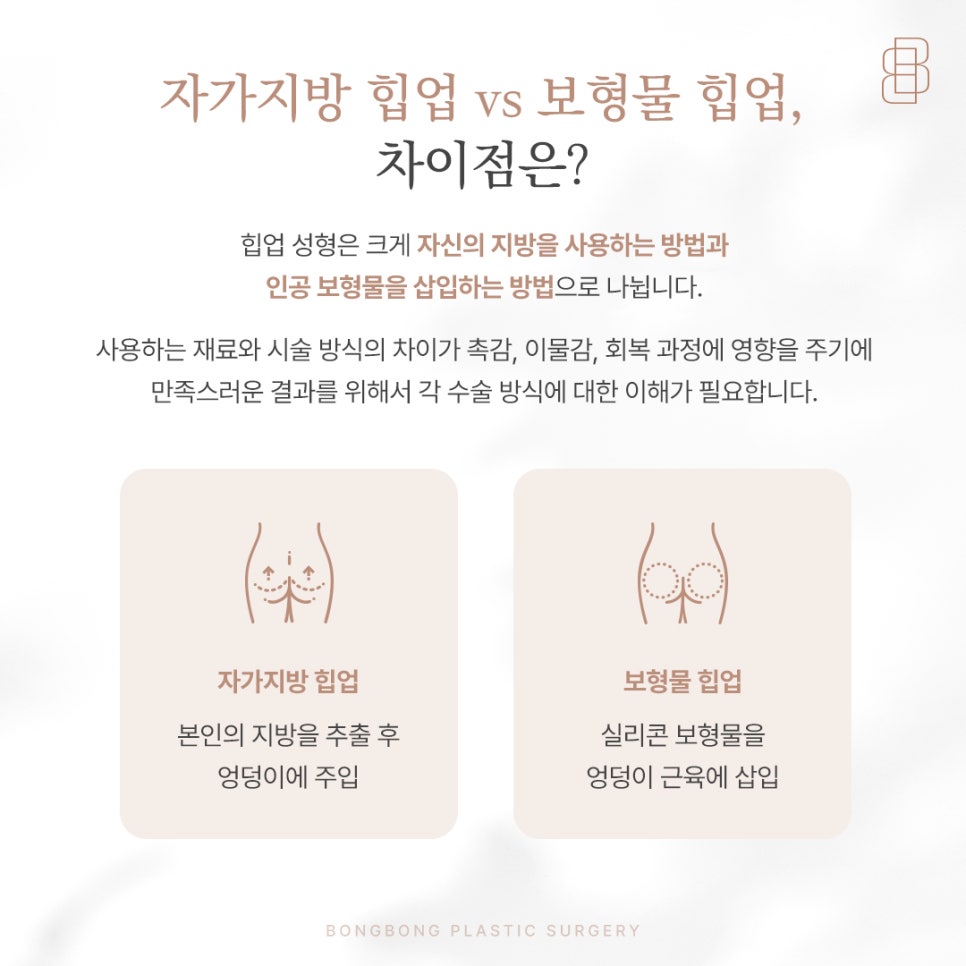
If only an implant is inserted, sufficient volume can be achieved, but the edges may appear more noticeable depending on body type. On the other hand, with fat grafting alone, it can be difficult to achieve the desired amount of volume. The hybrid method firmly creates the central volume with an implant and complements the sides and upper area with fat to complete a three-dimensional line. It pursues natural texture and visual balance at the same time.

The fat used for grafting is harvested from the abdomen, thighs, and other areas. This process is not only for hip enhancement, but also has the effect of refining the lines of the surrounding areas. It is the concept of removing unnecessary fat and redistributing it to the needed areas. An approach that considers the balance of the overall body shape is important. The goal is not simply to increase volume.

Hybrid hip augmentation surgery must take into comprehensive account each person's pelvic structure, skin elasticity, and existing fat volume. The size and placement of the implant, as well as the amount of fat grafted, need to be custom-designed. Choosing an overly large size can increase the risk of complications. Individual body-type analysis determines the surgical outcome. Sufficient consultation with a specialist must come first.

For a certain period after surgery, direct pressure on the buttocks should be avoided. Some absorption may occur in the fat-grafted area, and the plan is made with that in mind. Swelling and bruising gradually subside over time. Care during the recovery period has a major impact on maintaining the results. Regular follow-up is necessary.
Because implant insertion and fat grafting are performed at the same time, the surgery is relatively more difficult. The possibilities of infection, asymmetry, and differences in fat absorption rates should be fully explained. An experienced medical team and a systematic surgical environment are important. Safety should be the top priority.

Hybrid hip augmentation surgery is a surgical method that combines the advantages of implants and autologous fat grafting to complete a more three-dimensional and natural hip line. Rather than simply increasing volume, it aims for balance and harmony across the entire body shape. Sufficient consultation and planning before surgery, as well as post-surgical care, must all be in place for satisfactory results to be expected.
Customized design suited to your own body type and a safe approach are the most important factors. Please make your decision carefully after sufficient consultation with a board-certified plastic surgeon.