Lifting Sagging Buttocks
From Natural Butt Lift Surgery to Delicate Revision Surgery
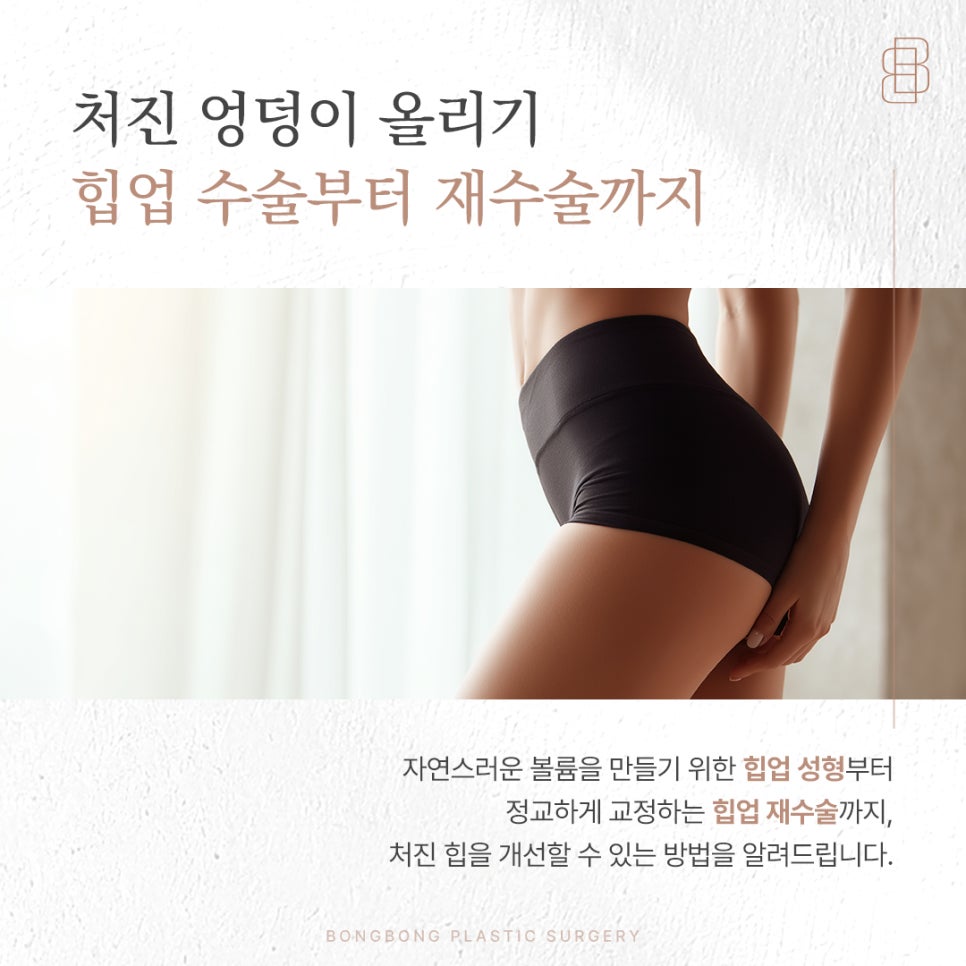
As people age, or due to weight changes and lifestyle habits, the buttock line often sags and loses elasticity. In particular, because the hip line is directly connected to the overall body proportion, even a small change can make the body shape look different.
Recently, more people have been seeking not just increased volume, but a natural and balanced butt lift, so various cosmetic surgery methods are gaining attention. In this trend, a customized approach suited to each person's body type and condition is becoming even more important.
What causes buttock sagging?

There are many causes of sagging buttocks. 대표적으로 include reduced skin elasticity and decreased muscle mass due to aging, which can naturally lead to a downward sag in the hip line.
In addition, long periods of sitting, lack of exercise, and rapid weight loss can also have an effect. In particular, when fat has decreased but the skin has not been able to contract, sagging becomes even more noticeable. Buttock sagging is not simply a fat issue, but the result of skin, muscle, and fat working together in combination.
What are the butt lift surgery methods for improving sagging buttocks?
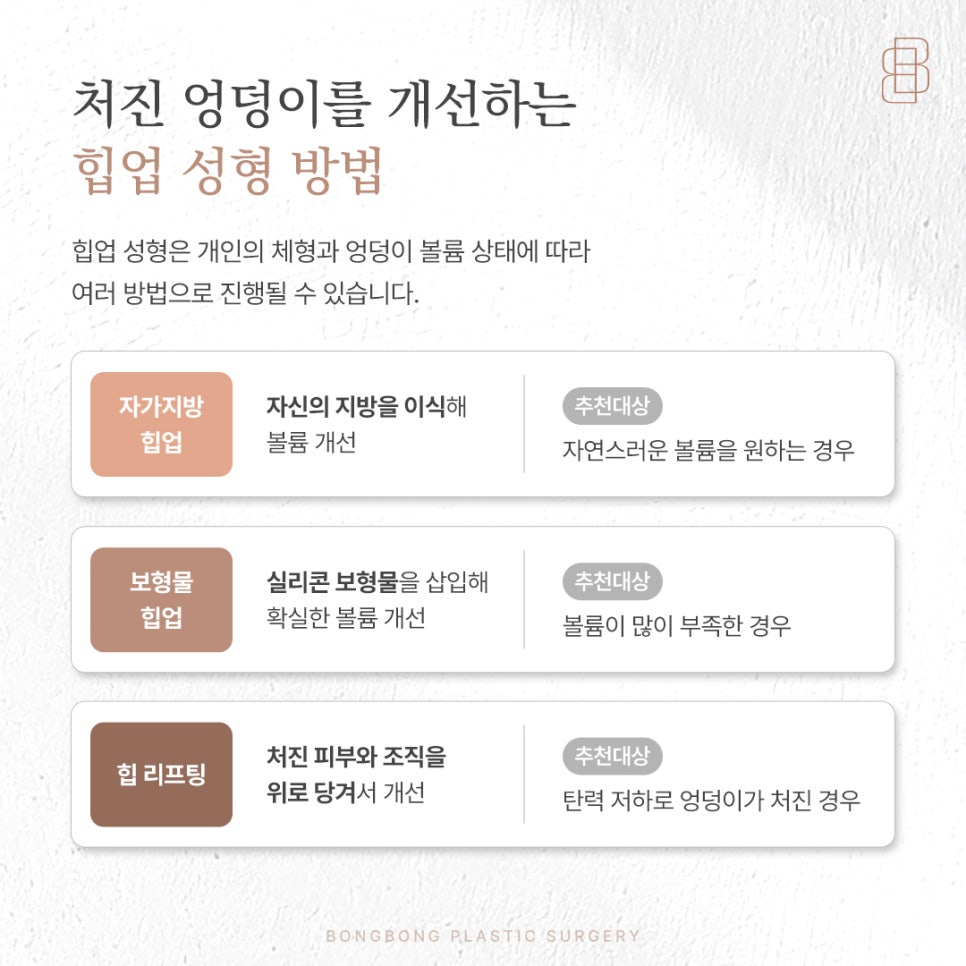
There are various ways to improve sagging buttocks, and the choice depends on the individual's body type and desired results.
'Autologous fat grafting' uses your own fat to create relatively natural-looking volume, and is characterized by a soft feel and smooth line.
'A method using implants' can provide a more definite improvement in volume and can also be applied when body fat is insufficient. A hip lift focuses on pulling up sagging tissue to create a firm, lifted line. The 'hybrid method' uses both autologous fat and implants together to pursue both volume and naturalness at the same time.
Recently, methods such as 'BiVOL' have also been used. BiVOL is a method that utilizes acellular dermal matrix (ADM, Acellular Dermal Matrix), and its 특징 is that over time it is replaced by the body's own tissue, forming a more natural and flexible volume.
This ADM is also known as a material used in L&C BIO's 'Elravie Re20,' and it has been shown to improve skin elasticity and support collagen regeneration. Among the various methods, the most important thing is to choose the one that is right for the individual.
Each surgical method has clear advantages and disadvantages, so it is not advisable to decide based only on trends or reviews. With autologous fat grafting, the absorption rate must be considered, and with implants, selecting the position and size is very important.
In addition, the results of a hip lift can vary depending on the degree of sagging, and in many cases a combined approach is needed. Accurately analyzing the individual's body type and skin condition is key to achieving a satisfactory result.
When might revision surgery be needed?
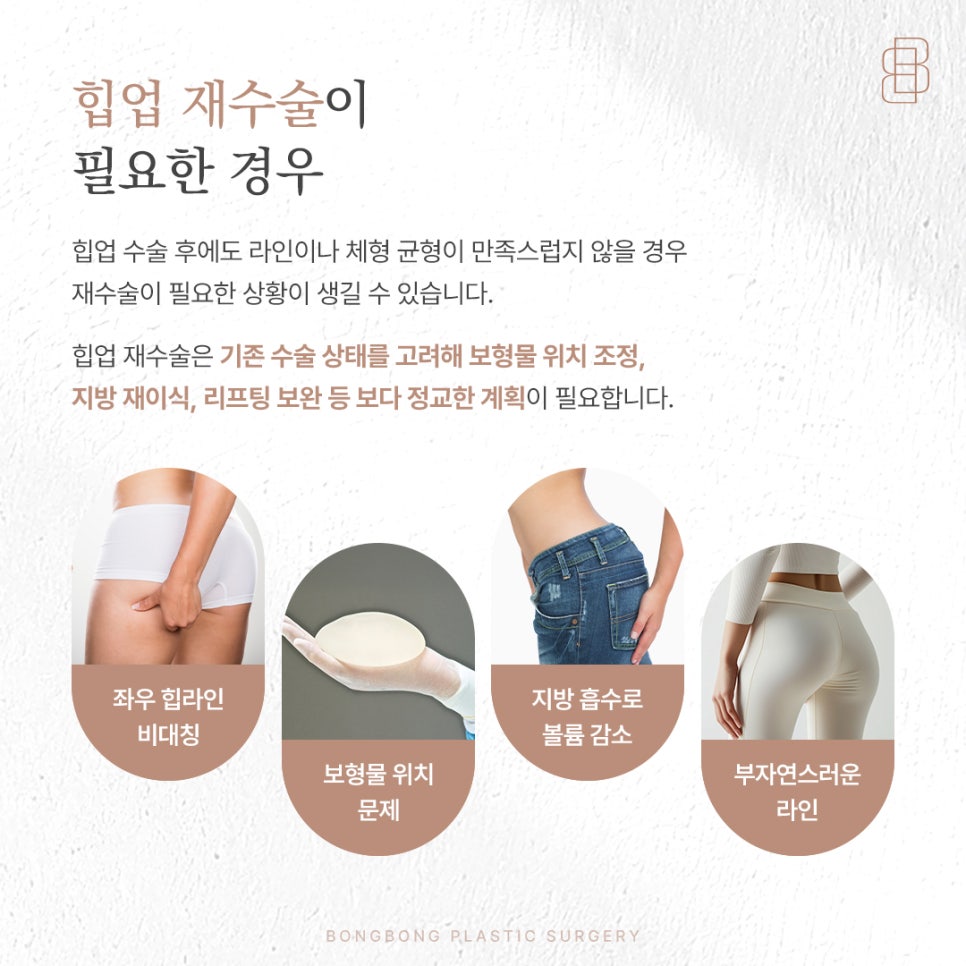
If you have already had butt lift surgery but are not satisfied with the results, or if deformation has occurred over time, revision surgery may be necessary. In such cases, a more precise approach is needed after fully considering the condition of the existing tissue and surgical history. In particular, because factors such as scarring, tissue damage, and asymmetry must also be corrected, experience is important in this field. Revision surgery requires a higher level of difficulty than the first surgery, so careful selection is necessary.
What are the check points for a natural butt lift?
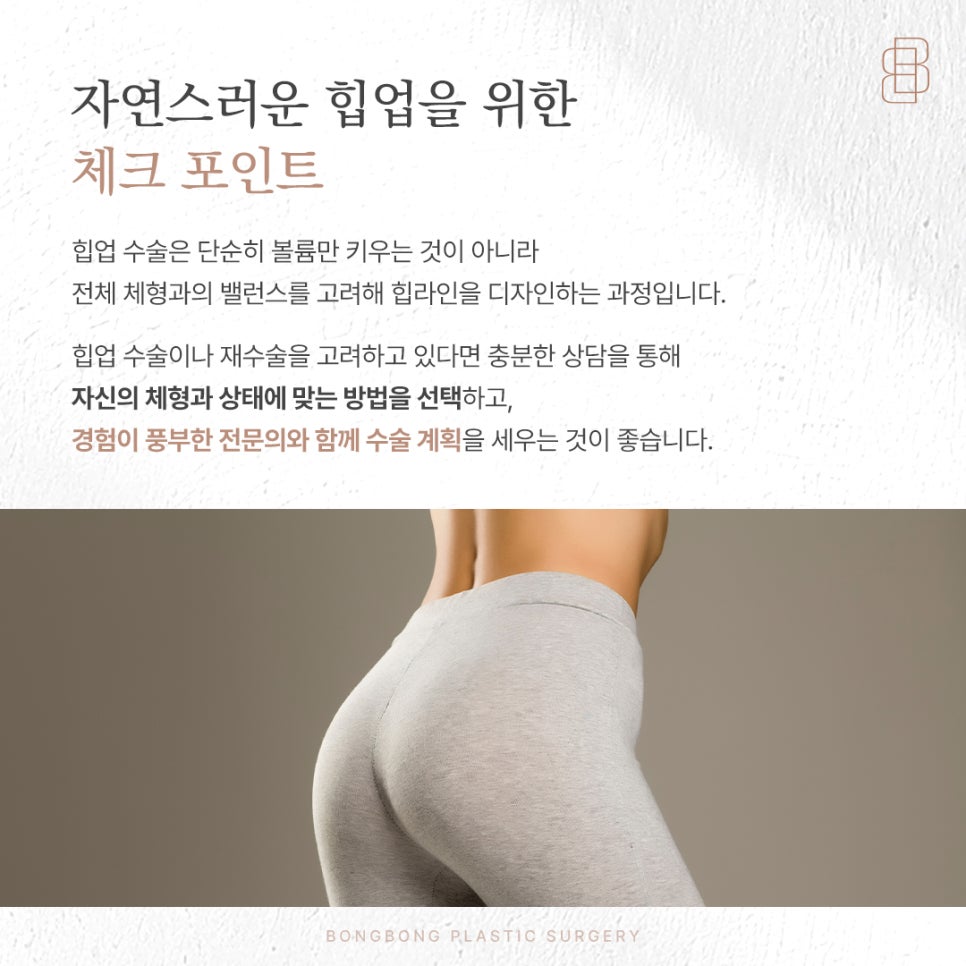
For a natural butt lift result, it is important to consider harmony with the overall body line rather than simply increasing volume. Connectivity with the waist, pelvis, and thigh lines is important, and excessive volume can actually create an unnatural result. In addition, touch, movement, and long-term durability must also be considered. Naturalness is determined not by size, but by balance and proportion.
After surgery, there may be restrictions on posture and activity for a certain period, and proper care has a major impact on maintaining the results. Wearing compression garments, adjusting lifestyle habits, and regular follow-up checks are necessary.
Also, because weight changes can affect the hip line, consistent management is important. Only when postoperative care is included can high-quality results be maintained.
Sagging buttocks can occur for a variety of reasons, and the methods for improving them may also differ depending on the individual's condition. Beyond simply increasing volume, an approach that considers harmony with the overall body line is needed.
For a natural butt lift, an accurate diagnosis and a customized surgical plan are the most important factors. In addition, only when the process is carried out systematically, from choosing the surgical method to postoperative care, can satisfactory results be expected. Carefully choosing the method that suits you and managing it consistently are the keys to creating a beautiful and balanced hip line.