Do you find yourself worrying about an uneven pelvic line every time you wear tight-fitting clothes?
Let’s compare the features of various hip dip filling methods—such as fat grafting, implants, and fillers—based on different body types and concerns,
and find the body-contouring solution that best suits your body for a smoother silhouette.
| [Guide to Subheadings] |
|---|
| 1. Customized volume improvement based on body type and concerns 2. A non-surgical approach for refining the line with ease 3. Options when complex correction is needed |

Have you ever stood in front of the mirror repeatedly adjusting your clothes because the side line of your pelvis looks especially sunken whenever you wear tight jeans or leggings?
This is a natural phenomenon that can occur to anyone due to differences in bone structure or muscle distribution, but for those who want a smooth and beautiful fit in clothing, it often becomes a major source of stress and insecurity.
To ease these concerns and regain lost confidence, many people have recently been looking closely into hip dip filling.
The approach used to complete an ideal body line varies depending on an individual’s body type, the amount of remaining body fat, and skin elasticity.

- Customized volume improvement based on body type and concerns
The first thing to consider for successful hip dip filling is understanding your current physical characteristics.
If you have enough spare fat in areas such as the thighs or abdomen, it may be worth positively considering a method that finely harvests that fat and fills in the hollow areas.
This can remove unnecessary fat while also adding missing volume to the hips, making it highly effective for overall body-contouring and balancing the upper and lower body.
On the other hand, if you have a notably lean body type with very little body fat, or if there is a clear difference in the shape of the two sides of the pelvis and you need a more semi-permanent and definite increase in volume, placing a sturdy implant deep within the muscle layer may be more suitable.
Because results can vary depending on each person’s body type and recovery ability, a precise diagnosis through 3D body analysis should come first for safety before the procedure.

- A non-surgical approach for refining the line with ease
If you are uncomfortable with a direct incision process or general anesthesia, and quick return to daily life is essential, a method using hip-specific filler may be an alternative.
This works by injecting a material approved for tissue repair in the human body to delicately correct locally sunken areas and asymmetry.
Because the procedure time is relatively short, within an hour, and there is no incision, there is less aftereffects such as bruising or pain, making it popular among office workers who do not have much time to spare.
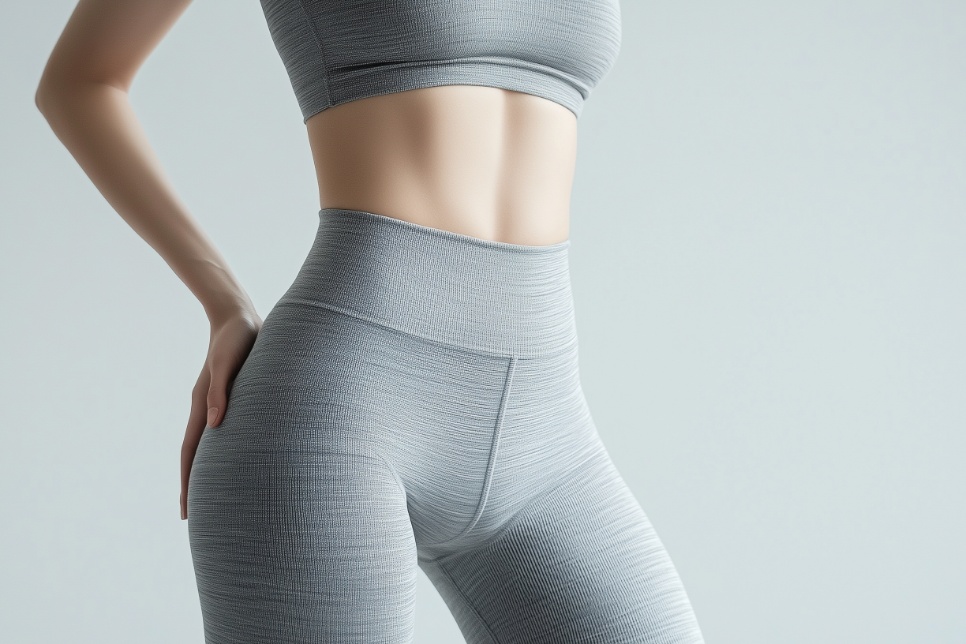
However, rather than simply injecting a large amount, a three-dimensional sense of design is very important to bring out an elegant curve that flows smoothly from the waist to the pelvis and thighs.
If too much is done in a very thin layer without considering the characteristics of the body’s skin, the surface may become uneven and appear unnatural, so special caution is needed.
For this reason, precise examination by medical staff with a deep understanding of soft tissues and extensive experience is essential for natural hip dip filling.
- Options when complex correction is needed
Lastly, one point that should not be overlooked in back-view design is the overall balance and harmony from the waist to the end of the hips.
If the lower line beneath the buttocks is severely sagging and the pelvic curve is almost absent, leaving the overall body shape flat, a hybrid method that combines only the advantages of implants and autologous fat grafting can create synergy.
This securely secures the amount of volume needed for the individual while covering the outer boundary with soft autologous tissue, resulting in a much smoother contour and a more realistic feel.
In this process, highly refined dissection and advanced skill to reduce damage to surrounding tissues are necessary to dramatically reduce bleeding and shorten the recovery period.
To maintain a satisfying and high-quality hip dip filling result stably, it is wise to carefully check whether a systematic aftercare system such as Caps or Smartlux is properly in place.
To make it easy to compare the key features and suitable candidates for each solution at a glance, the summary table below has been prepared.
| Category | Main Features | Recommended For |
|---|
| Autologous fat grafting | Simultaneous fat reduction and pelvic volume increase | Those with spare fat who want a natural line |
| Implant insertion | Improves flatness and maintains a voluminous shape | Those with a lean body type who want a permanent volume increase |
| Filler procedure | Short procedure within an hour and quick recovery | Those who need fine correction in a localized area |
| Hybrid | Maximizes volume and completes a natural, soft feel | Those with severe sagging and who need overall lower-body balance improvement |

I hope today’s information has been genuinely helpful for those who have been quietly worrying about an uneven pelvic line and sunken hips.
People often think that specific glute exercises or stretching alone can perfectly fill in the structural empty space of the bones, but there are clear limitations to fully correcting skeletal shape through muscle growth alone.
Therefore, it is most important to accurately understand your own physical characteristics and fat distribution, and then choose the most effective improvement method accordingly.
Rather than insisting on overly aggressive procedures simply because they are trendy, I recommend discussing things thoroughly with trustworthy medical staff based on abundant clinical data and planning the hip dip filling approach that is most harmonious and healthy for your body.