How Much Breast Sagging Can Be Improved
with Breast Surgery?
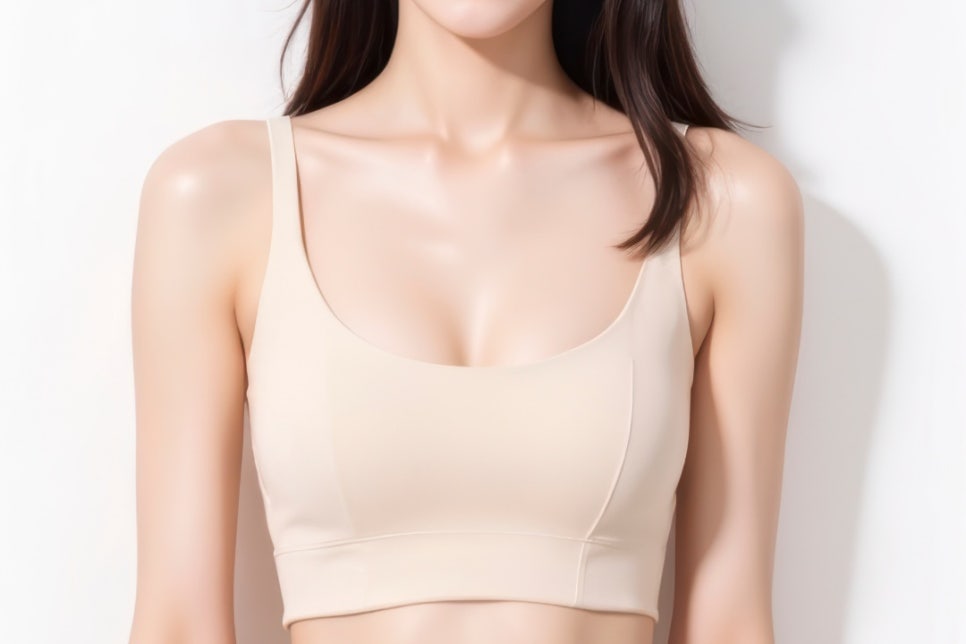
Many people feel that the shape of their breasts has changed after childbirth or weight fluctuations, or as they get older.
The nature of the concern can vary depending on whether the breasts have simply become smaller, feel as though they have dropped lower, or appear to have lost volume in the upper breast area.
In particular, if the breast line no longer looks the way it used to when wearing clothes, or the breasts appear to sit low even when wearing a bra, you may start to wonder about breast sagging.
However, sagging does not always occur for the same reason. Rather than deciding on an approach based only on the visible shape, it is important to first distinguish the current condition.
- How does sagging caused by
volume loss differ?

If the overall position of the breasts has not dropped significantly, but the upper area looks empty or the breasts feel less firm, the change may be related to volume loss. When the internal breast tissue decreases after weight loss or breastfeeding following childbirth, the skin may remain while the support provided by the underlying volume weakens, making the breasts appear saggy.
In these cases, the hollowed appearance may be more noticeable than the actual degree of sagging. Therefore, when considering breast surgery, it is important not only to think about lifting the breasts upward but also to examine how the insufficient volume can be replenished.
Implants or fat grafting may help address this lack of volume. However, if skin elasticity has decreased considerably or the nipples have moved significantly downward, adding volume alone may not create the desired contour sufficiently. This is why it is necessary to check whether breast sagging is also present to some degree.
- When changes in the skin and
mammary gland tissue occur together

If the overall shape of the breasts seems to flow downward and the skin appears stretched, the condition may be influenced by changes in both skin elasticity and mammary gland tissue. In other words, the structures that supported the breasts have loosened, making it difficult for them to maintain their previous shape.
In such cases, it is necessary to examine not only the breast size but also the nipple position, the height of the inframammary fold, and the amount of excess skin. This is because what appears to be simple sagging on the surface often involves both insufficient volume and stretched skin.
At this point, it is necessary to determine whether the contour can be shaped with implants alone, whether fat grafting is suitable for a natural enhancement, or whether a lift is also needed. One advantage is that various combinations can be considered based on the current condition. On the other hand, if there is a considerable amount of excess skin, volume enhancement alone may have limitations in the degree of improvement.
Therefore, when assessing breast sagging, it is advisable to examine not only changes in size but also the central position of the breasts and the amount of remaining skin.
- What approaches may be considered
when the degree of sagging is significant?

If the breasts have visibly moved downward or the nipples appear to be positioned lower than the inframammary fold, the degree of sagging may be considered relatively significant. In such cases, it may be difficult to adjust the position of the breasts themselves by simply adding volume.
In these situations, an approach that adjusts the position while removing excess skin and tissue may be considered. Depending on the circumstances, implants or fat grafting may also be used together to enhance both volume and shape.
One advantage is that the position and shape of the breasts can be addressed at the same time. Particularly when sagging is significant, adjusting the overall proportions rather than simply increasing the size may lead to a more natural result.
However, the extent of the incision, the recovery process, and scar care also need to be considered. In addition, each person has a different skin thickness, degree of elasticity, and amount of existing breast tissue, so the approach may vary even when the degree of breast sagging is similar. Therefore, before deciding on a surgical method, it is important to carefully assess the current condition and coordinate the desired shape with what is realistically possible.

When you feel that the shape of your breasts has changed, it is easy to think that simply increasing their size will solve the problem. In reality, however, the appropriate approach may vary depending on volume loss, reduced skin elasticity, changes in nipple position, and the degree of tissue stretching.
The options—such as implants, fat grafting, or a lift—may also differ depending on whether mild hollowing is the main concern, whether stretched skin is also present, or whether the breasts need to be repositioned.
Therefore, if breast sagging is a concern,
first distinguish your current condition,
and calmly discuss
which approach may be suitable
based on your body type and skin condition,
and the contour you want.