Incision-free hip augmentation with BiVoll,
What effects can it have?

In the past, hip augmentation may often have been associated primarily with procedures designed to create larger, more voluminous buttocks. Recently, however, there has been a growing trend toward valuing not only increased size but also curves that flow naturally with the overall body line, as well as the feel and elasticity of the area during movement. In particular, as interest in healthy, toned body lines has increased with the spread of social media and exercise culture, hip augmentation may also be changing in a more natural and body-friendly direction.
Against this backdrop, one of the approaches receiving attention recently is “BiVoll hip augmentation.” It is known as an approach different from conventional implant-centered methods, and there may also be cases in which it attracts interest for considering both natural feel and the concept of tissue regeneration.
How is BiVoll different from conventional hip augmentation?

Conventional hip augmentation may often be performed primarily through silicone implant placement or autologous fat grafting. By contrast, BiVoll may be known as an approach that uses acellular dermal matrix (ADM). ADM is described as biological tissue from which cells have been removed from the human dermis to reduce the possibility of an immune response. It is also sometimes described as having the characteristic of gradually changing within the body to resemble the patient’s own tissue as it adapts.
In other words, the approach may consider tissue regeneration and the formation of natural-looking volume together, rather than simply inserting an artificial structure. BiVoll may be an approach that considers the concept of tissue regeneration in addition to implant placement alone.
Why is the term “incision-free hip augmentation” used?

Conventional implant-based hip augmentation surgery may require a relatively large incision and dissection to create space. However, because BiVoll is approached differently from the placement of a large implant, reducing the burden of incisions and the extent of tissue damage may be considered. In particular, because it does not involve inserting a large implant, some cases may anticipate a relatively more natural recovery process.
Of course, differences may exist depending on the individual’s condition and the scope of the procedure, but there may be a growing number of people interested in approaches intended to reduce the overall burden. BiVoll may be used in a way that considers natural-looking volume while reducing the burden of tissue damage.
Why is BiVoll hip augmentation said to provide a natural feel and movement?

In hip augmentation, one of the factors that may be as important as size itself is the feel and movement of the area. If the result is excessively firm or moves unnaturally, there may be cases in which satisfaction is reduced. BiVoll is sometimes described as changing into the patient’s own tissue through an adaptation process within the body, and some people may therefore expect a more flexible shape and natural feel.
Because the area is involved in many everyday activities, such as exercising, sitting, and moving, natural tissue texture may be considered an important factor. Hip augmentation may involve not only volume but also natural movement and feel.
Why is it important to create a natural body line suited to the individual’s body shape?

If hip augmentation is approached simply as a way to make the buttocks larger, the overall body proportions may instead appear unnatural in some cases. Recently, it may be increasingly important to create an overall curve by considering the waist, pelvis, and thigh lines together.
BiVoll may also sometimes be described as an approach that considers three-dimensional volume that connects naturally with the body’s tissues, rather than simply creating a protruding shape. In hip augmentation, overall body-line balance may be more important than enlarging one specific area.
| Hip augmentation method | Characteristics |
|---|
| Implants | May allow direct volume enhancement |
| Autologous fat grafting | May offer a natural feel |
| BiVoll | May consider tissue regeneration and a natural connection |
Is BiVoll also discussed in connection with the concept of regenerative medicine?
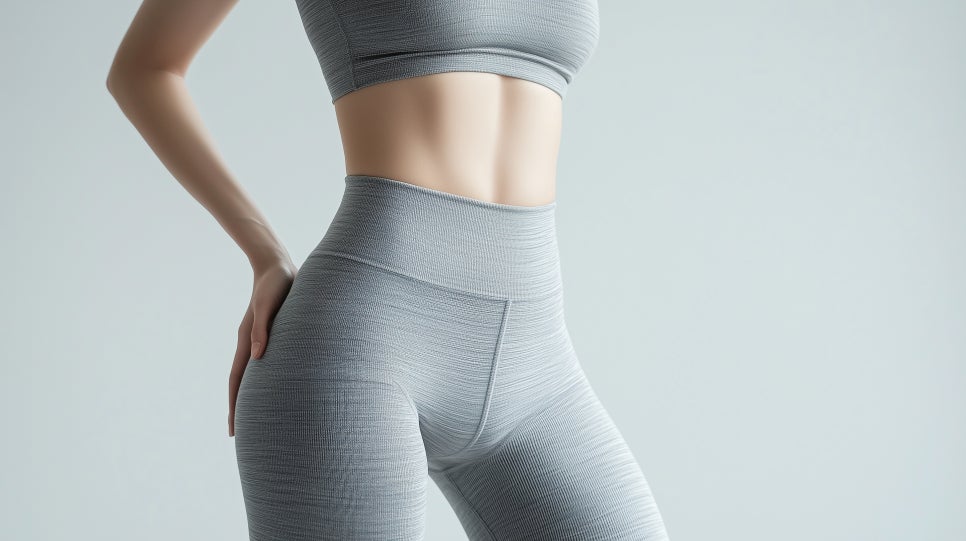
The ADM used in BiVoll may be described as a material produced using extracellular matrix (ECM)-based technology, and it may be used with consideration for adaptation within the body and biological stability. There may also be cases in which it is described in connection with the concept that the patient’s own cells gradually settle and tissue regenerates over time.
Because of these characteristics, it may also attract interest as an approach different from the concept of a simple artificial implant. BiVoll may sometimes be described as a biological-tissue-based approach rather than one based solely on an artificial structure.
Why is a natural hip line becoming more important than simply creating a larger volume?

In the past, there were often cases focused on a large and prominent hip line itself. More recently, however, there may be a growing preference for natural-looking elasticity and a body line that appears connected, as though shaped through exercise.
Therefore, a balanced design that considers the pelvic and thigh lines may be more important than simply creating a large volume. An approach that also considers the individual’s body shape and skin elasticity may be necessary. In hip augmentation, natural proportions and curves may be more important than excessive enlargement.
Why are detailed consultation and body-shape analysis important?

The results of hip augmentation may vary depending on factors such as skin thickness, fat volume, pelvic shape, and muscle structure. In particular, with approaches such as BiVoll that place importance on tissue adaptation and natural lines, body-shape analysis and setting the design direction may be even more important.
The process of balancing the desired appearance with the individual’s current body-shape conditions may also play an important role. In hip augmentation, body-shape analysis and design planning may be more important than simply choosing a procedure.

Recently, hip augmentation may be changing in a direction that places greater importance on natural feel and movement, as well as harmony across the entire body line, rather than simply increasing volume. BiVoll is known as an approach that uses acellular dermal matrix (ADM) to consider the concept of tissue regeneration and a natural connection, and there may be cases in which it attracts interest for characteristics different from conventional silicone implant-centered surgery.
In particular, for those who want a natural and soft hip line rather than an artificial appearance, an approach that sufficiently considers body shape and tissue condition may be important. Through adequate consultation and analysis, the process of choosing an approach suitable for the individual may be helpful.