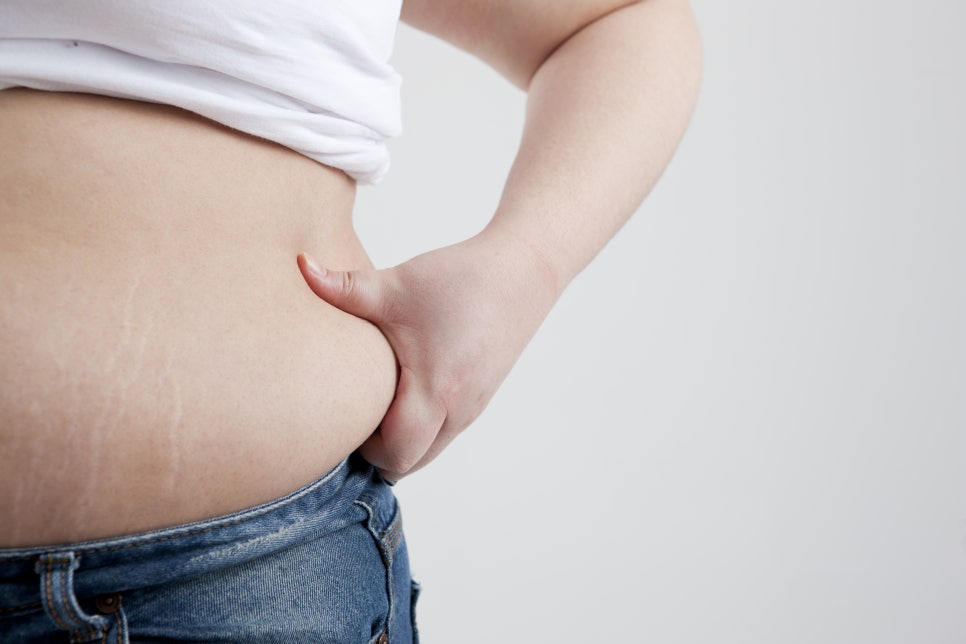
After childbirth, many people find that although they have lost some weight, their lower abdomen remains protruded or lacks firmness. This may be largely because the abdominal structure itself has changed during pregnancy and childbirth, rather than simply being a matter of gaining or losing weight.
In particular, the abdomen is a structure in which the skin, fat, muscles, and fascia all work together. If even one of these elements is damaged, it may become difficult to restore the overall shape. The key point is that visible changes in body shape may reflect “structural changes,” not simply a weight issue.
Structural Causes of Loose Belly Fat After Childbirth
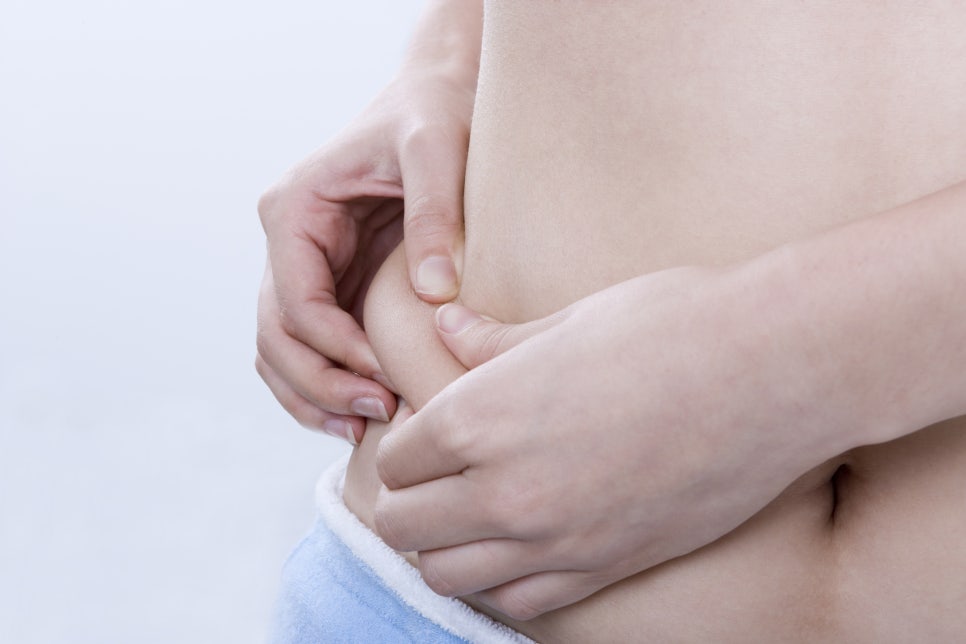
Due to diastasis recti
When the abdomen continues to remain unable to draw back inward
Diastasis recti, or separation of the abdominal muscles, occurs when the left and right rectus abdominis muscles separate as the abdomen expands during pregnancy. It is a major cause of a loose abdomen after childbirth. In this condition, even when you engage your abdominal muscles, the center does not feel stable, and the sensation of the abdomen pushing forward may persist.
In many cases, it cannot be resolved through exercise alone. Because the abdomen’s central support is weakened, functional problems may occur along with changes in appearance. Diastasis recti is one of the key structural causes of reduced abdominal firmness.
Reduced skin elasticity and weakened contraction
Skin that stretches rapidly during pregnancy often does not completely return to its original state after childbirth. In particular, when collagen and elastin fibers are damaged, the skin’s own ability to contract decreases, causing the loose sensation to persist. In this case, the abdomen may appear to sag even when there is not much fat, and it can be difficult to improve through exercise alone. Reduced skin elasticity itself is an important factor in visible sagging.
When abdominal fat gained during pregnancy
remains in localized areas
During pregnancy and childbirth, abdominal fat tends to increase as a means of storing energy. After childbirth, some of this fat may remain and not be easily lost. Lower-abdominal fat, in particular, tends to decrease more slowly than fat in other areas due to the influence of blood flow and hormones. As a result, the overall body weight may decrease while creating the impression that only the abdomen remains. Localized fat accumulation is often difficult to resolve through dieting alone.
A structure in which the abdomen protrudes further forward
because of changes in the pelvis and posture
After childbirth, the pelvis may widen or tilt forward, making the abdomen appear to protrude more than it actually does. In this case, the body shape may look distorted regardless of the actual amount of fat. It often occurs along with lower-back pain or postural imbalance, and may lead to functional changes rather than being merely a cosmetic issue. Postural changes are a hidden factor that can worsen abdominal protrusion.
After a cesarean section or vaginal delivery
abdominal fascial damage and adhesions
The extent of damage to the abdominal tissues may vary depending on the method of delivery. In particular, after a cesarean section, fascia around the incision may develop adhesions, which can restrict abdominal movement. This may cause a particular area to feel tight or firm and can disrupt overall abdominal balance. Even after a vaginal delivery, fascial function may weaken due to significant changes in intra-abdominal pressure. Fascial damage can cause asymmetry in movement as well as affect appearance.
Changes in fat accumulation patterns due to hormonal changes
Hormonal changes after childbirth also affect fat distribution, and fat may tend to accumulate again, particularly around the abdomen. These changes may become more pronounced depending on whether the person is breastfeeding, the speed of recovery, and their individual metabolic condition. For this reason, some people find that the abdomen improves noticeably more slowly even when maintaining the same diet and exercise routine. Hormonal changes are an important variable that influences the speed of body-shape recovery.
The limitations of structural abdominal changes
that cannot be resolved through exercise alone
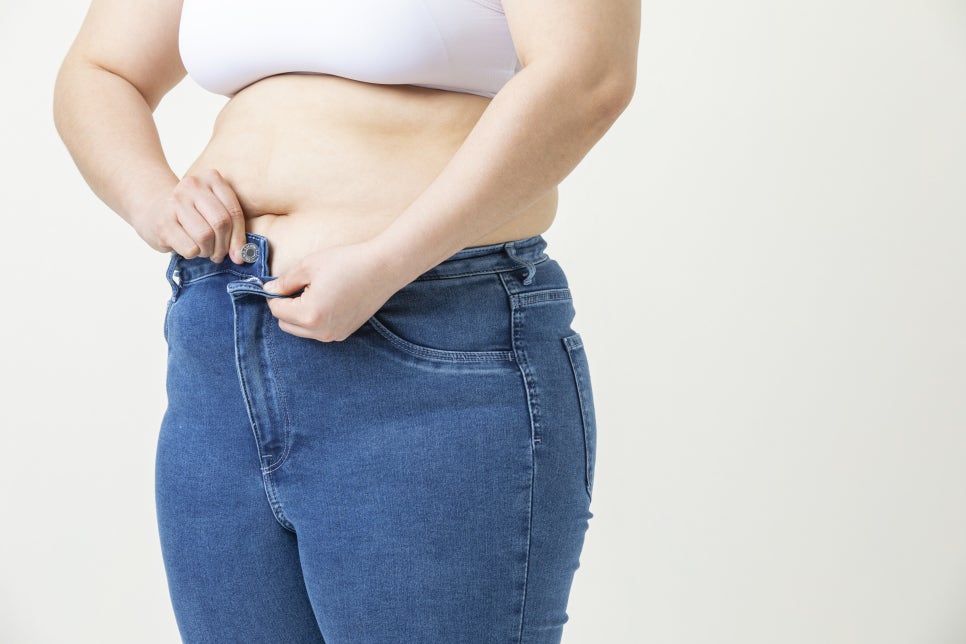
In many cases, people try to improve their abdomen through exercise after childbirth. However, when structural changes are already present, ordinary abdominal exercises alone may have limitations. If diastasis recti or fascial damage is present, incorrect exercise may instead increase abdominal pressure and worsen the condition. Therefore, accurately identifying the cause is important. In many cases, the issue is not exercise itself but “structural recovery.”
Why Loose Belly Fat Persists After Childbirth, Why Abdominoplasty May Be Considered, and Directions for Improvement
As described above, abdominal changes after childbirth result from the combined effects of the skin, fat, muscles, fascia, and postural changes. For this reason, simple care alone may often have limitations, and in such cases, abdominoplasty may be considered as a method of directly addressing structural issues.
The approach involves realigning the basic structure of the abdomen through correction of diastasis recti, removal of excess skin, and fat redistribution. The goal is not simply to reduce the external appearance, but to restore abdominal function and shape at the same time.
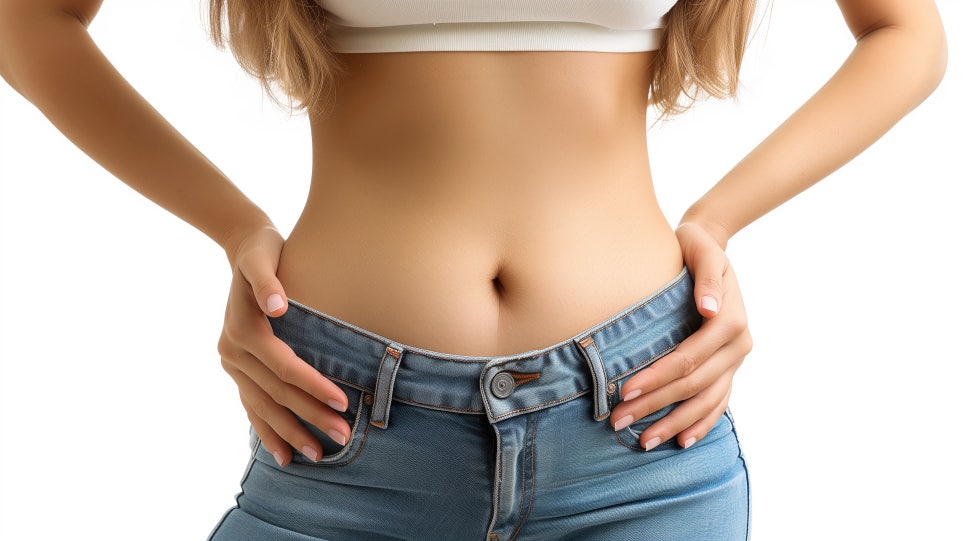
Abdominoplasty is not necessary for everyone. However, if the abdomen continues to protrude or does not regain its firmness despite exercise and other care, it may be considered as a structural solution. The method used may vary depending on the individual’s condition.
The important thing is to accurately assess the current condition and identify which factors are causing the abdominal changes to persist. The key to abdominal recovery is a “cause-specific, individualized approach,” and depending on the circumstances, abdominoplasty may be one possible solution.
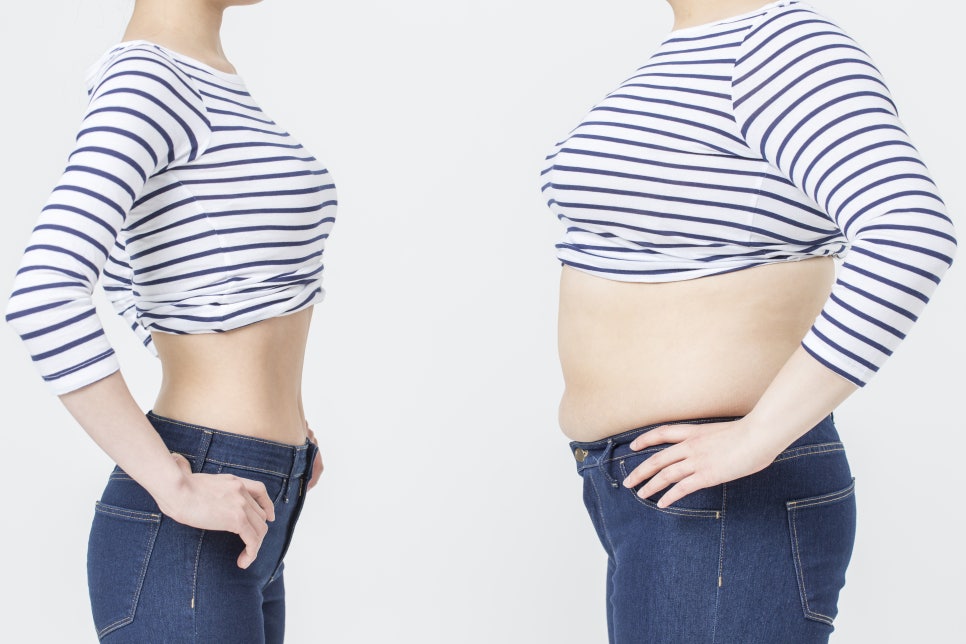
Loose belly fat after childbirth is difficult to explain solely as the result of weight gain or a lack of exercise. It results from the combined effects of changes in abdominal structure, skin, fat, posture, and fascia. Therefore, depending on the individual’s condition, various approaches may be considered, from nonsurgical treatment to methods that correct the abdominal structure.
The important thing is not to view the current condition solely as a cosmetic issue, but to understand it as the result of physical changes. Approaching it from this perspective can help establish a more realistic direction for recovery.