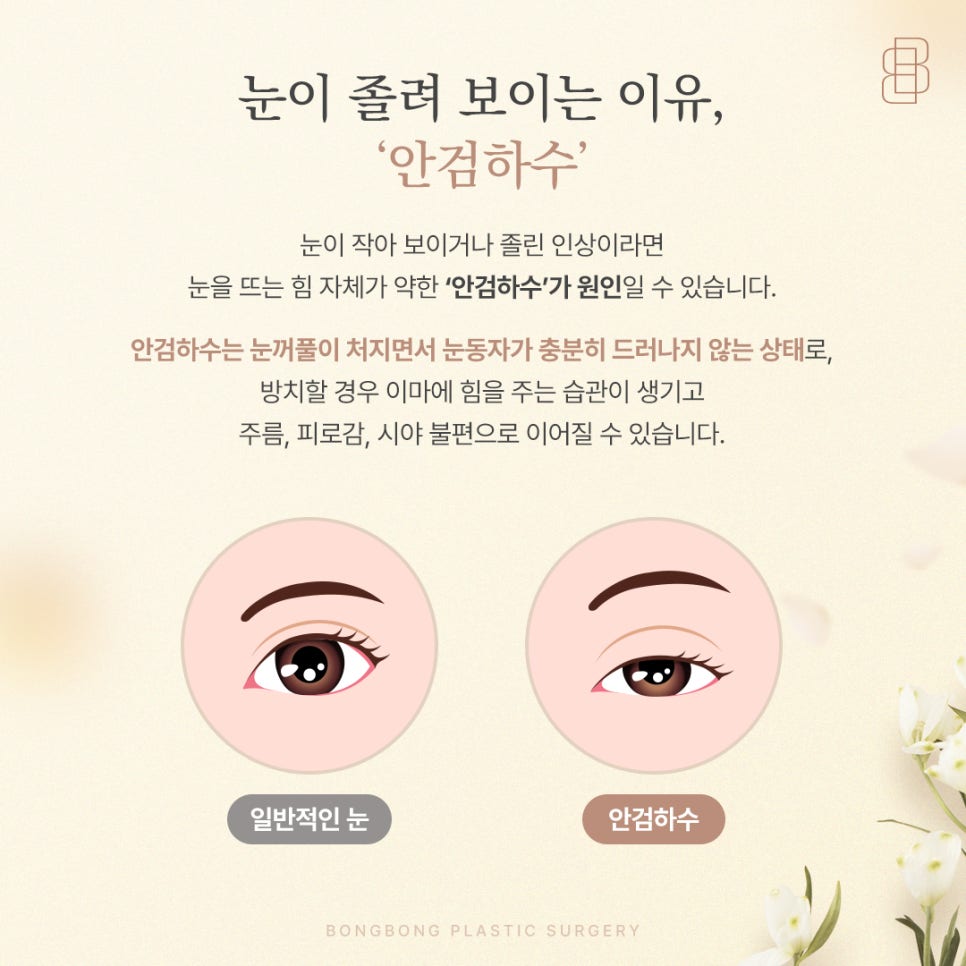
The eyes are one of the important features that determine the impression of the face. Even eyes of the same size can create a very different impression depending on the strength and position of the eyelids and the way the eyes open. In particular, if the pupils are not sufficiently exposed when opening the eyes or the eyes appear sleepy, the cause may not simply be the shape of the double-eyelid crease, but reduced eyelid function such as ptosis.
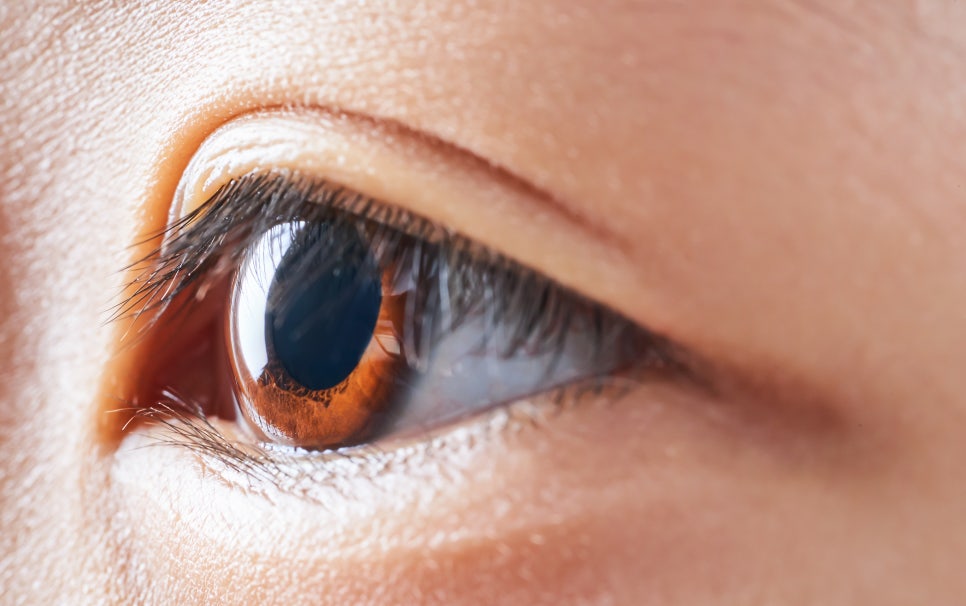
Ptosis refers to a condition in which the upper eyelid droops below its normal position because the muscles that lift the eyelid are weak or have reduced function. It may be present from birth, but it can also develop later in life as skin elasticity decreases or changes occur in the eyelid tissues.
In such cases, having only double-eyelid surgery to make the eyes look larger may not produce the desired result, and the eyes may instead continue to look heavy or sleepy. Ptosis correction is not simply a procedure to make the eyes look bigger; it is a process that improves both the function of opening the eyes and the balance of the eye shape.
Ptosis Symptoms: These Signs May Need to Be Checked
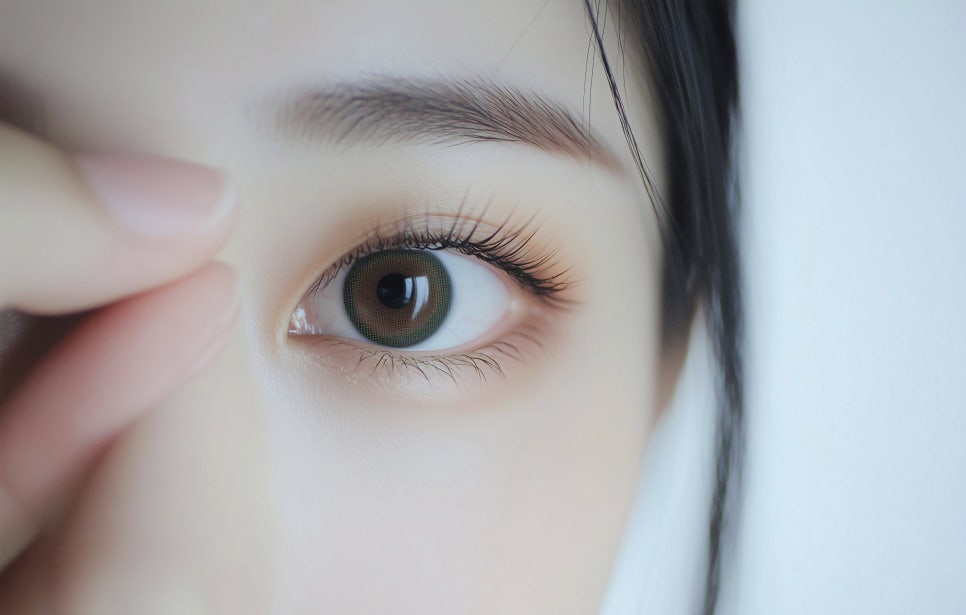
Ptosis can vary in severity from person to person and may cause everyday discomfort in addition to changes in the eye shape. Common symptoms may include the following.
-
The eyelid partially covers the pupil
-
Excessive use of the forehead muscles when opening the eyes
-
Tension in the forehead when trying to open the eyes wide
-
Always looking sleepy in photographs
-
Eyes becoming tired easily
-
Feeling that there is not enough strength to open the eyes
In particular, if you unconsciously develop a habit of raising your forehead and eyebrows to open your eyes, forehead wrinkles may deepen and fatigue around the eyes may increase. In addition, drooping eyelids can make the field of vision feel restricted, leading to functional discomfort. Therefore, it is important to distinguish between a purely cosmetic concern and a problem that also affects the function of opening the eyes.
What Is Eye-Shape Correction?
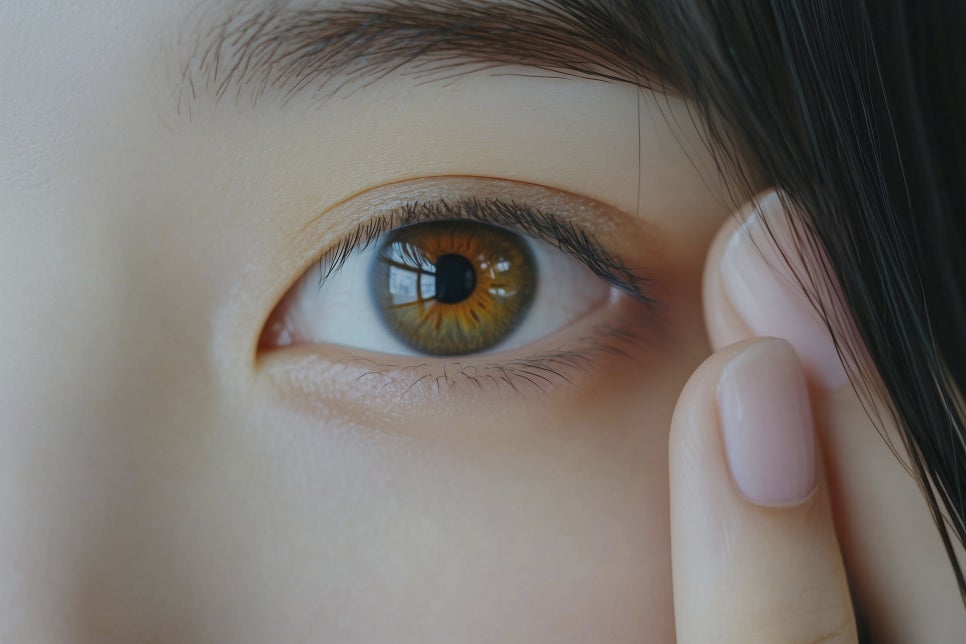
Eye-shape correction is a method of creating a more defined eye shape by adjusting the strength of the muscles that open the eyes and the position of the eyelids. While double-eyelid surgery creates a skin fold to form the eyelid crease, eye-shape correction focuses on supplementing the strength used to open the eyes. In other words, having a double-eyelid crease does not always make the eyes look defined, and eye-shape correction may also be considered when the muscles that open the eyes are weak.
The key to eye-shape correction is not to force the eyes to become larger, but to adjust the degree to which the eyelids and pupils are naturally exposed. Because the extent of correction required varies according to each person’s eye structure, the thickness of the eyelids, skin laxity, and muscle condition must be assessed comprehensively.
What Are the Method and Features of Incisional Eye-Shape Correction?

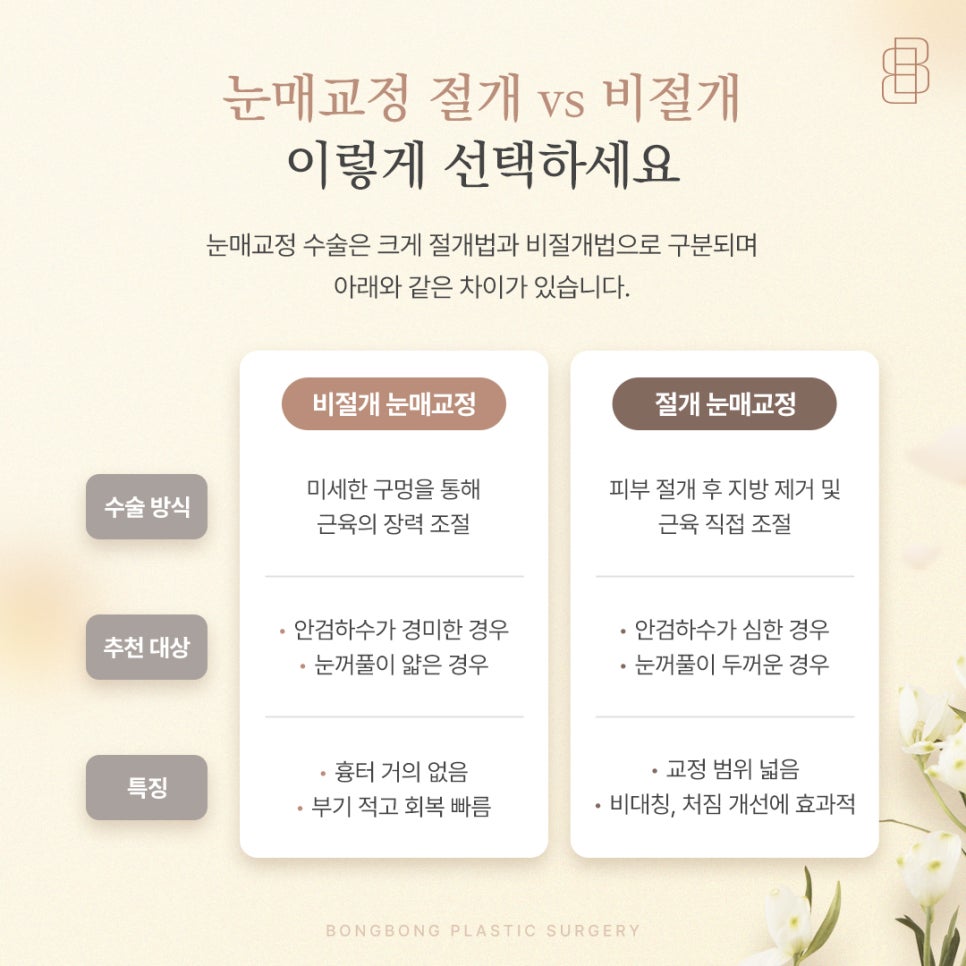
Incisional eye-shape correction involves making an incision in the skin and directly examining and correcting the internal tissues of the eyelid. It may be considered when the eyelid skin is thick or lax, or when the degree of ptosis is relatively pronounced.
One advantage of the incisional method is that the necessary adjustments can be made while directly examining the internal structure of the eyelid. A more precise approach is possible when skin removal is needed or when eyelid fat and tissue also need to be organized or removed.
However, because this method involves an incision, an initial recovery period is required, and the duration of swelling or bruising may vary depending on the individual’s skin condition. Because incisional eye-shape correction allows the eye structure to be examined directly during correction, its suitability can be assessed for people with multiple concerns involving the eyes.
What Are the Method and Features of Non-Incisional Eye-Shape Correction?
Non-incisional eye-shape correction involves adjusting the muscles that open the eyes and their connecting structures through small openings without making an incision in the skin. Because it involves less incision-related burden and generally has a shorter recovery period, it is a method of interest to people who want a natural-looking change. It may be considered when skin laxity is not severe and the eyelid tissues are in relatively good condition.
It also has the advantage of creating less concern about scarring, but it cannot be applied to every eye. When the eyelids are thick or severely droopy, sufficient correction may be difficult with the non-incisional method alone. Non-incisional eye-shape correction does not mean that the procedure is simple; it is an option for people whose eyes meet the appropriate conditions.
Comparing the Differences Between Incisional and Non-Incisional Eye-Shape Correction

Both methods aim to improve the eye shape, but they differ in their approach and the people for whom they may be suitable.
| Category | Incisional eye-shape correction | Non-incisional eye-shape correction |
|---|
| Method | Direct correction after making an incision in the skin | Correction through small openings |
| Application | When skin laxity or tissue organization is needed | When there is little laxity |
| Advantage | Allows precise correction | Less incision-related burden |
| Recovery | Relatively longer | Relatively shorter |
However, what is important is not whether the method is incisional or non-incisional, but choosing the method suited to the current condition of your eyes. Rather than following a popular method, factors such as eyelid thickness, the amount of fat, muscle condition, and the desired appearance should be considered to achieve a natural-looking result.
What Is Important for a Natural-Looking Eye Shape?
Eye-shape correction is not simply a procedure to make the eyes look bigger. A natural impression requires consideration of not only the size of the eyes, but also the proportions of the entire face, the double-eyelid crease, the direction of the outer corners of the eyes, and the balance between the two sides.
Excessive correction can make the eyes look unnaturally wide open or make the impression appear too strong, so adjusting the extent of correction to the individual is important. In addition, when there is a difference between the two eyes, the degree of asymmetry must be analyzed and both sides balanced.

Ptosis is not simply a problem of the eyes appearing small; in some cases, it is related to the function of lifting the eyelids. Therefore, if you want to improve the appearance of your eyes, it is important to assess the current condition of the eyelids and the strength used to open the eyes rather than considering only a double-eyelid procedure. Incisional and non-incisional eye-shape correction each have their own advantages and disadvantages, and the appropriate method may vary depending on the individual’s eye structure.
The most natural-looking eyes are not defined by a predetermined size, but are achieved when the eyes open comfortably and harmonize with the individual’s face. Through sufficient consultation and an accurate assessment, choosing the eye-shape correction method suited to you is an important step toward achieving a satisfactory result.