What Causes Widely Spaced Breasts—and What If Exercise Doesn’t Help?
When Is Surgery Needed?
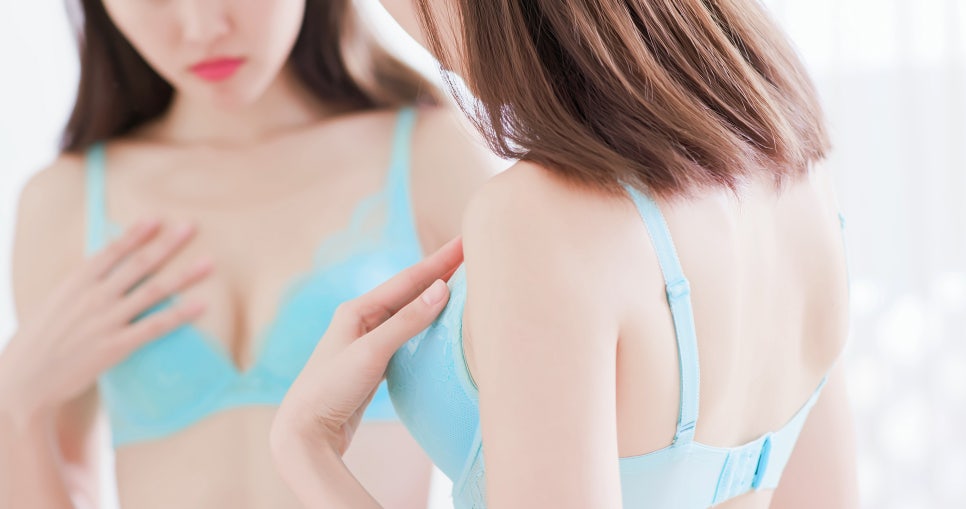
When looking in the mirror, some people may feel concerned because the space between their breasts appears wide or because they cannot achieve the desired fullness even when wearing a bra. In these cases, it is easy to think, “Wouldn’t chest muscle exercises help?” or “Wouldn’t gaining weight naturally fill the space?” However, breast shape is not determined solely by exercise or changes in body weight.
What causes widely spaced breasts?
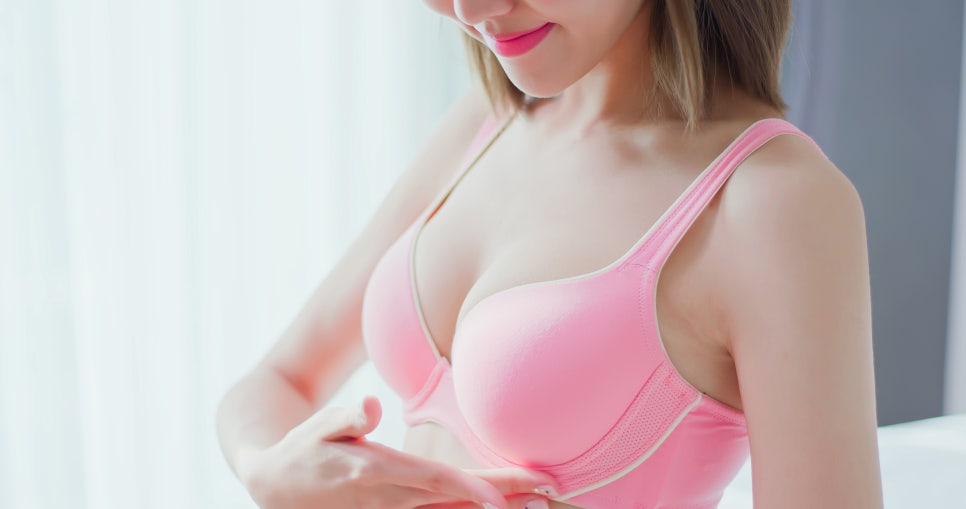
Widely spaced breasts are not simply a problem that occurs because the breasts are small. Regardless of breast size, the breasts may appear widely spaced if they are positioned toward the outer sides or if the central fullness appears insufficient.
One of the main causes is the natural structure of the rib cage. Because the shape and positioning of the ribs and the direction in which the breasts are situated differ from person to person, breasts with the same volume may appear different. If the rib cage is broad or the breast tissue is distributed toward the outer sides, the space between the breasts may appear wider.
A widely spaced appearance may also develop when breast volume decreases following weight loss, childbirth, breastfeeding, or similar experiences, making sagging on the outer sides more pronounced than on the inner sides.
The important point is that improving widely spaced breasts is not simply a matter of increasing volume. The shape needs to be designed while taking the individual’s breast structure and tissue distribution into account.
Why is it difficult to improve widely spaced breasts with chest exercises?
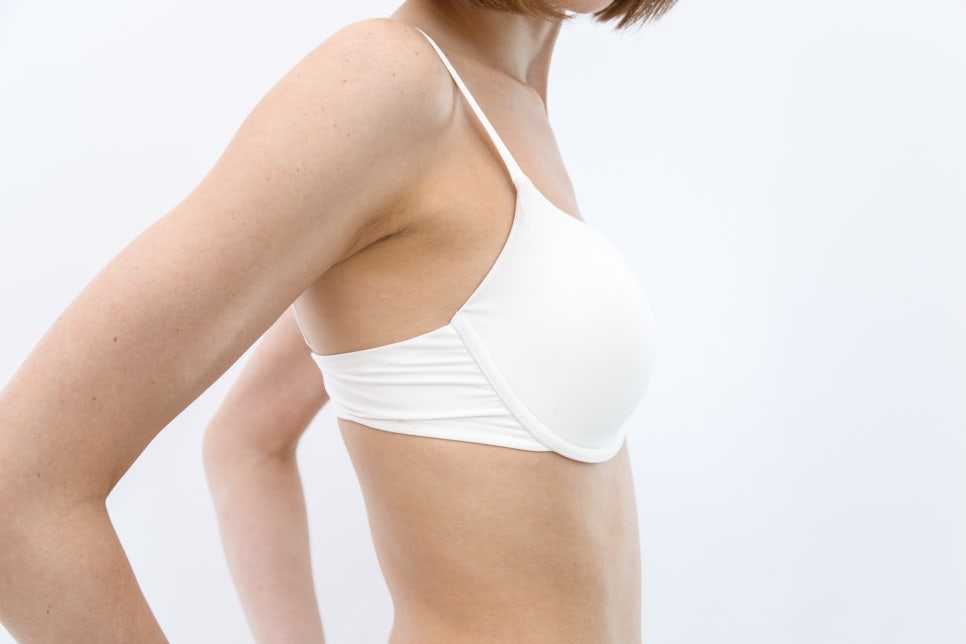
Chest exercises can help develop the pectoralis major, commonly referred to as the chest muscle. As muscle mass increases, the lines around the breasts may appear somewhat firmer, and some improvement in sagging may be expected. However, because women’s breasts consist mostly of fat and glandular tissue, it is difficult to move the breast tissue itself or narrow the space between widely spaced breasts through exercise.
For example, it is not possible to move breast tissue positioned toward the outer sides to the center through exercise alone. To change an already established breast shape, an approach that adjusts the internal volume and position of the breasts may be necessary.
The areas that can be improved through exercise differ from those that require surgical correction. Rather than insisting on exercise alone, it is necessary to identify the cause of the current breast shape.
What breast surgery methods can improve widely spaced breasts?
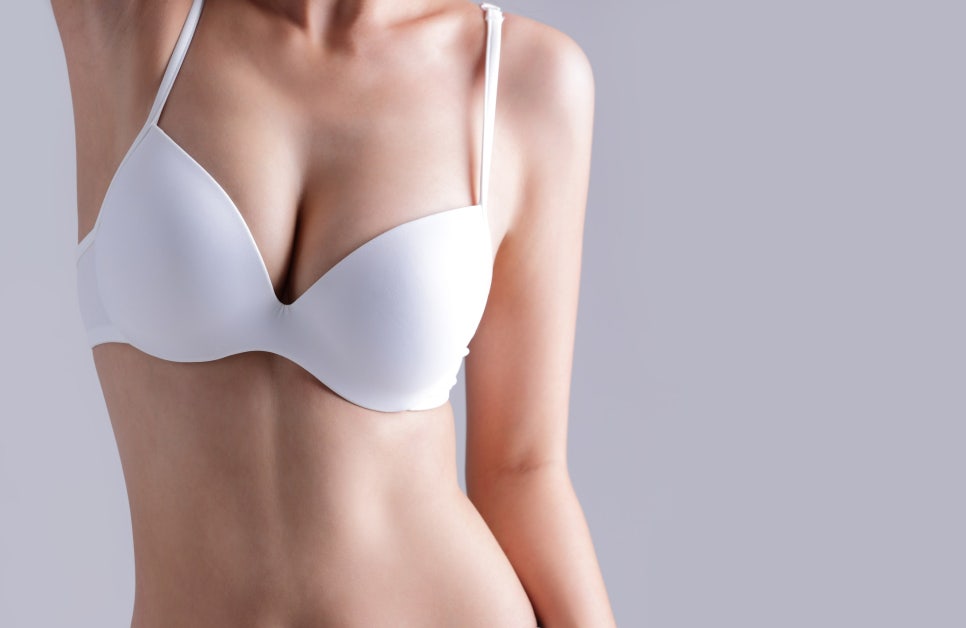
The method used to improve widely spaced breasts may vary depending on the individual’s breast condition and desired outcome. The most representative options include breast augmentation with implants, autologous fat grafting, hybrid breast augmentation, and fourth-generation BiVOL breast augmentation.
Implant breast augmentation creates volume in the desired position and designs the breast contour. In particular, for widely spaced breasts, it is important not simply to choose larger implants, but to consider how to fill the inner breast area and create a natural shape.
Autologous fat breast augmentation involves harvesting fat from areas such as the thighs or abdomen, purifying it, and injecting it into the breasts. This may provide a natural feel and soft volume. However, because some of the grafted fat may be absorbed, planning must take the desired volume and its maintenance into account.
What is hybrid breast augmentation for those seeking a natural contour?
In recent years, as more people have come to value a natural feel and overall proportions rather than simply increasing breast size, hybrid breast augmentation has also drawn attention. The hybrid method takes into account the advantages of both implants and autologous fat grafting: implants provide the basic volume, while areas that need additional correction are supplemented with fat.
For widely spaced breasts, central volume and breast contour are important. A hybrid approach is characterized by allowing a more detailed design tailored to the individual’s breast shape.
It is important to remember that breast augmentation is not simply surgery to increase size. It is a process of creating a natural shape while considering the proportions and harmony of the entire body.
What is BiVOL breast augmentation, which considers natural volume and tissue harmony?
Recently, many people have come to prefer breast augmentation methods that consider not only implant size, but also natural volume, feel, and movement that harmonize with their bodies. One method receiving attention in this context is BiVOL breast augmentation.
Unlike conventional implant-centered breast augmentation, BiVOL is known as a method that uses acellular dermal matrix (ADM), in which cells have been removed from human tissue. ADM is a material with high biocompatibility. Over time, it may integrate with the surrounding tissue and gradually become established in a way that resembles the patient’s own tissue. Accordingly, the goal is to create natural volume rather than simply filling a space.
People with thin skin or insufficient breast tissue, such as those with a slender build, may be concerned that the edges of implants will be noticeable. The BiVOL method may help supplement insufficient tissue and create softer contours.
For those with insufficient central volume, as in widely spaced breasts, or those seeking a natural breast curve, the possibility of applying BiVOL breast augmentation can be assessed based on their body shape and tissue condition. However, it is not suitable in the same way for every case, so it is important to determine the appropriate surgical approach through a thorough consultation with a medical professional.
What should be checked before surgery for widely spaced breasts?
When considering breast augmentation, the most important thing is to accurately understand the current shape of your breasts rather than simply deciding “how many cup sizes to increase.” Even among people with an A cup, the appropriate surgical method may differ depending on the width of the rib cage, skin elasticity, amount of breast tissue, and degree of symmetry between the two sides. In particular, for widely spaced breasts, the implant size as well as its position, shape, and surgical plan can significantly affect the outcome.
In addition, aiming to bring the breasts excessively close together may instead create an unnatural shape. The natural breast curve and movement should also be considered. To achieve a satisfying result, it is important to establish an individualized plan through an analysis of each person’s breast structure and a thorough consultation.
Widely spaced breasts are not simply the result of insufficient exercise. They can arise from various factors, including the natural structure of the rib cage, the position of the breast tissue, the amount of fat, and skin elasticity. Chest exercises can help with healthy body-shape management, but they may have limitations when it comes to fundamentally changing an established breast shape or the space between the breasts.
Therefore, if your breast contour does not improve despite consistent exercise, or if you cannot achieve the desired fullness even after putting on a bra, you may consider breast augmentation as an option for improvement.
Among the various options—including implants, autologous fat, hybrid breast augmentation, and BiVOL breast augmentation—it is important to choose the method suited to your body shape and desired outcome. The most important goal should be creating a natural and balanced breast contour.