How to Create Apple-Shaped, Lifted Glutes
Can Various Types of Exercise Help?

Recently, as interest in body care has increased, many people have begun various types of exercise to create firm, voluminous, so-called “apple-shaped” glutes. Exercises that stimulate the gluteal muscles, such as squats, lunges, and hip bridges, are especially well known as representative glute-lifting exercises.
However, quite a few people remain concerned that their gluteal volume has not increased as much as expected despite exercising consistently, or that hip dips and sagging contours remain unchanged. This is because there are clear aspects that can and cannot be improved through exercise.
What Types of Glute-Lifting Exercises Are There?
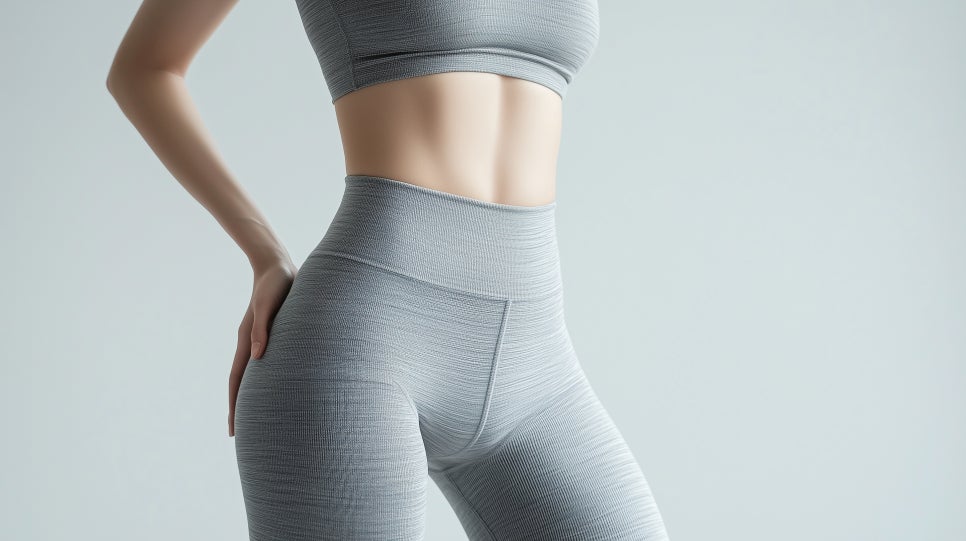
Representative glute-lifting exercises include squats, lunges, hip bridges, hip thrusts, and deadlifts. These exercises may help strengthen the gluteal muscles and improve their firmness. When performed consistently, they may also improve lower-body strength and contribute to better overall body contours.
Stair climbing and exercises using resistance bands are also commonly used as ways to stimulate the gluteal muscles.
Which Aspects Can Exercise Improve, and Which Are More Difficult?

Exercise is effective for developing muscle, but it is difficult to change the shape of the pelvis, the distribution of fat, or the skin’s elasticity itself. For example, when hip dips are pronounced, the upper gluteal area lacks volume, or the body is congenitally influenced by the pelvic structure, there may be limits to creating the desired contours no matter how diligently one exercises. It is important to understand that increasing muscle mass and improving body shape are different concepts.
Why Do Exercise Results Differ from Person to Person?

Even when people perform the same exercises, their results may differ. This is because factors such as the degree of gluteal development, body fat, skin elasticity, the width and tilt of the pelvis, and overall body type all have an effect.
Especially in people with slender body types, muscle development may not lead to a significant increase in volume. Sagging buttocks and hip dips may also be difficult to improve through exercise alone. The shape of the buttocks is influenced not only by the muscles but also by the skeleton, fat distribution, and skin condition.
What If More Definite Volume Improvement Is Needed?

If you want to improve volume or contours that cannot be sufficiently addressed through exercise alone, gluteal augmentation may be one option. Gluteal augmentation does not simply aim to make the buttocks larger. Rather, it aims to create more natural and three-dimensional gluteal contours by considering the proportions of the individual’s pelvis, waist, and thighs.
As various approaches are applied, including fat grafting, implants, and, more recently, methods that also take the tissue environment into consideration, customized plans suited to each individual’s condition are becoming possible.
When Might Gluteal Augmentation Be Considered?

Gluteal augmentation may be considered when the side profile appears indented because of hip dips, when gluteal volume has decreased after weight loss, or when a person naturally has a flat-shaped body type. It may also be considered when achieving the desired volume or contour improvement is difficult despite exercising for a long time. Through consultation, an appropriate approach can be selected. Above all, it is important to consider one’s body type and desired results as a whole.
What Happens When Exercise and Gluteal Augmentation Are Managed Together?

Having gluteal augmentation does not mean that exercise is no longer necessary. On the contrary, performing gluteal exercises at an appropriate time may help maintain muscle firmness and manage the overall body contour.
In other words, exercise helps maintain healthy muscles, while gluteal augmentation helps supplement volume and contours that are insufficiently improved through exercise alone. Exercise and gluteal augmentation are not substitutes for each other; they can serve as complementary approaches to address areas that need improvement.
Is It Important to Choose a Method Suited to Your Body Type?

There is no single prescribed method for lifting the glutes. Exercise may help when muscle development is needed, while gluteal augmentation may be a more effective improvement option when volume itself is insufficient or skeletal factors have a significant influence. Therefore, thoroughly assessing your body type, amount of body fat, skin condition, and other factors before choosing an appropriate method is an important process for increasing satisfaction.

Consistently practicing various exercises, such as squats and hip bridges, to create apple-shaped gluteal contours can certainly help. However, because the shape of the buttocks is influenced by multiple factors, including pelvic structure, fat distribution, and skin elasticity, it may be difficult to achieve the desired results through exercise alone. In such cases, supplementing insufficient volume and contours through gluteal augmentation may be one way to improve them.
Above all, accurately analyzing your body type and choosing the most suitable option among exercise, procedures, and surgery is the first step toward creating natural and satisfying gluteal contours.