Hello, this is Bongbong Plastic Surgery Clinic.
When you first begin looking into breast augmentation,
what are you most curious about?
You may have various concerns, such as how many cc would be appropriate, which implant to choose, and whether it is possible to achieve the volume you want without looking overly augmented.
However, even with implants of the same size, the actual surgical plan may differ from person to person because chest width, the amount of existing breast tissue, skin condition, and the desired contour can all vary.
For natural and beautiful breast augmentation, it is important to have a thorough consultation with your medical team and carefully determine the implant, surgical equipment, anesthesia, and post-operative care methods that are appropriate for you.
Therefore, when researching breast augmentation, rather than thinking only about “Which implant is best?”, it is helpful to consider the entire process, including how your current physical condition will be assessed, which surgical methods may be considered, and how your progress will be monitored and managed after surgery.
Today, we will go through, in order, the information that may be helpful to know before a consultation if you are considering breast augmentation.
- Breast Augmentation: What Should Be Considered Before Size?
“I think I would like a size around this.”
Having some idea of the size you want before a breast augmentation consultation can be helpful. However, it is difficult to determine the overall breast design based on size alone.
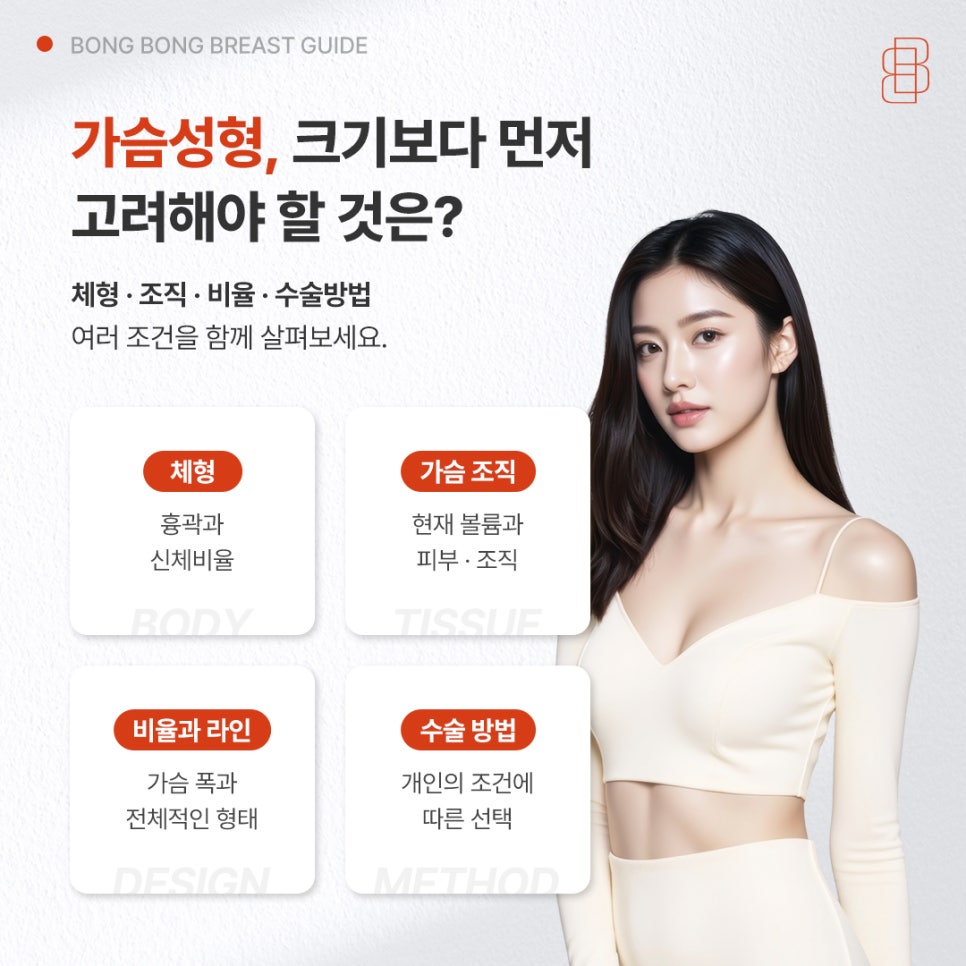
The first thing to assess is your body type. Since each person’s chest and upper-body proportions are different, the same volume may look different in practice.
Next is the existing breast tissue. The volume of the existing breasts and the condition of the skin and tissue also vary from person to person, so they need to be assessed together.
Proportion and contour are also important. Rather than simply focusing on larger breasts, you should consider how the breast width and overall shape will harmonize with the upper body.
Based on these factors, you will then discuss which surgical method may be considered.
Ultimately, breast augmentation begins with considering
body type → breast tissue → proportions and contour → surgical method
together.
Rather than using someone else’s implant size or surgical results as your own standard, the first step is to assess the conditions of your own body.
- How Can You Find a Breast Design That Suits Your Body Type?
“Please make it look natural.”
“I would like some volume compared with now,
but without making it look too excessive.”
These expressions are often used in actual consultations, but each person may have a different standard for what constitutes “natural-looking breasts.”
Therefore, instead of explaining the desired impression only in words, you can use a method that visually compares design directions based on your current body type.
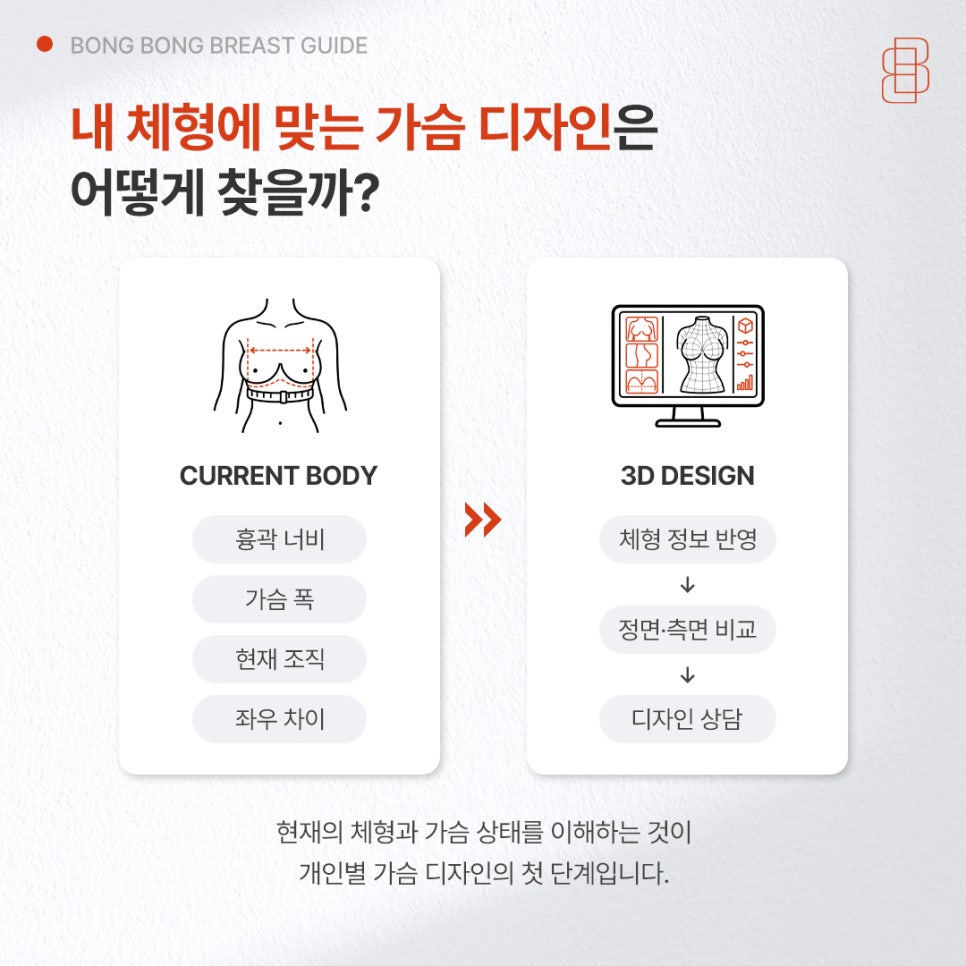
Bongbong Plastic Surgery Clinic incorporates 3D virtual plastic surgery to simulate breast size and shape according to each individual’s body balance.
With 3D virtual plastic surgery, you can assess current physical conditions such as chest width, breast width, existing tissue, and differences between the two sides. Based on this information, you can compare designs from the front and side and discuss them with the medical team.
This allows you to discuss more specifically not only “How many cc should be inserted?” but also
what volume may be considered for your body type and what kind of design you want from the front and side.
However, it is best to understand 3D virtual plastic surgery as an auxiliary method for discussing the design direction before surgery, rather than a process that exactly predicts or guarantees the appearance after actual surgery.
- What Types of Breast Implants Are Available?
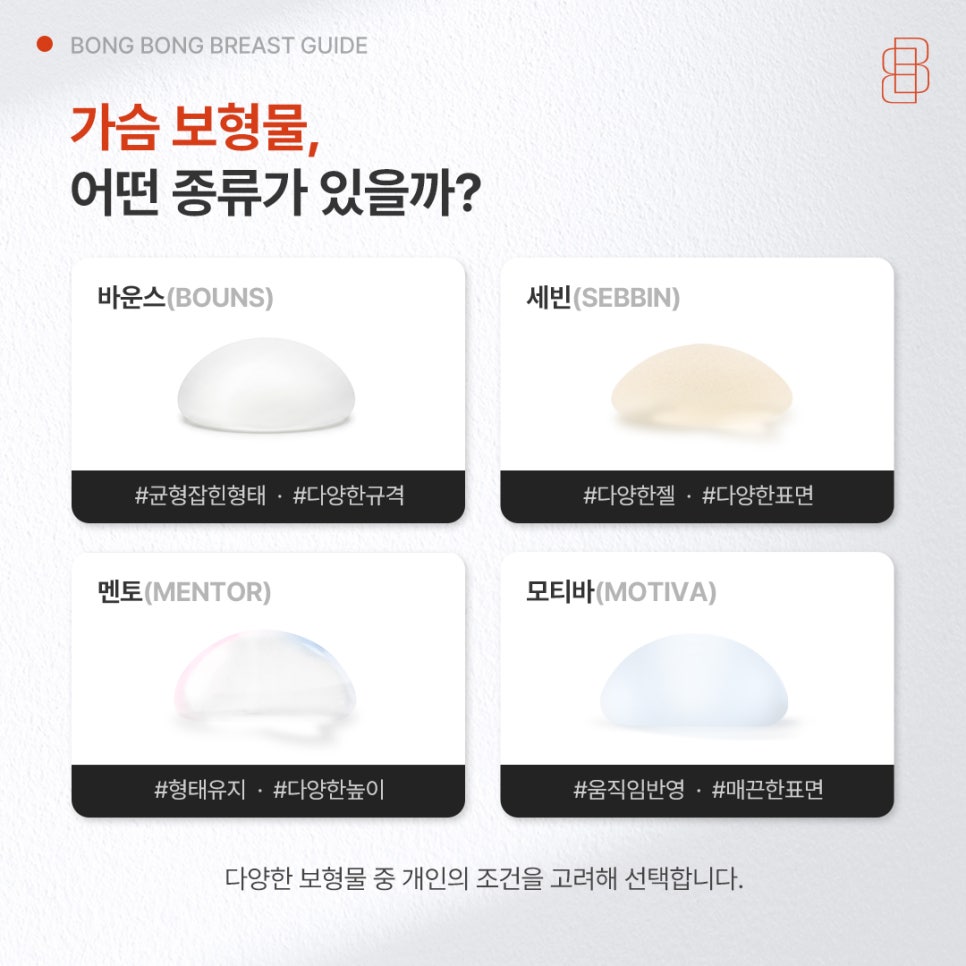
When searching for breast augmentation, you will come across various implant names, such as BOUNS, SEBBIN, MENTOR, and MOTIVA.
However, it may be helpful to reframe the question at this point.
Rather than asking, “Which implant is the best?”,
ask,
“What implant and specifications
may be considered for my body type?”
This may be the more important question.
Implants differ not only by brand name; depending on the product line, the available options for size, width, projection, and shape may also vary.
For example, if chest width, the amount of existing breast tissue, and the desired upper-breast and overall volume differ, the factors that need to be reviewed during the consultation may also differ.
Therefore, rather than choosing an implant simply because it is frequently mentioned in online reviews or because someone you know selected it, you need to compare implant types and specifications after assessing your current breast condition and desired design.
It may be easier to understand implants as one of several elements selected to plan the design you want, rather than as the purpose of breast augmentation itself.
- Should the Design Be Created Using Implants Alone?
As you research implants, you may also have this thought:
“Is there a way to create a more refined design in the areas that need it while using implants?”
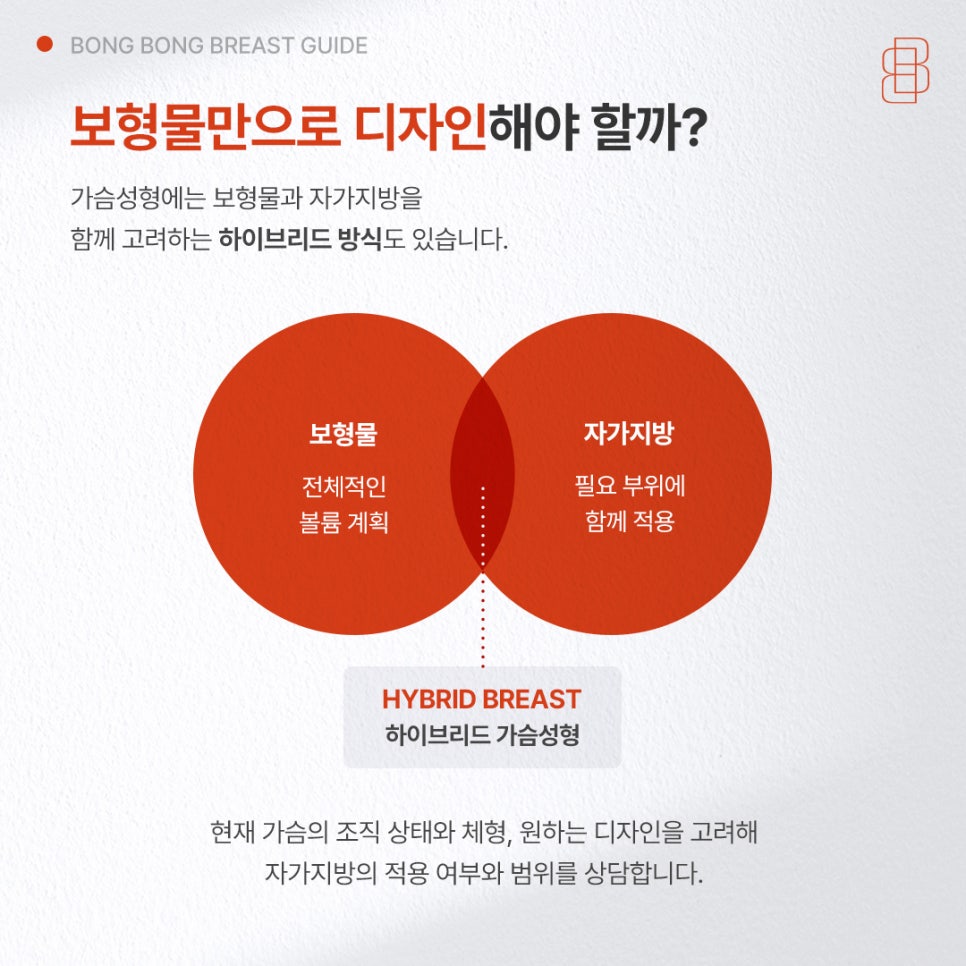
One method that may be considered in this situation is hybrid breast augmentation.
Bongbong Plastic Surgery Clinic describes hybrid breast augmentation as a method that uses implants together with autologous fat grafting.
Simply explained,
implants → plan the overall volume,
autologous fat → consider whether it should also be applied to areas that need it.
That does not mean that autologous fat is used in the same way for everyone.
After assessing the current breast tissue, body type, and desired design, you will consult with the medical team about whether autologous fat is needed and, if so, which areas and extent should be considered.
Therefore, even with hybrid breast augmentation, the important question is not the name of a particular method, but rather, “Is there a reason to consider this method given my current conditions?”
Is There Also a Method That Does Not Use Implants?
After learning about implants and hybrid breast augmentation, another natural question may arise.
“Can breast volume be planned without inserting implants?”
This point may be easier to understand when accompanied by an explanation from the medical team than through written information alone.
- An Alternative to Implants: What Is ‘BiVol’?

BiVol is a non-implant approach to breast augmentation presented by Bongbong Plastic Surgery Clinic.
According to Bongbong’s official information, BiVol uses biocompatible materials such as ADM and reflects the individual’s body structure and desired design.
BiVol can be easily understood by considering three points.
Non-implant approach
An approach different from inserting conventional breast implants
Biocompatible materials
Using materials during the process of planning volume
Personalized design
Planning while considering the current body type and tissue condition
The important point here is that BiVol is not necessarily a better method than implants in every case.
Implants, hybrid augmentation, and BiVol each use different approaches, so the methods that may be considered can vary from person to person.
Therefore, rather than deciding on a surgical method first after reading online information, it is better to begin the consultation with the question,
“Given my current breast condition, which of implants, hybrid augmentation, and BiVol may be considered?”
Surgical Equipment and Anesthesia Should Be Reviewed Alongside the Surgical Method
Rather than ending a breast augmentation consultation after checking only the surgical method and implant, it is also advisable to ask about the environment in which the surgery will be performed and how anesthesia will be administered.
Before surgery, you need to fully inform the medical team about your health, past medical history, and medications you are taking. You should also receive an explanation of the planned anesthesia method and how your condition will be monitored during surgery.
- Breast Augmentation: Post-Operative Care as Well
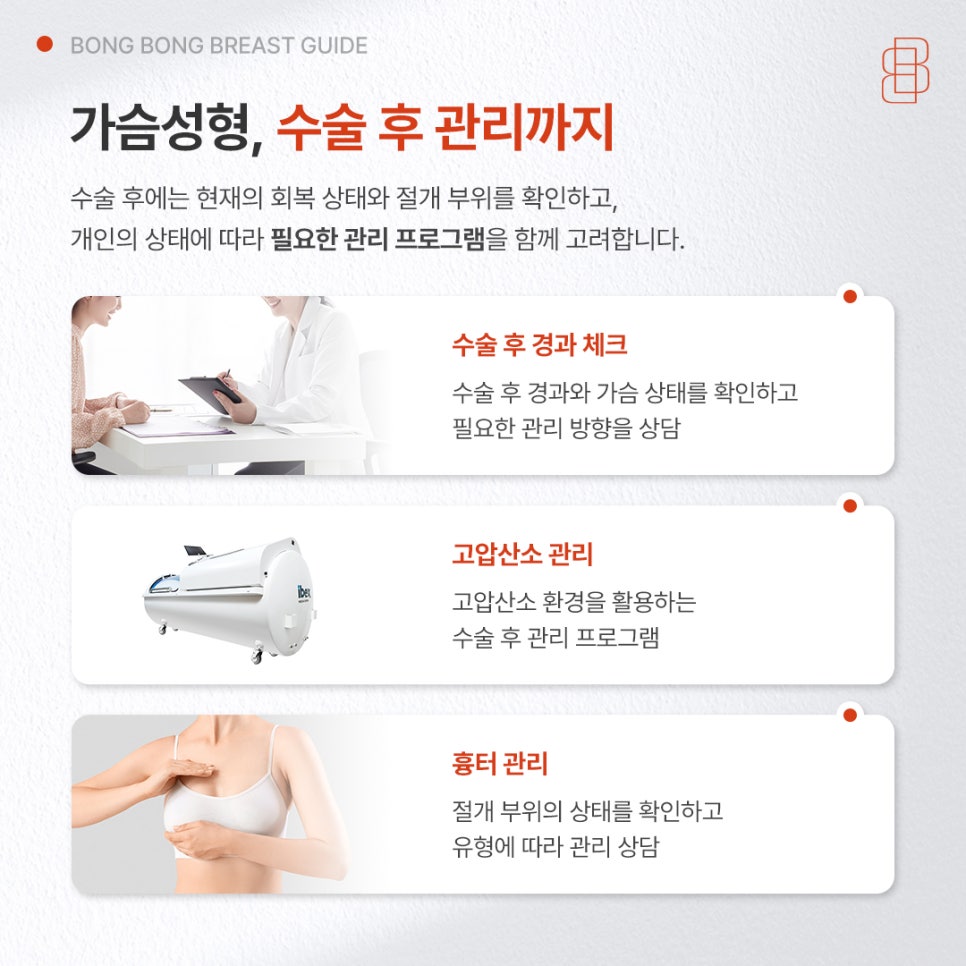
During breast augmentation consultations, most attention is focused on “How will the surgery be performed?”
However, it is also advisable to check in advance how your condition will be monitored after surgery, how the incision sites will be examined, and which care programs may be considered if needed.
Post-Operative Progress Checks
The process does not end when breast augmentation surgery is complete.
After surgery, it is necessary to monitor changes during recovery, including the shape of the breasts, the condition of both sides, the incision sites, and any pain or discomfort.
The speed of recovery and the post-operative course may differ from person to person. Rather than applying the same standards to everyone, it is important to consult with the medical team about whether further care is needed based on your current condition.
Hyperbaric Oxygen Care
Hyperbaric oxygen therapy generally involves supplying oxygen in an environment with pressure higher than atmospheric pressure. In medical settings, it may be used as an adjunct in certain situations related to some wounds, blood flow, or tissue damage.
Scar Care
Scars may differ in color, thickness, and appearance from person to person depending on skin characteristics, incision location, and the recovery process.
In the early stages, the incision area may appear red or feel firm. Since it changes over time, it is important to assess the current condition of the scar and, if necessary, consult about the appropriate timing and methods of care.
You Do Not Need to Decide on the Answer in Advance Before Your Consultation
As you research breast augmentation, you eventually return to the original question:
“So which method should I choose?”
However, you do not need to decide on the implant type or surgical method on your own before the consultation.
This is because each person has different breast width and tissue condition, chest and body type, and desired changes.
First, explain fully to the medical team what condition your breasts are currently in and what size and contour you want. Then, it is advisable to compare, one by one, the methods that may be considered for your individual conditions.
Rather than asking, “Which method is the best?”,
start by asking,
“Given my current condition, which methods may be considered?”
In addition to the implant and surgical method, it is important to make a careful decision after receiving a sufficient explanation of the surgical equipment, anesthesia plan, and post-operative progress checks and care process.