Concerned About Hip Dips in Particular?
Why They Are Difficult to Fill with Exercise Alone

| Key Summary in Advance Through Q&A Q. Are hip dips caused by a lack of fat? A. Hip dips refer to a shape in which the side where the buttocks and thighs meet appears indented inward. They are not caused simply by a lack of fat; various factors may be involved, including the structure of the pelvis and femur, the degree of muscle development, and fat distribution. Therefore, in some cases, it may be difficult to achieve the desired degree of improvement through exercise or weight gain alone. If you are considering buttock augmentation, it is important to first assess your current body shape and the cause of the hip dips. |
Table of Contents
-
Exactly where do hip dips occur?
-
Do hip dips occur only in thin people?
-
Can hip dips be eliminated through exercise?
-
What buttock augmentation methods can improve hip dips?
-
Points to check for a natural hip line
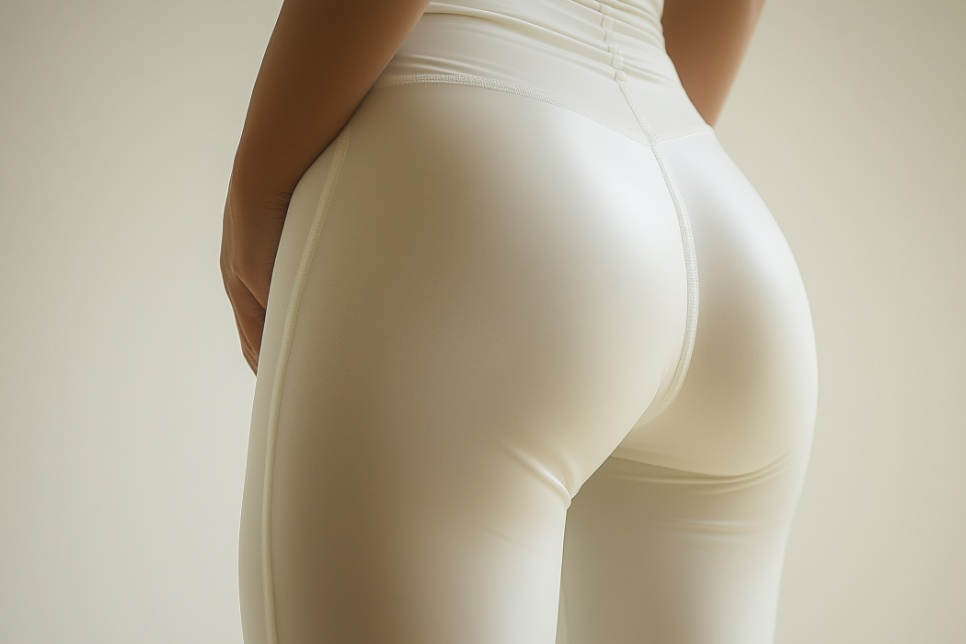
You may expect a smooth curve flowing from a slender waist to the pelvis and buttocks, but sometimes the indentation on the side of the pelvis becomes a concern when viewed from the side or from behind. These contours may become even more noticeable when wearing leggings or close-fitting clothing.
This area is commonly referred to as a hip dip. Hip dips can make the area between the pelvis and buttocks look disconnected or make the buttocks appear less voluminous than they actually are, leading to concerns about the hip line.
For this reason, some people focus on specific buttock exercises or try gaining weight to eliminate hip dips. However, hip dips are not caused simply by a lack of exercise or a thin body type. They are a physical characteristic resulting from the combined influence of an individual's bone structure, muscles, and fat distribution.
Therefore, if you are considering improving hip dips, the priority is to identify which areas of your current hip line appear to lack volume rather than simply increasing overall volume.
Today, we will look at why hip dips occur, the extent to which they can be improved through exercise, and how the line can be complemented through buttock augmentation.
- Exactly where do hip dips occur?

Hip dips generally refer to a shape in which the side of the buttocks where the pelvis and thighs meet appears indented inward. Rather than being a medical condition, they are closer to a physical characteristic that may naturally appear depending on an individual's body shape.
The area extending from the side of the pelvis to the femur may develop contours depending on the shape of the bones, muscles, and fat layer. If there is relatively little fat or muscle volume in this area, the outer line may appear indented.
The degree of hip dips varies from person to person. They may be barely noticeable in some people, while they may appear relatively deep when there is a large difference in the width of the pelvis and thighs or when fat is concentrated in certain areas.
Even in the same person, hip dips may become more or less noticeable as body weight or muscle mass changes.
Therefore, hip dips themselves do not need to be considered an abnormal condition. However, if they are causing stress because of your overall body shape or hip line, you may consider ways to improve their appearance.
- Do hip dips occur only in thin people?

| Factors Affecting Hip Dips | Characteristics |
|---|
| Bone structure | Width of the pelvis and the shape and position of the femur |
| Muscles | Degree of development of the muscles around the buttocks |
| Fat | Fat distribution around the pelvis and buttocks |
| Body shape | Proportions extending from the waist to the pelvis and thighs |
Hip dips are often thought to be caused by a lack of fat, but they can also appear in people with higher body fat levels.
This is because the factors that determine the shape of hip dips are not limited to the amount of body fat. The width and shape of the pelvis, the position of the femur, the degree of development of the gluteal muscles, and where fat is distributed can all have an influence.
For example, if there is sufficient fat around the waist and upper buttocks but relatively little fat on the sides of the pelvis, the middle area may appear indented, emphasizing the hip dips.
Conversely, even people with an overall thin body type may not have strongly pronounced hip dips, depending on the shape of their bones and muscles.
Ultimately, improving hip dips requires first examining why the area appears indented rather than simply gaining or losing weight.
- Can hip dips be eliminated through exercise?
One of the first methods people try when concerned about hip dips is buttock exercise.
Regularly performing exercises that use the muscles around the buttocks, such as squats and hip abductions, can help improve overall hip volume and firmness as the gluteal muscles develop.
However, it is difficult to change the structure of the pelvis itself through exercise or create the desired amount of volume in only a specific area.
In addition, the location and shape in which muscles develop vary from person to person. Therefore, even diligent exercise does not necessarily completely fill the indented area itself.
Accordingly, exercise can be used to develop the overall hip line and muscles, but it is important to understand that the extent of improvement may vary depending on the degree and cause of the hip dips.
- What buttock augmentation methods can improve hip dips?

When it is difficult to achieve the desired hip line through exercise or changes in body weight alone, buttock augmentation using autologous fat grafting may be considered depending on the individual's body shape.
Autologous fat grafting involves harvesting fat from areas with sufficient fat, such as the abdomen or thighs, purifying it, and grafting it into areas that require volume.
When hip dips are a concern, it is important not simply to enlarge the entire buttocks, but to place the fat while considering the overall line extending from the waist through the pelvis, buttocks, and thighs, including the indented side area.
If necessary, organizing fat around the waist or in adjacent areas while grafting fat into areas of insufficient buttock volume may help adjust relative contours.
However, not all of the fat injected during fat grafting remains in place. Some of the fat may be absorbed, and the degree of fat retention varies from person to person.
In addition, buttock fat grafting is a surgical procedure that may cause serious complications depending on the injection site and technique. Therefore, it is extremely important to consider the safe injection layer and appropriate injection volume.
- Points to check for a natural hip line

The presence of hip dips does not mean that simply filling the indented area with a large amount of fat will produce a natural result.
Because waist width, pelvic shape, buttock size, and thigh volume differ from person to person, the proportions of the overall body shape should be assessed first.
For example, the appropriate approach may differ between a case in which the pelvic line is not clearly defined because there is relatively more fat around the waist and a case in which there is an actual lack of volume on the sides of the pelvis.
If you are considering autologous fat grafting, the amount of fat that can be harvested, skin elasticity, left-right asymmetry, and the desired degree of volume should also be assessed. This is because it may be difficult to secure a sufficient amount of fat when body fat is very low.
In addition to the risks of fat necrosis, infection, and asymmetry, buttock fat grafting also carries the risk of serious complications such as, in rare cases, fat embolism. Therefore, it is important to receive a thorough explanation of the surgical method and its safety.
Hip dips are a body-shape characteristic that may naturally occur due to various factors, including bone structure, muscles, and fat distribution. Therefore, the appearance of hip dips does not necessarily mean that correction is required.
However, if you are considering buttock augmentation because hip dips are causing concern about your overall hip line, it is important to analyze the overall proportions extending from the waist to the pelvis, buttocks, and thighs, rather than simply filling the indented area, and to establish a surgical plan within a safe range.