As we age, our skin naturally starts to sag, but depending on lifestyle habits and body type, the facial line can also appear dull.
Have you ever looked in the mirror and felt that your facial contour seems to have collapsed, or that your skin has lost its elasticity?
A firm facial line gives a sharp and youthful impression, but a sagging facial line can make you look tired or down.
As the face sags, the shape of the face can change and give off a different impression than before.
As we age, our skin naturally starts to sag, but depending on lifestyle habits and body type, the facial line can also appear dull.
In particular, when the cheeks sag or elasticity decreases, the face may look relatively larger.
Changes in appearance can lower confidence and reduce satisfaction when taking photos.
One way to address these concerns is thread lifting.
Today, let’s take a look at the types of thread lifting and the precautions to keep in mind during the procedure.
Characteristics of People Who Need Thread Lifting

If your face is round or your cheekbones are prominent, thread lifting can help create a softer and more refined facial line.
Thread lifting is not only for cosmetic purposes, but also helps address a variety of facial concerns.
You may want to consider thread lifting if you have the following characteristics.
If you are in your 30s or 40s and your cheeks have begun to sag, are concerned about a double chin, or want a V-line but find surgery 부담스러운, it is a good idea to learn about the types of thread lifting and get the procedure soon.
Unlike general plastic surgery, it does not require a long recovery, so returning to daily life is not difficult and the 부담 is lower.
It can be effective for those who feel their skin has lost elasticity.
In particular, if your face is round or your cheekbones are prominent, thread lifting can help create a softer and more refined facial line.
How Long Does Thread Lifting Last?
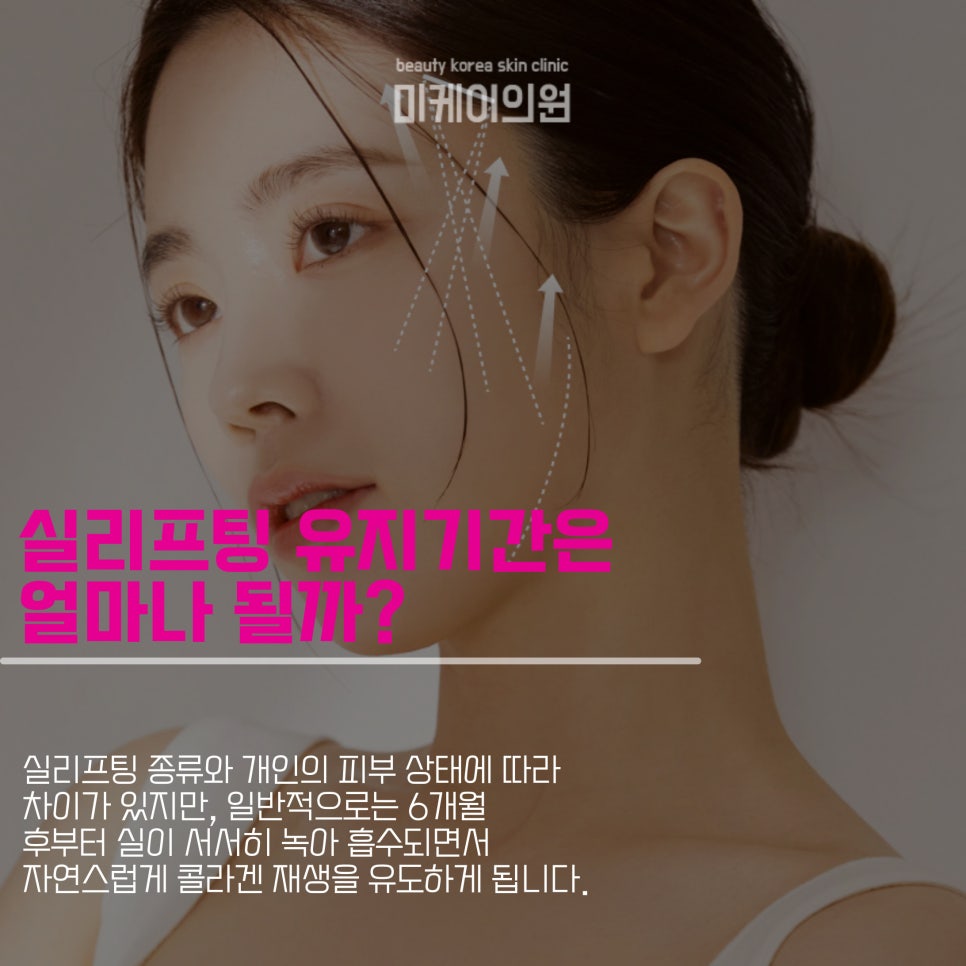
The duration varies depending on the type of thread lifting and the individual’s skin condition, but in general, after about 6 months, the threads gradually dissolve and are absorbed, naturally inducing collagen regeneration.
The effects of thread lifting usually last from 6 months to 2 years.
The duration varies depending on the type of thread lifting and the individual’s skin condition, but in general, after about 6 months, the threads gradually dissolve and are absorbed, naturally inducing collagen regeneration.
However, to maintain the lifting effect for a long time, regular procedures and consistent skin care are essential.
If your body temperature rises, inflammation may occur or it may affect the process of the threads settling in, and until the threads are fully settled, it is best not to rub the face strongly or apply pressure.
Also, smoking and drinking can reduce skin elasticity and diminish the effects of thread lifting.
Above all, sleeping face down or only on one side may shift the position of the threads, so it is best to sleep on your back.
Important Precautions You Should Know

It is best to avoid skin care treatments that involve massage or strong pressure for at least one month, drink plenty of water to help collagen production, and avoid alcohol after the procedure.
If this is your first time getting thread lifting, there are a few precautions to keep in mind.
For 1 to 2 weeks after the procedure, it is best to avoid excessive facial expressions.
It is best to avoid skin care treatments that involve massage or strong pressure for at least one month, drink plenty of water to help collagen production, and avoid alcohol after the procedure.
Also, if the skin becomes dry, elasticity decreases, so be sure to provide enough moisture and apply sunscreen.
In addition, combining the procedure with fillers to restore facial volume or Botox to relax muscles can improve the results even more.
The care method may vary depending on the type of thread lifting, so for more accurate information, please consult a medical professional.
Types of Thread Lifting
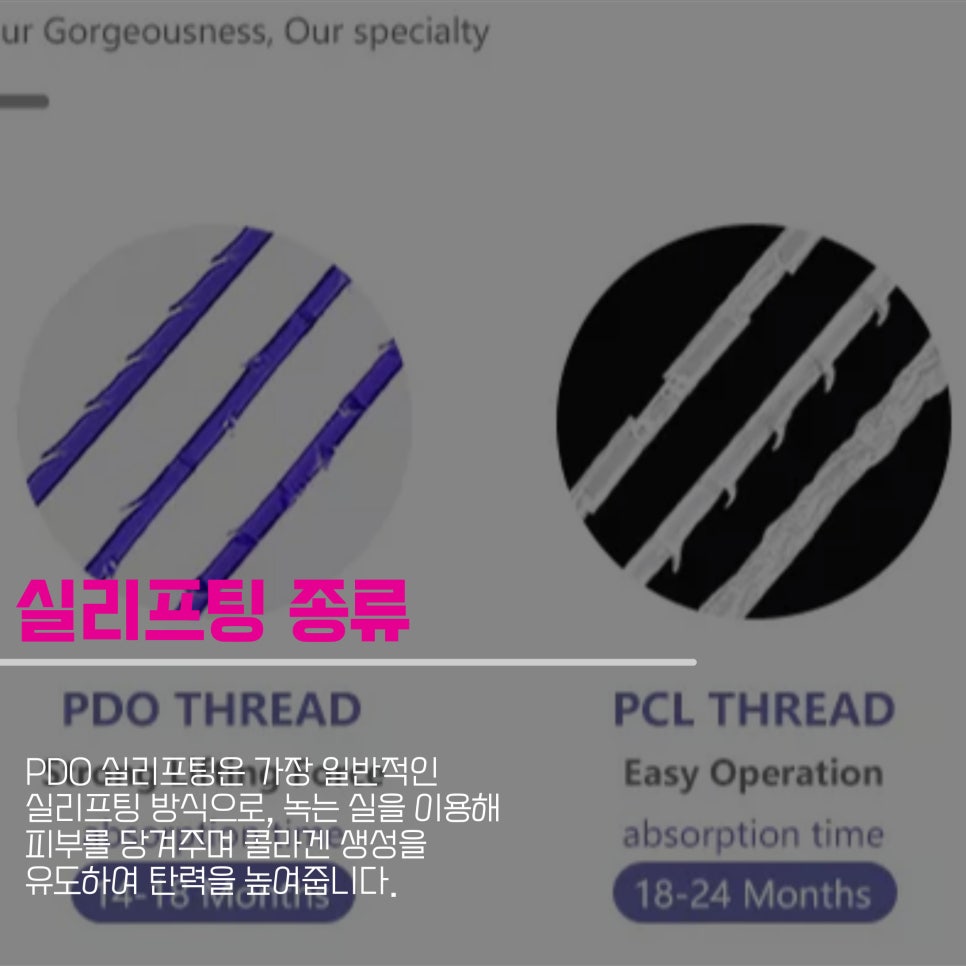
PDO thread lifting is the most common type of thread lifting. It uses dissolvable threads to pull the skin and stimulate collagen production, improving elasticity.
There are more types of thread lifting than you might think, and they can be selected according to skin condition and the desired effect.
PDO thread lifting is the most common type of thread lifting. It uses dissolvable threads to pull the skin and stimulate collagen production, improving elasticity.
PLA thread lifting contains PLLA (polylactic acid), which helps skin regeneration and its effects last relatively long.
APTOS thread lifting uses special barbed threads to strongly pull sagging skin.
Cog thread lifting uses threads with barbs (cogs) on the surface to more firmly lift the skin, and you can expect an immediate lifting effect.
If You Want a Natural Change
Depending on your individual skin condition, it is important to choose the appropriate type of thread lifting and receive customized care.
Thread lifting is a non-surgical procedure that improves facial shape and creates a more youthful appearance, with the advantages of fast results and quick recovery.
However, depending on your individual skin condition, it is important to choose the appropriate type of thread lifting and receive customized care.
Through 충분한 consultation with an expert, choose the method that is best suited to you!