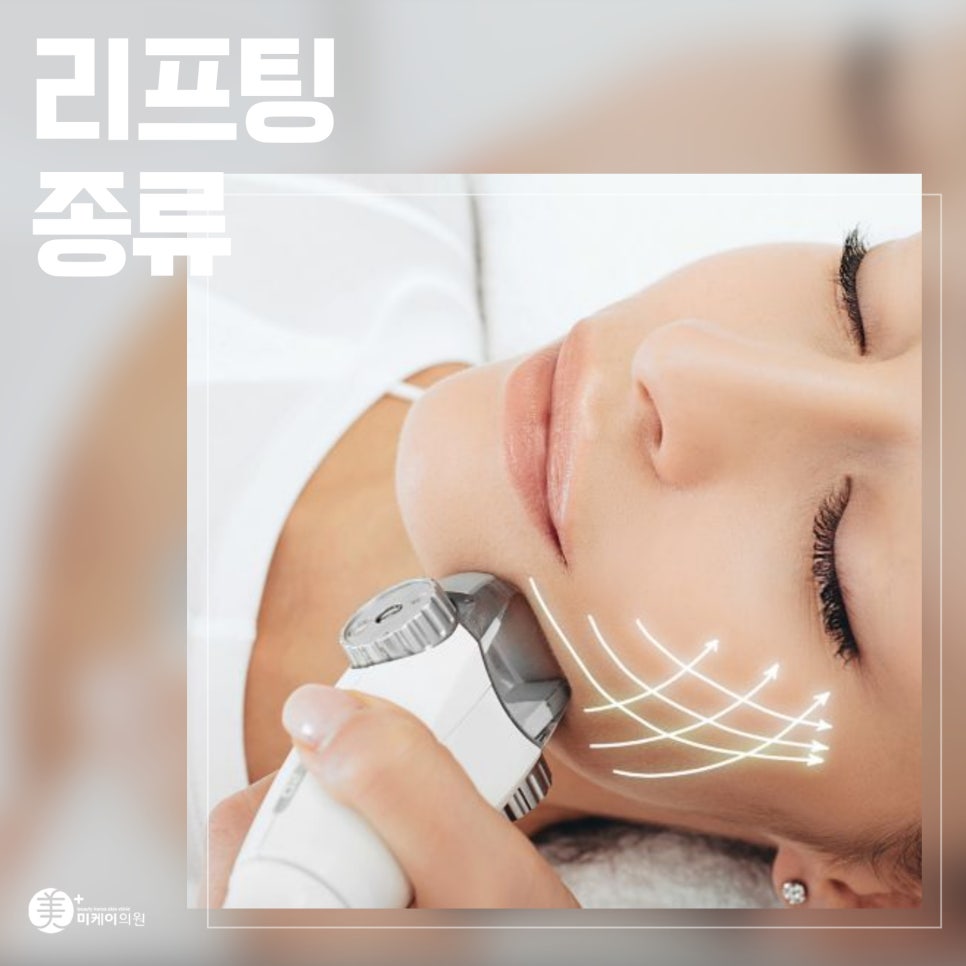
Many people want to regain
the elasticity and youthfulness of their skin.
These days, as various lifting methods have emerged
to improve skin sagging and
increase firmness,
it has become possible to choose a customized procedure
depending on an individual’s skin condition or goals.
Basically, lifting can be broadly divided into non-surgical methods and
surgical methods, and among non-surgical methods,
there are various approaches such as
ultrasound, radiofrequency, laser, and thread lifting.
Because each method uses different technology and
procedure techniques,
it is important to choose while considering
your skin condition, the degree of improvement you want,
and your recovery period.
Today, let’s take a closer look at
these different types of lifting one by one.
Boosting elasticity with ultrasound lifting
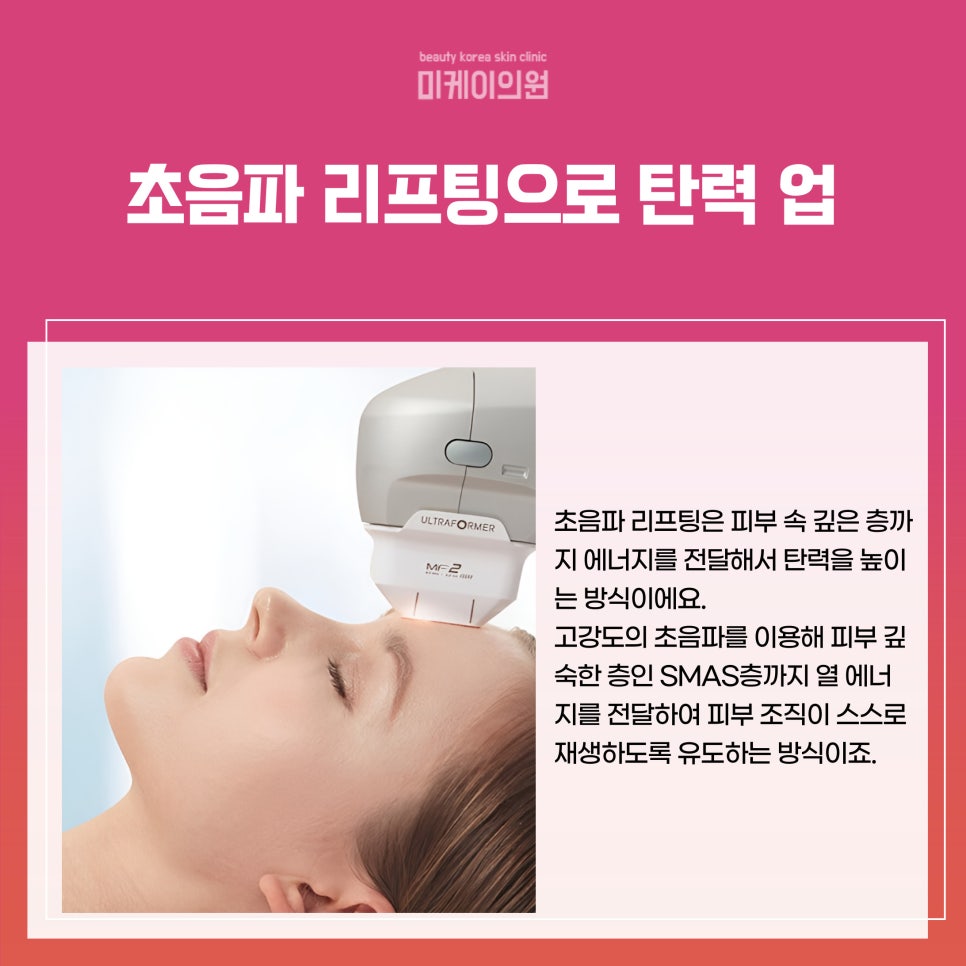
Ultrasound lifting is a method that
delivers energy deep into the skin
to improve elasticity.
It uses high-intensity ultrasound
to deliver thermal energy
to the SMAS layer, the deep layer of the skin,
and encourages the skin tissue
to regenerate on its own.
Compared with other lifting types,
this method causes less surface damage to the skin, and it is characterized by the fact that
a lifting sensation can be felt immediately after the procedure.
In addition, as time passes,
collagen is naturally produced,
so you can feel the skin gradually becoming firmer.
It is often chosen by people in their 30s and 40s,
when skin sagging begins, but these days it is also one of the lifting options preferred by people in their 20s who want to start taking care of skin elasticity quickly.
Soft and firm with radiofrequency lifting
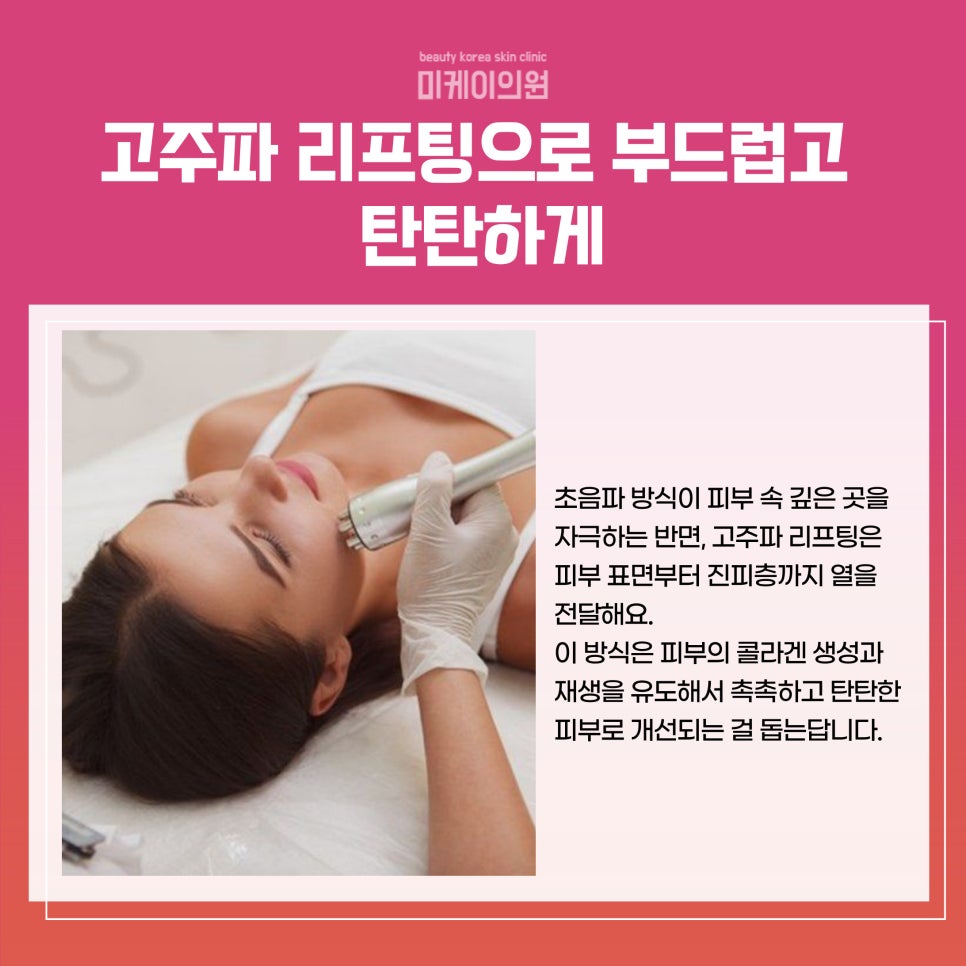
While ultrasound methods stimulate the deep layers of the skin,
radiofrequency lifting delivers heat from the skin surface
to the dermis.
This method helps improve the skin by inducing collagen production and regeneration,
resulting in moisturized and firm skin.
Radiofrequency lifting can especially help improve the texture of the skin surface,
so it is recommended for those who want to improve not only elasticity but also skin texture.
Like ultrasound lifting, you may feel a tightening sensation immediately after the procedure, but as time passes,
the skin appears even more elastic.
The warm sensation is relatively gentle, which also makes the procedure feel less burdensome.
Firming sagging areas with thread lifting
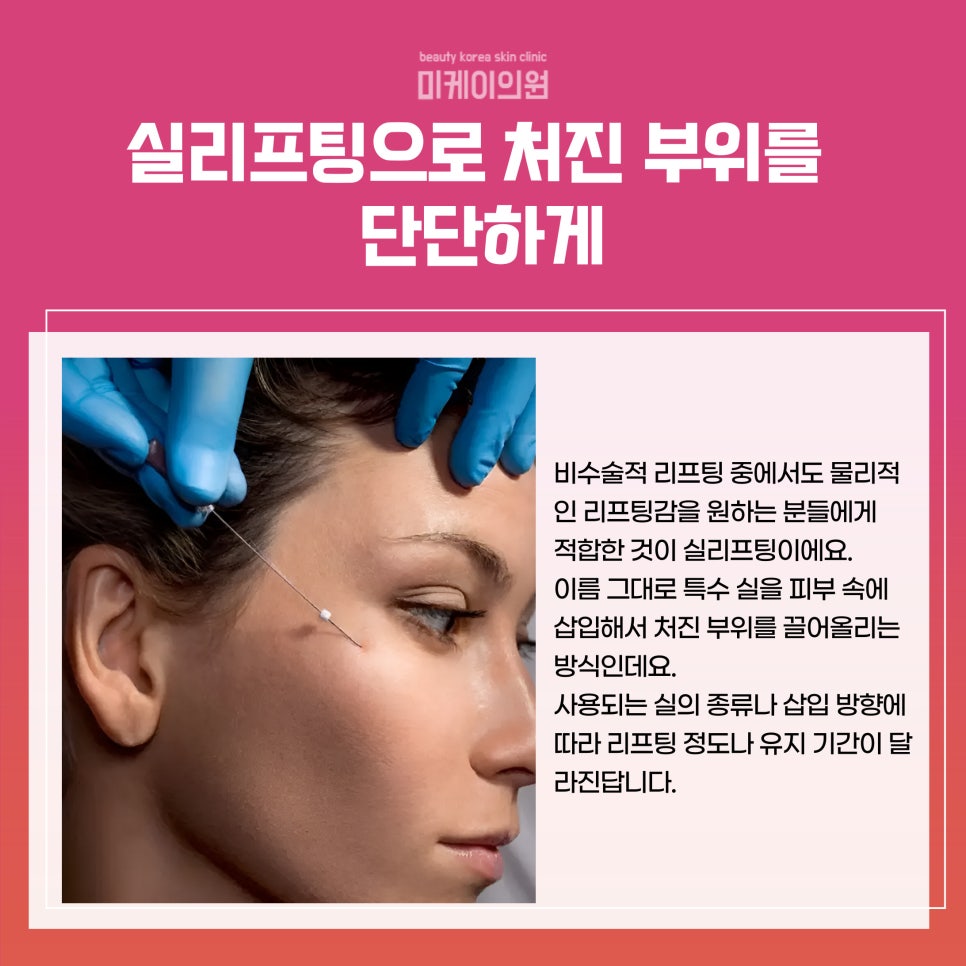
Among non-surgical lifting methods,
thread lifting is suitable for those who want a more physical lifting sensation.
As the name suggests, special threads are inserted into the skin
to lift sagging areas.
Depending on the type of thread used and the direction of insertion,
the degree of lifting and the duration of the effect can vary.
Compared with other lifting types,
thread lifting is characterized by the fact that you can feel an immediate improvement more strongly.
It is often used on noticeable areas such as the jawline, cheeks, and nasolabial folds, and can last longer when combined with other device-based lifting procedures.
Of course, bruising or swelling may occur after the procedure, but these usually recover naturally over time,
and the threads inside the skin are gradually absorbed.
In other words, thread lifting can be seen as a lifting method that improves skin sagging through physical support.
Precisely targeting skin layers with laser lifting
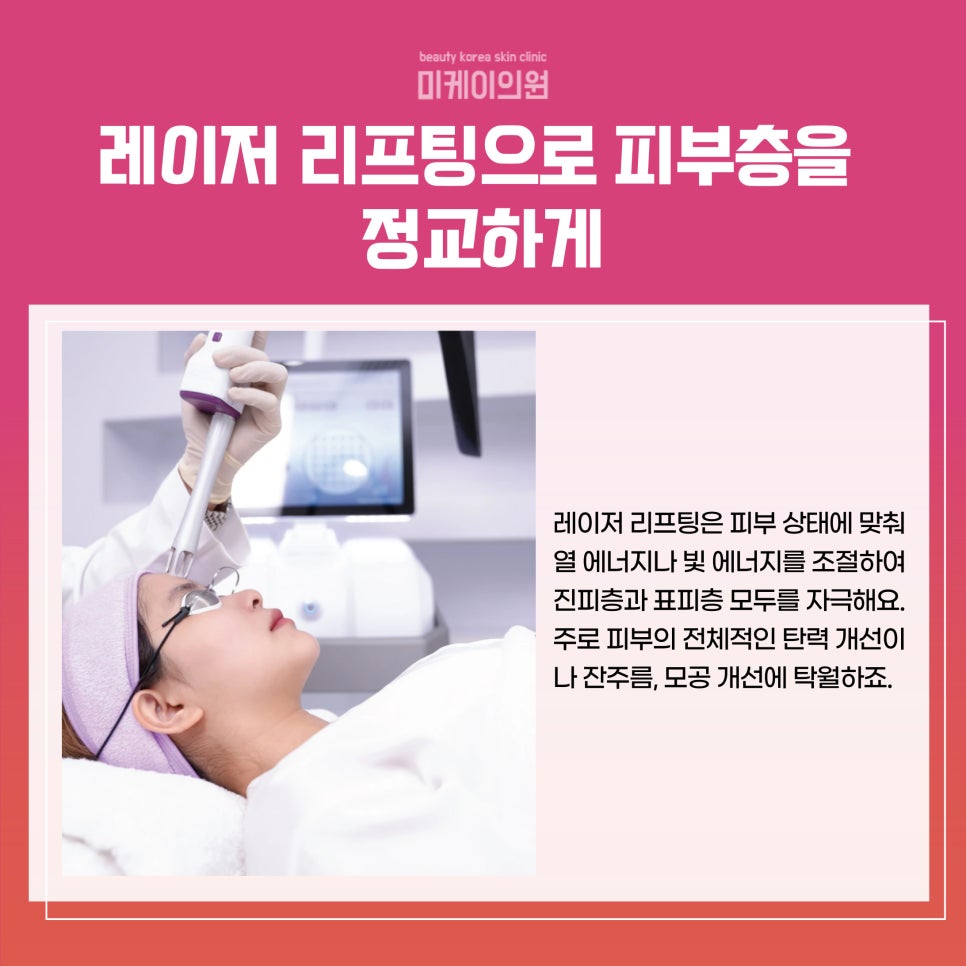
Lifting methods that use a variety of laser devices
are also drawing a lot of attention these days.
Laser lifting adjusts thermal energy or light energy according to the skin condition
to stimulate both the dermis and epidermis.
It is mainly excellent for improving overall skin elasticity,
fine lines, and pores.
In particular, because it can also help improve skin tone,
it is preferred by people who want to improve not just elasticity
but the overall condition of their skin.
Since lifting varies in intensity and penetration depth depending on the type,
it is best to receive enough consultation before the procedure and choose the lifting method that suits your skin.
Synergy with combination lifting
Lastly, many people do not limit themselves to just one type of lifting,
but instead manage their skin by combining several methods.
For example, they may use ultrasound lifting to treat deeper layers,
radiofrequency lifting to firm the skin surface,
or thread lifting to address sagging in specific areas.
This kind of combination lifting is characterized by the ability to make good use of the strengths of each lifting method
while compensating for their weaknesses.
Of course, the number of procedures and the cost may be a little higher,
but satisfaction is high because customized care is possible for each desired area.