Seasonal transitions are a time when the temperature difference between day and night is large and dry winds blow,
making the skin easily sensitive.
In particular, during the seasonal change between summer and winter,
the skin barrier weakens, making it easy for skin problems or
dryness to occur.
At times like this, more careful seasonal skin care is needed than usual.
In dermatology clinics, along with customized care tailored to each person’s skin condition,
various procedures are performed that can be combined with hydration and soothing treatment.
These can help restore the skin’s elasticity and moisture,
which may be lacking with basic care alone.
Especially for skin with severe dryness, even small stimuli can
cause sensitive reactions, so
consistent care and
systematic procedures during seasonal transitions make a big difference.
Moisture Completed Through Procedures
The most important thing in seasonal skin care is
maintaining moisture.
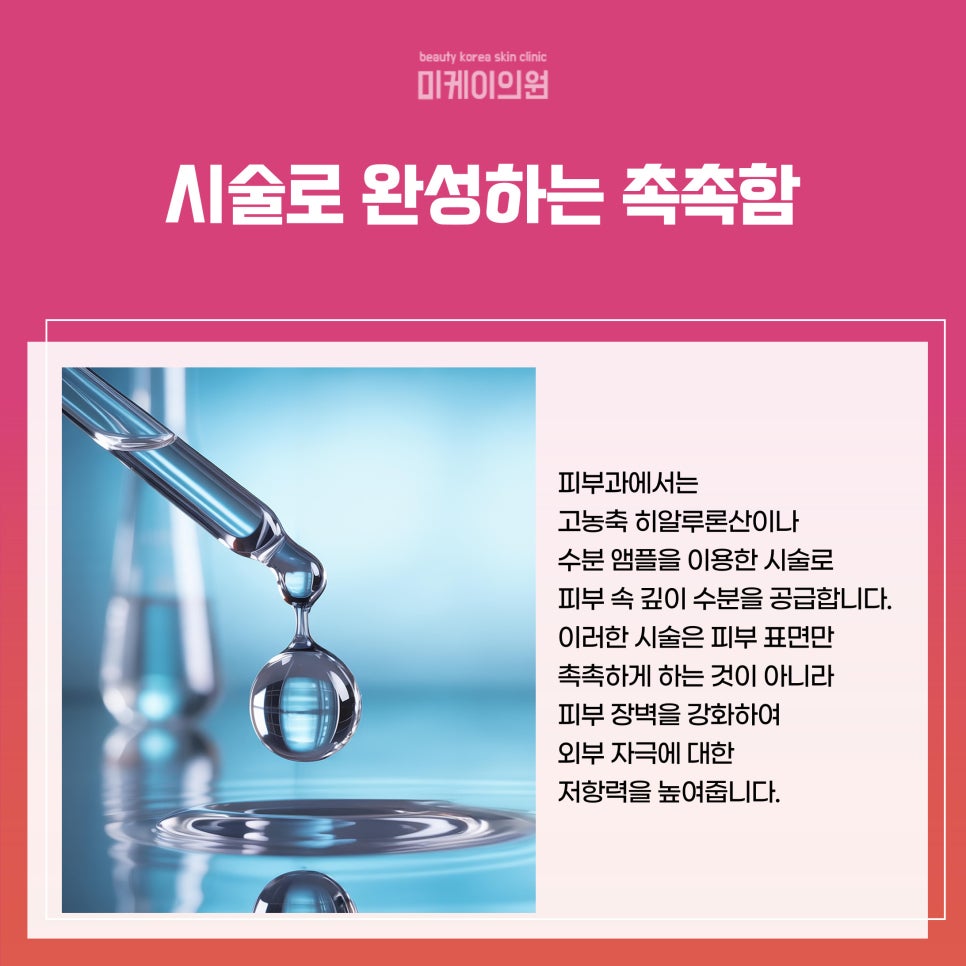
In dermatology clinics, procedures using high-concentration hyaluronic acid or
moisturizing ampoules
deliver hydration deep into the skin.
These procedures do not just make the skin surface
moist,
but also strengthen the skin barrier,
increasing resistance to external irritants.
In addition, dead skin cells and roughness caused by lack of moisture are
improved, leaving the skin texture much softer,
and helping makeup adhere better.
Unlike simple moisturizing at home, dermatology procedures can provide
focused care even in deeper layers,
helping maintain healthy skin during seasonal changes.
Soothing Care for Sensitive Skin
Another important point in seasonal skin care is soothing sensitive skin.
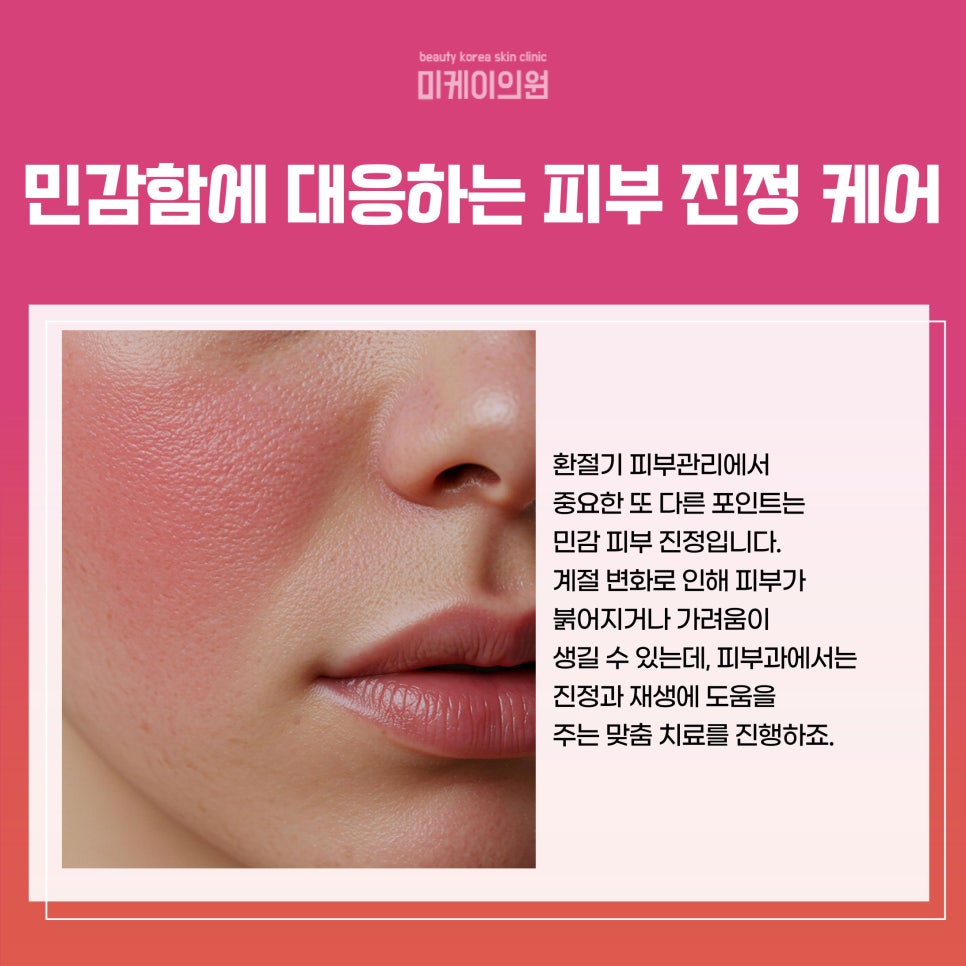
Due to changes in the season, the skin may become red or
itchy, and dermatology clinics provide customized treatments that help with soothing and
recovery.
For example, soothing masks or low-irritation laser
procedures help minimize skin damage while
supporting recovery.
If sensitivity repeats, the skin barrier can weaken
over the long term, so
early care is important.
These procedures are not just temporary soothing,
but help restore the skin’s fundamental health,
allowing you to maintain comfortable skin even during seasonal changes.
Customized Care That Also Addresses Skin Tone and Elasticity
Seasonal skin care should include not only moisture and soothing,
but also improvements in skin tone and elasticity.
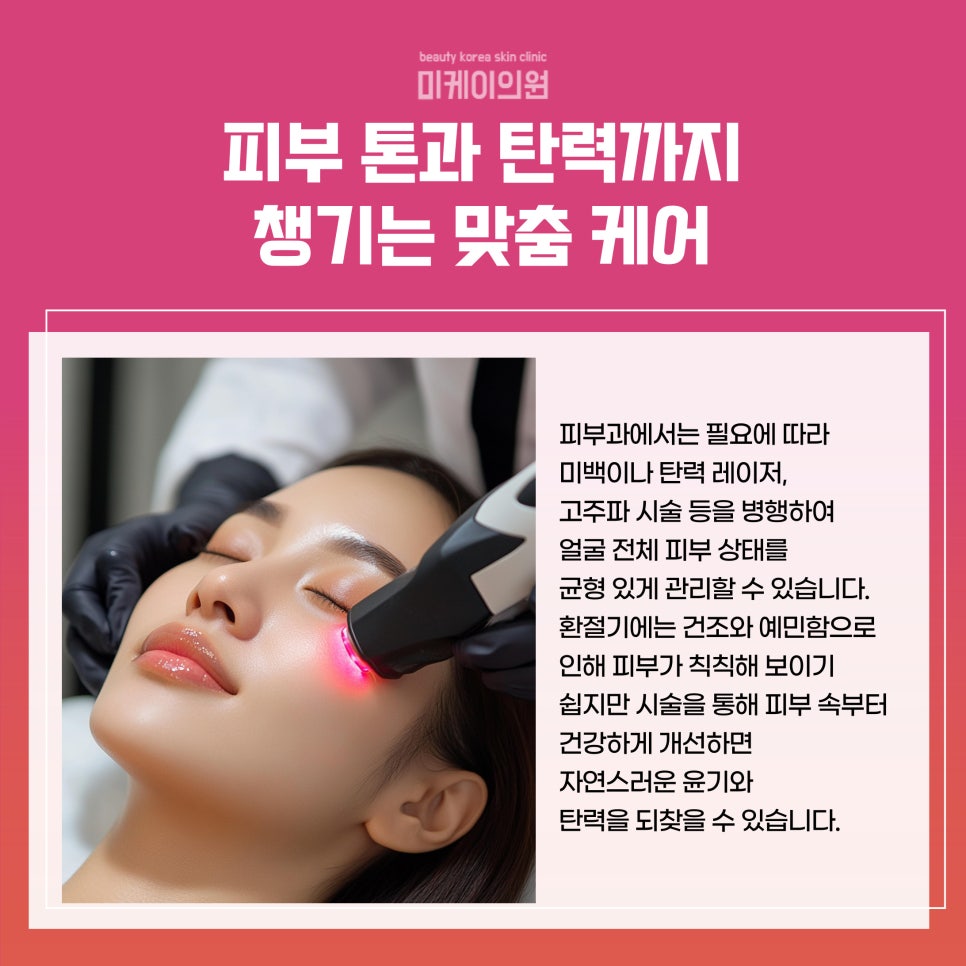
Depending on the need, dermatology clinics may combine whitening treatments or
elasticity lasers, radiofrequency procedures, and other treatments to
manage the overall condition of the facial skin
in a balanced way.
During seasonal transitions, dryness and sensitivity can make
the skin look dull, but
if it is improved from within through procedures,
natural glow and elasticity can be restored.
This kind of customized care not only
improves the skin in the short term,
but also helps maintain it consistently throughout the seasonal transition.
In addition, when skin tone and elasticity are well managed,
makeup applies more smoothly,
and you can expect the skin to become
less sensitive to external irritants.
A Procedure Plan Combined with Daily Care
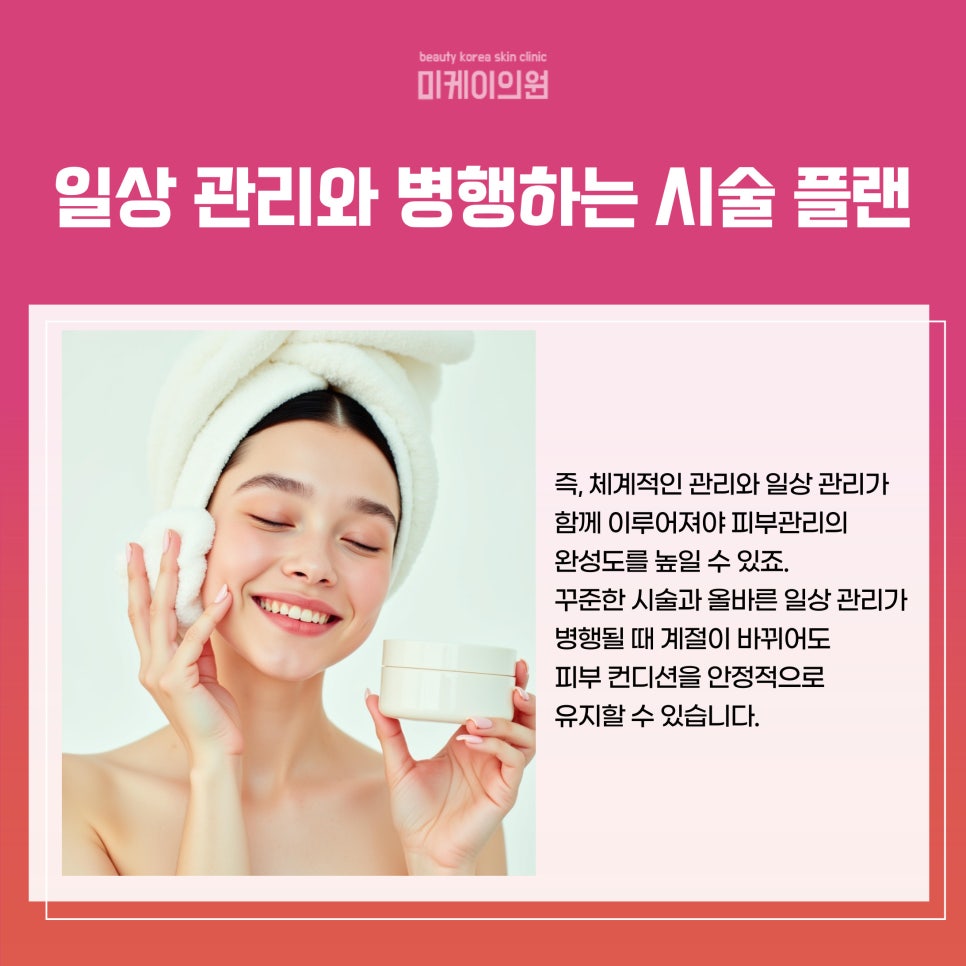
Seasonal skin care does not end completely with dermatology procedures alone.
To see even greater results, they should be combined with basic care at home.
For example, after receiving a hydration procedure at a dermatology clinic,
using low-irritation creams and serums suited to your skin condition can improve moisture retention,
and the soothing effect lasts longer.
In addition, maintaining adequate water intake in daily life and
using a non-irritating cleansing routine maximizes the results of the procedure.
In other words, systematic care and daily care
must be carried out together to improve the overall quality of skin care.
When regular procedures and proper daily care are combined,
you can stably maintain your skin condition even as the seasons change.
The Changes in Seasonal Skin Created by Consistency

Seasonal skin care is not something that ends in the short term;
consistency is the key.
Through regular visits to the dermatology clinic and customized procedures,
the skin barrier should be strengthened, and moisture and soothing
should be managed continuously.
During periods of major seasonal change, one session of care may
not be enough, but by stabilizing the skin condition through consistent care,
you can prevent breakouts and
dryness.
If you build a systematic care routine during seasonal transitions,
you can maintain healthy, moist skin
even as the seasons change, and also keep its natural glow and
elasticity.