As we age, skin elasticity gradually decreases,
and sagging can become noticeably more visible.
To help ease these changes,
many people are turning to thread lifting.
Thread lifting is a procedure that inserts medical threads into the skin
to lift sagging tissue
and stimulate collagen production.
As time passes, lifting and improved elasticity
appear naturally.
If you understand the differences among thread lifting types,
you can choose according to your skin condition and goals.
If it is performed in a way that suits you,
you can expect a more natural and longer-lasting change.
Understanding the Differences in Various Thread Lifting Types
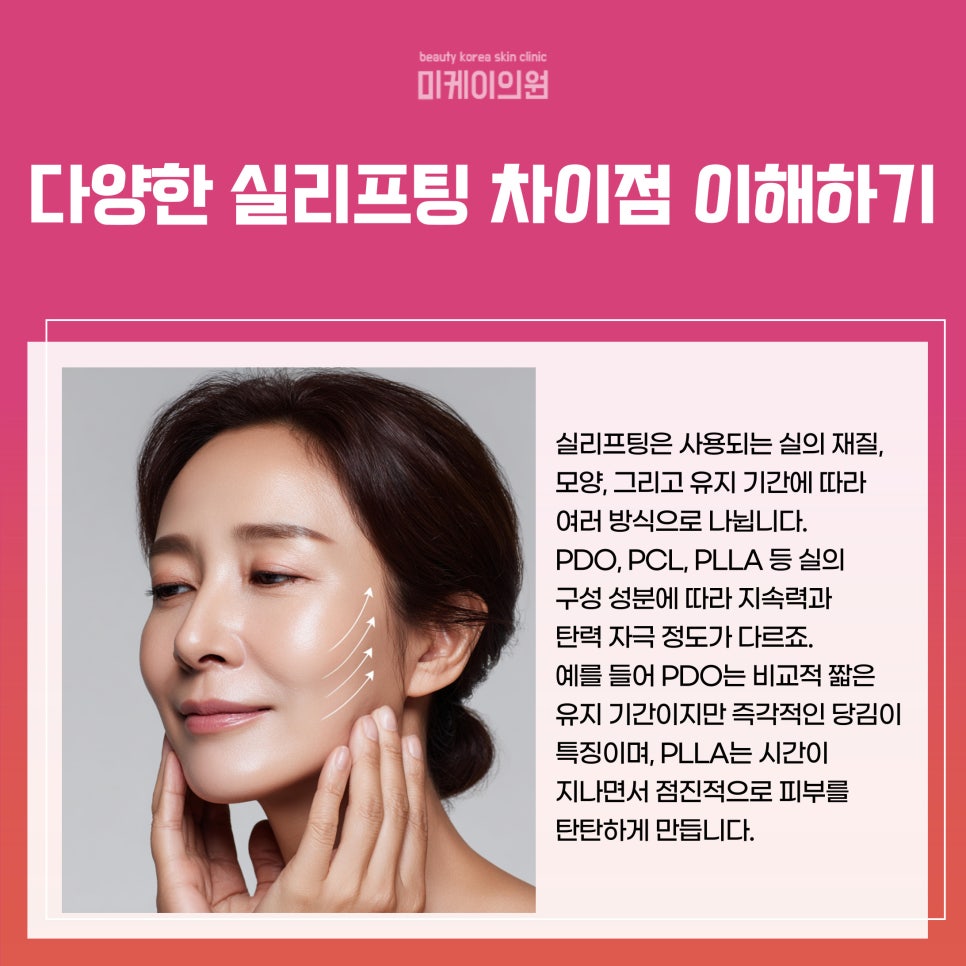
Thread lifting is divided into several methods depending on the material,
shape, and duration of the threads used.
Depending on the composition of the thread, such as PDO, PCL, and PLLA,
the duration and degree of elasticity stimulation differ.
For example, PDO has a relatively short duration,
but is characterized by an immediate tightening effect,
while PLLA gradually firms the skin over time.
Once you understand the differences among thread lifting types,
you can look beyond simply the idea of “lifting”
and choose what fits your skin thickness and elasticity condition.
The structure of the thread is also important.
Depending on the shape, such as barbed, spiral, or smooth threads,
the direction and strength of the lift differ.
Properly understanding the characteristics of each thread
is the first step toward a satisfying result.
Lifting Techniques That Emphasize Naturalness
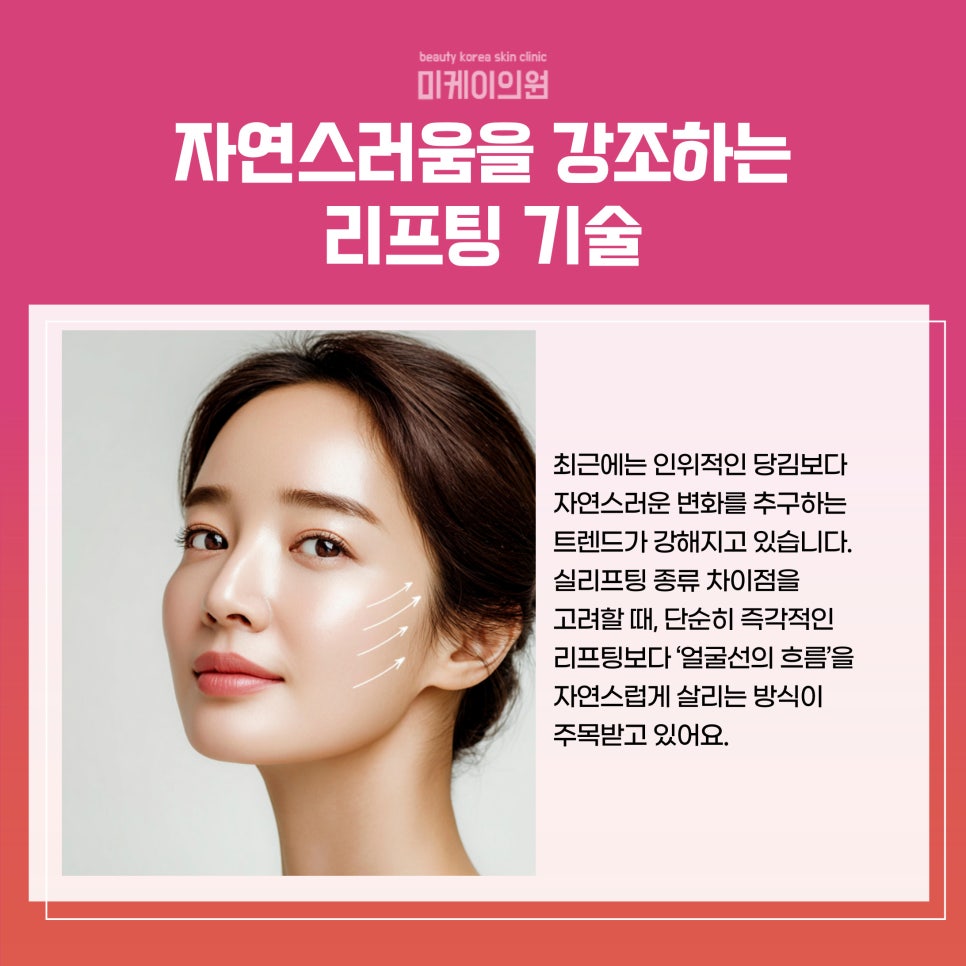
Recently, the trend has been shifting toward
pursuing natural changes rather than an artificial pull.
When considering the differences among thread lifting types,
a method that naturally brings out the flow of the facial line
is drawing attention more than simply an immediate lift.
If only a specific area is pulled strongly,
it may look better at first, but over time
it can create an unnatural impression.
Therefore, during the procedure, it is important to consider the overall balance of the face
and carefully adjust the direction and depth of the threads.
This approach allows the lift to flow more smoothly,
with less awkwardness even during facial expressions.
In other words, naturalness is now
a core value of thread lifting.
The Importance of Longevity and Care
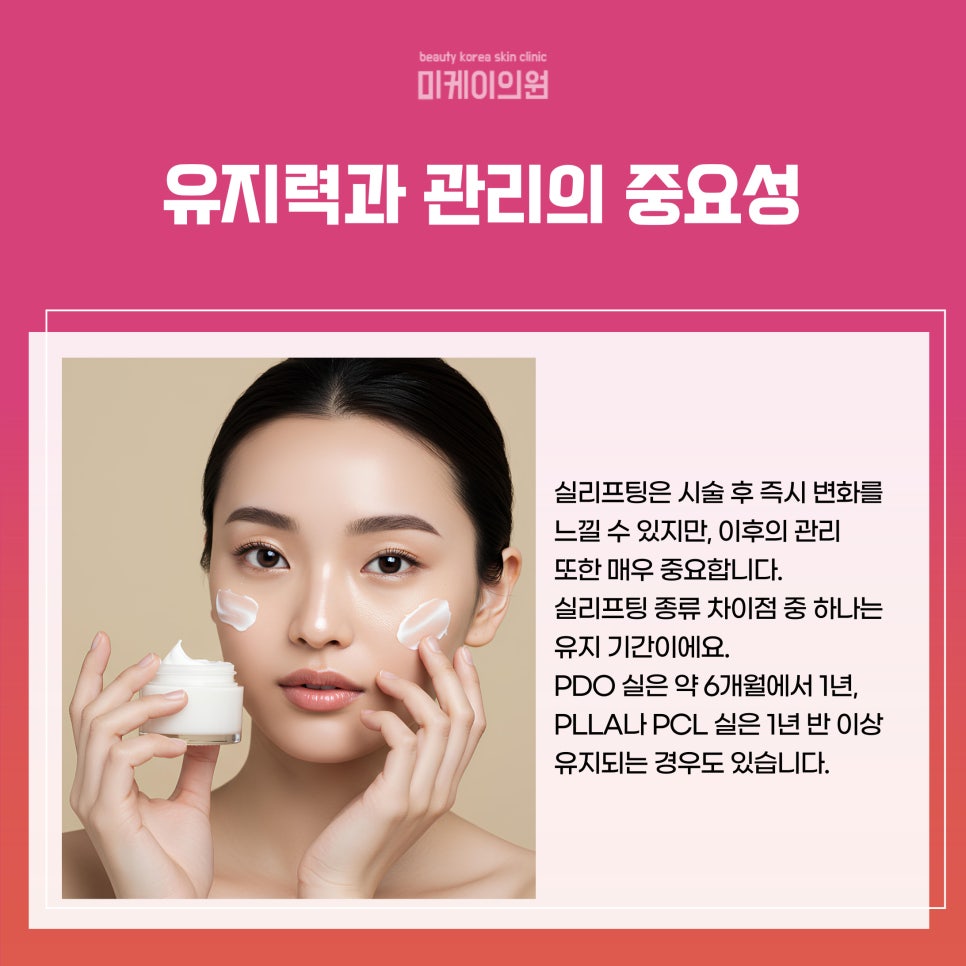
Thread lifting can produce immediate changes after the procedure,
but post-procedure care is also very important.
One of the differences among thread lifting types
is the duration of effect.
PDO threads generally last about 6 months to 1 year, while PLLA or PCL threads
can sometimes last more than 1.5 years.
Right after the procedure, swelling or a pulling sensation may be felt,
but these are temporary reactions and usually subside naturally within a few days.
However, the duration can vary depending on an individual's skin condition,
lifestyle habits, and care methods.
During periods when skin elasticity has decreased,
it can also be helpful to combine the procedure with care programs
that support collagen production.
After the procedure, it may be necessary to avoid excessive facial massage
or intense exercise, and moisturizing care for skin soothing may also be needed.
Only when post-procedure care is continued properly
can satisfactory lifting results be maintained for a longer time.
A Customized Choice That Suits You
Everyone has a different face shape and skin condition.
Therefore, after fully understanding the differences among thread lifting types,
it is important to plan a customized procedure that suits you.
For example, if lifting across the entire face is needed,
a thread with strong fixation may be chosen,
while if the focus is on improving elasticity,
threads that help collagen production may be selected.
In this way, strategically combining threads according to the purpose
can lead to natural and harmonious results.
In addition, rather than changing everything with a single procedure,
a gradual approach to improvement may be less burdensome.
With consistent care, it is possible to maintain a firmer
and brighter impression.
If You Are Considering Thread Lifting
A lifting procedure is not simply a process of removing wrinkles,
but a process of finding a natural harmony that suits you.
If you approach it with a good understanding of the differences among thread lifting types,
your satisfaction after the procedure will be much higher.
What matters most is not unrealistic expectations,
but understanding your current skin condition
and being willing to accept gradual changes.
In addition, sufficient consultation and planning before the procedure
can help prevent unnecessary side effects.
Thread lifting is a good way to restore skin elasticity
while naturally bringing back one’s own beauty.
Consistent care and careful choices
help maintain that change for a longer time.