Thread lifting is one of the procedures considered when you want to gradually improve sagging skin contours or reduced elasticity.
Using threads to pull up the skin tissue,
the method may vary depending on each person’s facial structure and skin thickness.
At a clinic near Gangnam Station for thread lifting,
it is important not just to insert threads
but first to identify which areas of the skin have lost support.
Rather than expecting only an immediate change,
thread lifting often aims for a process in which the skin’s own elasticity is gradually restored over time.
This is because taking into account personal lifestyle habits, skin condition, and recovery speed can help bring the result closer to a natural look.
Understanding How Thread Lifting Works
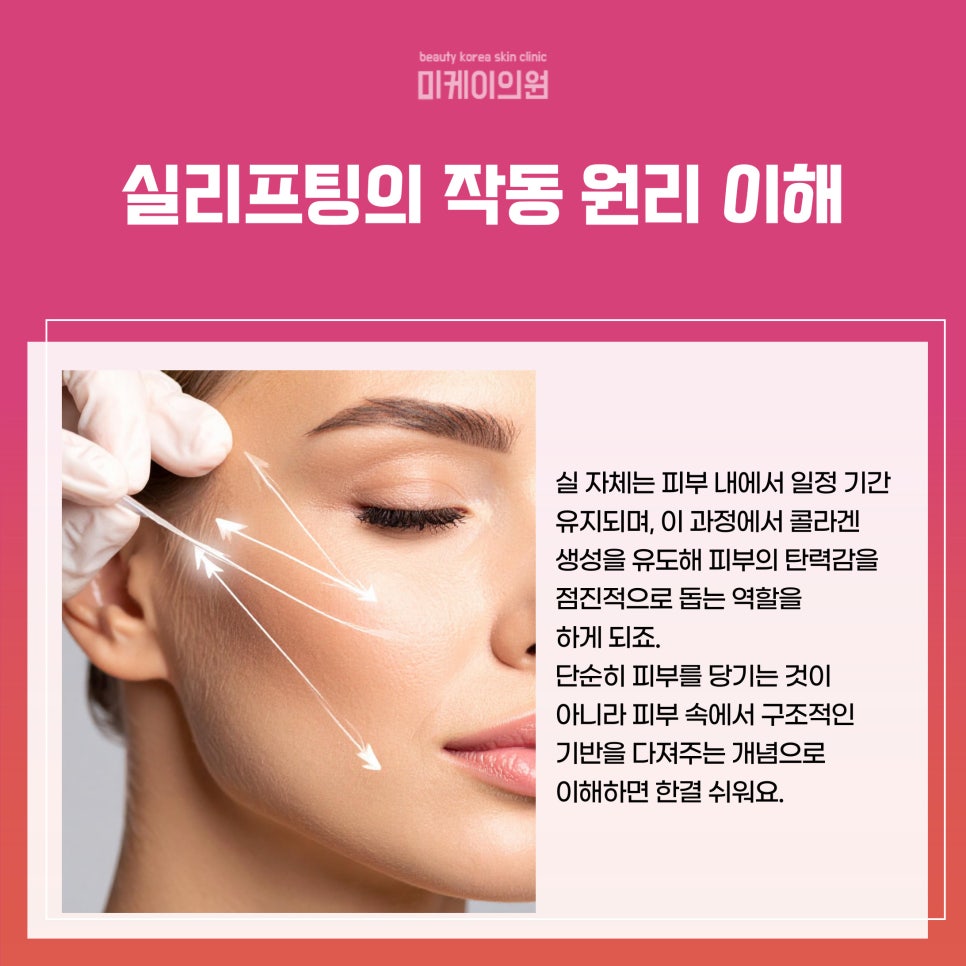
At a clinic near Gangnam Station, thread lifting is performed by inserting special threads under the skin
and pulling up sagging tissue to refine the contour.
The threads remain in the skin for a certain period,
and during that time they help induce collagen production,
which gradually supports skin elasticity.
It is easier to understand if you think of it not simply as pulling the skin,
but as strengthening the structural foundation within the skin.
There are dissolvable threads and threads that remain in place for a certain period,
and each has different advantages and a different lasting feel.
In general, the goal is to improve while maintaining a natural line.
Differences by Thread Type
The threads used for thread lifting differ in shape, thickness,
and how long they last.
At a clinic near Gangnam Station for thread lifting,
after understanding the characteristics of various threads such as PDO, PLLA, and PCL,
they help each person choose the most suitable option.
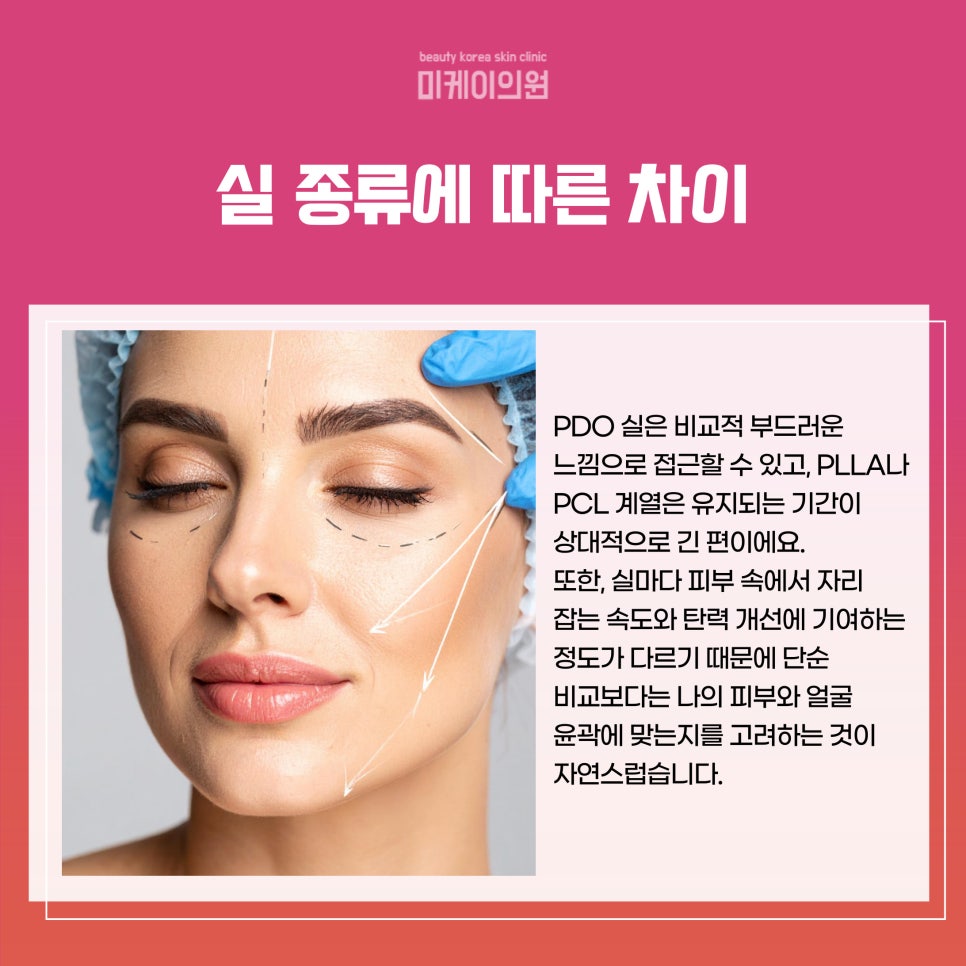
For example, PDO threads can be approached with a relatively softer feel, while PLLA or PCL types tend to last longer.
Also, because each thread settles into the skin at a different rate
and contributes differently to improving elasticity,
it is more natural to consider whether it suits your skin and facial contours rather than making a simple comparison.
Points to Consider During the Procedure
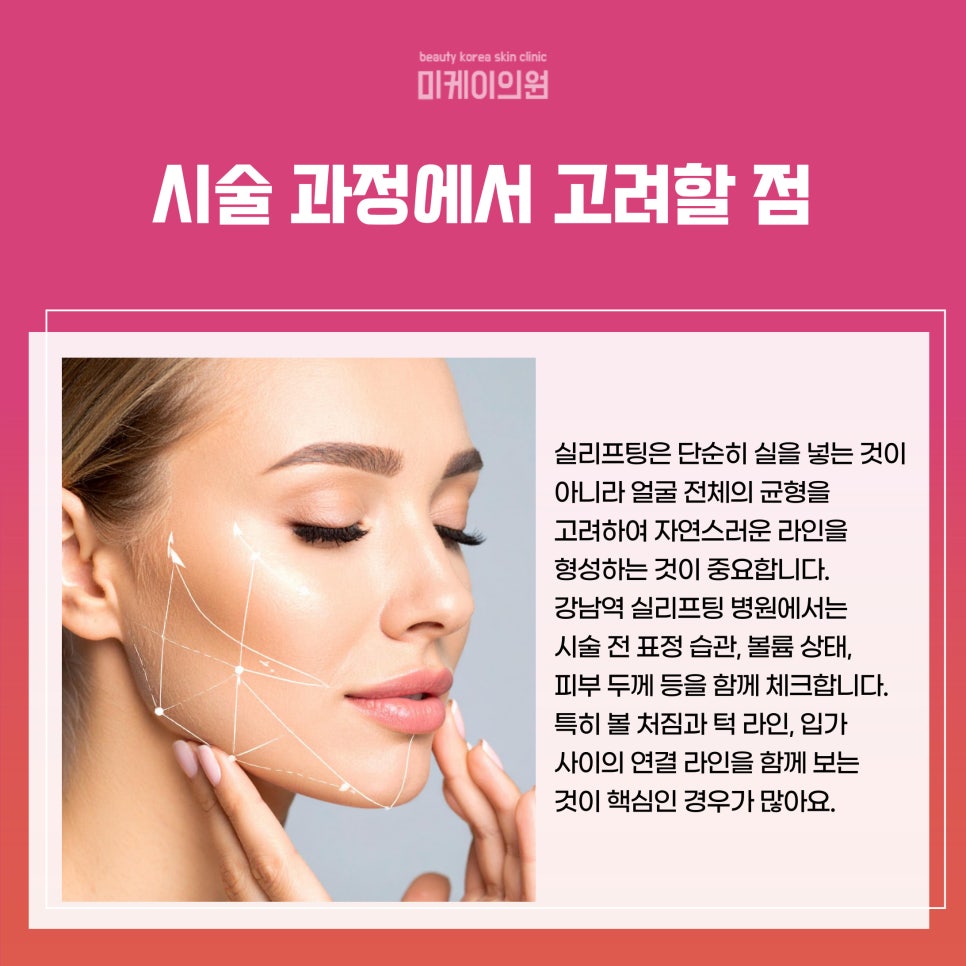
Thread lifting is not simply about inserting threads;
it is important to create a natural line while considering the overall balance of the face.
At a clinic near Gangnam Station for thread lifting, facial expression habits, volume status, and skin thickness are checked together before the procedure.
In particular, it is often key to look at the connection between sagging cheeks, the jawline, and the area around the mouth.
There may be an immediate feeling of tightness after the procedure,
but it takes time for the skin to settle.
Depending on individual recovery speed, there may be slight soreness or tightness,
which is explained as a normal adjustment process.
For reference, after the procedure, it helps to avoid strong facial massages or excessive use of facial muscles.
The Importance of Post-Procedure Care

Post-procedure care plays a major role in maintaining the results
and supporting a comfortable recovery.
At a clinic near Gangnam Station for thread lifting,
advice about posture and sleeping habits for the first few days after the procedure may be provided.
For example, a habit of sleeping on your side can place stress on the pulled thread structure,
so sleeping on your back may be more appropriate at first.
Strong heat stimulation to the treatment area or intense exercise may temporarily cause swelling or tightness,
so adjustment is needed.
It is also important to understand that the recovery process differs from person to person.
You should not become impatient.
Changes That Continue with Consistency

It is good to understand that thread lifting is a procedure in which changes appear naturally over time.
When setting the direction of care at a clinic near Gangnam Station for thread lifting,
rather than focusing on a one-time procedure,
the flow of maintaining the facial line over the long term is often considered.
Rather than expecting all changes from a single procedure,
it is necessary to check how the skin gradually settles.
By checking the condition at regular intervals,
you can maintain the lifting effect relatively steadily.
Also, since personal lifestyle habits, body type, and skin elasticity can affect the results,
it is natural to pay attention to daily care as well.
In the end, thread lifting can be seen as a process of refining one’s facial line in a more comfortable and natural way.