Types and Causes of Obsessive-Compulsive Disorder Symptoms, and
How to Improve Them
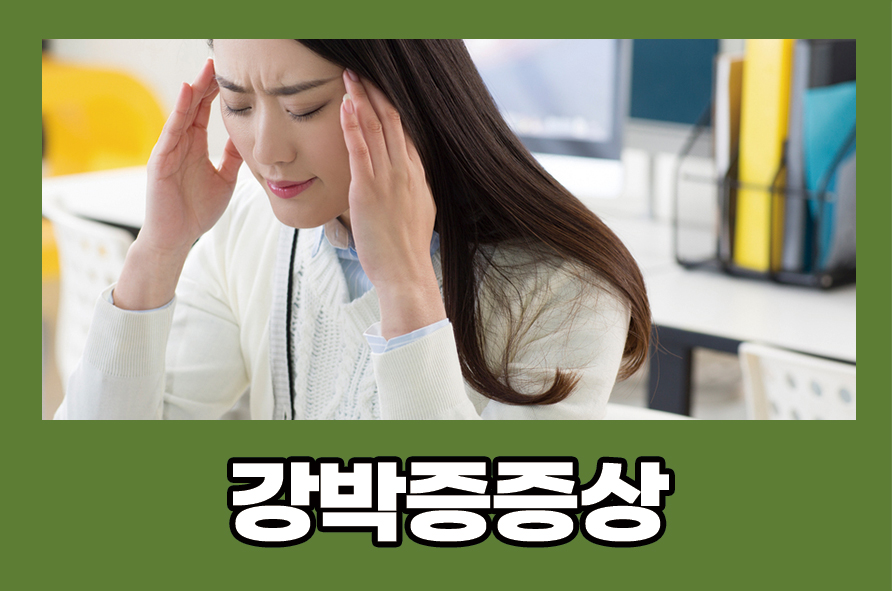
When going out, even if you have properly locked the gas valve and the door,
you may still feel as if you did not lock them and keep checking, becoming
anxious.
If this behavior is repeated excessively, it can interfere with relationships
and daily life, and if the symptoms become severe, you may suspect an
obsessive-compulsive disorder.
Today, we will look at what causes obsessive-compulsive disorder,
the symptoms by type, and how to treat and
improve the symptoms.

In the case of obsessive-compulsive disorder, it can largely be divided into
obsessive thoughts and compulsive behaviors, and if these continue
regardless of your will, they can cause discomfort in daily life.
Obsessive thoughts refer to repeatedly having the same thought come up,
even though you recognize it as irrational or strange, without being able to
control it normally.
Compulsive behaviors are repetitive actions performed to escape these
obsessive thoughts, such as becoming excessively fixated on cleaning the
indoors or washing your hands dozens of times a day.

Obsessive-compulsive disorder is known to be caused by psychological and
biological factors, and symptoms may be triggered by tension and stress.
As for biological causes, there are problems with brain function. If the
activity of the caudate nucleus, which controls thinking and behavior, and
the orbitofrontal cortex, which perceives fear and danger, is abnormal,
symptoms can occur.
In the case of obsessive-compulsive disorder, the symptoms vary depending
on the type. First, if you have checking obsessions, you repeatedly check
whether you have done something properly.

For example, you may constantly check whether the door was properly
closed, whether the lights were properly turned off, whether there are any
typographical errors in your work, or whether an assignment was submitted
properly.
Symptoms of contamination obsessions include being excessively sensitive
to neatness and unable to tolerate dirt, perceiving it at a level of fear or
distress.
Because of this, they may be unable to tolerate getting dirty, wash their
body dozens of times, or repeatedly clean spaces, showing such symptoms.

If you have hoarding obsessions, you feel fear and anxiety about throwing
things away, so you cannot discard items and end up storing them.
It is common not to be able to throw away books, clothes, and newspapers,
and situations can arise in which used tissues or other trash cannot be
discarded, causing the home to turn into something like a garbage dump.
Because symptoms can interfere with daily life if they continue, if you
suspect symptoms, it is important to get examined and improve them through
appropriate treatment.

For the treatment of obsessive-compulsive disorder, cognitive behavioral
treatment and medication for obsessive-compulsive disorder can be used,
and rather than feeling burdened by a long treatment period, it is important
to maintain a positive mindset and receive treatment consistently.
In addition, to improve symptoms, it is good to bring change and vitality to
daily life through ongoing exercise or hobbies along with treatment.
Today, we looked at the causes of obsessive-compulsive disorder, the
symptoms by type, and how to treat and improve the symptoms. I hope the
above was helpful.