About Endometriosis Symptoms, Causes, and
Treatment and Management Methods

If you are a woman of reproductive age, you will have your period once a month,
and at this time, you may experience discomfort accompanied by various symptoms such as menstrual cramps.
The degree of pain varies from person to person, but in severe cases,
it can be accompanied by intense pain that makes daily life difficult.
These menstrual cramps may not simply be caused by menstruation itself,
but may be caused by endometriosis, which is considered one of the major causes of infertility.
Today, we will look at the symptoms of endometriosis, which has been occurring more frequently in young women recently and requires caution, along with its causes, treatment of symptoms, and preventive management methods.
Recently, as the age at marriage has been getting later and menarche has started earlier in many cases, female infertility has been increasing, and a representative cause of female infertility is endometriosis.
The endometrium is the tissue that lines the inside of the uterus, and it is a tissue that thickens and then sheds repeatedly according to the monthly menstrual cycle.
Endometriosis refers to a condition in which endometrial tissue that should only exist inside the uterus develops outside the uterus, such as in the ovaries or fallopian tubes.
If the endometrium settles somewhere other than where it should normally be and takes root outside the uterus, problems with ovulation and fertilization can occur, so active treatment is necessary.
The exact cause of endometriosis is still not clearly known, but early menarche, environmental hormones, and genetic factors are being cited as the main causes.
Endometriosis symptoms can appear in various ways,
with pelvic pain and abnormal symptoms during menstruation being the representative ones.
If you have not had menstrual cramps for several years but suddenly feel severe menstrual pain, you should suspect whether it could be endometriosis.
In addition, pelvic pain that occurs with the start of menstruation or just before menstruation is also one of the symptoms of endometriosis, and dyspareunia may occur.
If you continually feel pain in the pelvis, the pain continues for several days even after menstruation ends, and menstrual pain becomes increasingly severe, you may want to suspect this condition.
If endometriosis is severe, the likelihood of infertility is high because the anatomical structure within the pelvis is altered, interfering with the release, movement, and implantation of eggs.
As such, endometriosis can cause a variety of symptoms, so if you have suspicious symptoms, it is important to get examined and receive appropriate treatment.
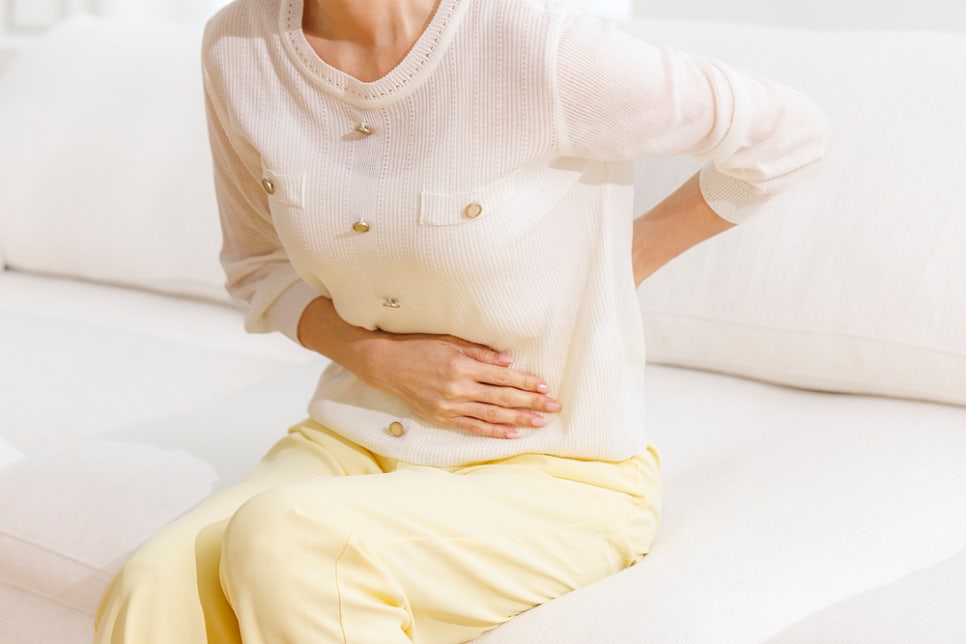
To treat endometriosis, medication therapy to stop menstruation and surgical therapy to remove the diseased areas are mainly used.
It is also important to make efforts to manage symptoms in everyday life. It is best to avoid foods containing female hormones, and it is also advisable to avoid using disposable and plastic containers.
Today, we looked at what symptoms and causes endometriosis has, as well as treatment and management methods for the symptoms. I hope this information was helpful.