How to Quickly Get Rid of a Face Bruise
What Methods Should Be Avoided?

Everyone has probably experienced bruising on some part of the body at least once,
and it usually fades naturally after some time.
Even if a bruise appears on a body part that is not very visible, it may be less concerning, but if a bruise occurs on the face, where it is easily seen, it is likely to be bothersome.
Today, I will explain in detail the causes of bruising, how to quickly get rid of a face bruise,
and precautions.

A bruise refers to a case in which an impact from various causes damages the inner layer of the skin, leading to bleeding and swelling.
If a blood vessel bursts, blood appears under the skin, and this pooled blood causes a red mark.
In the early stage, because the blood has not yet coagulated, it appears as a red bruise, but as time passes, it gradually changes into various colors such as dark red, blue, and yellow.

In the early stage, when it comes to how to quickly get rid of a face bruise, the blood vessels have just been damaged, so the blood inside the skin has not yet fully coagulated.
Therefore, it is better to reduce bleeding and swelling as much as possible by promoting blood vessel constriction, and cold compresses are helpful for quickly reducing swelling.
If the swelling appears to have subsided compared with before, switching to a warm compress for faster recovery is a way to quickly get rid of a face bruise.
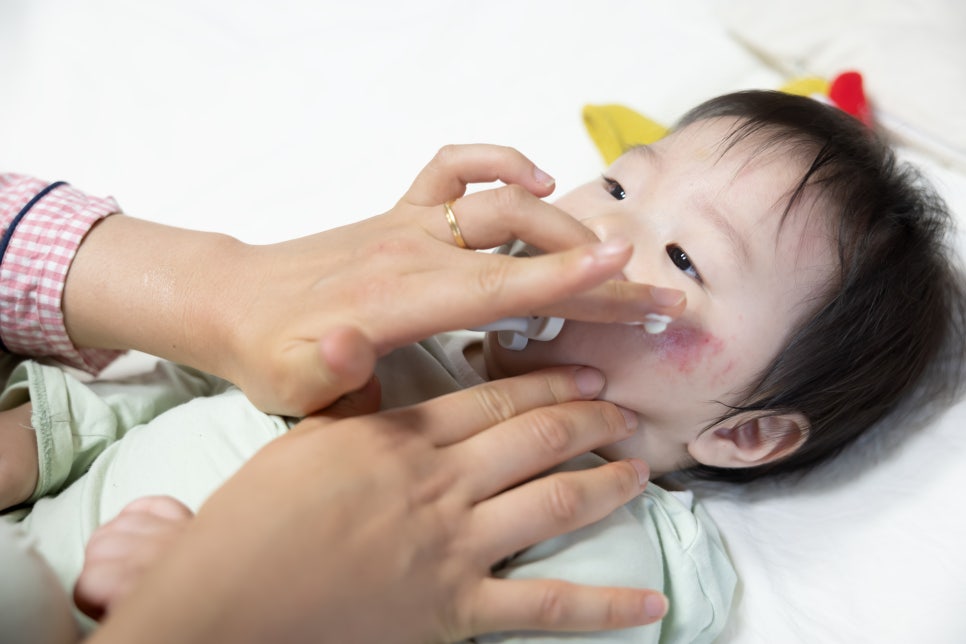
In addition to compresses, you can also expect relief through an ointment appropriate for the symptoms, and the ingredient that helps with how to quickly get rid of a face bruise is heparinoid alone.
Because its molecular size is smaller than that of combination ingredients, it is absorbed into the skin quickly and tends to be less irritating, so it can be used on the sensitive face area.
However, if the user is a child under 5 years old, use should be avoided, and symptom relief may be expected through a combination bruise cream rather than an ointment.

For bruises on other areas, applying an ointment containing salicylic acid glycol and amorphous esin ingredients can help with faster recovery.
In the case of salicylic acid glycol, it is an ingredient that helps quickly recover from pain and inflammation, while amorphous esin helps relieve swelling by strengthening capillaries further.
Combination ointments are made to help inflammation disappear quickly, but because they are highly irritating, care should be taken not to use them on the face or mucous membrane areas.

However, if the methods mentioned above are continued consistently but the condition worsens or shows no sign of improvement, additional treatment should be carried out.
In such cases, using an oral anti-inflammatory pain reliever together with a topical anti-inflammatory pain reliever can be helpful.
If a bruise on the face lasts for more than 2 weeks, please visit a relevant medical institution to determine whether there is any serious internal damage.