Coenzyme Q10 benefits,
recommended intake, ingredients, content, side effects and more
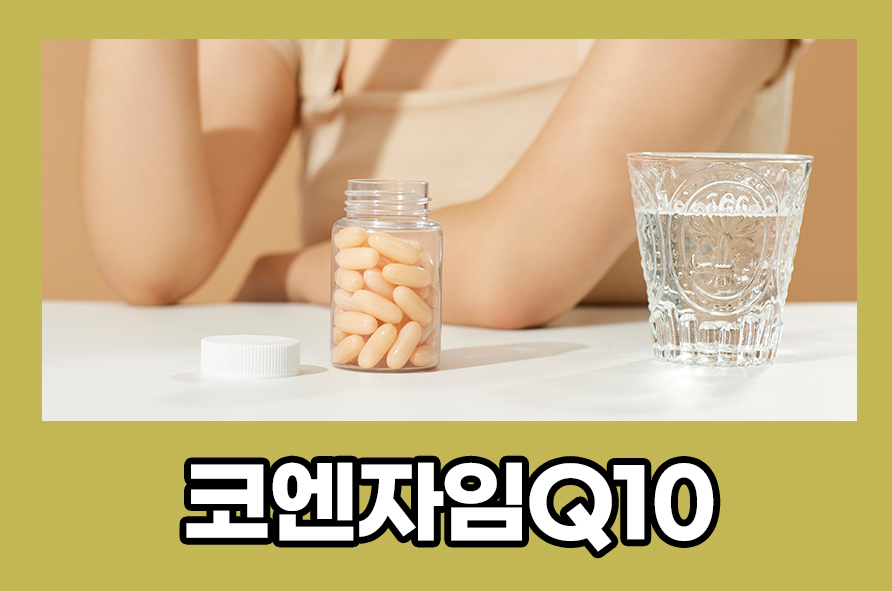
Recently, living a long and healthy life has become a trend, and supplements have also become part of a routine for taking care of health.
Among them, coenzyme Q10 is a fat-soluble, vitamin-like substance that plays an important role in the body’s energy production and in maintaining cell health.
Today, we will take a detailed look at the basic information about coenzyme Q10, its main benefits, ingredients, content, how to take it, side effects, and more.

Coenzyme Q10 is mainly used in the mitochondria inside cells to produce energy, and it also helps prevent cell damage through strong antioxidant action.
In particular, it is found in large amounts in areas that consume a lot of energy, such as the heart, liver, and kidneys, and its natural synthesis in the body decreases with age, stress, illness, and other factors.
Therefore, it can be replenished through supplements or food, and it can be obtained from beef, mackerel, tuna, spinach, broccoli, and more.
One of its representative benefits is promoting cardiovascular health, and because it helps stabilize blood pressure and strengthen myocardial function, it can help as an adjunct treatment for heart failure and angina.
It also helps remove free radicals through antioxidant action, contributing to anti-aging and maintaining skin health, and it is also considered to be effective for recovery from fatigue and improving energy.
If the body lacks this ingredient, energy production may decline, metabolism may slow, and problems such as reduced immunity and decreased brain function may occur.

The ingredient can be broadly divided into the oxidized form, ubiquinone, and the reduced form, ubiquinol, and in general, ubiquinone is widely used in supplements.
After ingestion, it is converted to ubiquinol in the body and used, and while ubiquinol has a higher absorption rate in the body, it is more expensive.
For general health management purposes, a daily intake of 100 to 200 mg is recommended, but for managing specific conditions, 300 mg or more may be taken according to a healthcare professional’s prescription.

Due to its fat-soluble nature, taking it right after a meal that contains fat can be expected to provide better absorption, and dividing it into 2 to 3 doses is recommended.
If you are considering a coenzyme Q10 supplement, be sure to carefully check whether it has certification marks such as GMP, which guarantee the quality of the raw materials.
Also, if the capsule color has become excessively discolored or if something smells unusual when you open the lid, it is safer to stop taking it.

Side effects are rare, but with high-dose intake, stomach discomfort, heartburn, nausea, headaches, dizziness, and other symptoms may occur.
It may also interact with blood pressure medications, anticoagulants, insulin, and others, so if you are taking any specific medication, you must consult the relevant healthcare professional.
If you follow the correct way of taking it and the precautions properly, this product can be very helpful in many areas, including cardiovascular health and fatigue improvement.