Fasting Time for Upper Endoscopy: Water,
Food, and Precautions for Sedated Exams
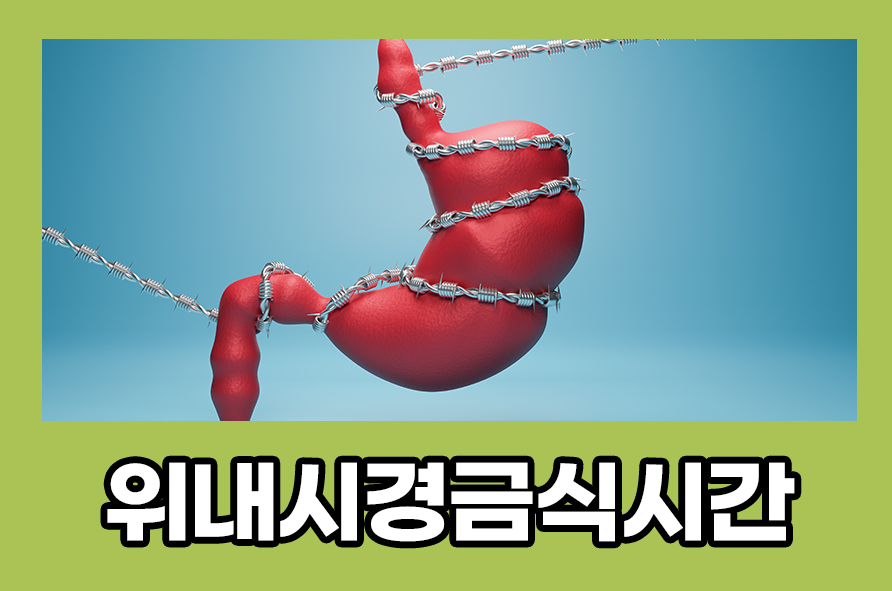
An upper endoscopy, performed to properly check the health of the stomach and esophagus,
is a test that can identify inflammation, ulcers, polyps, cancer, and more.
However, if food or water remains in the stomach, it can obstruct the endoscopic view,
making an accurate diagnosis difficult. There is also a higher risk of complications such
as aspiration pneumonia, so caution is needed.
Today, we will look at the fasting time for upper endoscopy, whether water and food can be consumed,
the exam duration, and precautions to help the test proceed safely and clearly.

In general, an 8-hour fasting period is recommended for upper endoscopy.
If the exam is scheduled for the evening, you should fast from midnight the night before.
If you have a morning hospital appointment, have a light dinner the previous evening,
and after that, you should not eat anything except water during the fasting period for upper endoscopy.
Because some time is needed for food to be digested, you must maintain an empty stomach,
and you should not drink water starting 2 hours before the exam.
Many people may wonder whether they can drink water during the fasting period for upper endoscopy.
In some cases, a small amount is allowed until 2 hours before the exam.
However, this can vary depending on each person's health condition and the hospital's guidelines,
so it is safest to follow the instructions of the attending medical staff.
In particular, milk, juice, coffee, and tea may leave residue on the gastric mucosa,
which can obstruct the view during the exam, so they should be avoided.
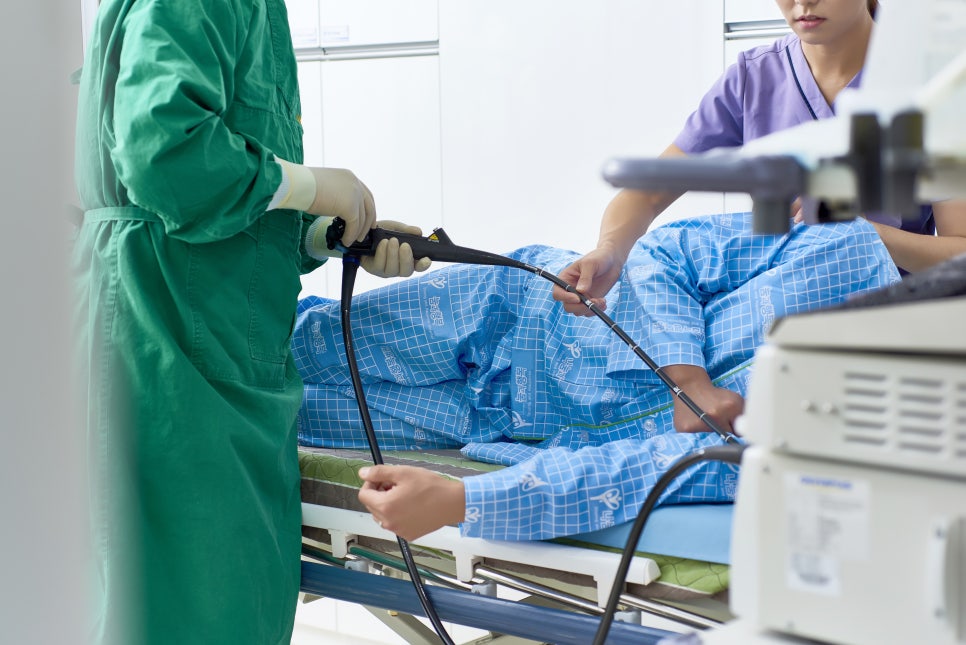
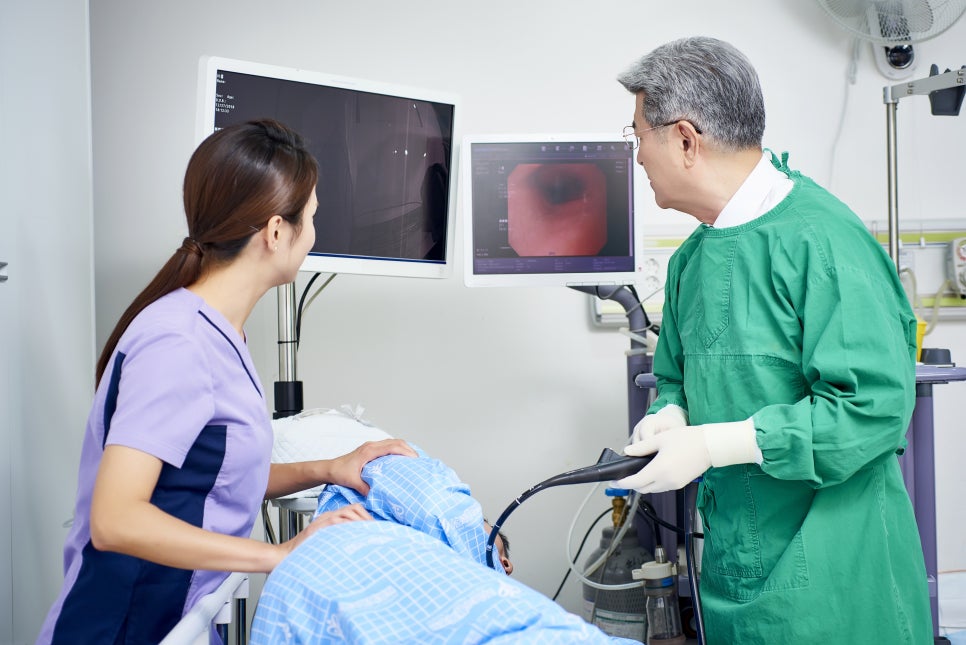
The exam itself usually takes only about 5 to 10 minutes, so it is often brief,
but if a biopsy or polyp removal is performed at the same time, it may take a little longer.
Before the exam, a topical anesthetic may be sprayed to reduce the gag reflex,
or in the case of sedated endoscopy, a sedative may be used, which takes about 1 to 2 hours.
Eating after an upper endoscopy is possible about 1 to 2 hours after the exam,
once the effect of the throat anesthetic has mostly worn off.
If you eat while the anesthetic is still in effect, the airway may become blocked,
or there is a high risk of aspiration, which is a very dangerous situation.
Even if you had sedated endoscopy, it is better to wait for the recovery period,
then try drinking water slowly first. If there are no issues, you can eat rice gruel,
porridge, and soft foods.
Also, if a biopsy or polyp removal was performed, it is helpful to avoid spicy,
hot, hard, and chewy foods as much as possible for a few days.

As precautions, avoid overeating, drinking alcohol, and smoking the day before the exam.
If you are taking certain medications such as blood clot inhibitors, they should be adjusted after speaking with the medical staff.
After the exam, temporary abdominal bloating, heartburn, and belching may occur,
but in most cases they improve with time.
However, if symptoms such as severe abdominal pain or blood in the stool occur,
you should visit the relevant hospital immediately. If you had sedated endoscopy,
please avoid driving immediately after recovery.