
After getting home from work, I would wash up and lie down at around 11 p.m. But the days when I fell asleep as soon as I lay down were few and far between. I would stare at the ceiling, turn on my phone, turn it off again, and toss and turn some more. This pattern repeated until I barely managed to fall asleep after 1 a.m. the next morning. Naturally, I never felt refreshed when I woke up, and I remained tired all day. By changing my evening routine one step at a time, I found that the time it took me to fall asleep clearly became shorter, and I would like to share that experience.
8 p.m.: I started by changing the lighting
The first thing I changed was the lighting. After 8 p.m., I left only a floor lamp on instead of the fluorescent ceiling light in the living room. I began after hearing that when bright light continues to reach your eyes, your body may mistakenly think it is still daytime, and I definitely felt that my eyes became more comfortable. I also switched my phone screen to night mode, which reduced eye strain. It was a small change, but it clearly altered the atmosphere of the evening.

Simply dimming the lights in the evening noticeably reduced the time it took me to fall asleep
9 p.m.: I started avoiding caffeine and late-night snacks
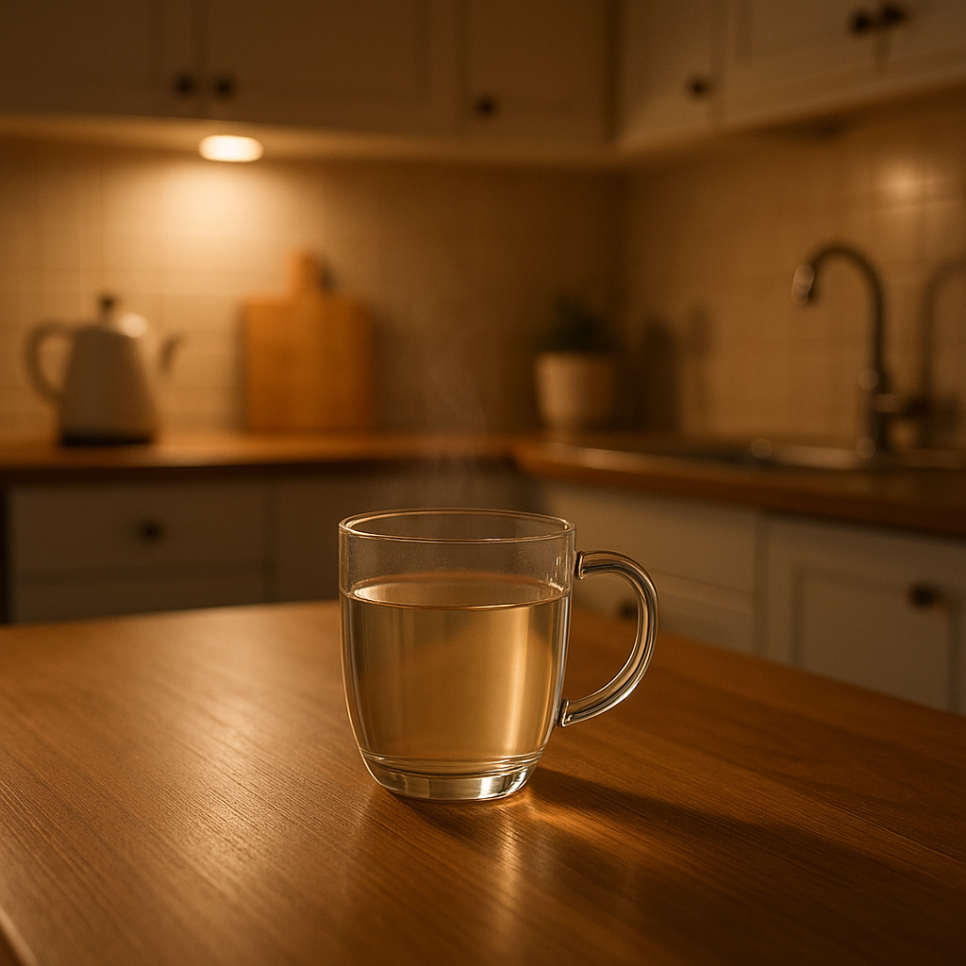
I used to often have an iced Americano even after dinner. I knew caffeine could affect sleep, but I did not pay much attention to it. However, after stopping caffeine after 8 p.m., I found it clearly easier to fall asleep. Late-night snacks were also a problem. I thought I would sleep better if I went to bed with a full stomach, but instead, the burden of digestion made me feel as if my body stayed awake. When I was hungry, I developed the habit of having just a glass of warm water.
10 p.m.: I also began paying attention to jaw clenching and tension
During the period when I was tossing and turning, my jaw felt stiff every morning. It turned out that I had a habit of clenching my teeth while asleep. It was worse on stressful days. When I gently massaged and stretched my jaw muscles in the evening, the discomfort in my jaw was noticeably reduced in the morning. I heard that if this habit continues for a long time, it can place stress on the teeth or jaw joints, so I came to think that checking my condition at a dental clinic, if necessary, could also be an option.
A habit of clenching your teeth while asleep is often related to jaw tension in the evening
10:30 p.m.: I created a bedtime routine
When I followed the same sequence every day, my body began to recognize the signals. I established a set order: washing up, stretching for five minutes, dimming the lights, and lying down in bed. At first, I forced myself to stick to it, but after two or three months, my body began responding naturally. This was when I started to feel sleepy as soon as I lay down in bed. It also helped to leave my phone outside the room instead of next to the bed. If it was within reach, I would eventually turn it on.
I also put together answers to a few frequently asked questions. I am often asked whether taking a nap interferes with nighttime sleep, and it is generally said that a nap has little effect if it does not exceed 30 minutes. I am also asked whether sleeping in on weekends helps, but if your wake-up time differs too much from your weekday schedule, it can instead disrupt your body’s rhythm, so it is said to be better to maintain a regular wake-up time. I am sometimes asked what to do if tooth clenching or grinding is severe. If it is severe or pain continues every morning, it can be helpful to have a dental clinic check the condition of your jaw joints and teeth and discuss necessary care methods.
After those nights of tossing and turning had passed, I felt firsthand that each of my evening habits had a greater impact than I expected. Changing just these five things—lighting, caffeine, late-night snacks, stretching, and a set routine—made a clear difference. If you have a stiff jaw or are concerned about a habit of clenching your teeth, visiting a nearby dental clinic to have your condition checked may also be an option.
11 p.m.: I readjusted my bedroom temperature and humidity
Even on days when I paid attention to lighting and caffeine, there were times when that was not enough. Then I heard that lowering the bedroom temperature might help, so I tried it. Setting it to around 26°C in summer and around 20°C in winter clearly reduced the amount of time I spent tossing and turning under the covers. I heard that when it is too warm, the body keeps trying to release heat and therefore cannot sleep deeply. I also began paying attention to humidity. On dry days, my throat often felt scratchy and I would wake up while sleeping, but this happened less often after I started running a humidifier. I placed a thermometer and hygrometer next to my bed and developed the habit of checking them every day. As a result, I naturally began checking the environment before lying down. If the thickness of the blanket is not suited to the season, you may feel too hot or cold while sleeping and wake up repeatedly, so I prepared a separate summer blanket, which also reduced this discomfort. These details may seem minor, but after changing them, I felt that not only did I fall asleep faster, but I also woke up fewer times during the night. Since temperature and humidity are easy to overlook if you do not keep checking them, I incorporated them into my evening routine altogether.
11:30 p.m.: I practiced breathing slowly
There were days when my mind kept racing even after I lay down. Thoughts about what had happened that day and what I had to do the next day kept leading to more thoughts, driving away my sleep. What I tried then was a slow-breathing method. You inhale for four seconds, hold your breath for seven seconds, and then exhale slowly for eight seconds. At first, counting felt awkward, but after repeating it for several days, I could feel my body relaxing first. When I exhaled slowly, it felt as if the tension in my shoulders and neck gradually melted away. On days when I had a lot on my mind, I repeated this breathing method five or ten times and focused only on counting. Rather than trying to force distracting thoughts away, redirecting my attention to my breathing worked better for me. As I lay down, closed my eyes, and focused on my breathing, there were more days when I fell asleep before I realized it. This method requires no special equipment and can be done anywhere, so it was also very helpful when I was on business trips and sleeping in unfamiliar places.
I also adjusted my evening exercise time
I used to go to the gym late after work, but when I came home after exercising, my body was instead stimulated, making it more difficult to fall asleep. I thought I would sleep well because I felt refreshed after sweating, but the opposite was true. So I moved my workout to before 7 p.m. By the time I went to bed, my body clearly felt calmer. On days when I still wanted to move later in the evening, I lowered the intensity to a light walk or stretching. I realized firsthand that vigorous exercise keeps your heart rate elevated for a long time and affects you until bedtime. Conversely, once I developed the habit of taking even a short walk during the day, I found it easier to fall asleep at night as my body naturally began to feel tired. I felt that moving my exercise time alone changed my overall evening condition. Now, if I cannot exercise because of an evening appointment, I usually do a few light yoga movements at home instead.
As I changed my lighting, caffeine intake, late-night snacks, jaw tension, routine, temperature and humidity, breathing, and exercise time one by one, I eventually noticed that the time it took me to fall asleep after lying down had become much shorter. Rather than trying to change everything at once, I think the important part was trying one thing at a time and finding what worked for me. Everyone’s physical condition and lifestyle patterns are different, so the same approach may not work for everyone, but I definitely experienced that even spending the evening a little differently can change sleep quality.
I also reset my dinner time
I used to work late and come home late often, so eating dinner at 8 or 9 p.m. was part of my daily routine. On days when I ate until I was full and lay down right afterward, my condition the next day was noticeably poor. Since I went to sleep before fully digesting my food, there were also days when I woke up with an uncomfortable, bloated feeling. So I set a goal of finishing dinner at least three hours before bedtime whenever possible. On days when dinner was delayed because of a work gathering or an appointment, I reduced the portion by half and focused on foods that were easy to digest. Switching to foods with broth or porridge made my stomach feel much more comfortable. Moving dinner earlier was not as easy as I expected, but after changing the order of my evening so that I ate as soon as I got home and handled the rest of my tasks afterward, I naturally began to stick to it. Adjusting just my mealtime clearly increased the number of days when I woke up with a comfortable stomach.
9 p.m.: I developed the habit of soaking my feet in lukewarm water
A half-body bath took too long, making it difficult to do consistently. Instead, I started soaking my feet, and it worked better than I expected. When I soaked my feet in lukewarm water for about 10 minutes, I felt my body gradually warm up and then cool down again, bringing on sleepiness as my body temperature fell. Water that is too hot can instead have a stimulating effect, so it was important to keep it lukewarm. Since I could simply soak my feet while watching television, I was able to do it every day without feeling burdened.
The body often sends signals of sleepiness as its temperature gradually falls after rising
9:30 p.m.: I started writing my worries down on paper
There were days when I suddenly thought of things I had to do the next day or unresolved problems after lying down. Whenever that happened, my mind became complicated and sleep disappeared. So before bed, I developed the habit of briefly writing down any worries that came to mind that day or things I had to do the next day. If I kept them only in my head, they continued to circle around, but once I transferred them to paper, my mind surprisingly felt somewhat more organized. I did not need to write in perfect sentences; simply listing words was fine. After using this method, the time I spent lying in bed and getting lost in unrelated thoughts noticeably decreased. Once again, I felt that one small habit could change the atmosphere of the entire evening.