Isu Station Dermatology
Some people become interested in Oligio,
but once it comes time to make a decision,
it turns out to be harder than expected.
This is because there are many things they want to know,
including the procedure itself, pain, recovery time,
and precautions after the treatment.
In particular, first-time patients often worry,
“Will it really be effective for my skin?”
and “Will post-treatment care be difficult?”
These concerns are very natural,
and they are also a good sign that you are approaching it carefully.
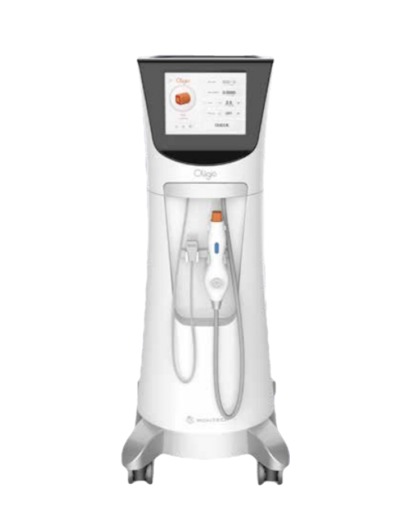
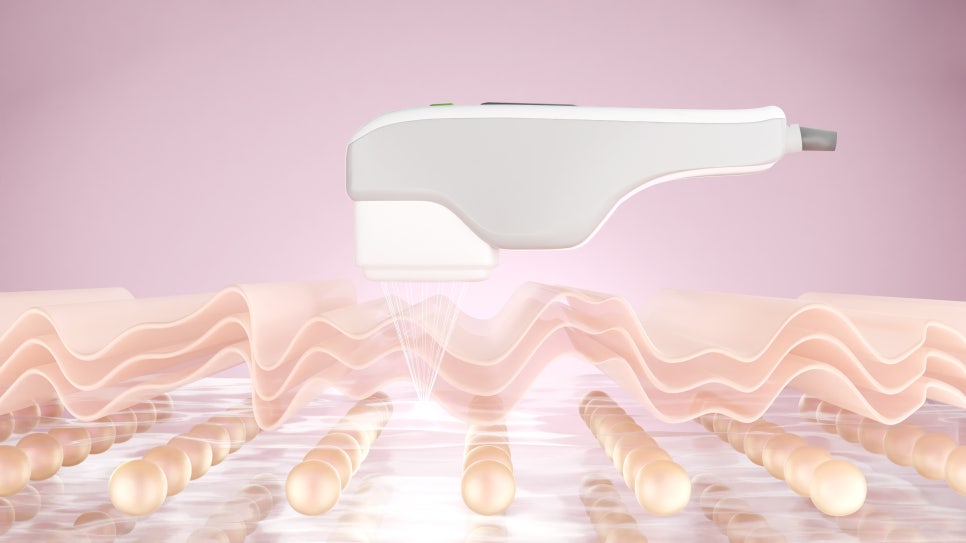
Isu Station Dermatology’s Oligio uses radiofrequency energy
to deliver energy deep into the skin,
inducing collagen regeneration.
Simply put, it works by giving the skin a “heat stimulus”
to help loosened collagen tissue
tighten again.
Because this process can naturally lift
facial contours that have lost firmness,
it is widely applied to people in their 30s and 40s,
when sagging begins, as well as to people in their late 20s
who still retain relatively good elasticity.
However, because it is more about gradually reorganizing
the skin’s internal structure over time
rather than producing an immediate, visible lift,
it is a better fit for those who hope for natural improvement
rather than those expecting a dramatic change right away.
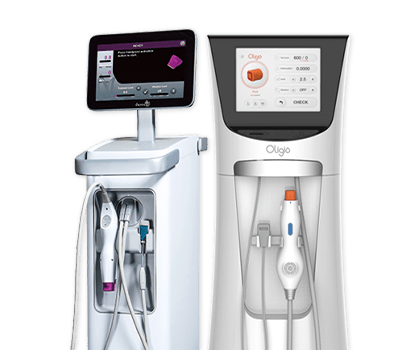
Because Isu Station Dermatology’s Oligio is a non-surgical method,
you can return to daily life immediately after the procedure.
The chances of swelling or bruising are relatively low,
and in many cases, makeup is possible right after treatment.
However, since individual skin reactions can vary,
it is better to avoid stimulating skincare products
and long periods of outdoor activity on the day of the procedure.
In particular, if your skin is sensitive,
it can be helpful to use less irritating skincare products
for about two days after treatment and give your skin enough time to calm down.
The most important thing is to recognize
that heat stimulation has been applied to the skin.
Even if the skin looks fine on the outside,
regeneration is actively taking place inside,
so during this period it may be more vulnerable to external irritation.
Activities that raise body temperature,
such as saunas, jjimjilbangs, or intense exercise,
should be avoided, and strong massages or exfoliation
should also be avoided for one to two weeks.
Sun protection is also essential.
After Oligio, your skin may become more sensitive to ultraviolet rays,
so you should apply sunscreen carefully before going বাইরে.
Because it takes time for collagen in the skin to be reorganized
after Oligio, you will usually begin to feel the skin becoming firmer
gradually over the course of two weeks to a month.
To maintain this effect for longer,
please remember that post-treatment care is very important!
Depending on your skin condition,
we also recommend combining the treatment with
lifting laser procedures from time to time.
What matters is remembering that this is not a procedure that is
“finished in one session,” but rather a method that should be
“maintained and managed continuously.”

Oligio lifting cannot be judged by the device alone.
Who plans the procedure and what 기준 they use to suggest treatment
are far more important.
At Grini Dermatology near Isu Station,
the clinic director, a board-certified dermatologist recognized by the
Ministry of Health and Welfare, personally provides care,
and rather than recommending excessive repeated procedures,
we suggest only precise diagnoses and treatments that are truly necessary.
In addition to Oligio,
we are equipped with a variety of lifting devices,
so you can receive the procedure that is right for you.
With private one-person treatment rooms,
Magic Glass consultation rooms,
and a well-organized treatment flow,
we provide a more comfortable care experience.
To accommodate busy daily schedules,
we also offer evening consultations from Monday to Friday
and weekend appointments (Saturday and Sunday),
so if you are starting to worry about skin elasticity,
we recommend getting a consultation before it gets too late.
Above all, what matters most is diagnosing your own skin condition
and choosing the right method for it.
Rather than deciding simply based on trends
or recommendations from people around you,
we suggest consulting about your current elasticity level and goals,
then making a plan accordingly!