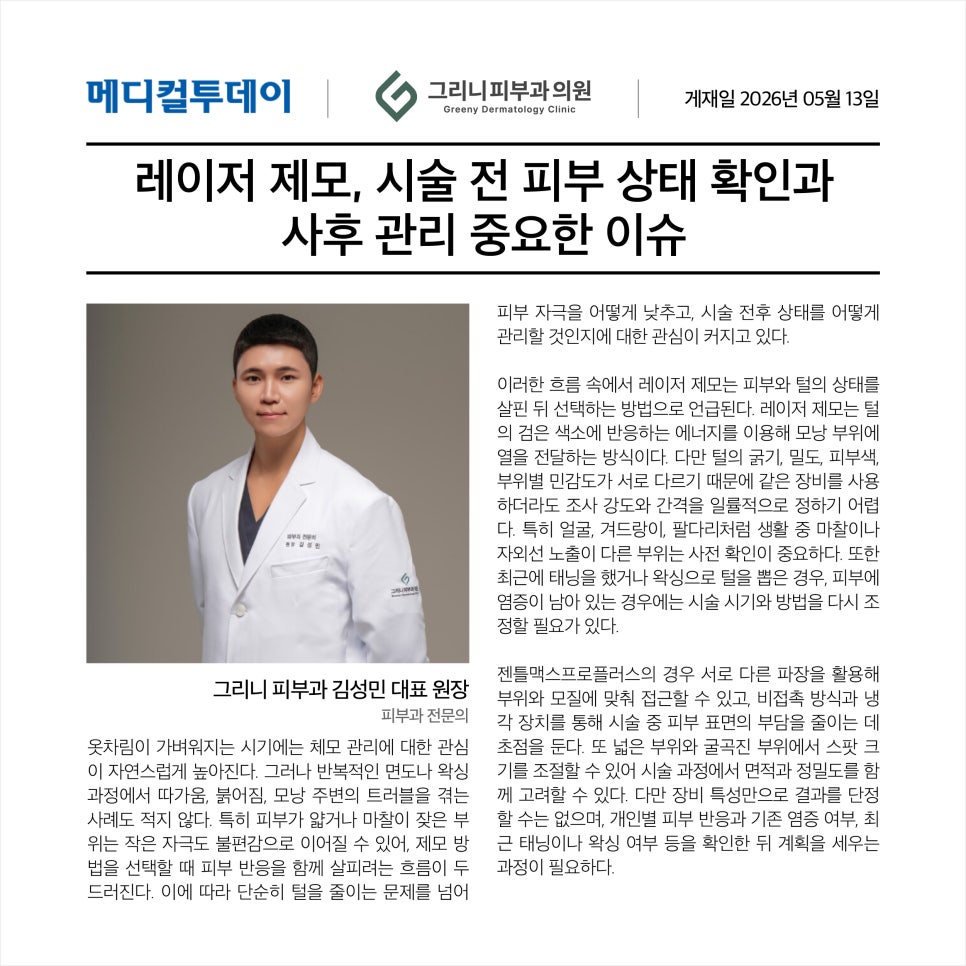
As interest in laser hair removal continues to grow,
more people are making inquiries.
Many people consider laser treatment
for easy and clean hair removal,
but it is being emphasized that checking the skin condition before treatment and providing appropriate aftercare
are very important for achieving actual results and ensuring a safe treatment process.
Let’s take a look at the details
through the news article!
As clothing becomes lighter, interest in body hair management naturally increases. However, quite a few people experience stinging, redness, and problems around the hair follicles during repeated shaving or waxing. In particular, areas with thin skin or frequent friction can become uncomfortable even with minor irritation, so there is a growing tendency to consider skin reactions when choosing a hair-removal method. Accordingly, interest is increasing not only in reducing hair, but also in how to minimize skin irritation and manage the condition of the skin before and after treatment.
Against this backdrop, laser hair removal is mentioned as a method to be selected after assessing the condition of the skin and hair. Laser hair removal uses energy that reacts to the dark pigment in the hair to deliver heat to the area around the hair follicles. However, because hair thickness, density, skin tone, and sensitivity vary by area, it is difficult to determine the treatment intensity and intervals uniformly, even when using the same device. Areas such as the face, underarms, arms, and legs differ in their exposure to friction and ultraviolet rays during daily life, making a preliminary assessment particularly important. In addition, if the person has recently tanned, removed hair by waxing, or has lingering skin inflammation, the timing and method of treatment may need to be adjusted.
In the case of GentleMax Pro Plus, different wavelengths can be used to approach treatment according to the area and hair type. Its non-contact method and cooling system also focus on reducing the burden on the skin’s surface during treatment. In addition, the spot size can be adjusted for both large and curved areas, allowing the treatment area and precision to be considered together. However, results cannot be determined solely by the characteristics of the device. A treatment plan should be established after checking each person’s skin response, any existing inflammation, and whether they have recently tanned or waxed.
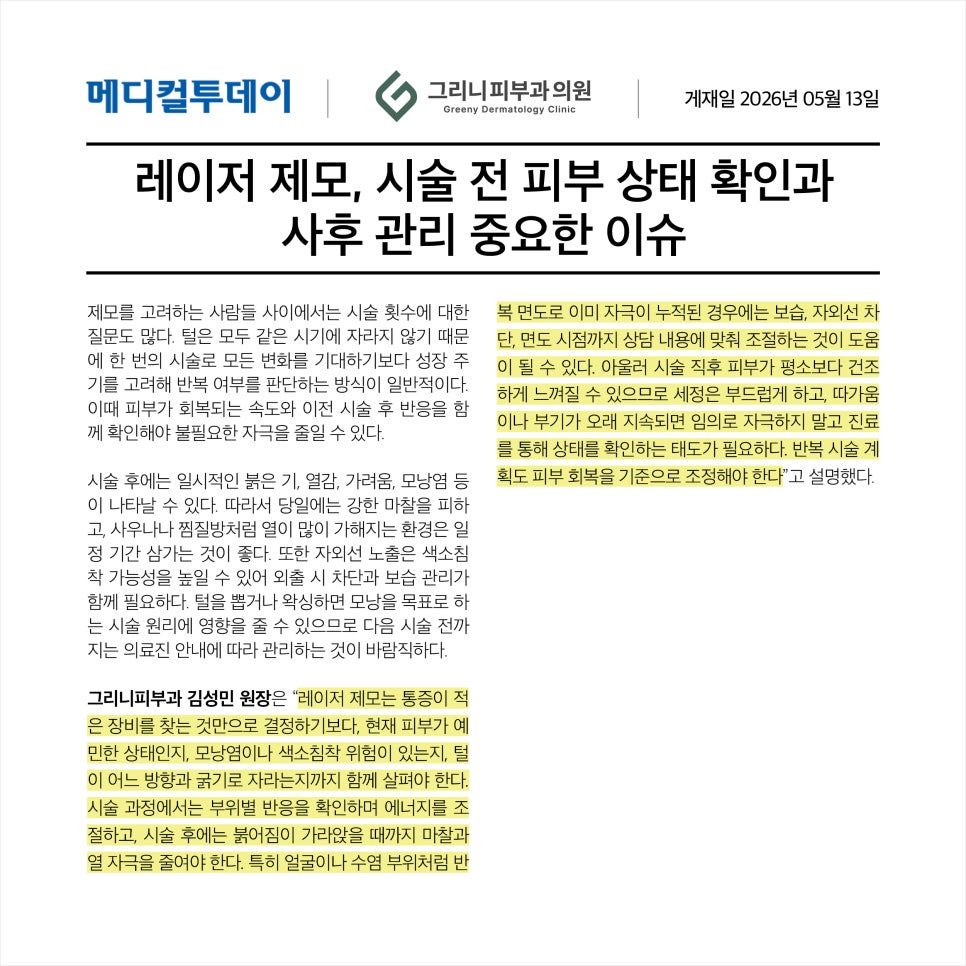
People considering hair removal also frequently ask about the number of treatment sessions. Because not all hair grows at the same time, rather than expecting every change from a single treatment, it is generally advisable to consider the growth cycle when deciding whether repeat treatment is needed. At that time, checking the skin’s recovery rate and its response after the previous treatment together can help reduce unnecessary irritation.
Temporary redness, a feeling of heat, itching, and folliculitis may occur after treatment. Therefore, it is best to avoid strong friction on the day of treatment and to refrain for a certain period from environments involving substantial heat, such as saunas and heated bathhouses. Ultraviolet exposure can also increase the possibility of hyperpigmentation, so sun protection and moisturizing care are both necessary when going outside. Because plucking or waxing hair can affect the treatment principle of targeting the hair follicles, it is advisable to follow the medical staff’s instructions until the next treatment.
Director Kim Seong-min of Greeny Dermatology explained, “Laser hair removal should not be decided solely by looking for a device that causes little pain. It is also necessary to examine whether the skin is currently sensitive, whether there is a risk of folliculitis or hyperpigmentation, and the direction and thickness in which the hair grows. During treatment, the energy should be adjusted while checking the response of each area. After treatment, friction and heat stimulation should be reduced until the redness subsides. In particular, when irritation has already accumulated from repeated shaving, such as on the face or beard area, it may be helpful to adjust moisturizing, sun protection, and the timing of shaving according to the consultation. In addition, because the skin may feel drier than usual immediately after treatment, cleansing should be gentle. If stinging or swelling persists for a long time, it is necessary not to irritate the area on one’s own, but to have the condition checked through a medical consultation. Plans for repeated treatment should also be adjusted based on the skin’s recovery.”
▼ Read the news article ▼