Whenever you look in the mirror,
you may notice that your jawline looks less defined than before,
or feel that your skin no longer has the same firmness.
Once you become interested in skincare,
you naturally start looking into lifting treatments.
In that process, many people come across the name “Titanium lifting”
and wonder what kind of treatment it is.

Rather than deciding on a treatment
simply because the name sounds familiar or you have heard it often,
it is important to first determine whether it is suitable for
your current skin condition and concerns.
Even with the same Isu Station Titanium lifting treatment,
the required treatment plan may vary depending on skin thickness,
the degree of loss of elasticity, pigmentation concerns,
and lifestyle habits.
Today, focusing on what people searching for Isu Station Titanium
may be curious about,
we will look at the features of Isu Station Titanium lifting
and the situations in which it may be considered.

What Is Titanium Lifting?
Titanium lifting is a laser lifting treatment
that uses multiple laser wavelengths according to the condition of the skin,
with the goal of improving firmness and skin texture.
It works by delivering energy not only to the skin’s surface
but also to the dermal layer,
creating an environment that supports the production of collagen and elastin.
Through this process, the skin may appear firmer,
and it is one of the treatments considered
when loose-looking facial contours or loss of elasticity are concerns.
It may also be considered through consultation
for those who want to address dull-looking skin tone,
fine lines,
and skin texture at the same time.
However, Isu Station Titanium lifting
is not a treatment from which everyone
can expect the same changes.
Because the causes and degree of skin aging
differ from person to person,
it is necessary to check the current condition of the skin
through a thorough diagnosis before treatment.
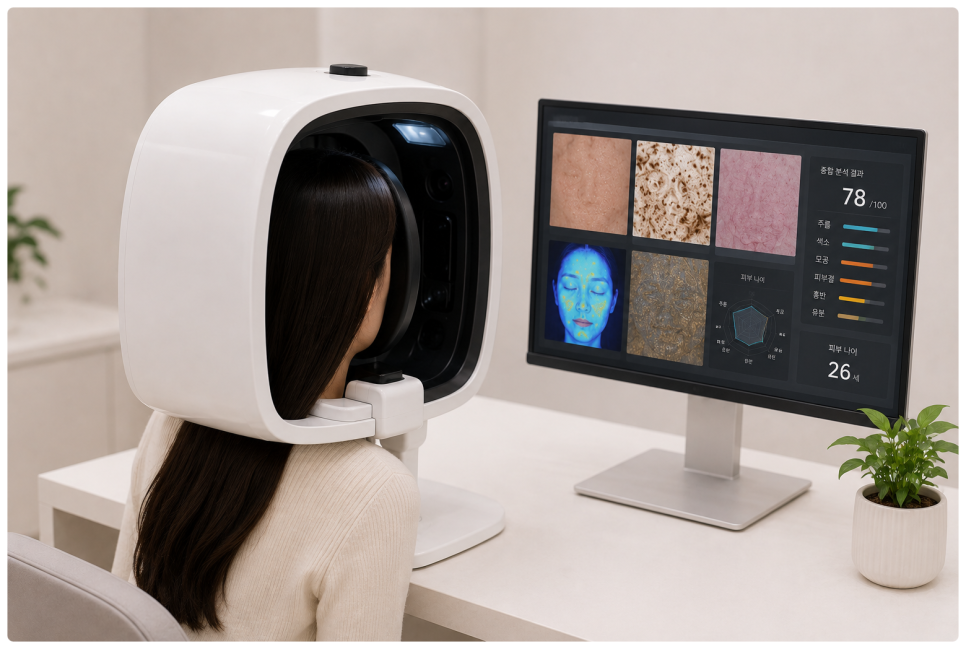
Diagnosis Is More Important Than the Name
Many people consider the treatment
after hearing that “Titanium lifting is good.”
In reality, just as important as which equipment is used
is how carefully the current condition of the skin
is analyzed.
For example, the appropriate treatment approach may differ
depending on whether sagging is caused by
reduced dermal elasticity, changes in fat,
or differences in skin thickness.
In addition, the energy intensity and treatment area required
for each part of the face
should be planned differently for each individual.
For these reasons, before treatment,
it is important to carefully examine the condition of the skin,
thoroughly discuss the patient’s concerns and desired direction,
and then establish a treatment plan.

Post-Treatment Care Is Also
an Important Factor in Maintaining Results.
After Isu Station Titanium lifting,
the skin may become temporarily sensitive,
so it is advisable to pay attention to moisturizing
and sun protection.
Avoid care that may cause irritation,
such as exfoliation,
for a certain period,
and follow the precautions provided by the medical staff.
When going outdoors, apply sunscreen thoroughly
and take care not to expose the skin
to strong irritation.
Adequate water intake
and regular lifestyle habits may also help
maintain the condition of the skin.
When necessary, it is advisable to check the condition of the skin regularly
and adjust the care plan.

Titanium lifting is one of the
laser lifting treatments considered
for the purpose of improving firmness and skin texture.
However, rather than choosing a treatment
based solely on the name “Titanium,”
the first step should be to determine whether it is suitable
for your current condition and concerns.
그리니 Dermatology avoids unnecessary repeated treatments
and strives to prioritize and recommend the care needed for the current condition,
based on the principles of using authentic products
and the prescribed dosage.
In addition, throughout every treatment process,
we consider it important to communicate sufficiently with patients
and explain the treatment methods and expected process
in an easy-to-understand manner.
Establishing a treatment plan suited to your current condition
based on sufficient consultation and diagnosis
may help you decide on a more satisfactory approach to care.