Hello,
I’m Kim Tae-yoon, the head director of Shinsung Dental Clinic.
Last time, I explained bruxism and Botox treatment,
but unfortunately, I was only able to provide an explanation and couldn’t post a treatment case.
Recently, however,
there was a case that matched that explanation perfectly,
and fortunately, the patient kindly agreed to let me use the photos,
so I’m briefly sharing the treatment case here.^^
“Because of bruxism, my jaw feels uncomfortable in the morning and it seems like my teeth are getting cracked.”
This was a male patient in his 30s,
and sleep bruxism was the reason for his visit.
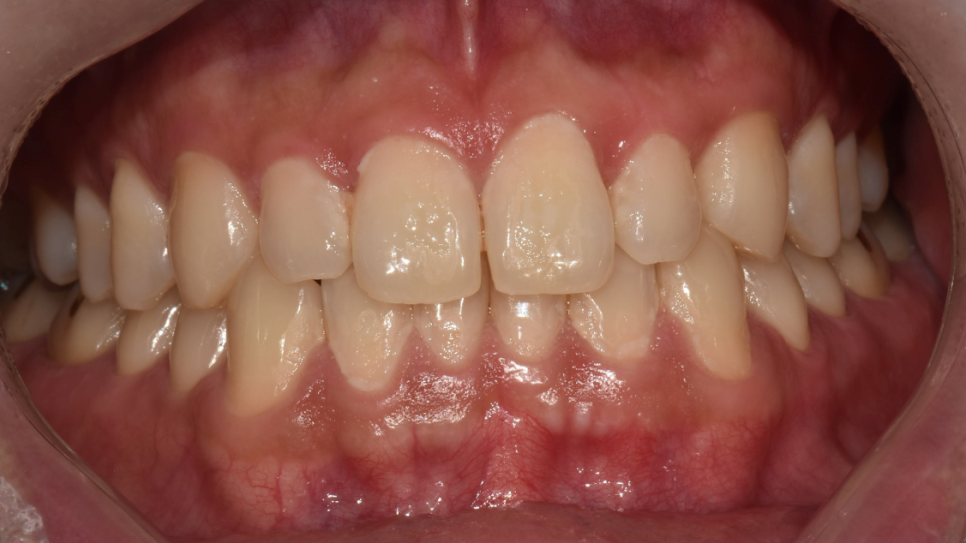
There were slight microcracks visible on the teeth,
but fortunately they were not yet severe enough to require treatment.
When excessive force is applied for a long time due to bruxism,
cracks can form in the teeth and gradually become larger,
which can eventually lead to teeth breaking or splitting.
Anyway,
since the teeth were not yet in a condition requiring treatment,
we proceeded with treatment to reduce jaw discomfort and lessen the severity of the bruxism.
We relieved inflammation and tension in the temporomandibular joint and jaw muscles through physical therapy,
including superficial heat therapy and low-level laser therapy.
We also performed Botox treatment on the jaw muscles.
(I will leave the link below to a post that explains Botox treatment for the jaw muscles in detail.)
https://blog.naver.com/ssdc0466/223754387047
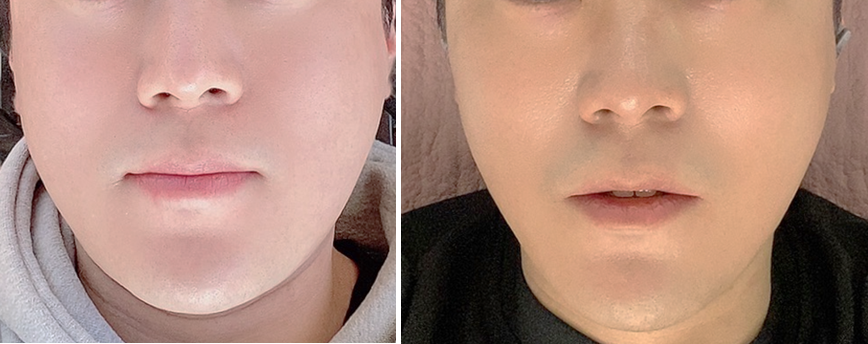
These are the before-and-after Botox photos sent by the patient one month after the treatment.
You can see that the jaw line has become slimmer.
The patient said that,
the severity of the bruxism had definitely decreased,
so morning discomfort was much reduced,
and they were very satisfied that the jaw also looked slimmer.^^
As the final step of treatment,
we made a bruxism guard for the patient.
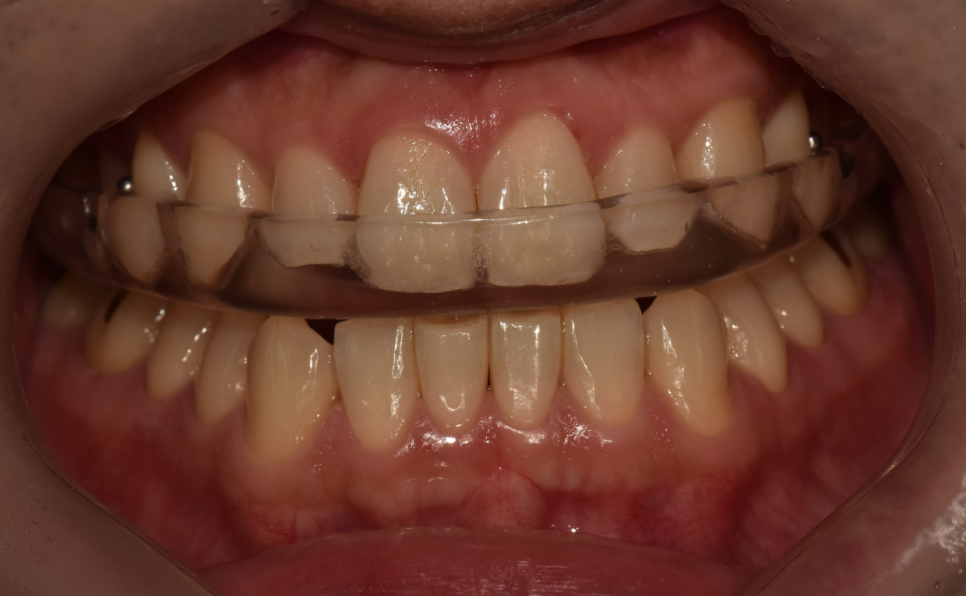
A bruxism guard is,
a device worn on the upper or lower jaw while sleeping at night.
First, it prevents the teeth from touching each other,
protecting them from wear or cracking caused by bruxism,
and it also makes a slight change to the position of the jaw,
which helps stop or reduce the intensity of unconscious bruxism that occurs during sleep.
This time as well, when we made a follow-up call,
“Bruxism has decreased even more,
so mornings are more comfortable. I’m very happy!”
That is what the patient told us.
Although the exact cause and treatment method are still not clearly established,
this was a rewarding case in which difficult-to-treat sleep bruxism was effectively alleviated.
We were also truly grateful that the patient actively shared feedback.
That concludes this case post.
I hope everyone has a great day~ ^^
- This case post was written with the patient’s consent.
Treatment period: 2024. 11. ~ 2025. 2.