Low Nose Rhinoplasty _Enhancing a More Defined Bridge Using Autologous Rib Cartilage

These days, interest in beauty-related matters is quite high, so people of all ages and genders are focusing on improving their appearance.
Recently, many people have also chosen plastic surgery as a way to address shortcomings and work on self-improvement.

As a result, content related to video and beauty fields has been getting more views,
and people working in related fields have become more popular.
However, there was one area that could not be solved through makeup techniques or photography methods alone: the nose.
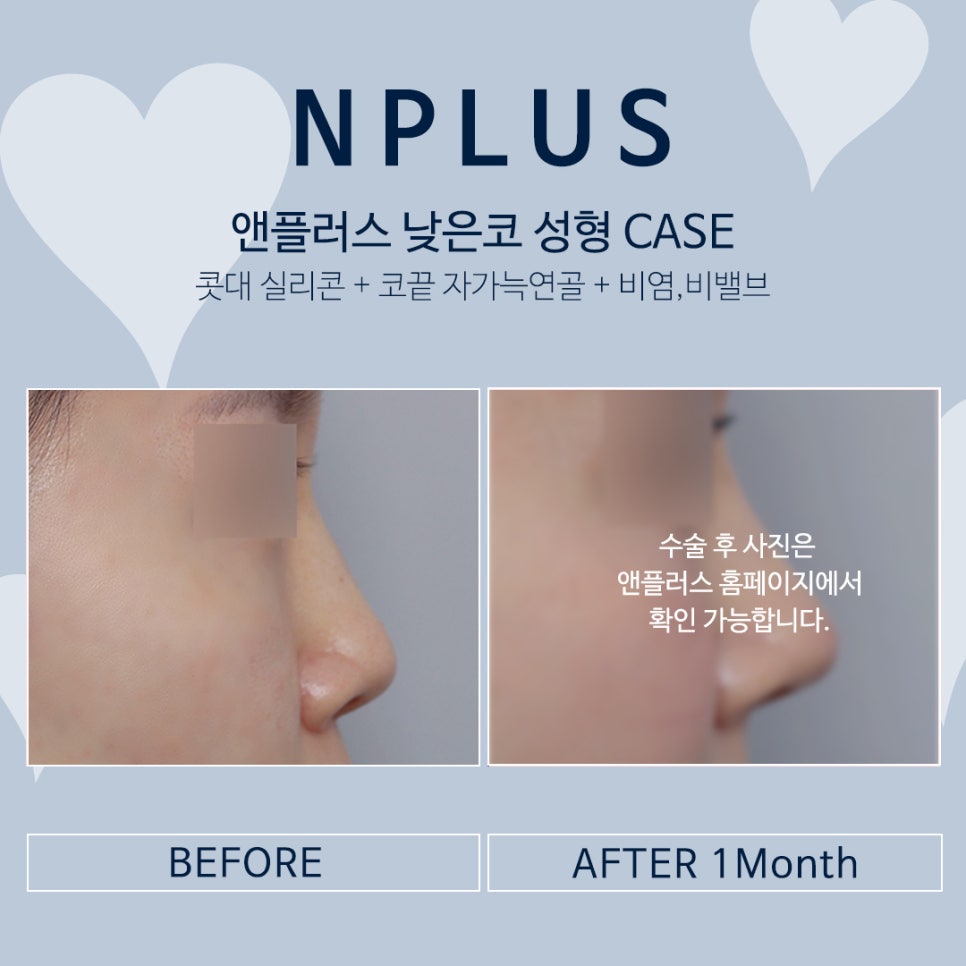
The image above shows actual before-and-after photos of Anplus low nose rhinoplasty using autologous rib cartilage.
Because many Koreans have features typical of East Asians, such as a low nose bridge and wide nostrils,
people now prefer a more refined look and tend to favor a more three-dimensional nose shape.
Also, since the nose is at the center of the face and plays a major role in balancing facial features,
interest in low nose rhinoplasty is increasing even more.

However, the thought of surgery may feel psychologically burdensome.
In the case of low nose rhinoplasty, it is not something to take lightly, because from the outside of the nose to the inside,
it has a complex structure, and the procedure is classified as a high-difficulty surgery.
So it is recommended that you do thorough research and find a place that is right for you.
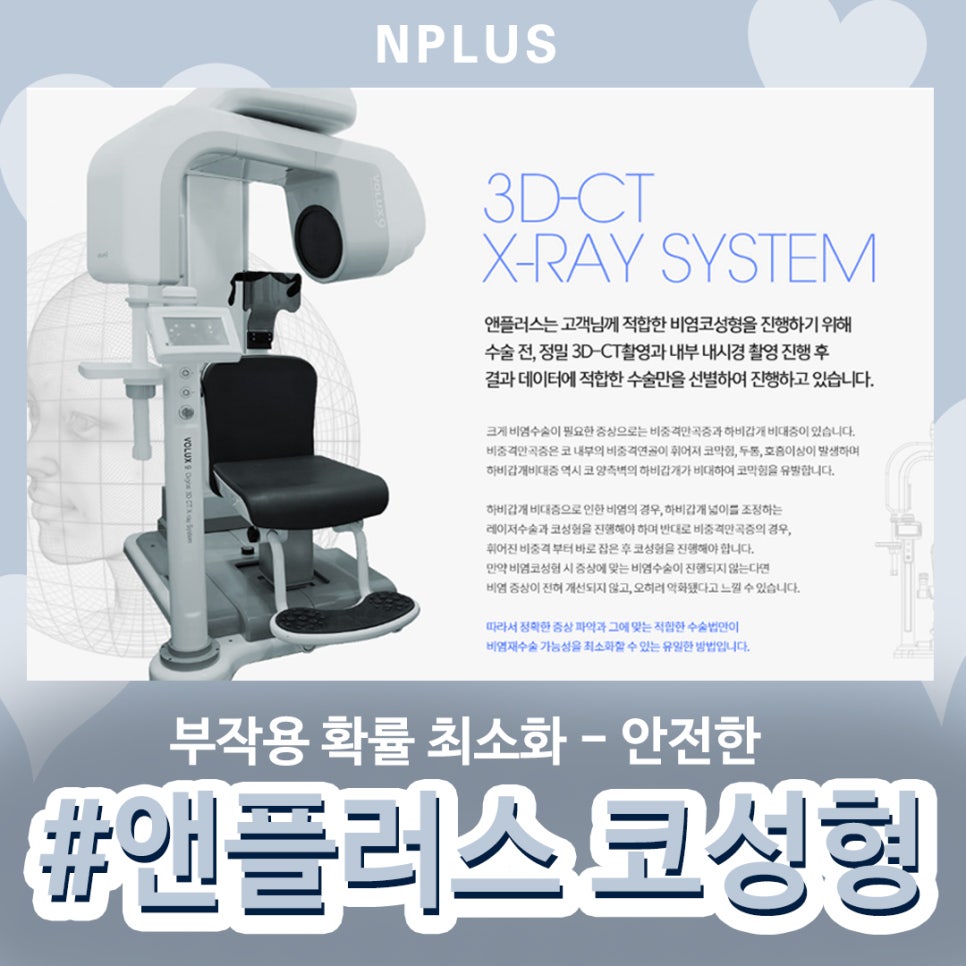
Because the process of changing the shape of the nose requires a proper understanding of the structure before surgery,
if it is performed incorrectly, it can lead to reduced function or revision surgery. For that reason, it requires extensive anatomical knowledge
and the ability to analyze the internal structure precisely.
Therefore, when checking these aspects, surgery must be performed based on accurate analysis and data
through 3D-CT and internal endoscopy.
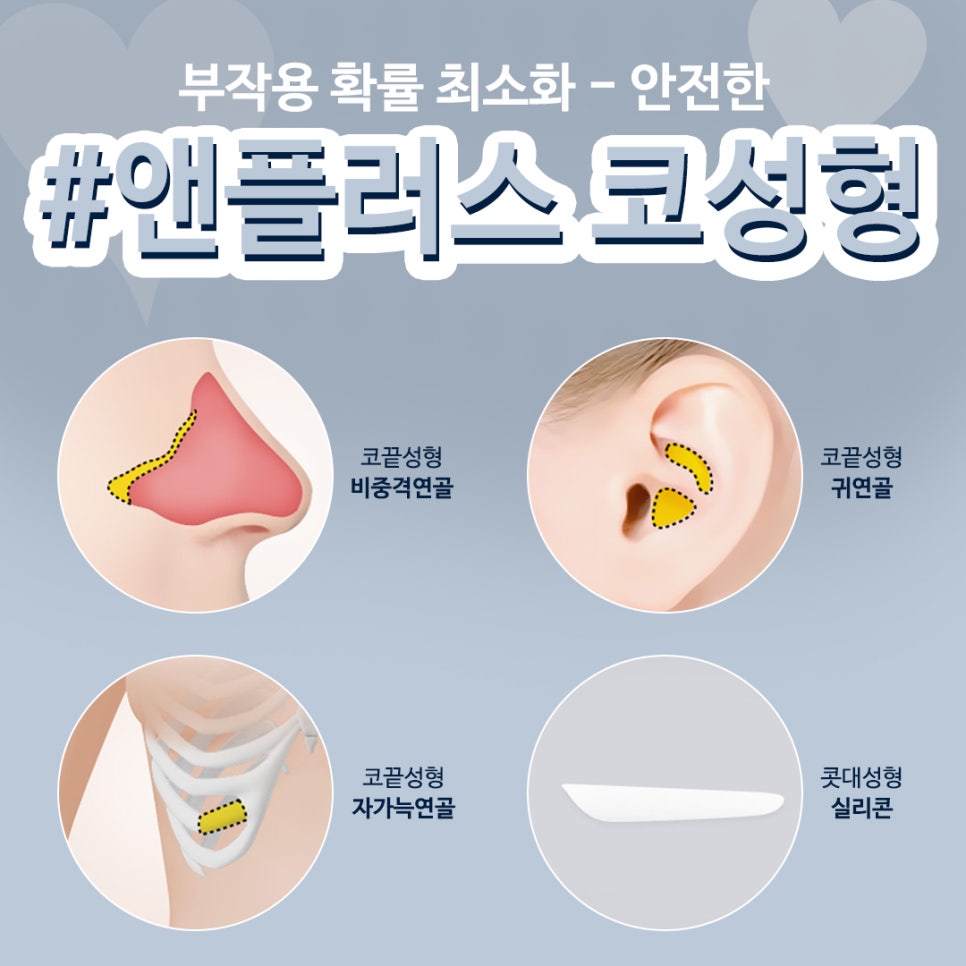
The main materials used in low nose rhinoplasty are silicone for the nasal bridge + autologous cartilage for the tip of the nose.
What does autologous cartilage for the nose tip mean?
It usually refers to three types: septal cartilage, ear cartilage, and autologous rib cartilage.
Among these three, surgery is performed using the material that best suits the individual.

Also, to minimize an artificial look during low nose rhinoplasty, a manufactured implant (silicone)
is not used as-is; instead, the implant is carefully shaped before insertion.
Traditional low nose rhinoplasty focused mainly on raising the bridge rather than correcting the overall nose line,
so it often looked artificial.
At Anplus, to minimize an artificial appearance after nose surgery,
a manufactured implant (silicone) is not used as-is. Instead, the surgeon considers the individual’s overall image,
the width and length of the nasal bridge, the width of the nasal tip, and various other aspects,
then carefully shapes the implant before insertion.
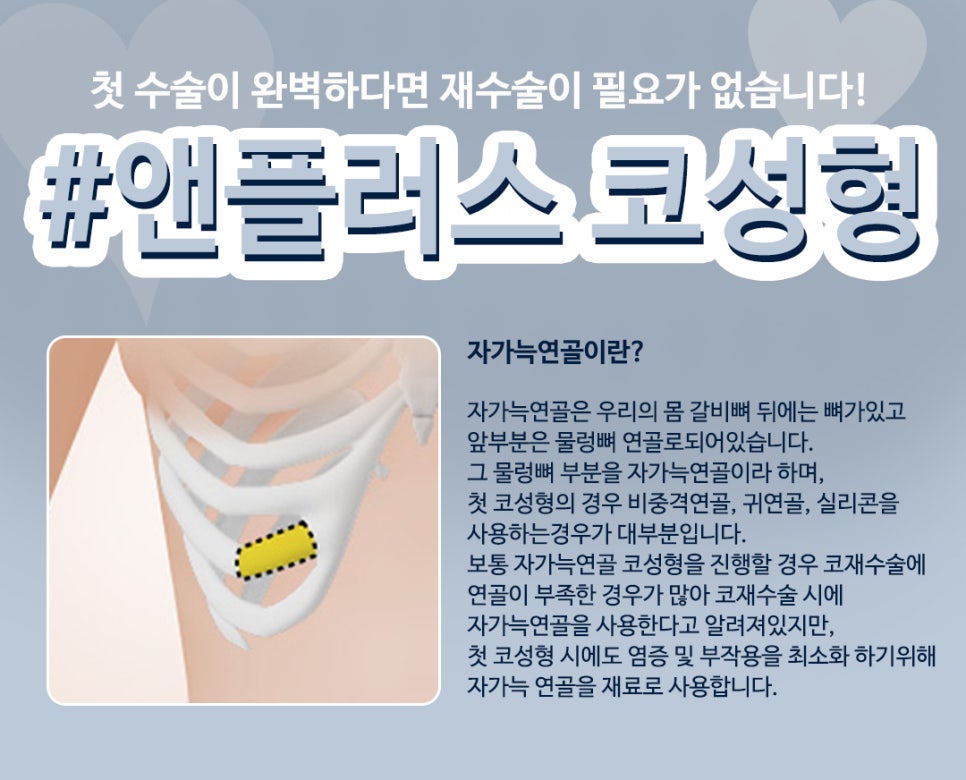
Is autologous rib cartilage also used in the first nose surgery?
In older rhinoplasty methods, silicone for the nasal bridge + septal cartilage or ear cartilage for the nasal tip were commonly used,
and autologous rib cartilage was mainly used for revision surgery.
Recently, however, there are many cases in which autologous rib cartilage is used from the first surgery.
-
When the nose is small and low, and the septum is insufficient
-
When there is not enough ear cartilage
When operating on the nasal tip, strong cartilage in sufficient quantity is needed,
but septal cartilage and ear cartilage often have limitations.
Autologous rib cartilage is large and strong, making it possible to achieve satisfactory results.
People often ask, “Is it really necessary to use autologous rib cartilage for the first surgery?”
However, as explained above, while there are cases where materials are insufficient, if the first surgery is done perfectly,
there is no need for revision surgery, which is why it is used.

Because Anplus has focused only on nose surgery for 15 years,
it carries out highly satisfying rhinoplasty based on extensive experience and know-how.
Therefore, with function also taken into consideration, it provides 1:1 customized surgery to create a nose line suited to each individual.
That concludes the information about low nose rhinoplasty using autologous rib cartilage.
I hope this article is very helpful for those who are considering low nose rhinoplasty.
Thank you :D