
Hello. This is Ojiko Plastic Surgery & N+.
This time, I’d like to share information about nose surgery insurance benefits.
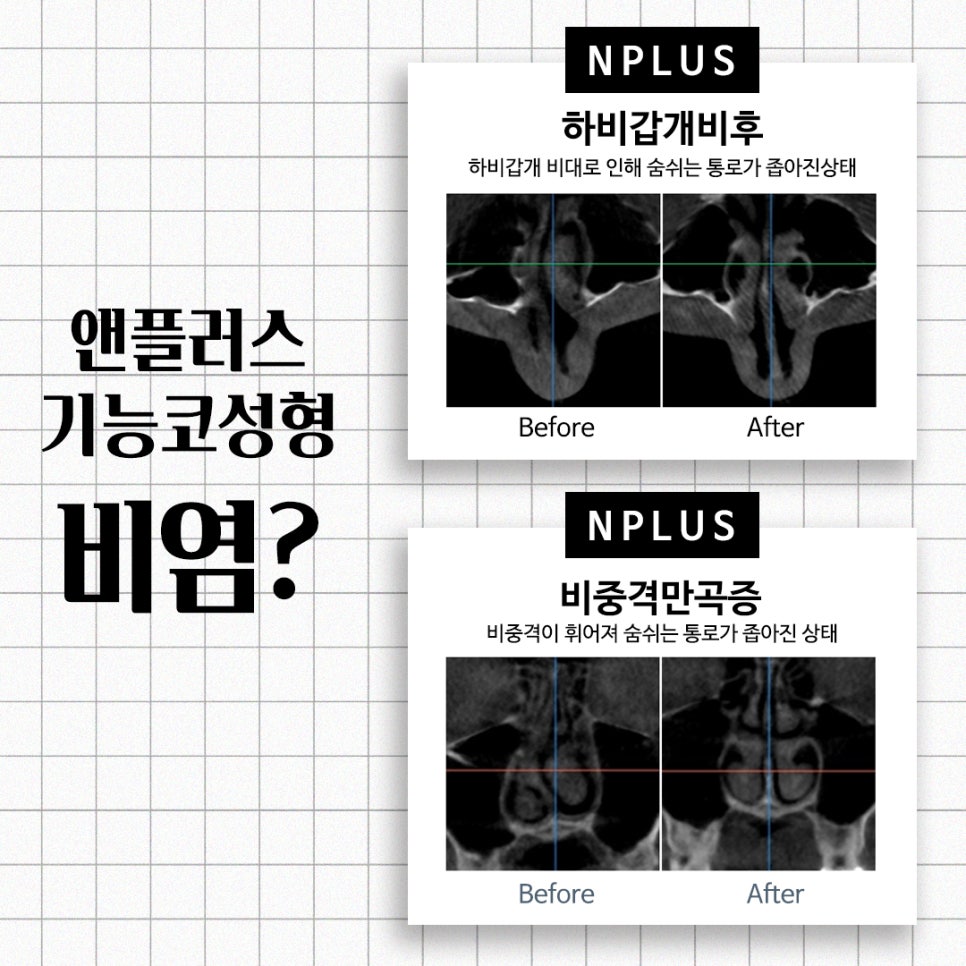
Autumn has already arrived. Because of nasal congestion symptoms, more and more people are looking into nose surgery insurance,
and many of you may have hesitated to undergo nose surgery because of the cost, even though you were uncomfortable.
You may think cosmetic surgery is not covered by actual expense insurance, but conditions such as rhinitis, deviated septum, nasal valve reconstruction, and nasal bone fractures
may qualify for insurance benefits.
The nose is the center of our face, influencing not only appearance but also smell and breathing, so
it plays a very important role. Therefore, if nasal congestion symptoms appear due to the conditions above, it is important to identify the exact cause before they worsen
and to receive appropriate treatment or surgery accordingly in order to prevent further deterioration.
However, if you proceed with nose surgery based only on these symptoms, you may not receive benefits, so
through an accurate diagnosis and proper examination, you should confirm the diagnosis and details, then contact the relevant insurance company to receive exact guidance before proceeding.
If you do not undergo accurate testing and diagnosis, eligibility for payment and the payment rate may differ, so we recommend organizing the above information at a reliable place
and preparing accordingly.
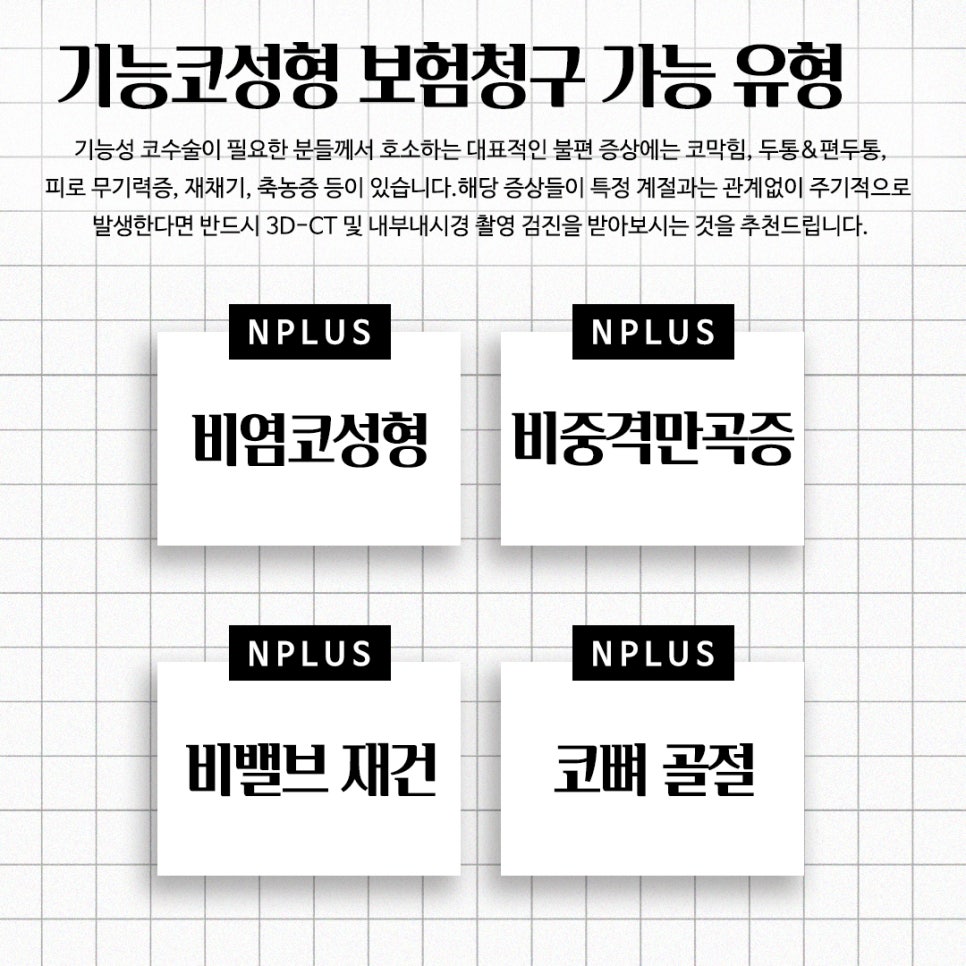
What types are eligible for nose surgery insurance claims?
-
Rhinitis nose surgery
-
Deviated septum
-
Nasal valve reconstruction
-
Nasal bone fracture
If you undergo even one of the cases above, you may receive nose surgery insurance benefits.
Therefore, if you suspect the symptoms above, you can go to a nearby otolaryngology clinic to check whether you have
the condition and receive a diagnosis.
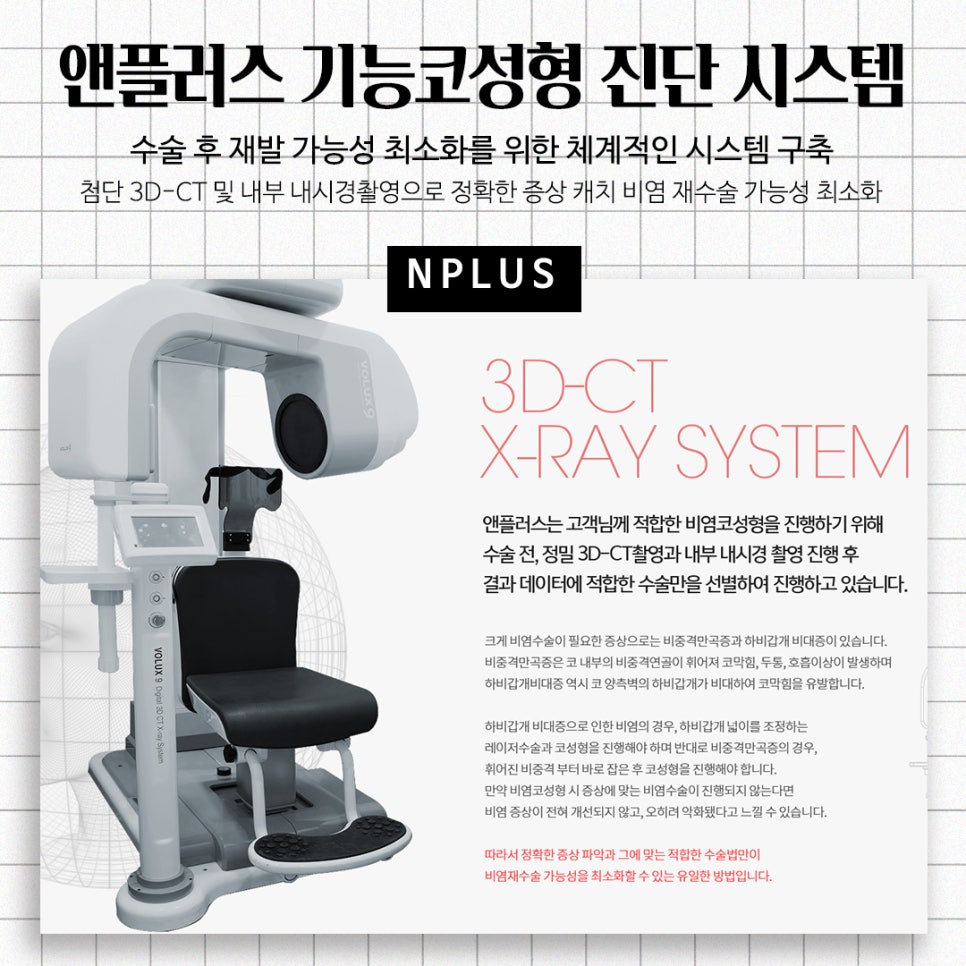
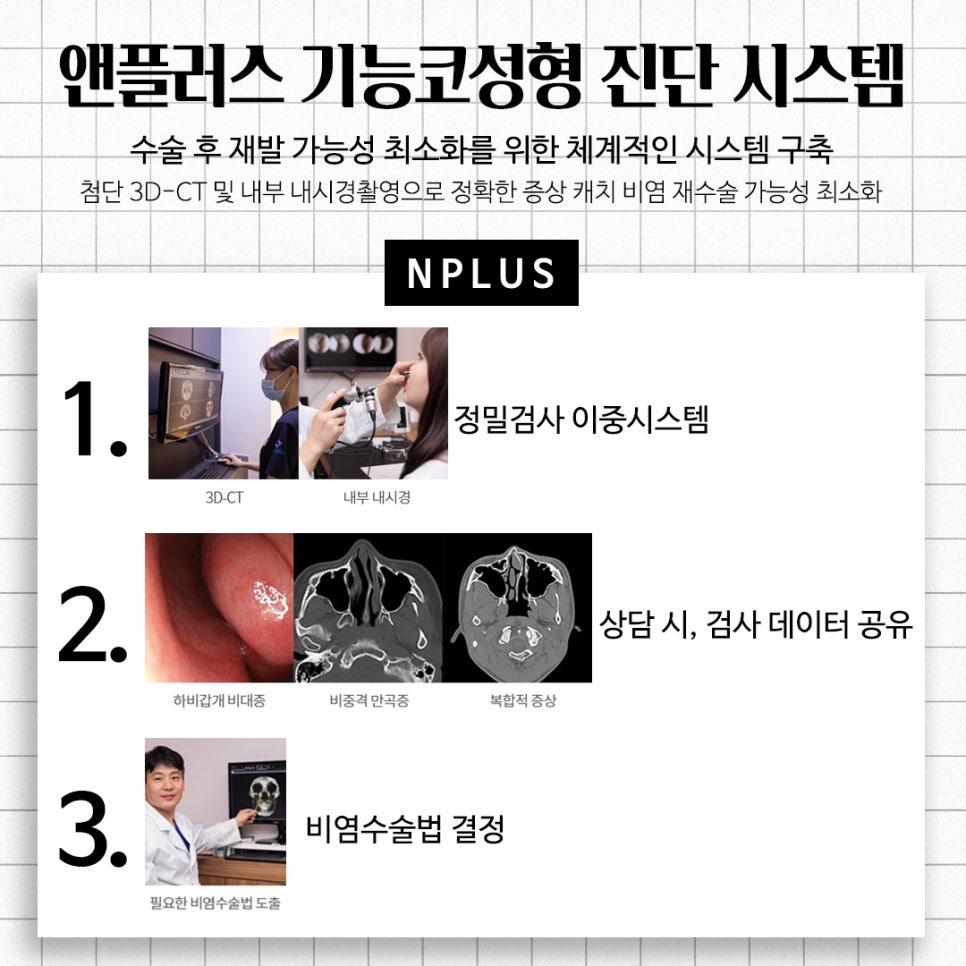
At Ojiko Plastic Surgery & N+, in order to perform functional rhinoplasty, we carry out allergy testing, internal endoscopy,
and 3D-CT imaging, and select only the nose surgery methods that are suitable for the resulting data.
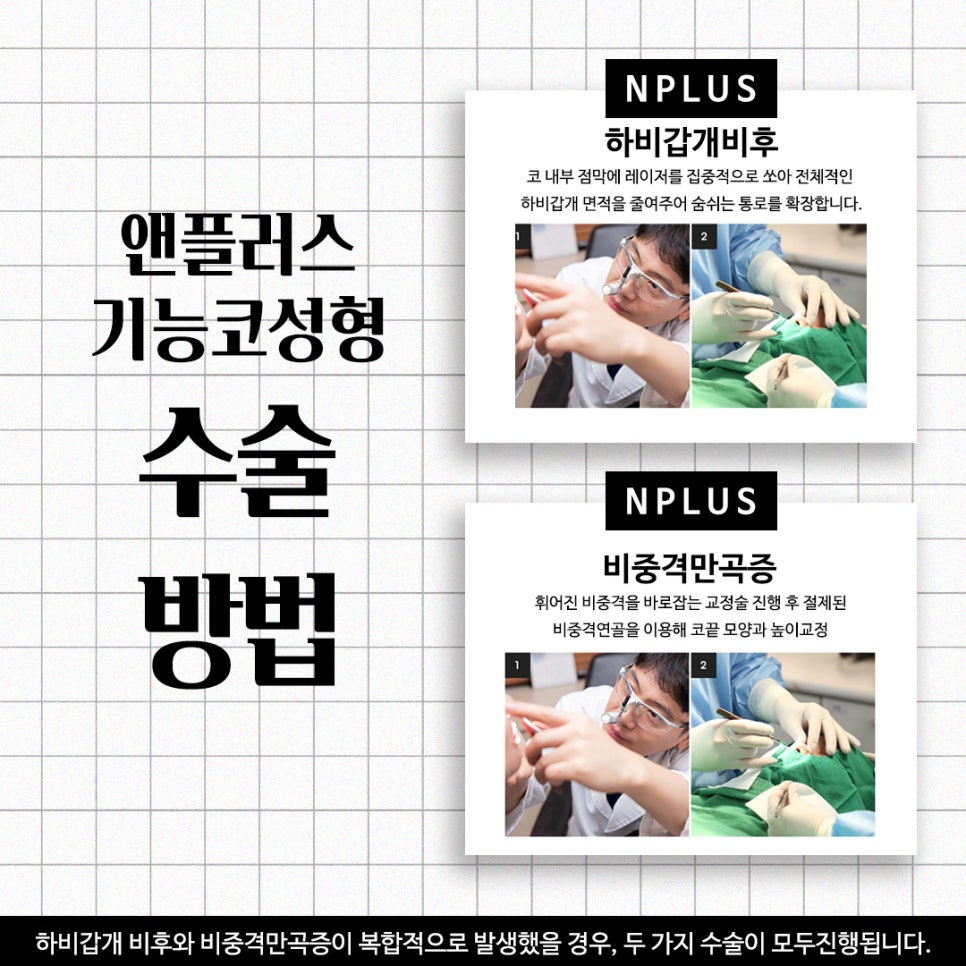
The main cases that can receive nose surgery insurance benefits are deviated septum and inferior turbinate hypertrophy.
A deviated septum occurs when the cartilage that divides the nose in half is bent, causing nasal congestion, headaches, and breathing abnormalities,
and inferior turbinate hypertrophy also causes nasal congestion because the inferior turbinates on both inner walls of the nose become enlarged.
For a deviated septum, rhinoplasty is performed after correcting the deviated septum, while inferior turbinate hypertrophy requires
laser surgery to adjust the size, along with rhinoplasty.
If rhinitis surgery is performed without the appropriate surgery for the symptoms, the rhinitis symptoms may not improve at all and may even
feel worse. Therefore, accurately identifying the symptoms and proceeding with the appropriate surgical method can minimize the possibility of repeat rhinitis surgery.

Lastly, here is the procedure for nose surgery insurance benefits.
-
Detailed examination
-
Confirm eligibility for payment and reimbursement rate
-
Proceed with surgery and treatment
-
Check the documents needed for actual expense insurance claims and request issuance from the hospital
-
Submit individual documents to the insurance company
-
Receive insurance payment after the insurer’s individual review
The process above is how it works, and because nose surgery is one of the more advanced surgeries, it should be performed at a place with excellent skill and ample
experience, along with technical expertise based on strong capabilities, so that rhinitis can be overcome and post-surgery nasal shape and satisfaction can be improved.
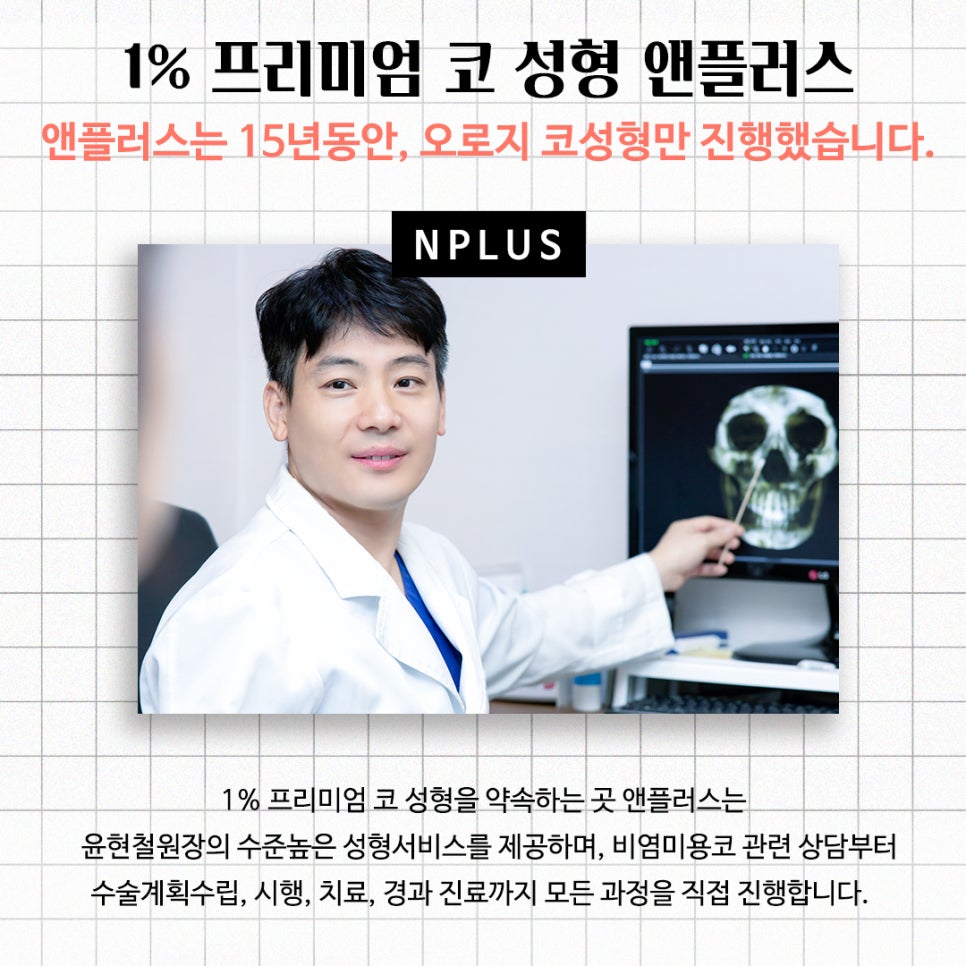
That concludes our explanation of nose surgery insurance. I hope this article is of great help to those who are considering nose surgery because of nasal congestion in the fall.
Thank you^^*
�