What causes nasal congestion?
You need to take a good look inside the nose.

Hello, this is Ohjiko Plastic Surgery & N Plus, where we have performed only nose surgeries for 15 years.
Today, we have prepared information about the causes of nasal congestion.

What causes nasal congestion?
When the nose feels blocked while breathing, it means that the passage through which air enters the nose has become narrower.
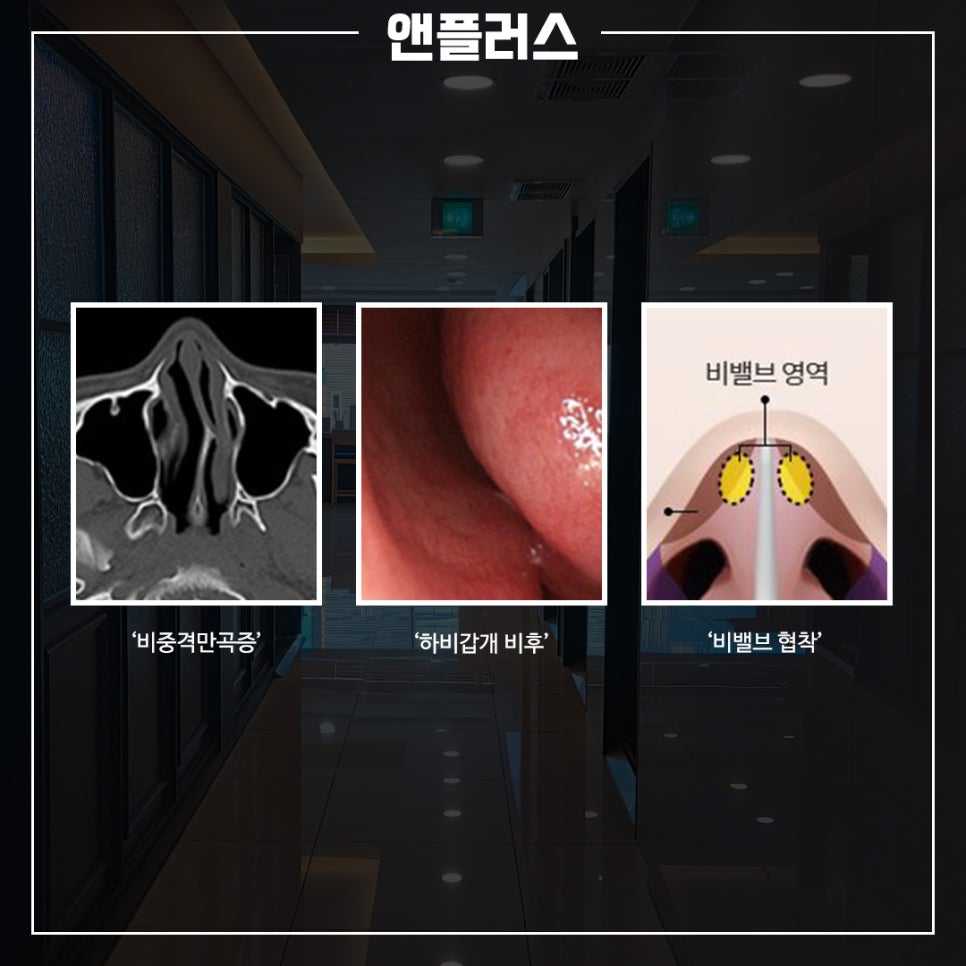
In cases where the passage becomes narrow, if the septum, which is the divider inside the nose, is bent and one side is narrowed,
or if the angle between the nasal septum and the outer nasal structure, called the nasal valve, becomes narrow,
and if you look closely inside the nose, it is not a large empty space but has about three pieces of soft tissue protruding.
These are called the superior turbinate, middle turbinate, and inferior turbinate. Among them, the largest is the inferior turbinate, and when the inferior turbinate tissue is
larger than its normal size, the passage can become narrower due to hypertrophic rhinitis caused by inferior turbinate hypertrophy.
In other words, septal deviation, nasal valve stenosis, and hypertrophic rhinitis can be causes of nasal congestion.


How is nasal congestion treated?
Septal deviation - If the septum is bent, there are various ways to straighten the bent part, such as removing the deviated septum.
Nasal valve stenosis - There is nasal valve correction surgery that widens the narrowed area when air passes through the nasal cavity.
Inferior turbinate hypertrophy - There is rhinitis correction surgery that reduces the volume of an overly swollen inferior turbinate using radiofrequency or a laser.
The nasal valve is broadly divided into the internal nasal valve and the external nasal valve. The external nasal valve refers to the lower outer side of the nostril on the right.
Some people notice that area collapsing inward when they inhale through the nose. In such cases, it is called "external nasal valve stenosis."
Because the supporting strength of the cartilage just below the nasal bone is weak, nasal congestion can occur.
Depending on the cause, nasal valve correction surgery may be necessary.

If rhinitis surgery is performed too excessively, there is something called "empty nose syndrome." When viewed through endoscopy or CT, the inside of the nose appears as if it has been hollowed out like a cave,
and some people suffer because, for example, when they eat something like a peppermint candy, they keep feeling a cool sensation flowing into their nose.
The cause is that the inferior turbinate has been removed too much.
Normally, when air enters the nose, the inferior turbinate helps create what is called laminar flow.
It is a normal structure that divides the air evenly in layers, adjusts the temperature appropriately, and adds a bit of moisture.
If too much is removed without considering this function, air enters the nose in what is called "turbulent flow" (air movement that is irregular and abnormal),
so the air swirls as it enters the nose.
In that case, even though a lot of air enters the nose, a person feels significant discomfort and, paradoxically, feels as if the nose is blocked.
Because dry air enters, the nose becomes dry and uncomfortable.
If empty nose syndrome develops, it is very difficult to improve, so when performing inferior turbinate surgery,
it is important to preserve as much of the normal tissue as possible and reduce it only minimally back to its original normal size.
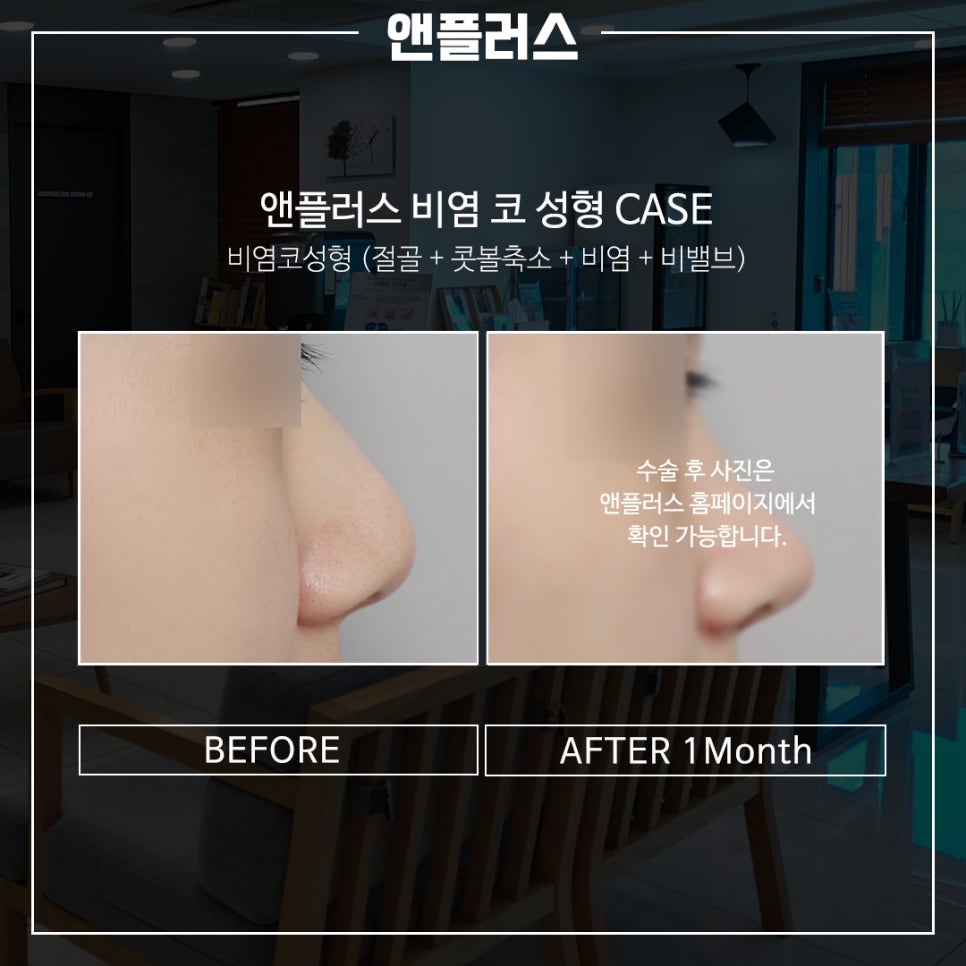
(These are before-and-after photos of actual rhinitis surgery at N Plus that caused nasal congestion.)
So far, we have looked at septal deviation, nasal valve stenosis, and hypertrophic rhinitis, which are causes of nasal congestion and make it difficult to breathe through the nose. I hope this article is very helpful for those who are curious about the causes of nasal congestion. Thank you^^