
Hello. This is Ozigo Hospital & Plus, thinking only about your beautiful and healthy nose.
Today’s topic is autologous rib cartilage rhinoplasty.
Most people in Korea share East Asian features, so a low nasal bridge and a blunt nasal tip account for a large part of the reasons for undergoing rhinoplasty.
Accordingly, when performing rhinoplasty, the bridge is augmented with an implant, and the tip is operated on using autologous tissue or autologous cartilage.
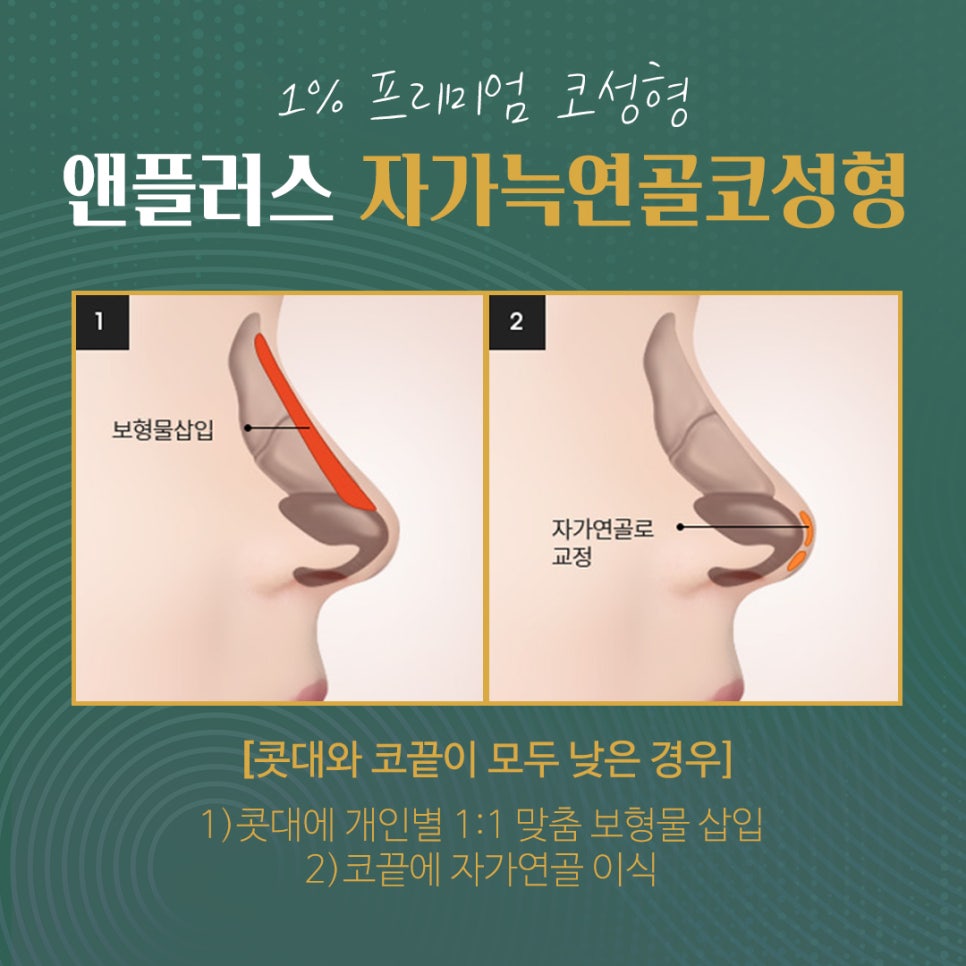
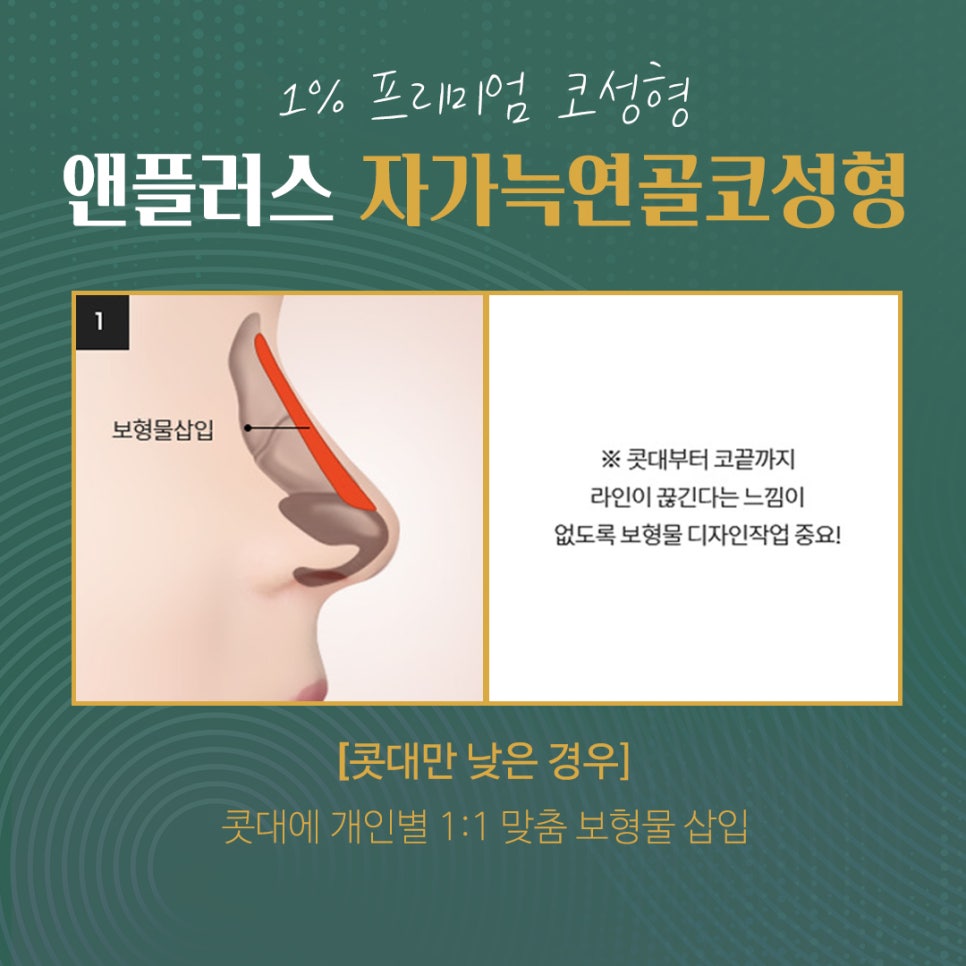
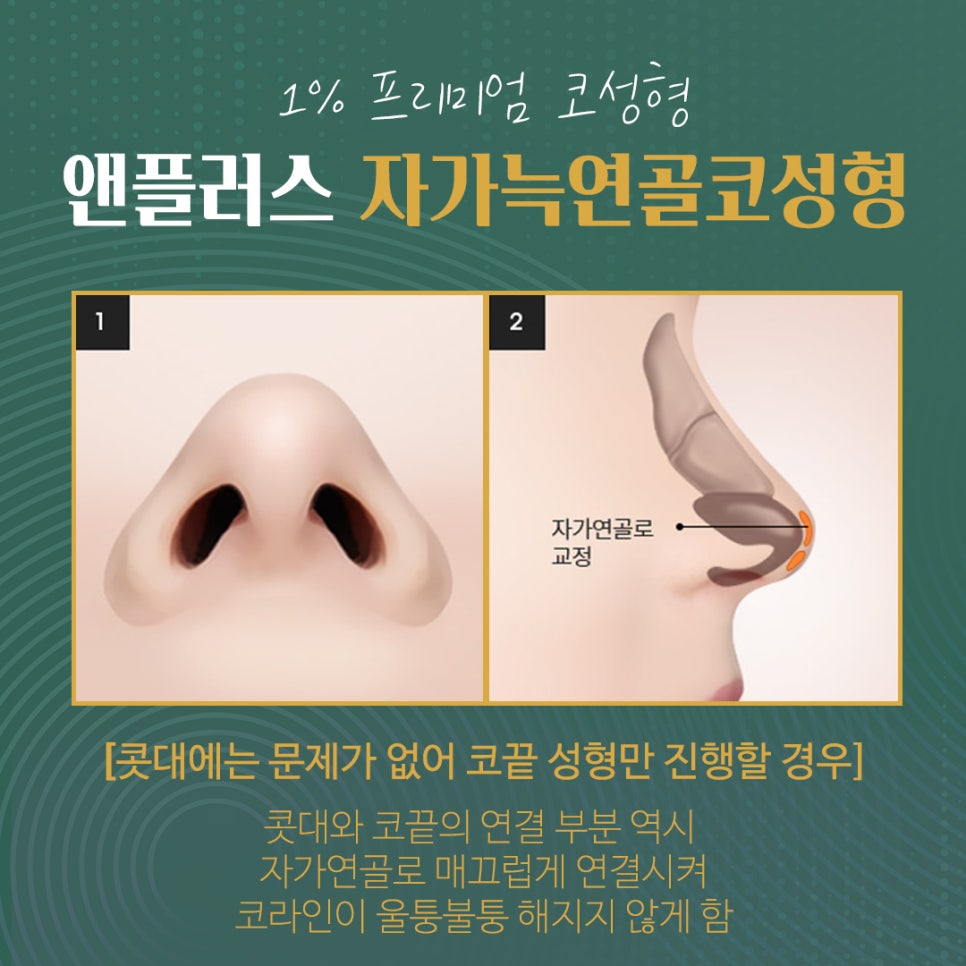
In general, when undergoing rhinoplasty and both the bridge and tip are low, silicone is used for the bridge, while ear cartilage, septal cartilage, or autologous rib cartilage is used for the tip.
If only the bridge is low, the surgery is performed by inserting an implant. Lastly, if only the tip is drooping, correction is done using autologous cartilage without an implant.
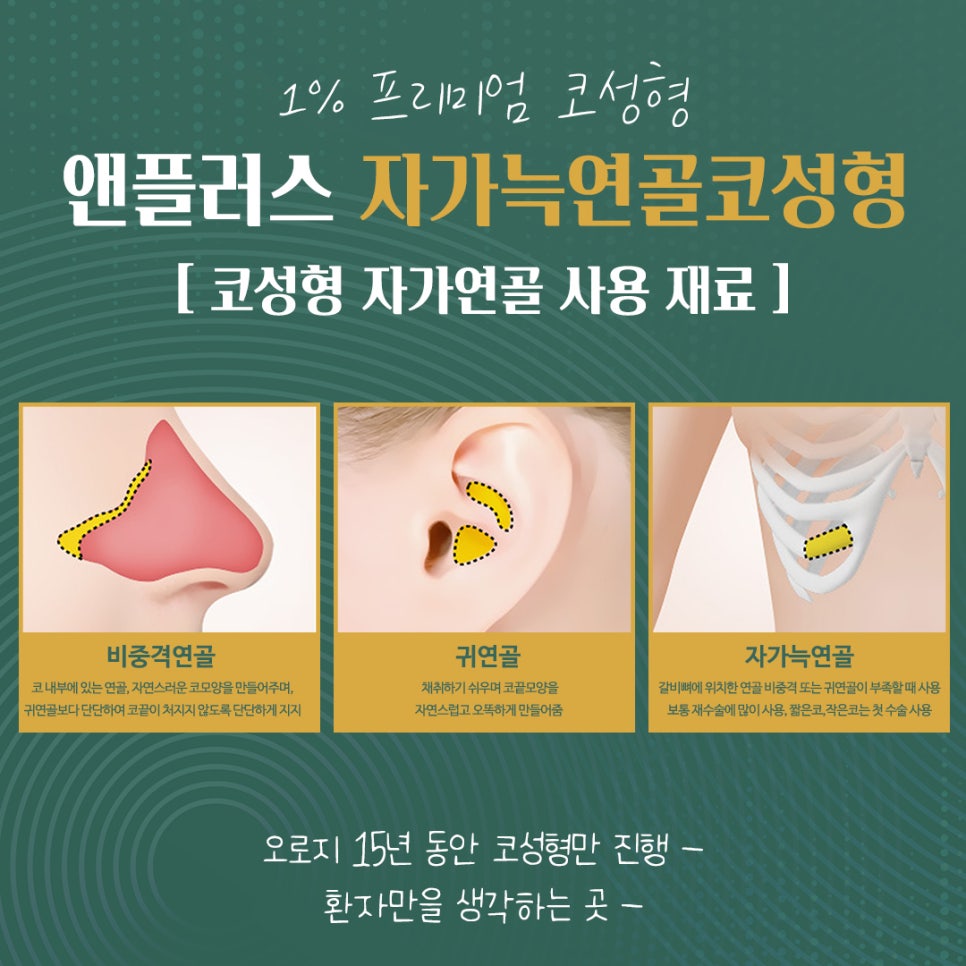
Among the autologous cartilage materials used in rhinoplasty, autologous rib cartilage was previously used mainly for revision surgery. The reason is that it has fewer side effects and is a firm, strong material. However, taking advantage of these benefits, autologous rib cartilage rhinoplasty is now also being performed for primary surgery.
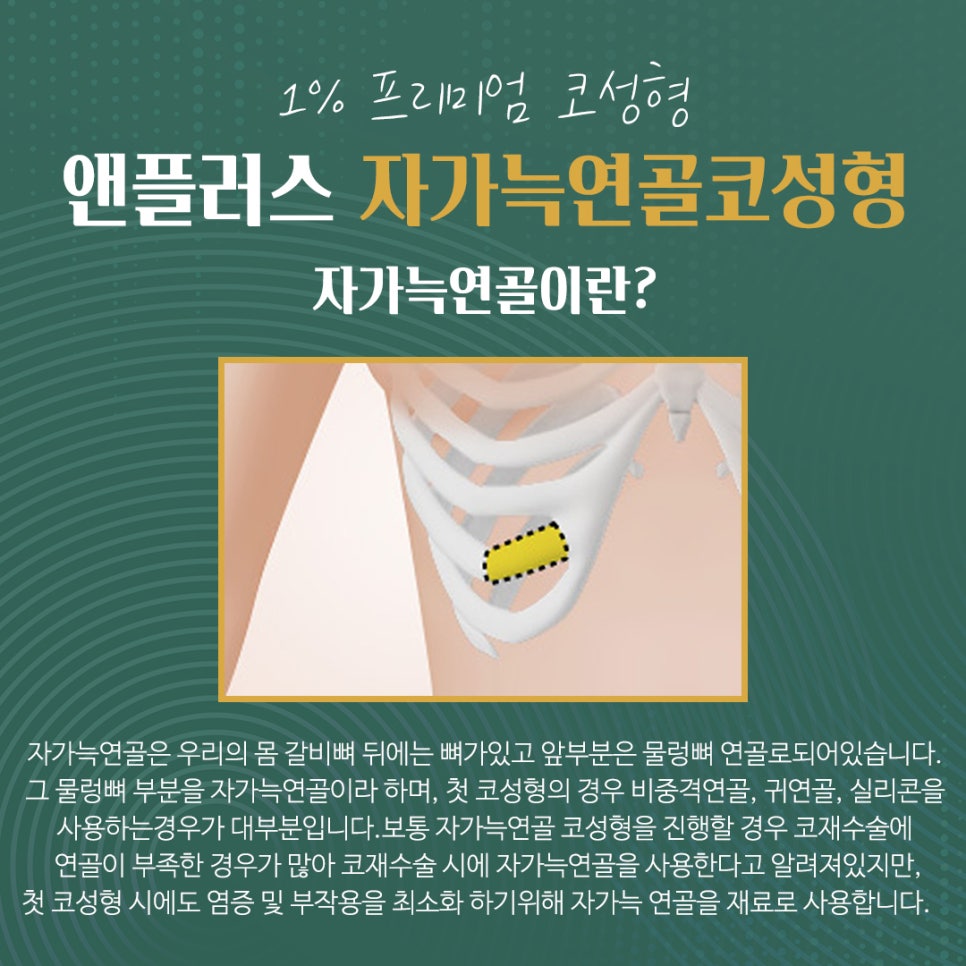
What is autologous rib cartilage rhinoplasty? Autologous rib cartilage refers to the cartilage on the front part of our rib bone, while there is bone behind it.
The soft cartilage part is called autologous rib cartilage, and it refers to the surgery that uses it as material for the nasal tip or nasal bridge during rhinoplasty.
The advantages of autologous rib cartilage rhinoplasty are that, compared to septal cartilage or ear cartilage, it is larger, firmer, and available in greater quantity.
Because it is autologous tissue, it can minimize inflammation and side effects after surgery, and it is used because the likelihood of side effects such as shape changes is low.
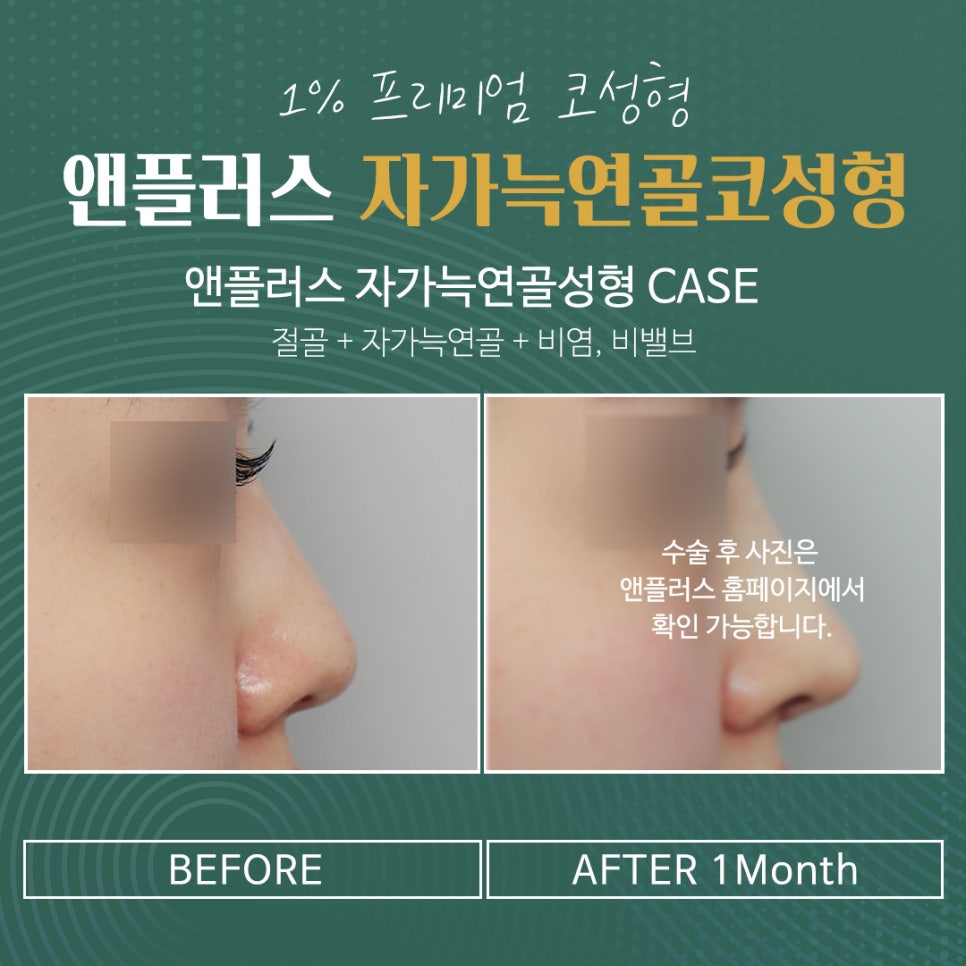
(The above image shows before-and-after images of an actual autologous rib cartilage rhinoplasty at N Plus.)
Those considering autologous rib cartilage rhinoplasty are, first, people who lack ear cartilage or septal cartilage due to previous revision rhinoplasty.
Second are people whose noses are small, low, and upturned. The partition that divides our nostrils into two is called the septal cartilage, and this septal cartilage varies in shape from person to person. In many cases, the cartilage is also small, and in such people the ear cartilage is also small and weak, so autologous rib cartilage rhinoplasty is performed in these cases.
However, even when undergoing autologous rib cartilage rhinoplasty, if you approach it only from an aesthetic or cost perspective, you may overlook the functional aspects of the nose, which can lead to revision surgery. Therefore, we recommend having the procedure done at a place with abundant clinical experience and extensive knowledge of the nose and materials.
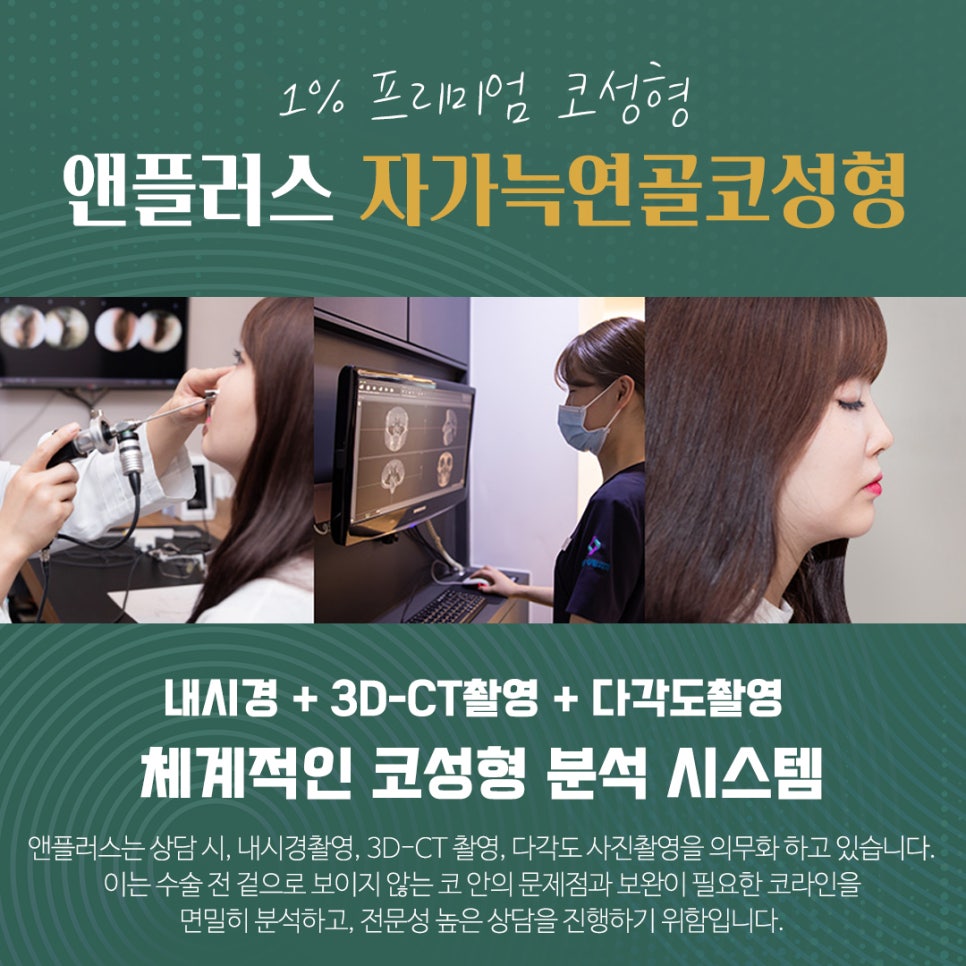
Therefore, when choosing a hospital for autologous rib cartilage rhinoplasty, you should carefully check whether it is equipped with devices that allow examination of your nose, whether the medical staff has extensive experience, and whether they provide thorough aftercare. Only then can you achieve more satisfactory results.
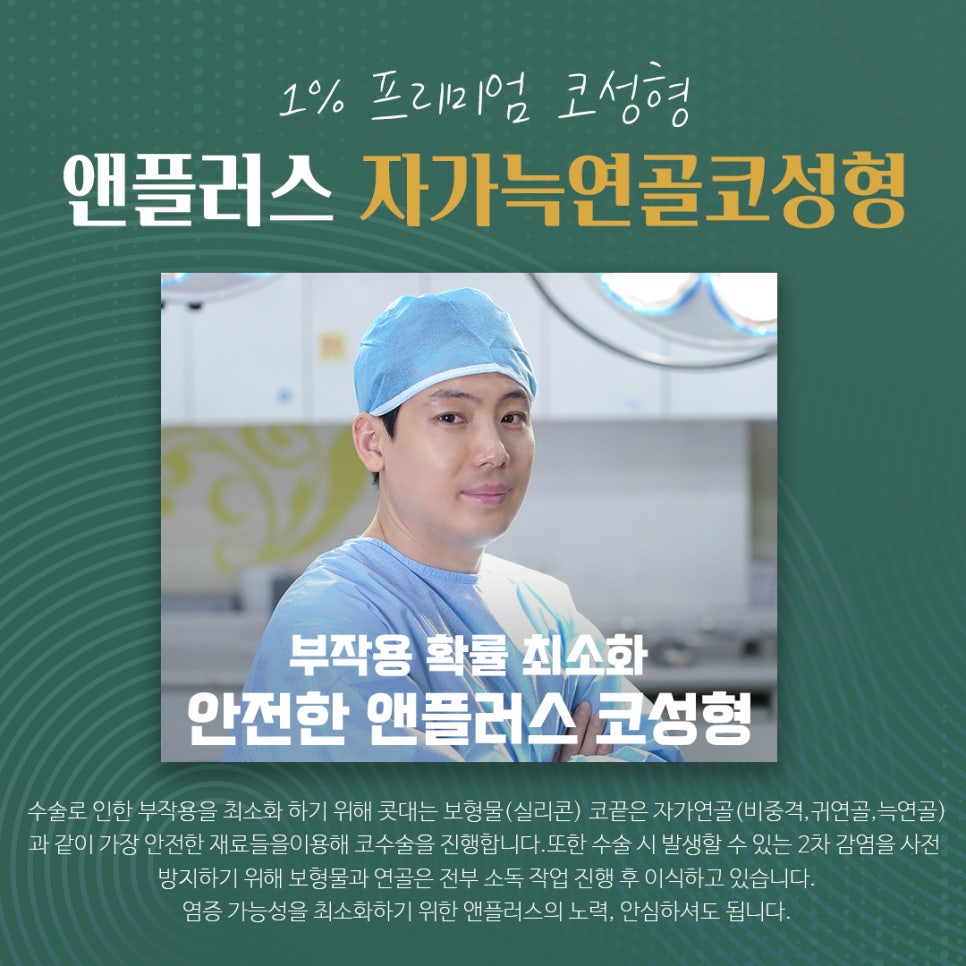
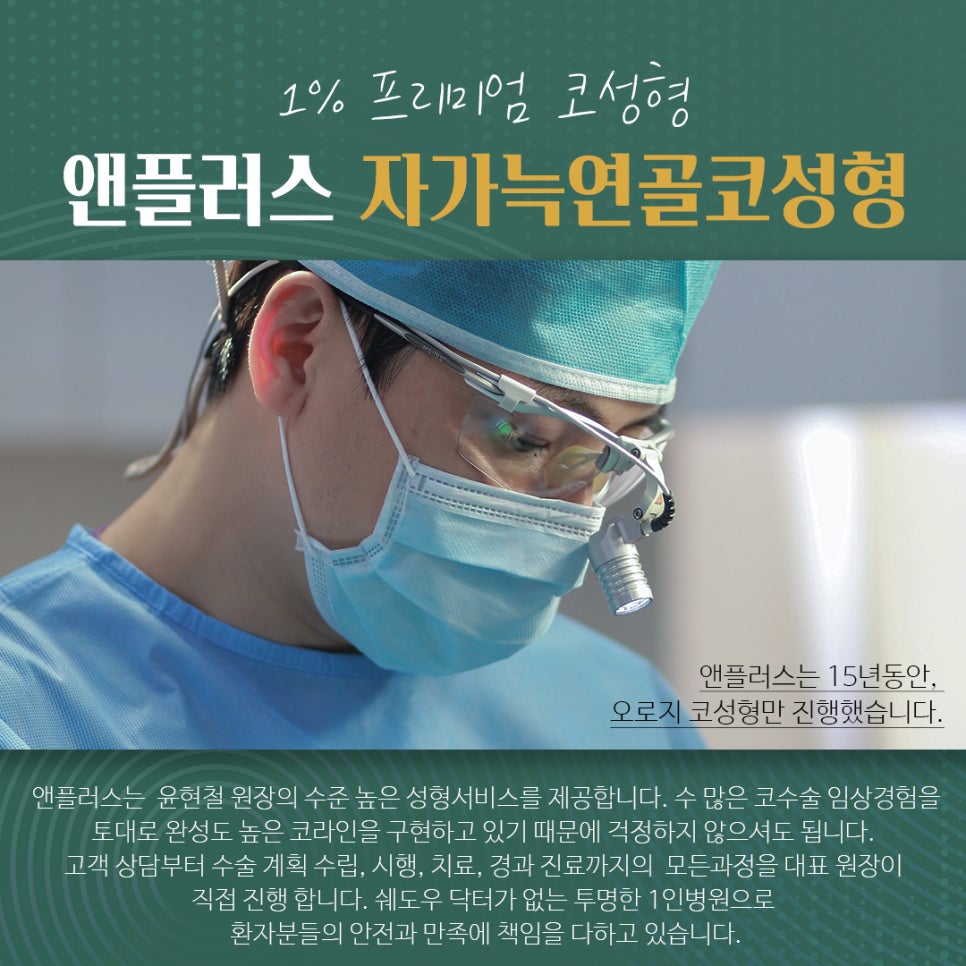
At N Plus, the chief director personally handles every step, from patient consultation to surgical planning, procedure, and follow-up treatment.
As a transparent one-doctor clinic with no shadow doctor, we prioritize patient safety and satisfaction.

That concludes the information we’ve shared about N Plus autologous rib cartilage rhinoplasty. We hope this post is very helpful for those considering revision rhinoplasty or those looking into surgery with a safer and stronger material. Thank you^^