
Hello. We are Ogico Hospital & N Plus Clinic, where for 15 years we have focused only on your healthy and beautiful nose.
The topic prepared this time is non-implant rhinoplasty using autologous cartilage.

These days, appearance is considered part of one's qualifications, so people of all ages and genders are increasingly interested in their looks. In the past, there was a tendency to pursue cosmetic surgery that looked obviously enhanced, but today the trend is to bring out the individuality of one's face while improving the areas that felt lacking. As a result, interest in rhinoplasty is high, because the nose is located at the center of the face and is the most three-dimensional feature among the facial features, so it can be said to determine the overall impression of the face.

There are various methods of rhinoplasty, and the method and materials used vary depending on the individual's nose shape and condition. Usually, surgery is performed using silicone for the bridge and autologous cartilage for the tip, but for those who want a more natural look or feel burdened by using silicone, information about non-implant rhinoplasty is becoming more sought after.

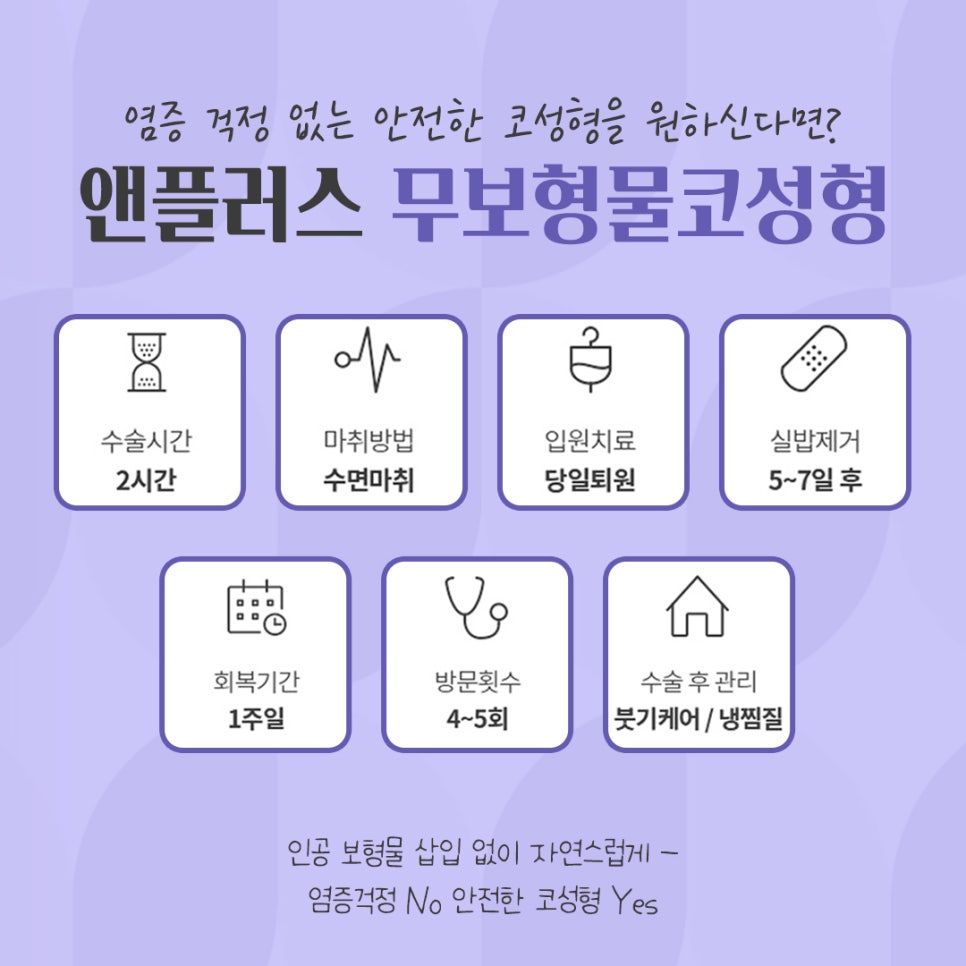
What is non-implant rhinoplasty? It is a surgery that does not use silicone (an artificial implant) for the bridge and uses autologous cartilage for the tip.
In the case of non-implant rhinoplasty, because autologous cartilage is used, the likelihood of inflammation is significantly lower, making it a suitable procedure for those who are very sensitive to inflammatory reactions or want a more natural-looking rhinoplasty.

Types that may need non-implant rhinoplasty include cases where the bridge is high but the tip is drooping, a hump nose, a tip that is upturned or, conversely, long, and a drooping tip.
When performing non-implant rhinoplasty, autologous cartilage is harvested and surgery is performed on the nasal tip. Autologous cartilage includes septal cartilage, ear cartilage, and autologous costal cartilage. If there is not enough autologous cartilage or it is difficult to harvest, safe donated costal cartilage that has been FDA-approved is used.
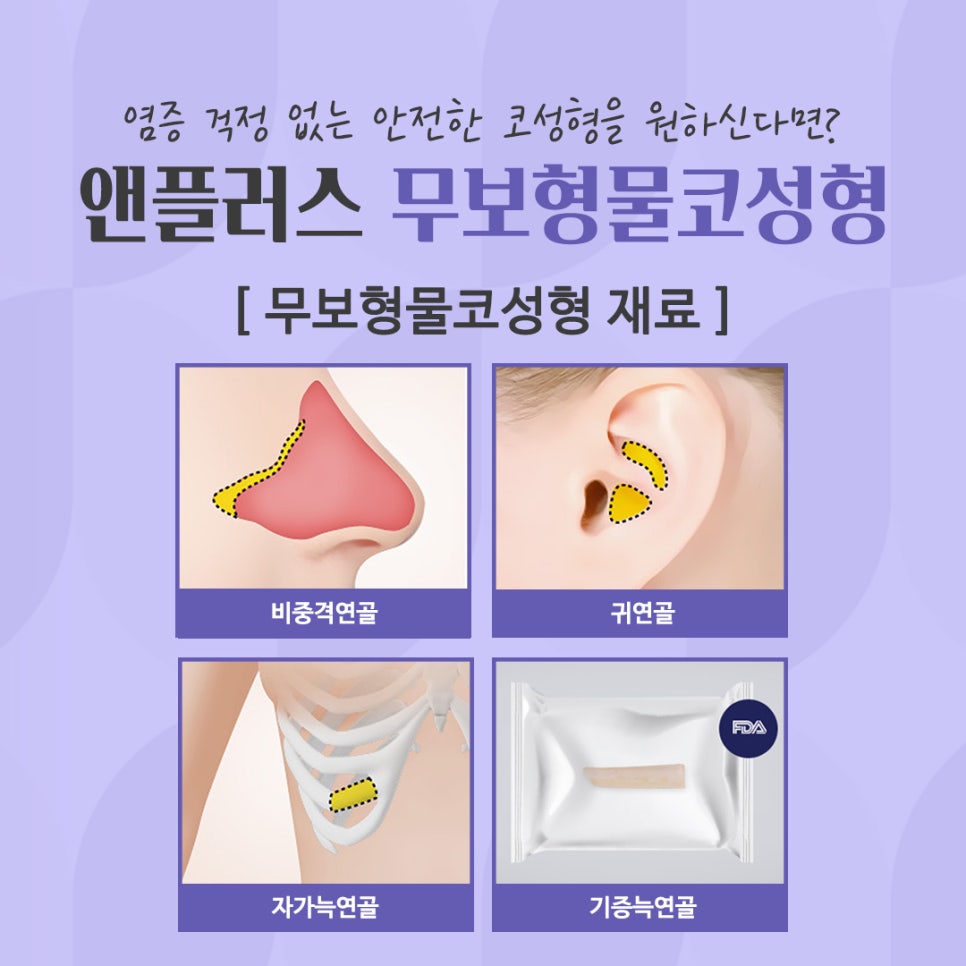
Septal cartilage is the cartilage that supports the nose and the partition that divides the nostrils, and it creates a natural nose shape. It is also firmer than ear cartilage, so it provides solid support to keep the nasal tip from drooping. Ear cartilage is relatively easy to harvest compared to other cartilage and is used to make the tip look natural and refined. Autologous costal cartilage is cartilage located in the ribs and is used when septal cartilage or ear cartilage is insufficient. It is often known as a material used in revision surgery, but because it is large and firm, it is also widely used in primary surgery. Finally, when harvesting autologous cartilage is difficult, donated costal cartilage is used. We use donated costal cartilage approved by the U.S. FDA, and because it has undergone special processing, the chance of rejection during grafting is low, so it is used as an alternative to autologous cartilage.
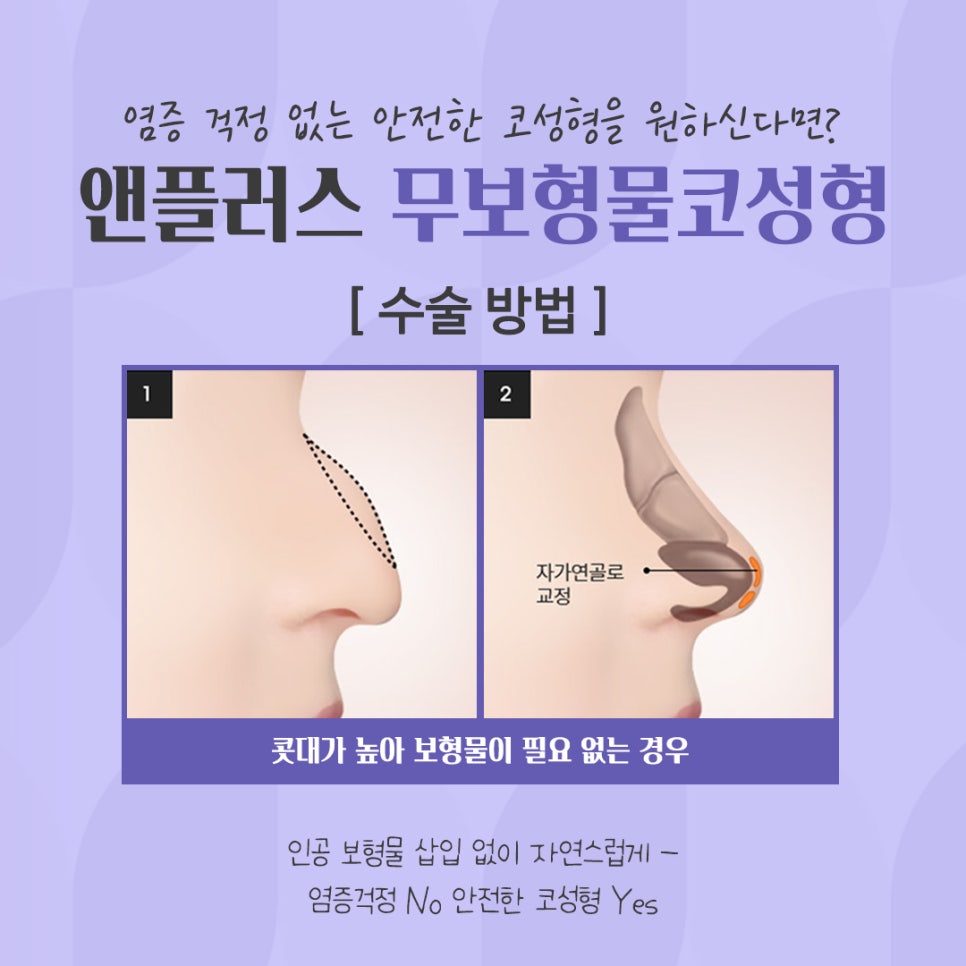
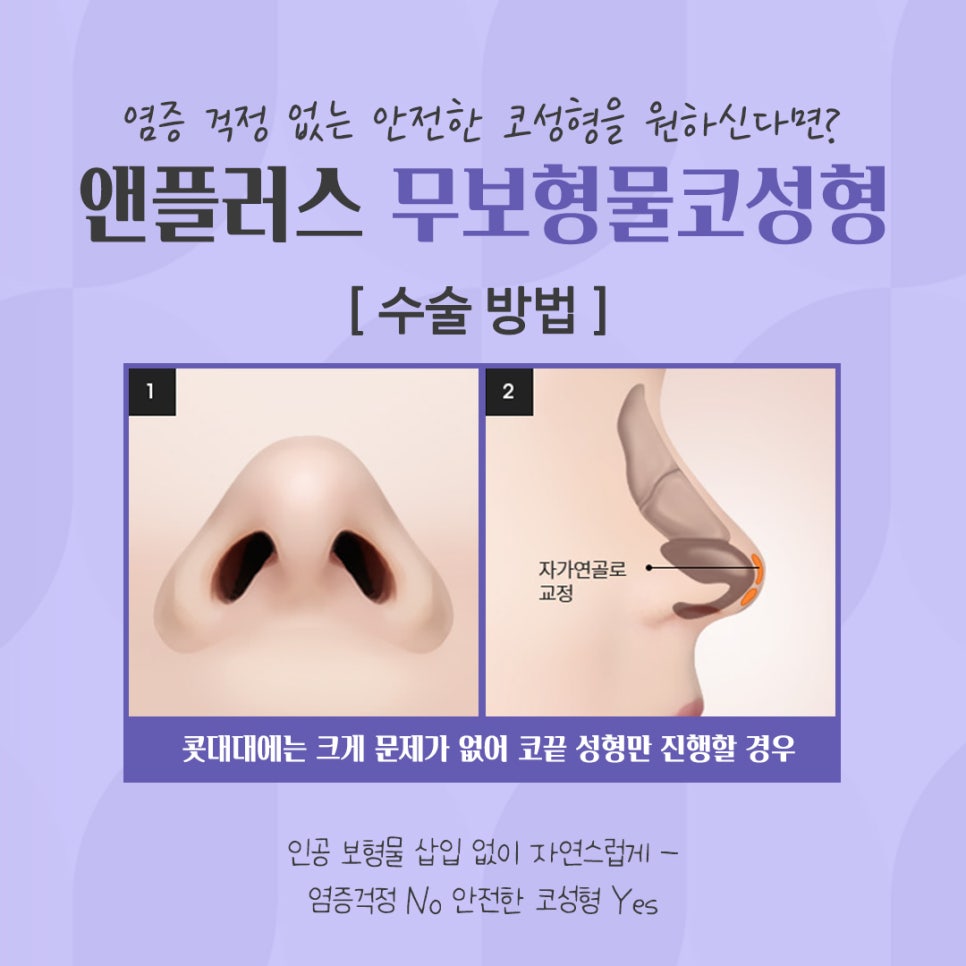
The surgical methods for non-implant rhinoplasty can largely be divided into two types. One is when the bridge is high enough that an implant is not needed, and the other is when the bridge is not a major issue and only the nasal tip is corrected. In cases where the bridge is high enough that an implant is not needed, if there is a hump on the bridge, the hump is removed or osteotomy is performed, and the tip is corrected using autologous cartilage.
If there is no problem with the bridge, the nasal tip is corrected with autologous cartilage and then naturally connected to the bridge, allowing the nasal line to be corrected in a natural way.
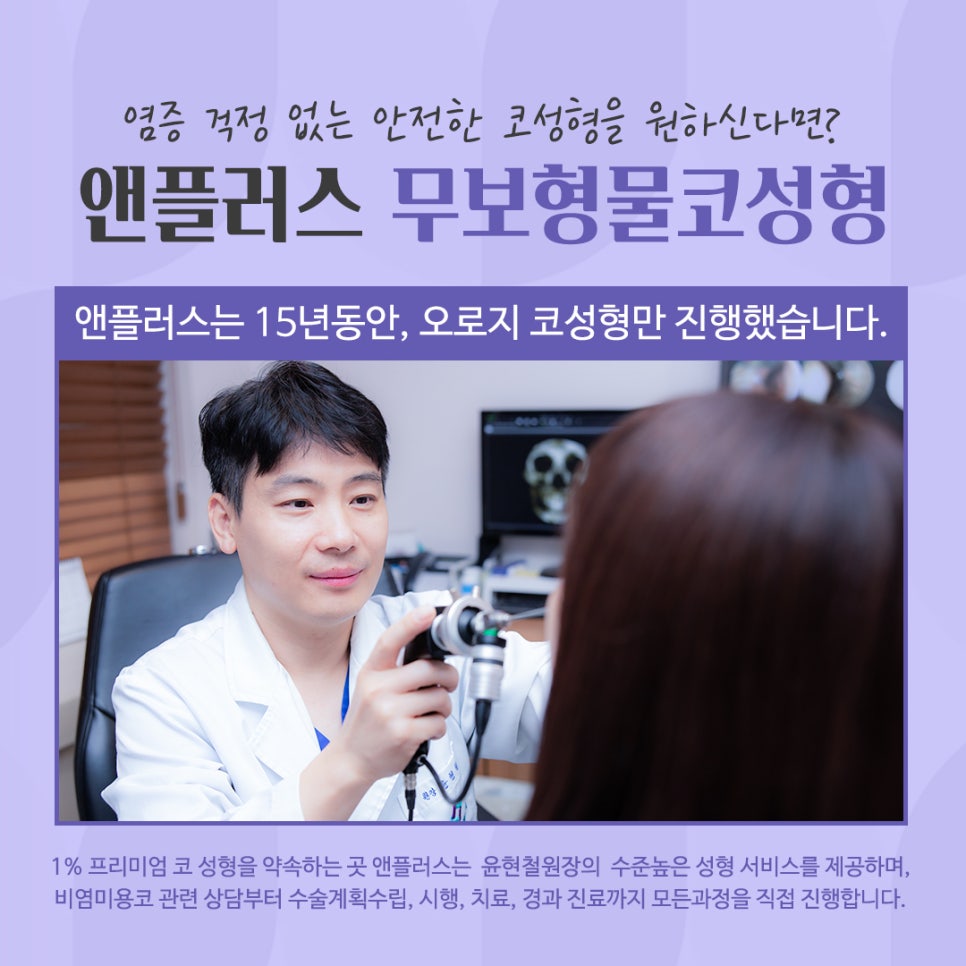
As shown above, non-implant rhinoplasty can reduce some of the overall burden associated with rhinoplasty, but it is by no means a simple procedure, so you need to look into it more carefully. Although the nose may seem simple on the outside, internally it is a functional organ responsible for breathing and smell, and its structure is more complex than we might think. Therefore, surgery is performed through high-level techniques by medical staff with extensive knowledge of the nose and advanced experience. For this reason, it is important to have the procedure done at a place that can accurately evaluate even these functional aspects, so that the surgery can be highly satisfying.
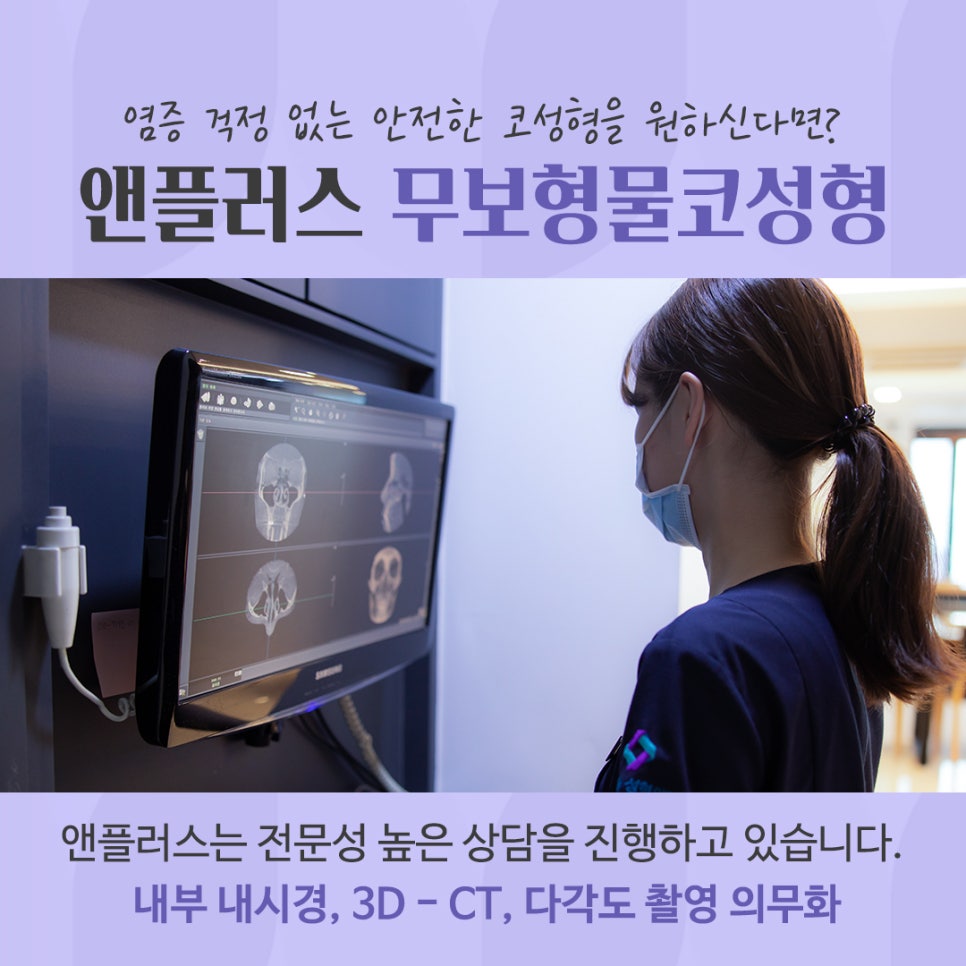
At N Plus Clinic, in order to accurately identify internal issues as well as aesthetic concerns, we first examine the exact problem through 3D-CT scans and internal endoscopy, and then perform customized surgery suited to each patient's condition based on the test results. Representative Director Yoon Hyun-cheol personally oversees every step one-on-one, including surgical planning, the procedure, treatment, and follow-up care. For post-operative care, N Plus Membership Card holders receive a free A/S system for one year after surgery, and a surgery responsibility guarantee system is in place to prepare for any situation that may arise after surgery, such as pain, inflammation, or dissatisfaction with the shape.
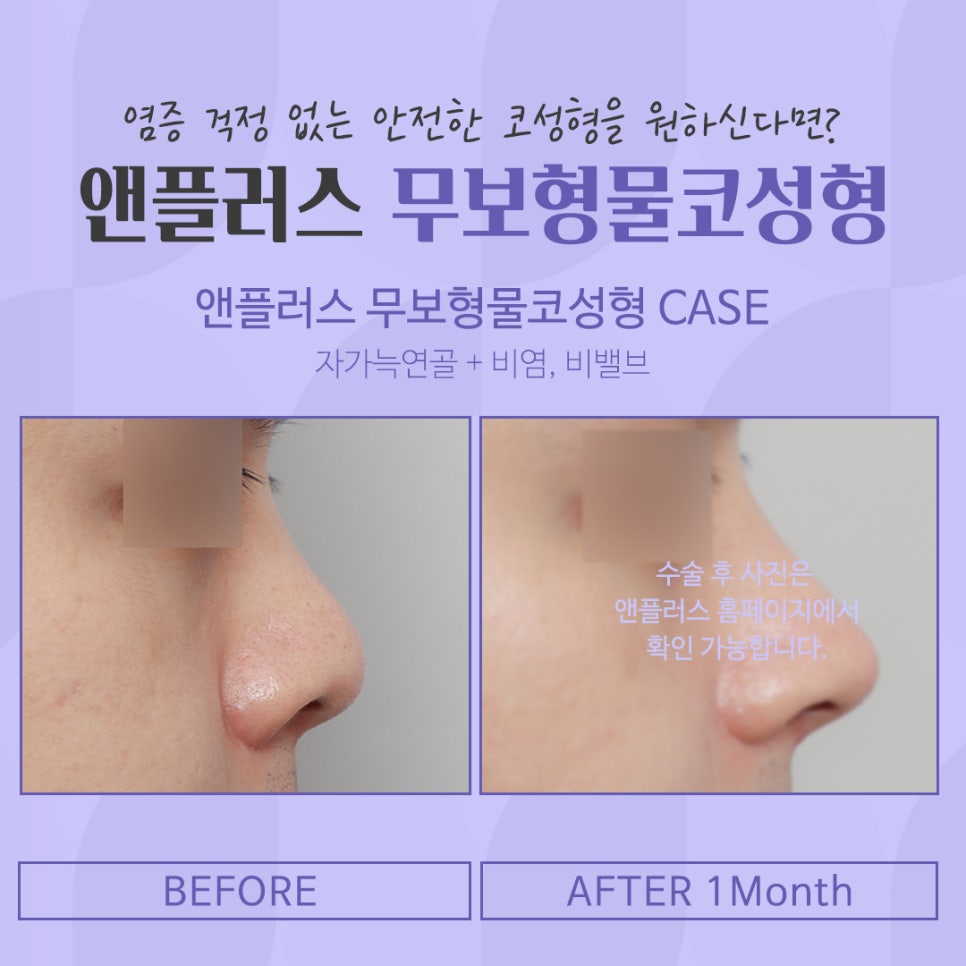
(The image above shows actual before-and-after images of non-implant rhinoplasty at N Plus Clinic.)
That concludes the information about safe non-implant rhinoplasty using autologous cartilage at N Plus Clinic. I hope this article is helpful for those considering a natural-looking rhinoplasty. Thank you.