Let’s Naturally Enhance Your Appearance with Tip Rhinoplasty
Hello. We are OjiKo & Plus Clinic, which thinks only about your beautiful and healthy nose.
The topic we will introduce this time is natural tip rhinoplasty.

These days, improving one’s appearance for personal satisfaction is a trend, and people are trying various methods to address areas they feel are lacking, such as dieting, skin procedures, and makeup. Among them, one area that has been difficult to improve is the nose. The nose is located at the center of the face and is the most three-dimensional part, so it tends to draw a lot of attention. If the bridge is low or the tip is wide, the face can appear broader or give a somewhat outdated impression, which is why many people look into rhinoplasty to improve it.

Among rhinoplasty procedures, there are many inquiries these days about tip rhinoplasty. People who feel that full nose surgery is too burdensome may seek change through tip rhinoplasty and hope for a more defined facial feature effect.
Tip rhinoplasty can be considered in cases where the nasal tip is low, upturned, drooping, or wide. With a surgical method based on the exact cause, you can expect an improvement toward a more natural-looking nasal tip.

However, if tip rhinoplasty is performed indiscriminately or the nose shape is chosen based on trends, it may result in a shape that does not suit the individual and lead to a secondary surgery, so this is an area that must be decided more carefully.
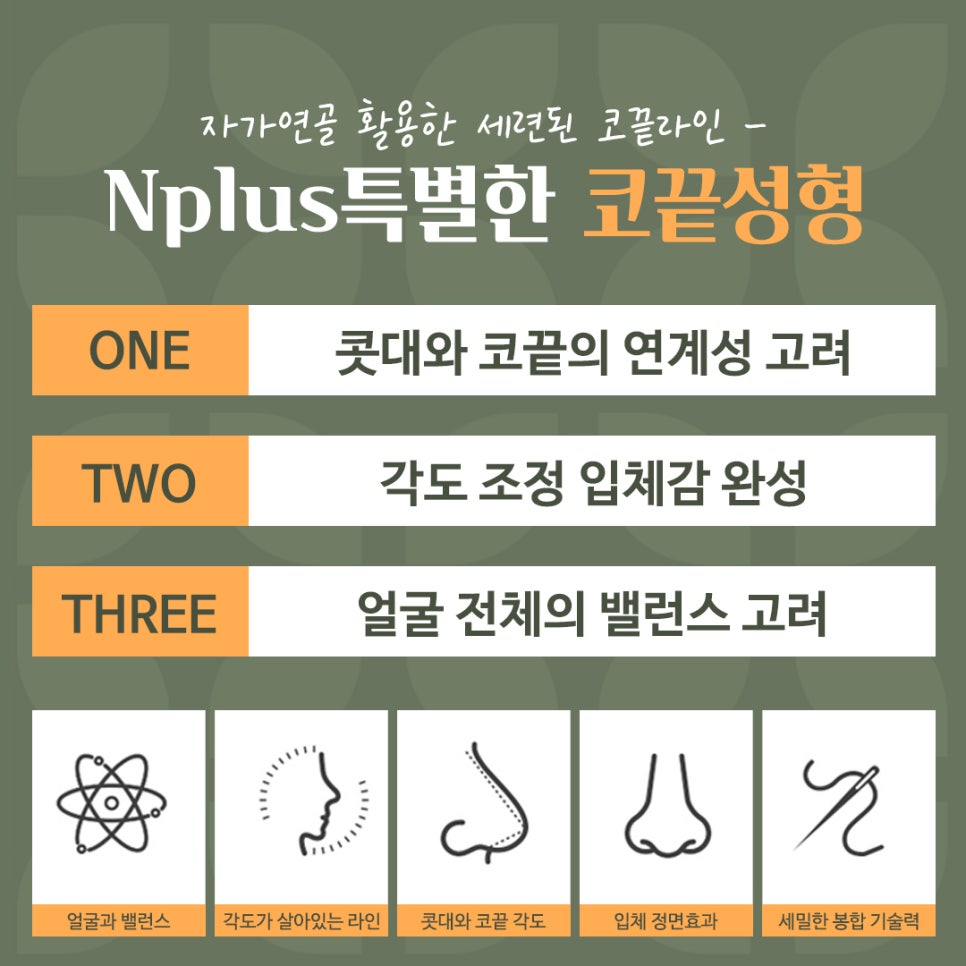
Because each person has different characteristics in their native septal cartilage, alar surface, perinasal soft tissue, skin thickness, skeletal structure, and more, choosing tip rhinoplasty at a place that accurately checks the points mentioned above and proceeds accordingly can lead to a more satisfying result.
Tip rhinoplasty methods can be broadly classified into four types: cases where the nasal tip is low, upturned, drooping, or wide.
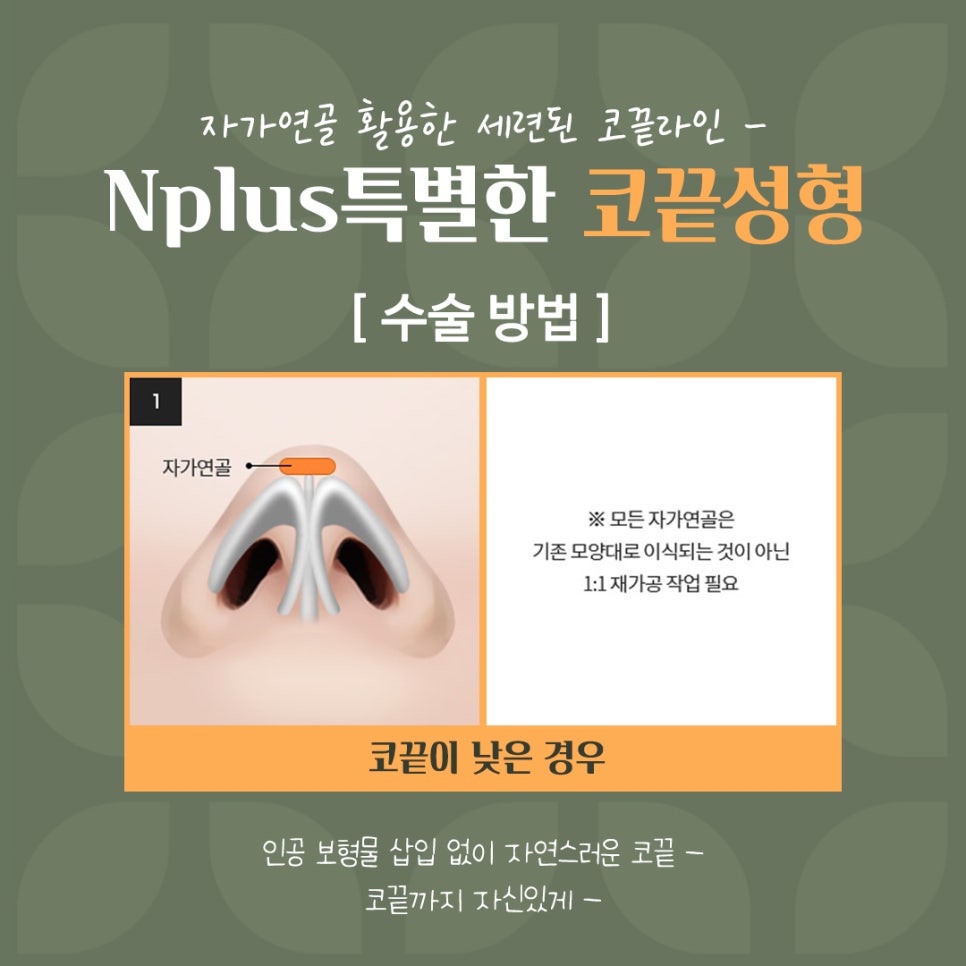
First, in cases where the nasal tip is low, the tip is corrected by additionally grafting autologous cartilage over the nasal tip cartilage.
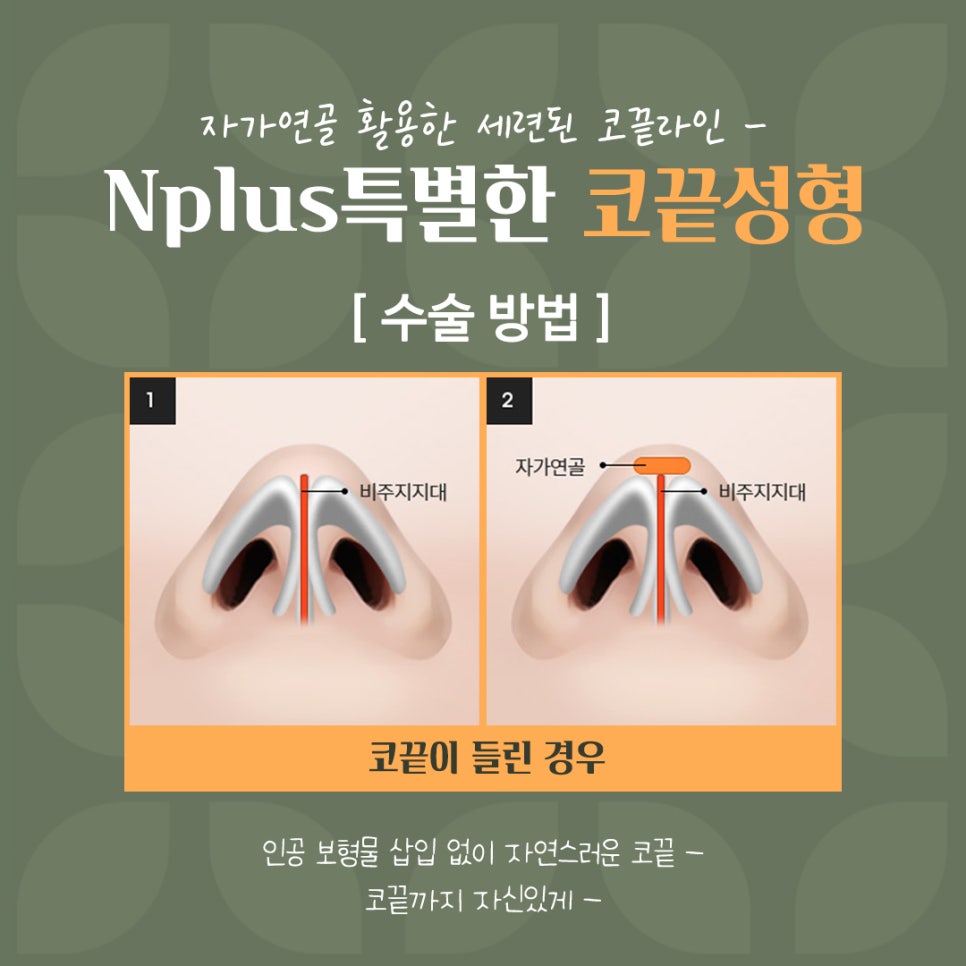
Second, in cases where the nasal tip is upturned, a columellar strut is placed to prevent the nose from being upturned, or septal extension is added, and autologous cartilage is additionally placed on top of the supported nasal tip cartilage to correct the tip shape.
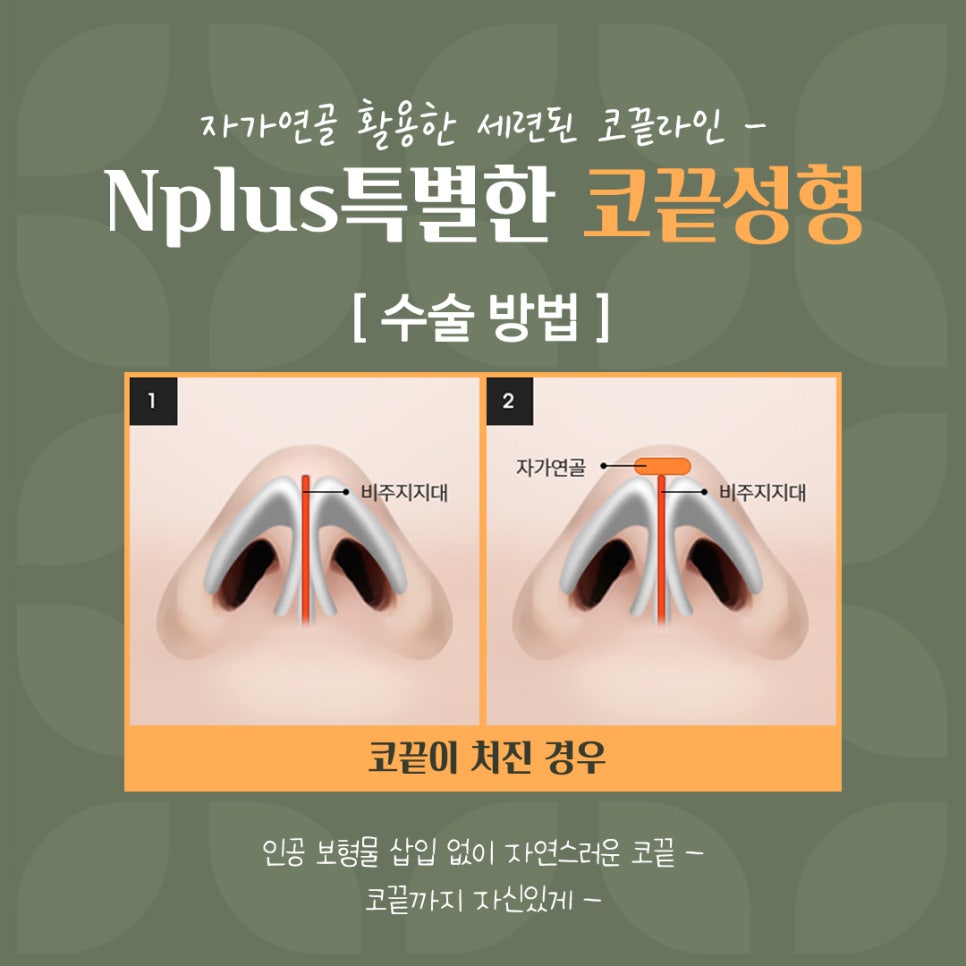
Third, in cases where the nasal tip is drooping, a columellar strut is placed to firmly fix the weak, drooping tip cartilage, and then autologous cartilage is additionally placed on top of the supported tip cartilage to correct the shape of the nose tip.
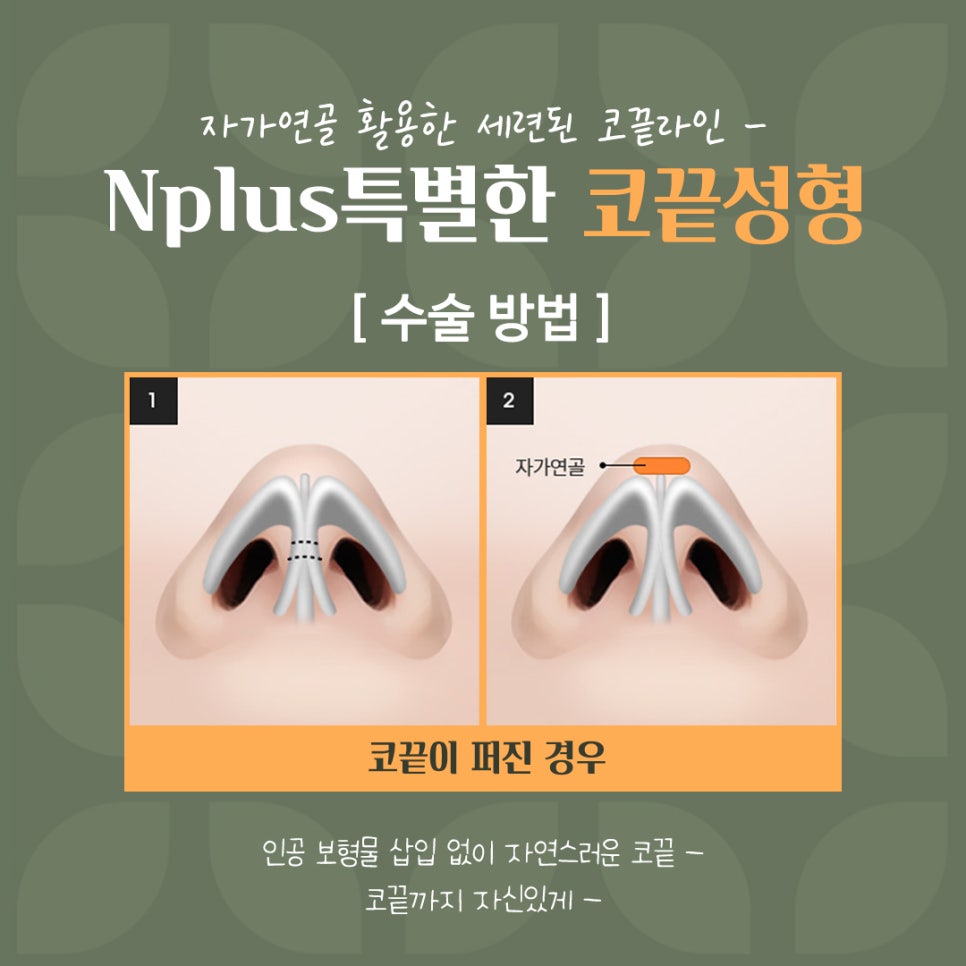
Lastly, there are cases where the nasal tip is wide. In these cases, the widened tip is gathered, tightly tied, and fixed, and if the effect is not sufficient, autologous cartilage is additionally grafted for correction.
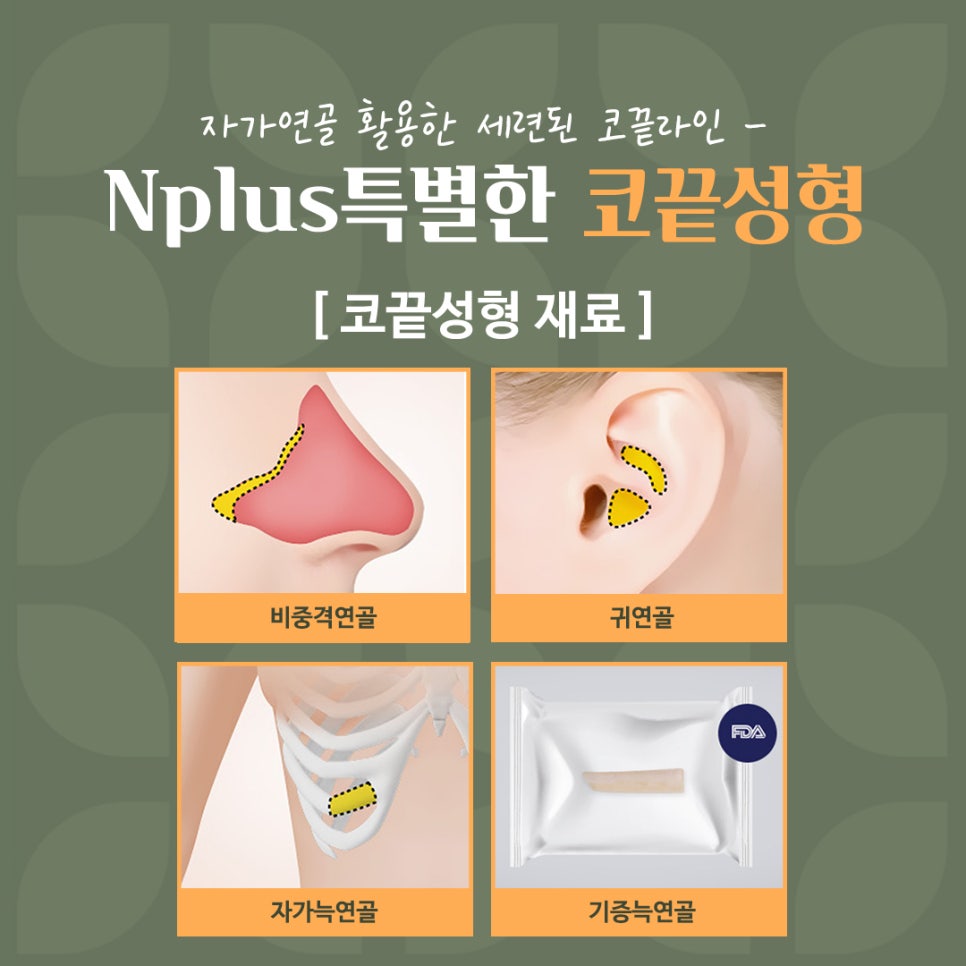
The material most commonly used for tip rhinoplasty is autologous cartilage. Autologous cartilage includes septal cartilage, ear cartilage, and autologous rib cartilage, and when there is not enough autologous cartilage, donor rib cartilage is used for the surgery.
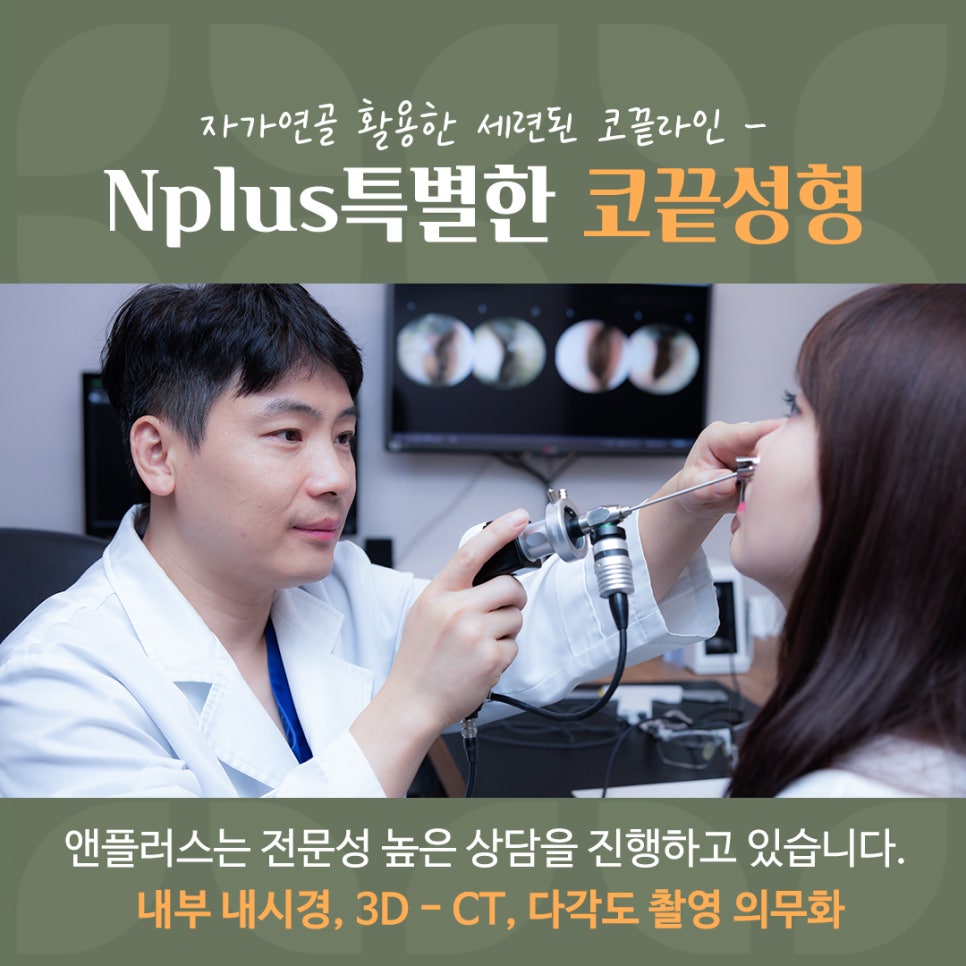
Even tip rhinoplasty alone can be performed using various methods as described above, so we recommend checking your nose carefully before proceeding with surgery. At N Plus Clinic, before tip rhinoplasty, we sufficiently check the lateral view of the nose, and through 3D-CT imaging and internal endoscopic examination, we simultaneously check the internal functional aspects as well. Through accurate confirmation of whether cartilage is used and whether there are any functional abnormalities, we analyze the cause and perform surgery using a method tailored to each individual.

Recently, the number of people undergoing tip rhinoplasty as a standalone procedure has increased. At N Plus Clinic, when performing tip rhinoplasty, we do not simply lift the nasal tip; instead, we consider the overall line from the bridge to the tip. Because the shape, length, angle, and materials used for the nasal tip each differ, we design the most ideal tip shape for each person and perform the surgery accordingly.
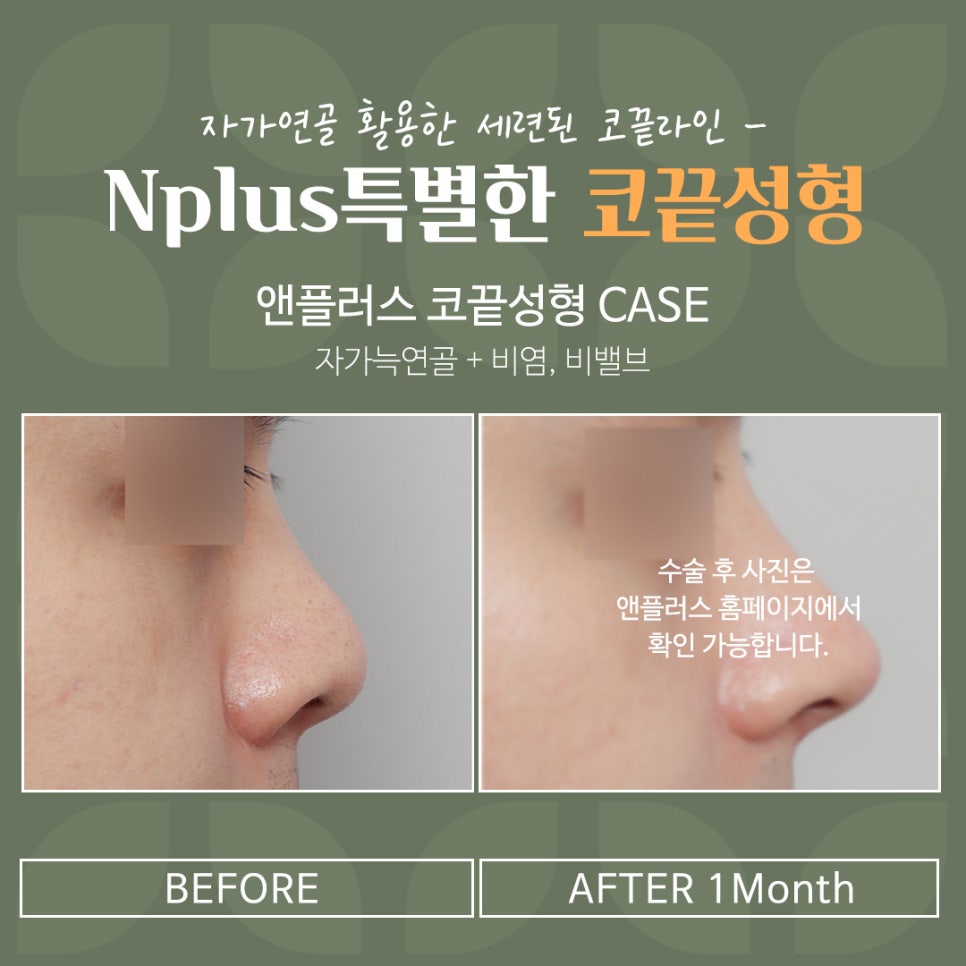
(The image above shows actual before-and-after photos of tip rhinoplasty at N Plus Clinic.)
This concludes our summary of natural tip rhinoplasty. I hope this post is very helpful for those considering tip rhinoplasty because they are unhappy with the shape of their nasal tip. Thank you.