
Hello. This is Ojiko Hospital & Plus, which is dedicated only to your beautiful and healthy nose.
What we will introduce this time is a rhinoplasty revision review using autologous rib cartilage.

The nose is located at the center of our face, so it can be said to be an area that has a major impact on facial balance, three-dimensionality, and aesthetics. For this reason, many people undergo rhinoplasty. As mentioned above, the nose plays a large role in appearance, but it is also a functional organ responsible for breathing and the sense of smell, so it is an important part of the body that requires extra caution and careful consideration.

However, when people undergo rhinoplasty, many approach it easily from an aesthetic or cost perspective, so when they overlook functional aspects or are dissatisfied with the shape, they become highly interested in rhinoplasty revision reviews. Among these, there is also a growing trend of looking into autologous rib cartilage, which is often used as a revision material.
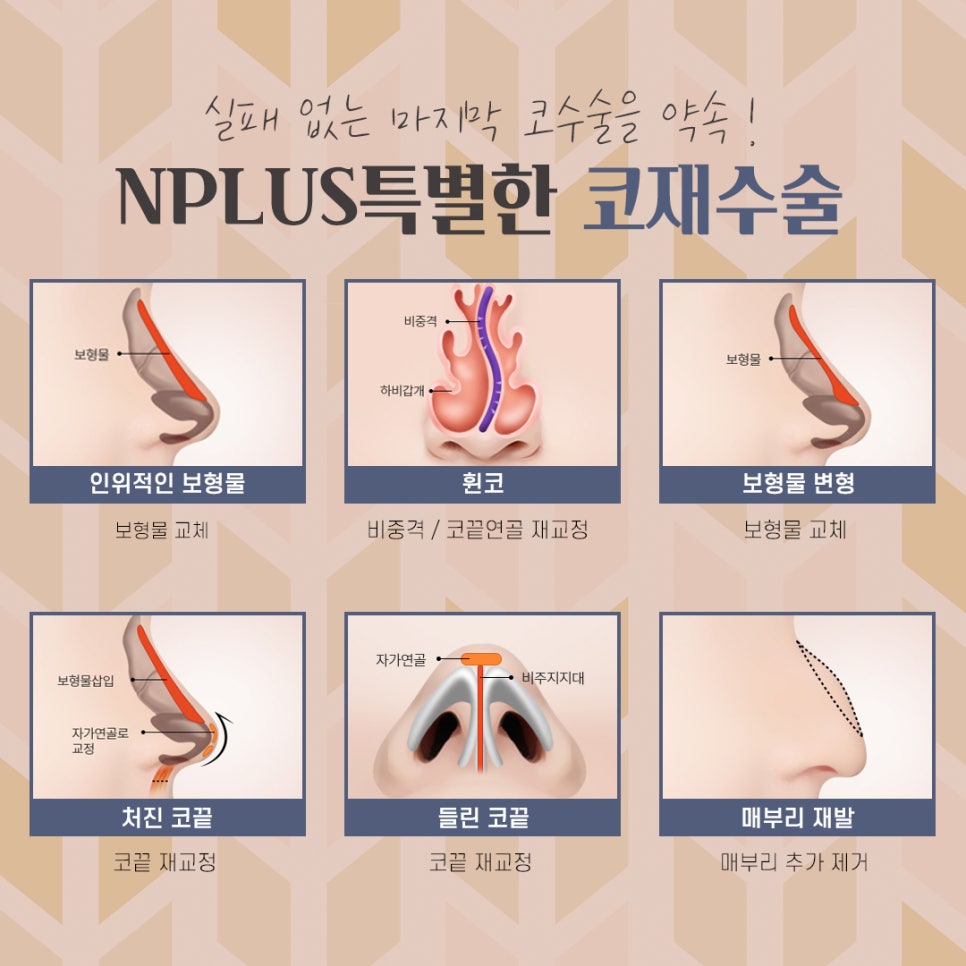
The nose is popular for rhinoplasty because even a small change can greatly improve one’s image. While many people feel satisfied with the changes after rhinoplasty, those looking into rhinoplasty revision reviews include people who are dissatisfied with the shape, as well as people who absolutely need revision surgery due to inflammation or contracture.

Therefore, if you look at rhinoplasty revision reviews, the causes for revision are also diverse, so it is recommended that you identify the exact cause before surgery and then proceed. A satisfying rhinoplasty revision review can be achieved by checking whether the medical staff have a high level of anatomical knowledge of the nose, rich experience and career history, whether they have equipment that can accurately examine your nose, and whether thorough post-operative care is guaranteed.
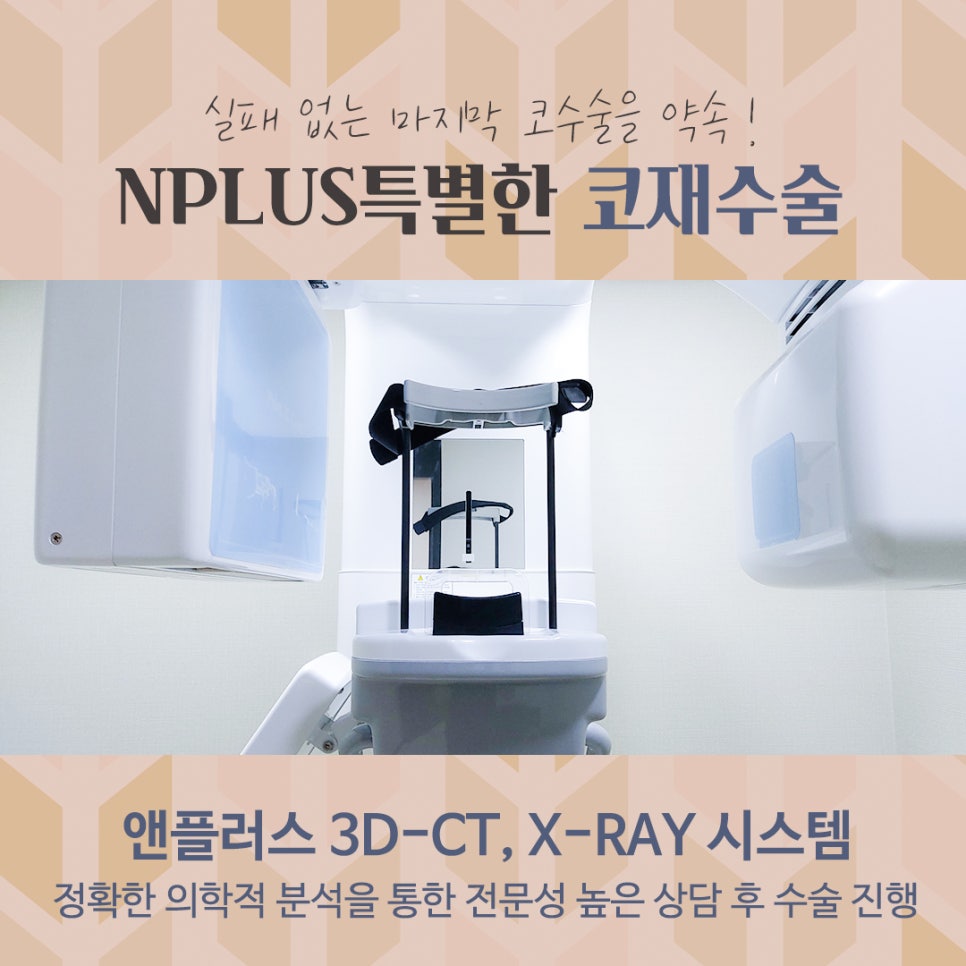
At N+ Plus, to help ensure a satisfying rhinoplasty revision review, we perform a 3D-CT scan and internal endoscopic imaging before surgery to analyze and identify the underlying problems, and then provide consultation with a specialist based on the detailed examination data.
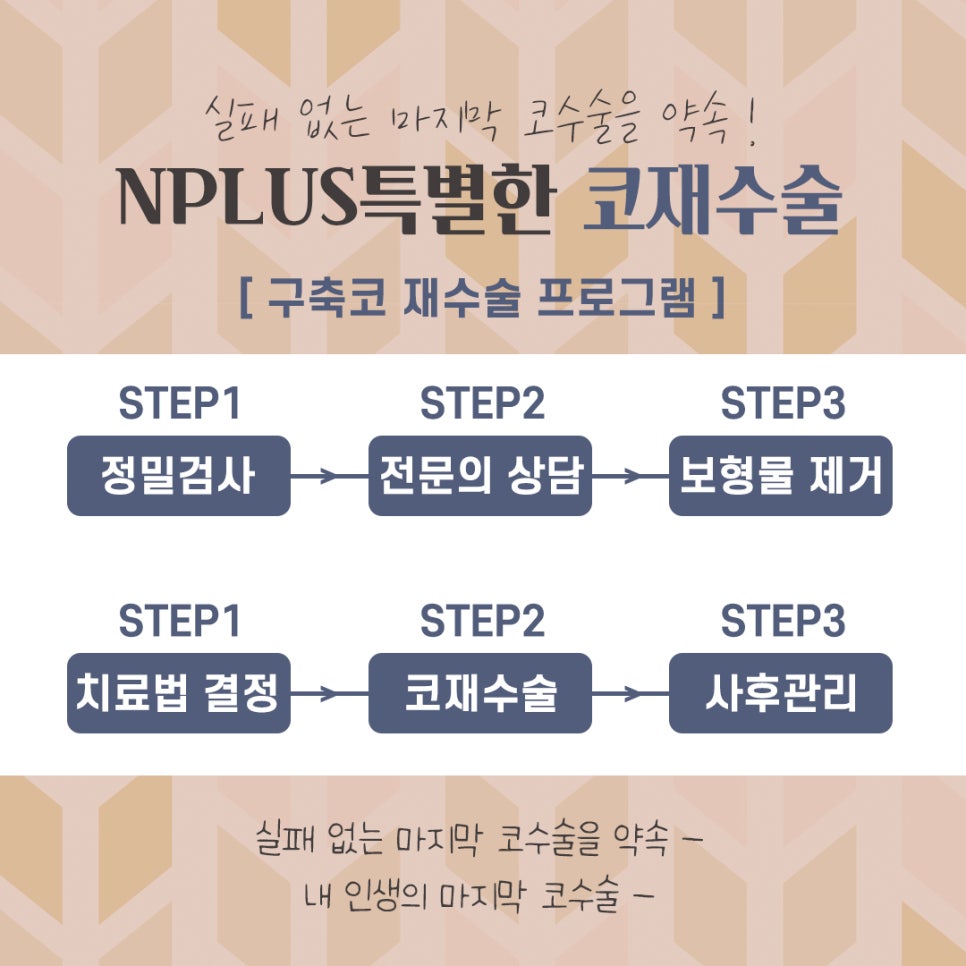
It is safest to perform rhinoplasty revision at least 6 months to 1 year after the last surgery, but if contracture symptoms occur due to an inflammatory reaction, we advance the timing of revision surgery by restoring damaged tissue around the nose as quickly as possible through a systematic regenerative treatment program.
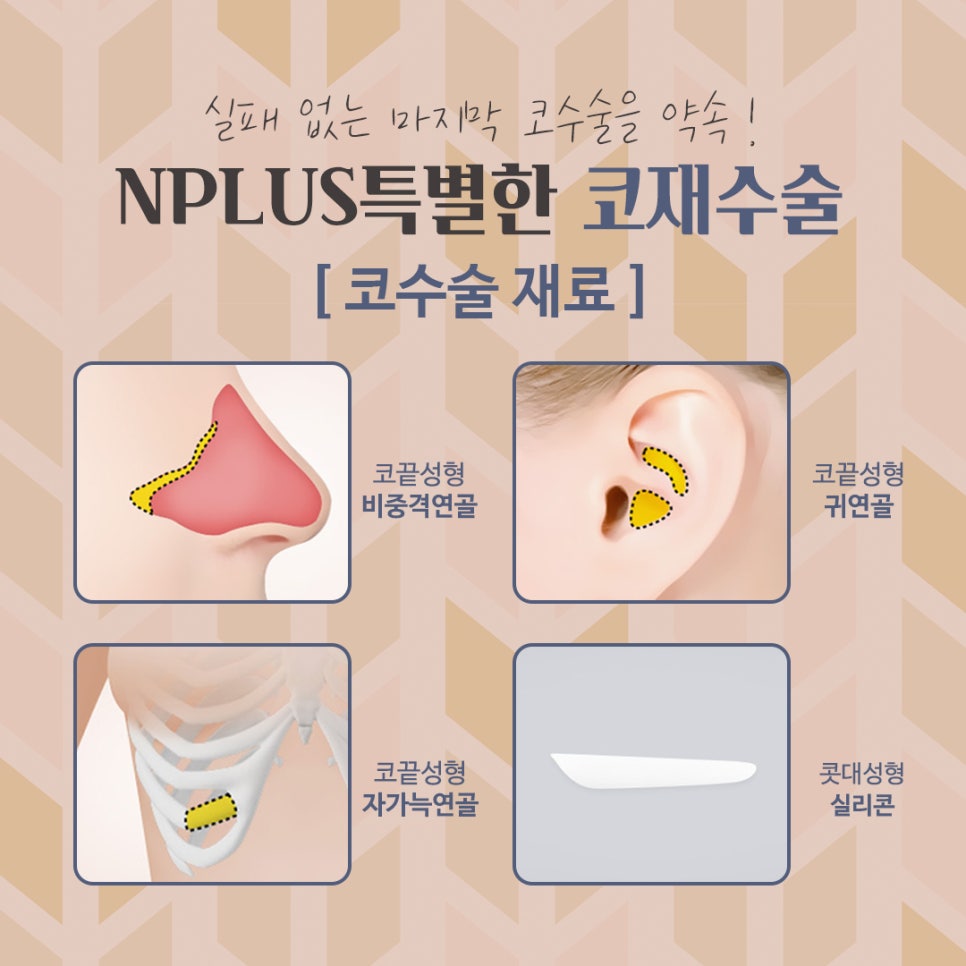
As materials for rhinoplasty revision, silicone is mainly used for the bridge of the nose and autologous cartilage for the tip. Autologous cartilage includes septal cartilage, ear cartilage, and autologous rib cartilage. Septal cartilage is the cartilage that divides and supports our nostrils, and ear cartilage is located inside the ear and is the easiest cartilage to harvest. What is autologous rib cartilage? Behind our ribs there is bone, and the front part is soft cartilage. That soft cartilage part is called autologous rib cartilage. In most primary rhinoplasty cases, septal cartilage, ear cartilage, and silicone are used, but when there is insufficient septal or ear cartilage, autologous rib cartilage, which provides a sufficient amount and strong support, is used. In revision cases, autologous rib cartilage is used when contracture causes the nose to become lifted or when surgery has been performed multiple times. Because autologous rib cartilage is a tissue from the patient’s own body, inflammation and side effects after surgery can be minimized, and the likelihood of side effects such as changes in shape is low, so it is widely used.
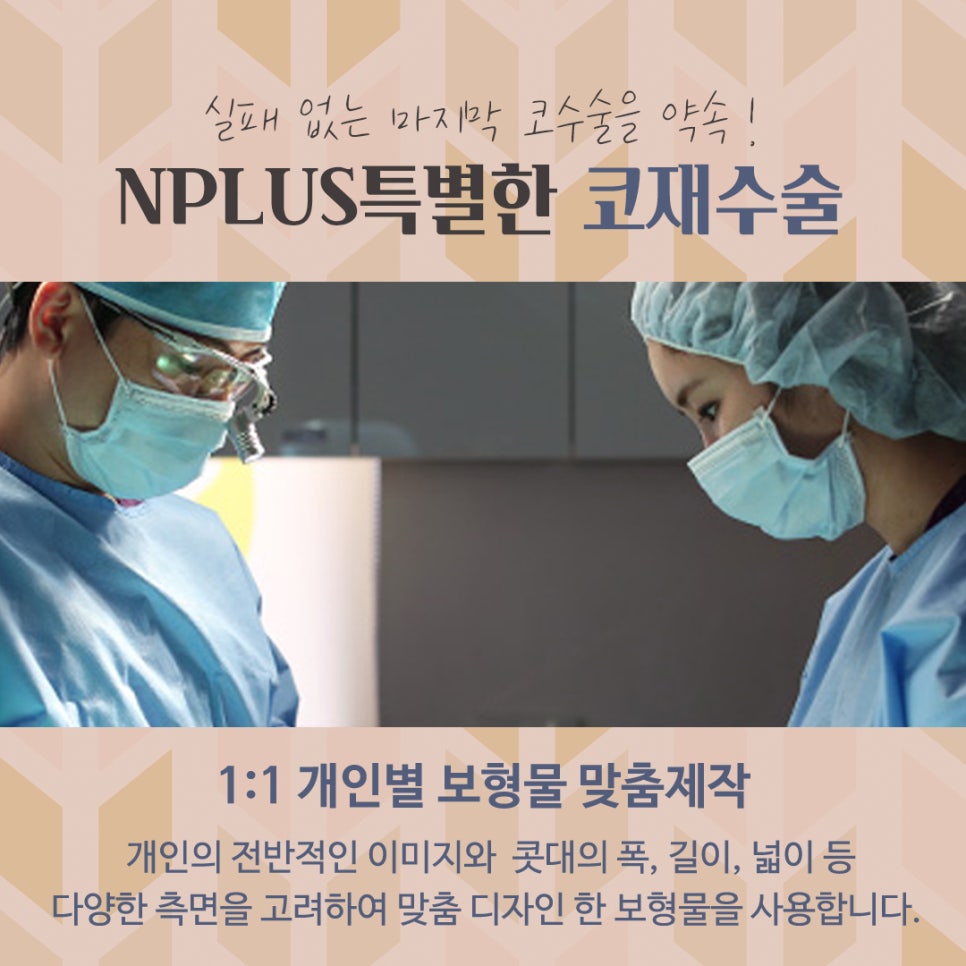
For rhinoplasty revision, it is important to minimize implants and supplement any skin shortage caused by damage with a skin graft from the patient’s own body. To minimize an artificial feel after nose surgery, commercially produced implants are not used as-is; instead, various factors such as the individual’s overall image, the width and length of the nasal bridge, and the width of the tip are considered, and the implant is carefully shaped by hand before use. In this way, a natural nose line is created without awkwardness from the glabella and bridge line to the tip line.

Lastly, aftercare is also important in rhinoplasty revision. At N+ Plus, the chief physician personally handles every step of the process, from customer consultation to surgery planning, implementation, and follow-up treatment. In addition, by issuing an N+ Plus membership card, they provide not only a free after-sales service system for one year after surgery, but also a surgery responsibility guarantee system in preparation for any possible post-operative pain, inflammation, or dissatisfaction with the appearance.
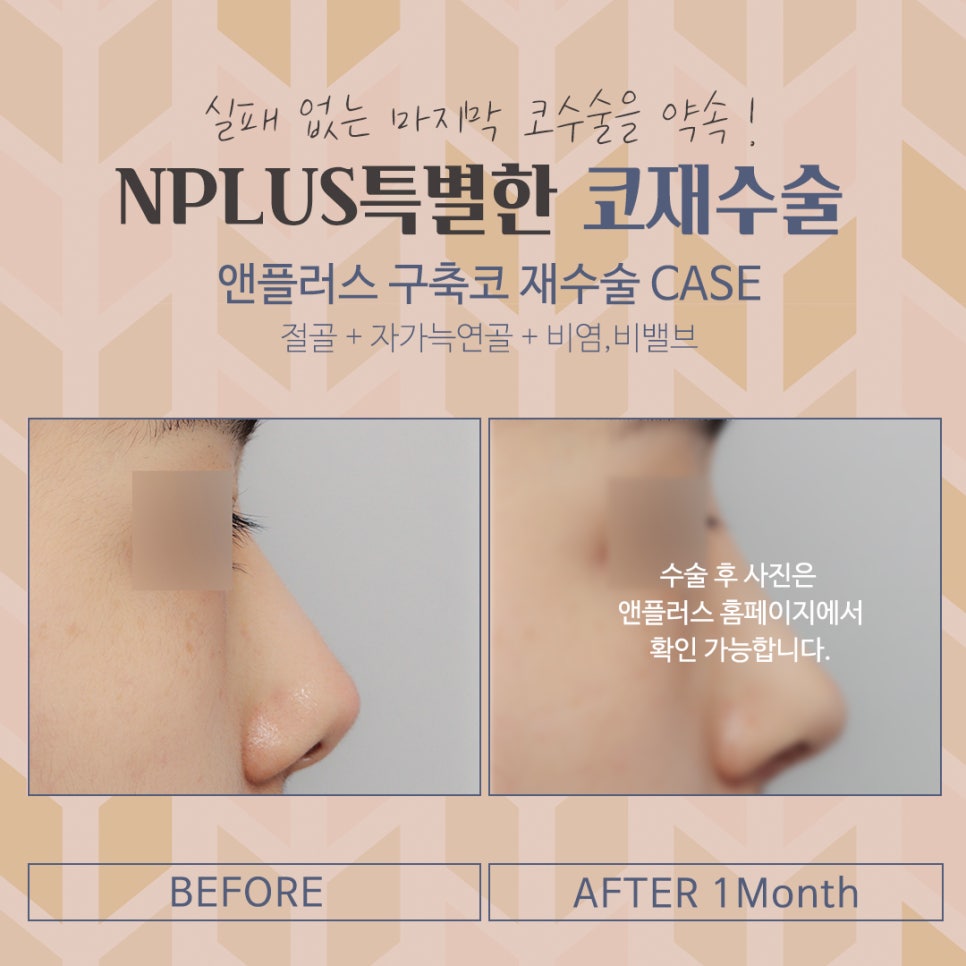
(The image above is an actual before-and-after photo from a rhinoplasty revision review using autologous rib cartilage at N+ Plus.)
That concludes our summary of N+ Plus’s rhinoplasty revision review using autologous rib cartilage. I hope this post is helpful to those who are stressed because they are unhappy with the shape after rhinoplasty or because of contracture. Thank you.