Hello. We are Oji Plastic Surgery & N Plus, thinking only about your beautiful and healthy nose for 16 years.
Today, we will introduce short nose surgery performed by elevating the columellar support.
Recently, many people have become more interested in plastic surgery due to concerns about their appearance. Among these, there is especially strong interest in the nose, which is located at the center of the face and is responsible for the balance of our facial features. This is because even a small improvement to the nose can bring about a big change in our overall impression.
There are many different types of people who seek nose surgery. Some have a low nose, a crooked nose, a hooked nose, an upturned nose, or a drooping nose. Among these, when the nose is low and upturned, it can look less three-dimensional or give a dated impression, so many people look into short nose surgery in more detail.
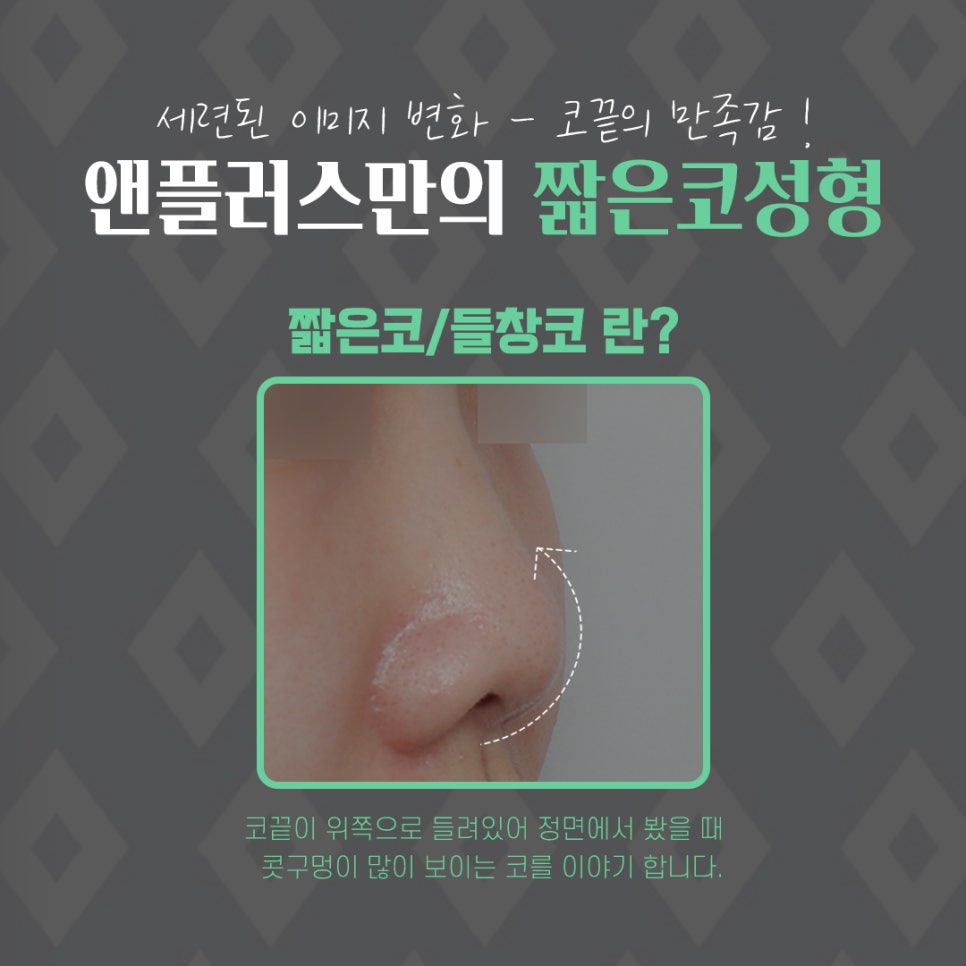
What is short nose surgery? It refers to a nose whose tip is turned upward, making the nostrils very visible from the front. In the case of a short nose, there may be congenital factors, but there are also acquired factors that occur after nose surgery due to contracture, which shortens the tip of the nose. This surgery lowers the tip of the nose by creating a columellar support or by extending the skin.
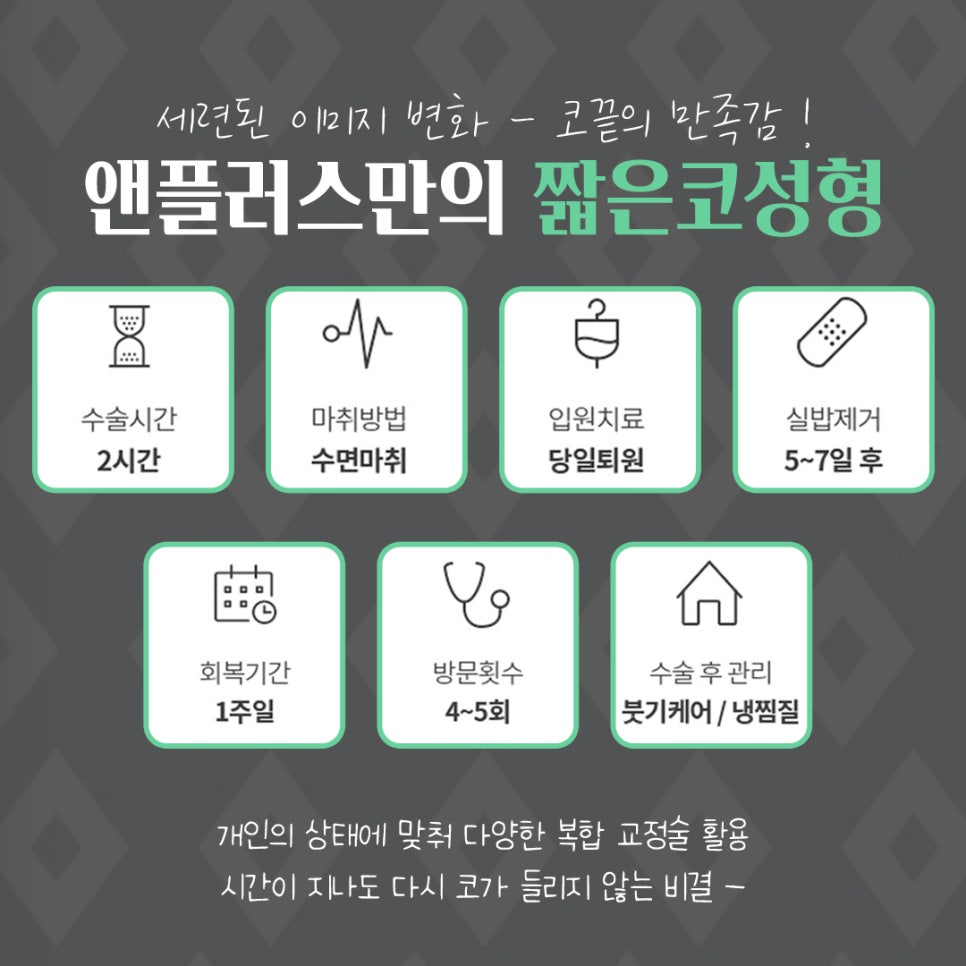
People looking into short nose surgery are often concerned about the tip of the nose. When the nose is low, the tip is upturned, or the shape is blunt, attention naturally focuses on the nose. Through short nose surgery, it can be changed to create a more refined and sharper impression.
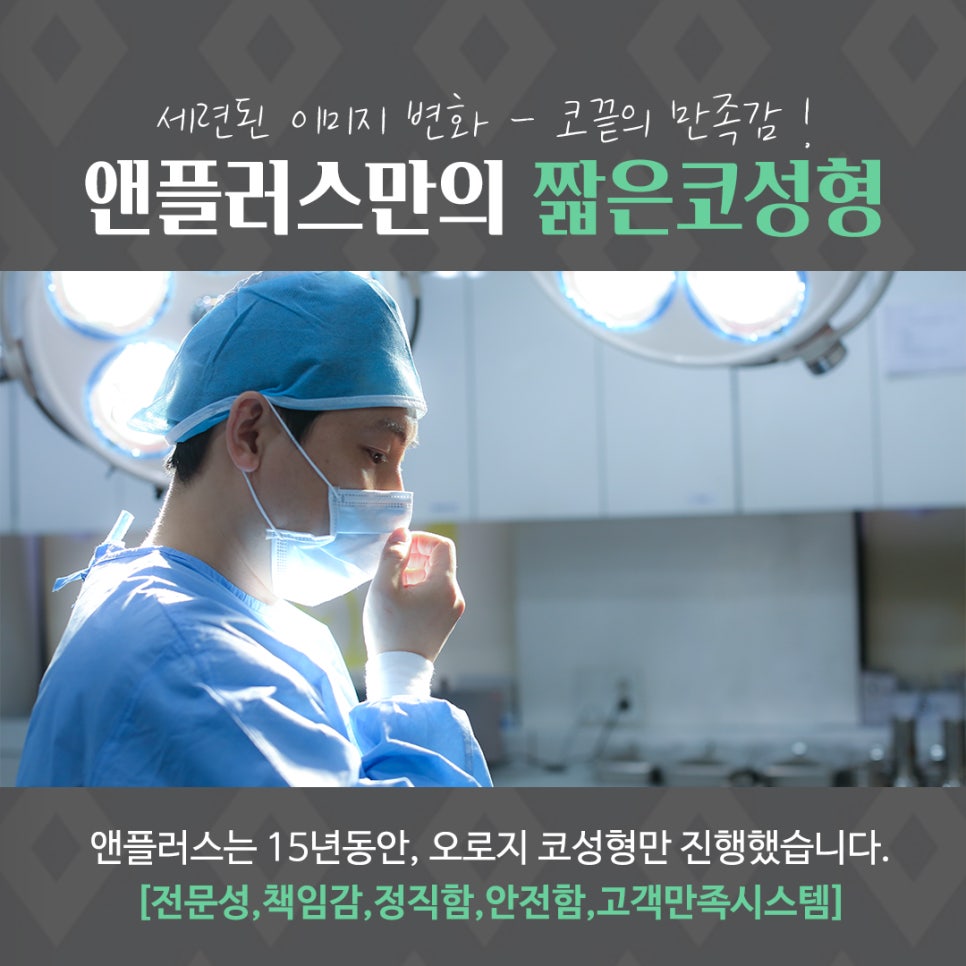
Therefore, when looking into short nose surgery, people usually approach it from an aesthetic or cost-related perspective. However, the nose is not only an important cosmetic feature but also a functional organ responsible for breathing and smell. Because it has a much more complex structure than it appears, you should carefully check whether the medical team has sufficient anatomical knowledge of the nose, whether they proceed with the surgical method that suits you, and whether they have the equipment needed to accurately analyze your nose. If surgery is performed based only on the aesthetic or cost-related aspects mentioned above, it may lead to revision surgery. For that reason, if you research more carefully and proceed only after thorough consideration, you may achieve a more satisfying short nose surgery result.
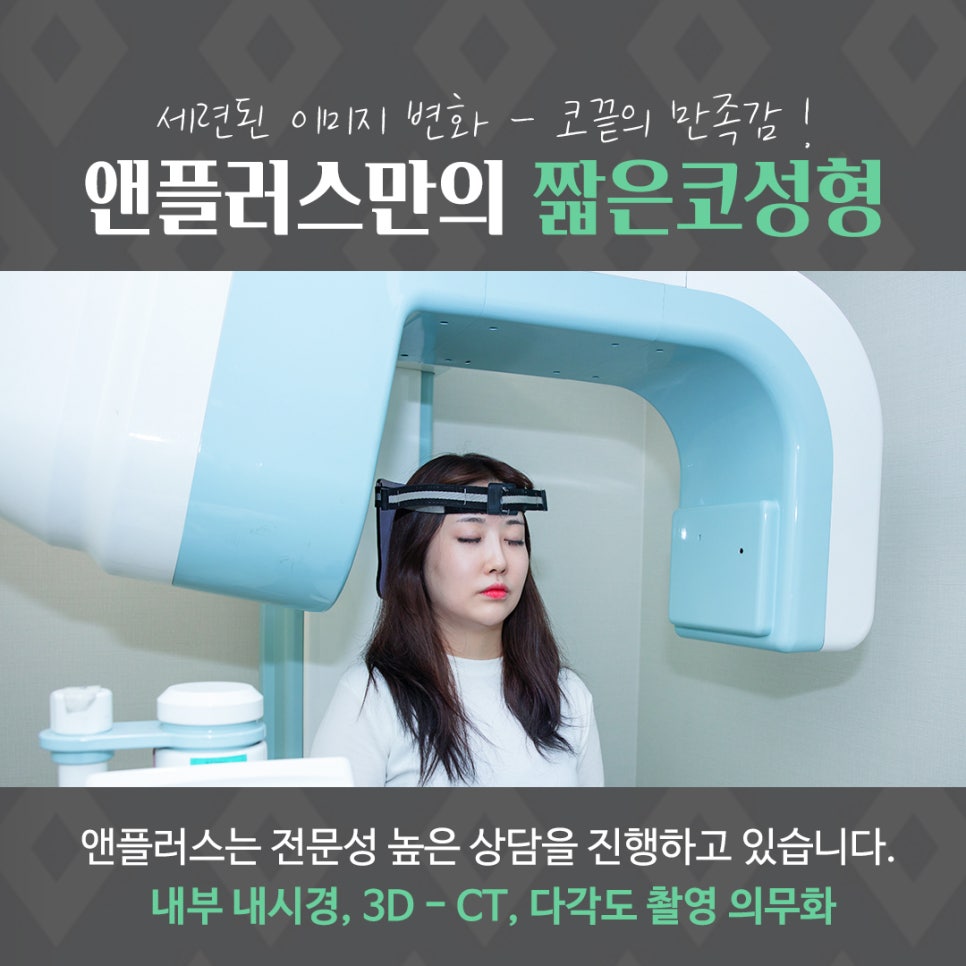
Therefore, before short nose surgery, we accurately assess the internal condition of the nose through 3D-CT scanning and internal endoscopic examination, and perform the appropriate surgical method according to each individual's condition. From consultation and treatment to follow-up, Director Yoon Hyun-cheol personally takes full responsibility one-on-one, making it possible to achieve safer and more satisfying short nose surgery.
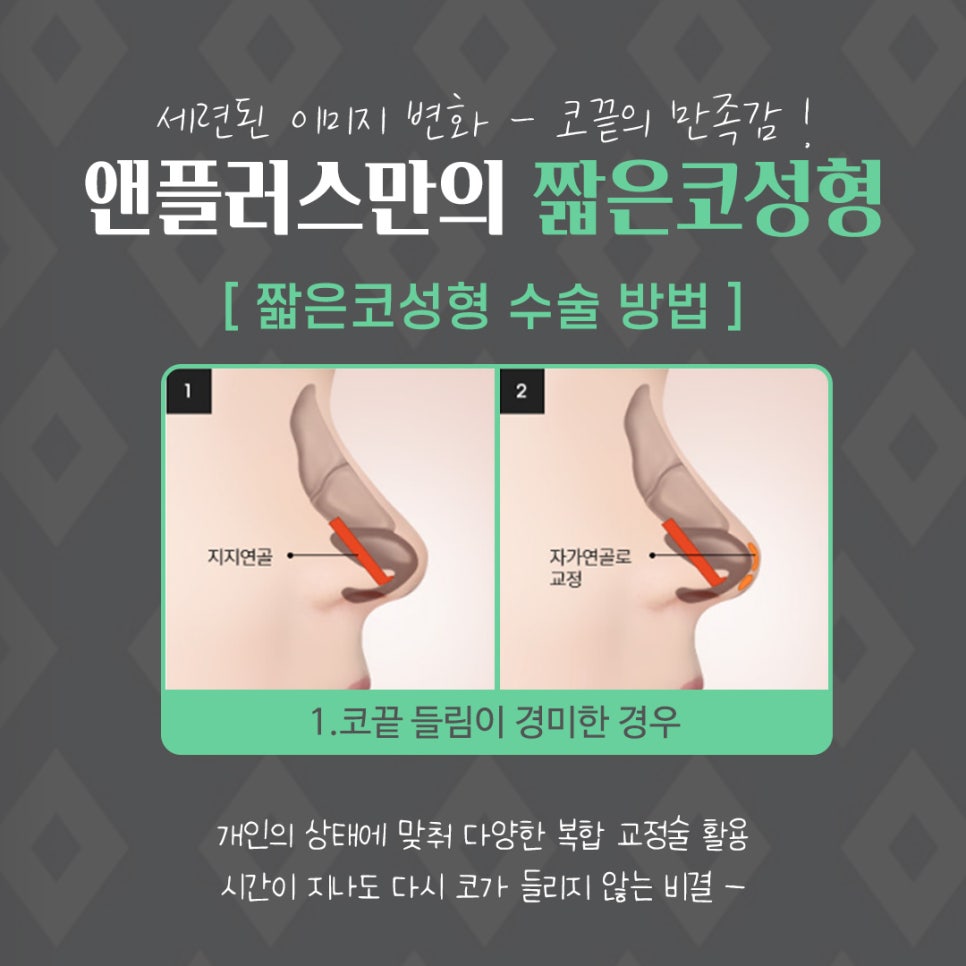
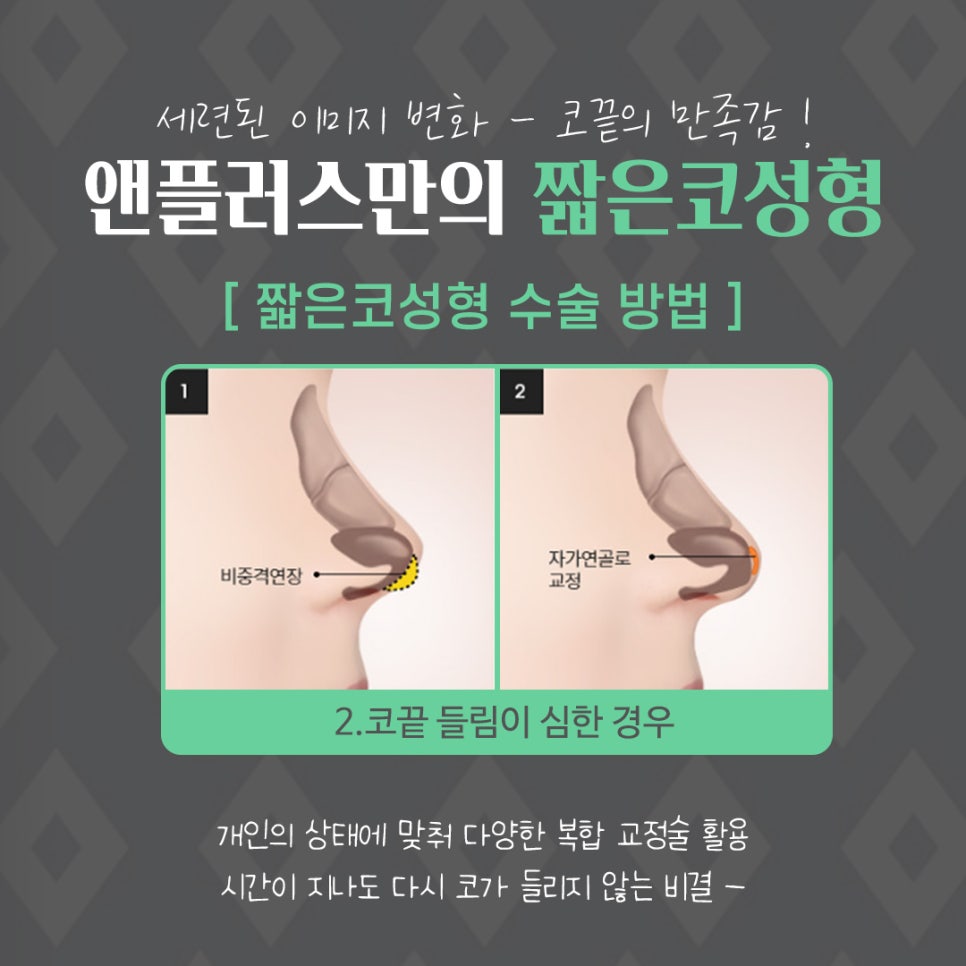
Short nose surgery can largely be divided into two methods: cases where the tip upturn is mild and cases where it is severe. When the tip upturn is mild, a strong support cartilage is grafted between the columellae to create a columellar support, then the tip cartilage is fixed so it does not move, and autologous cartilage is grafted to the tip to refine the overall nasal line. When the tip upturn is severe, strong autologous cartilage is used to sufficiently extend the tip through septal extension, then autologous cartilage is grafted to the tip and the overall nasal line is refined.
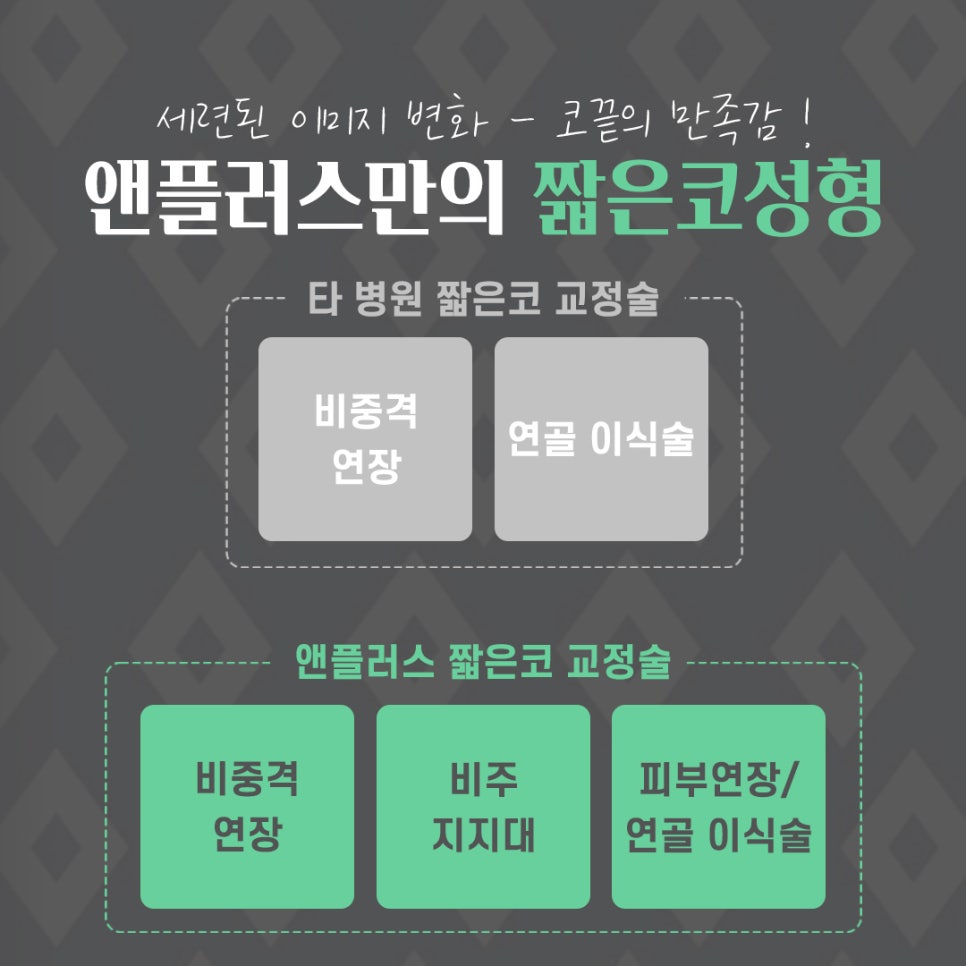
The recurrence rate can be minimized through N Plus's combined correction procedure for short nose surgery.
N Plus Combined Correction Procedure
- Skin extension / cartilage grafting: Secures the skin space needed for tip correction and grafts autologous cartilage to
correct the height of the tip, giving it a definite sense of height and completing an overall higher nasal line.
- Septal extension: Using strong septal cartilage or rib cartilage, the tip is extended downward/forward to
significantly lengthen the upturned tip so that the nostrils are no longer visible.
- Columellar support: Using ear cartilage and septal cartilage, it is grafted between the inner crura of the alar cartilage (wing cartilage) and
firmly fixed so that the tip does not turn up or droop again.
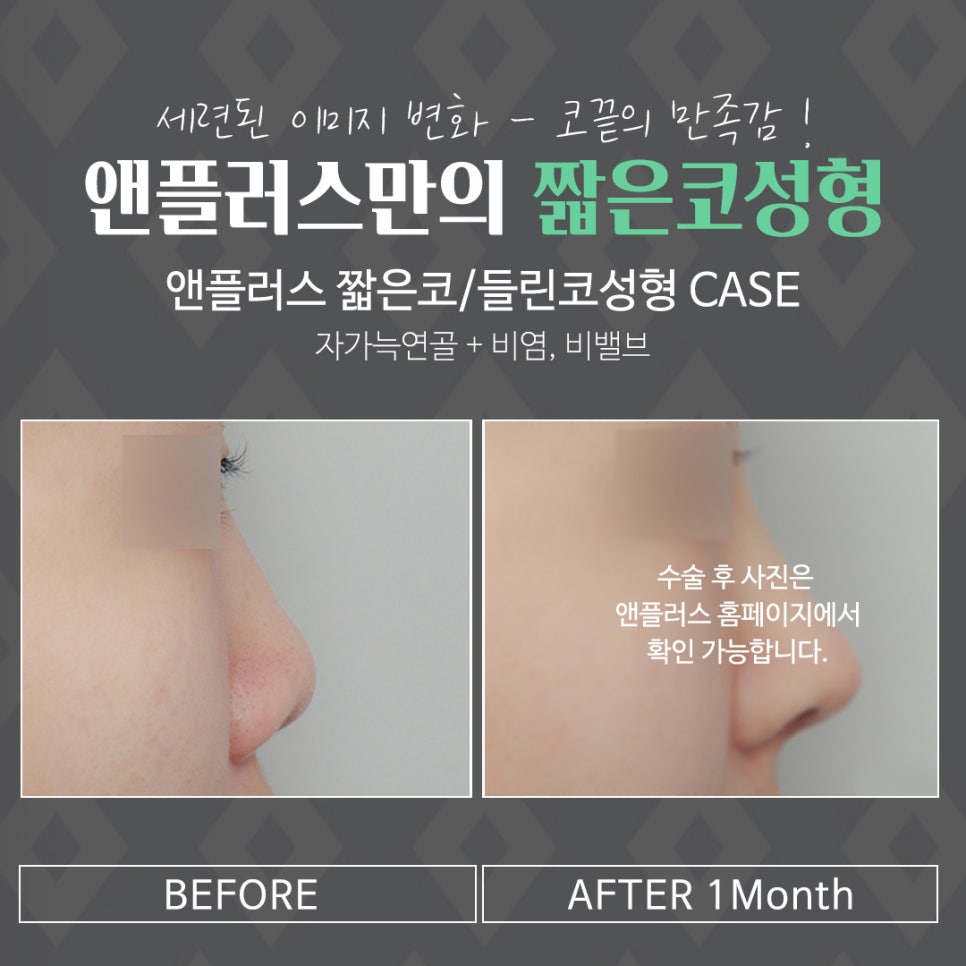
(The image above shows before-and-after photos of short nose surgery using an actual N Plus columellar support.)
As such, short nose surgery is a high-difficulty procedure that simultaneously lowers an upturned tip and corrects the height of the tip. At N Plus, to clearly improve a short nasal tip, we perform at least two or more different combined corrective procedures. By selectively performing septal extension to lower a short and upturned tip, a columellar support to firmly prevent the tip from turning up again, and skin extension and cartilage grafting to satisfy both tip height and length, we can achieve a more satisfying surgery.

Lastly, at N Plus, for a satisfying short nose surgery result, we offer not only a one-year free after-sales service system even after the aftercare program, but also a surgical responsibility guarantee system prepared for any situation that may arise after surgery, including postoperative pain, inflammation, or dissatisfaction with the shape. Therefore, those who have an N Plus membership card can receive aftercare benefits at any time.

That concludes our explanation of short nose surgery using a columellar support at Oji Plastic Surgery & N Plus. We hope this article has been very helpful for those considering plastic surgery because their nose is short or upturned. Thank you.