Hello. This is Ohjiko Hospital N+Plus, which thinks only about your beautiful and healthy nose.
The topic we will introduce this time is a review of no-implant nose surgery for a natural nose line.
Among the features of our face, the nose is located at the very center, so it plays a role in balancing the facial features. However, when the shape of the nose differs from the standard of beauty we have in mind, more people are trying to improve it through rhinoplasty. When people say rhinoplasty, they usually think that the bridge is made with silicone and the tip with autologous cartilage. But even without using implants such as silicone, people who want to improve existing concerns and prefer a more natural shape want to learn more about no-implant nose surgery reviews.
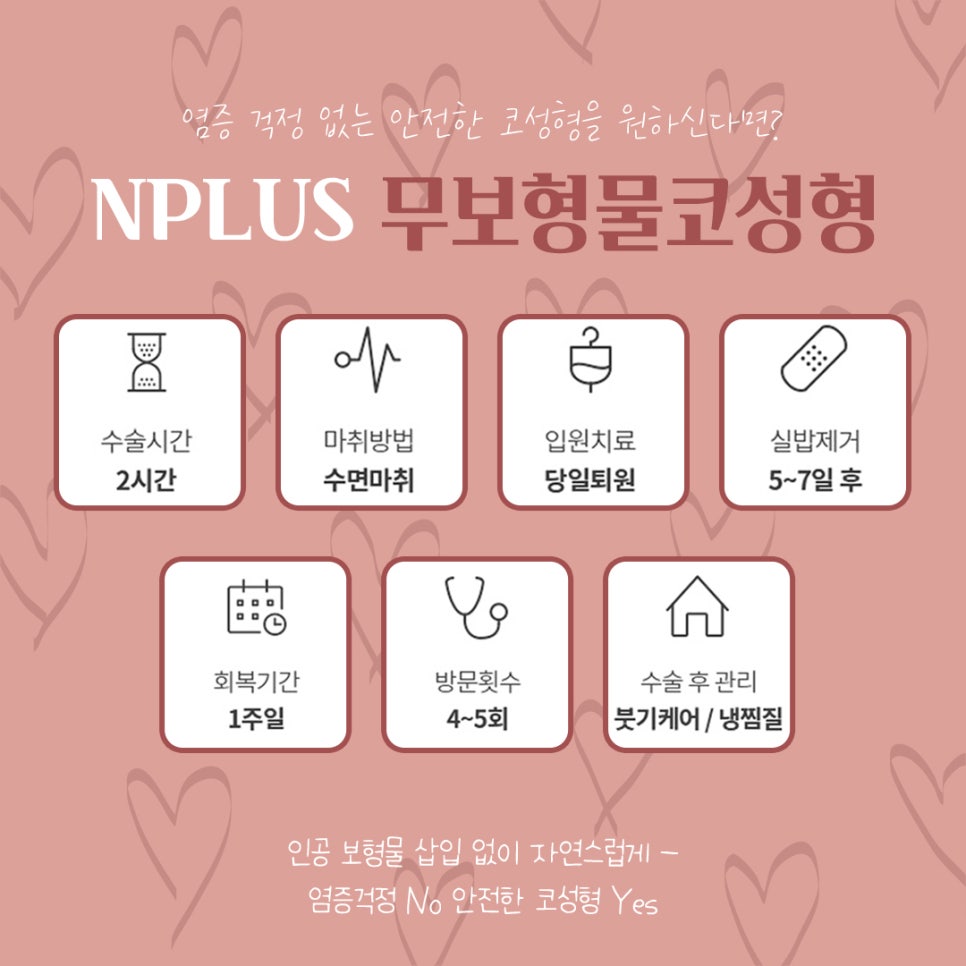
What is no-implant nose surgery? It is a surgery performed without using silicone (an implant) on the bridge of the nose, and using autologous cartilage for the tip of the nose. In the case of no-implant nose surgery, because the procedure is performed using autologous cartilage, the probability of inflammation is quite low, so it can be considered a suitable surgery for people who are very sensitive to inflammatory reactions or who want a more natural rhinoplasty.
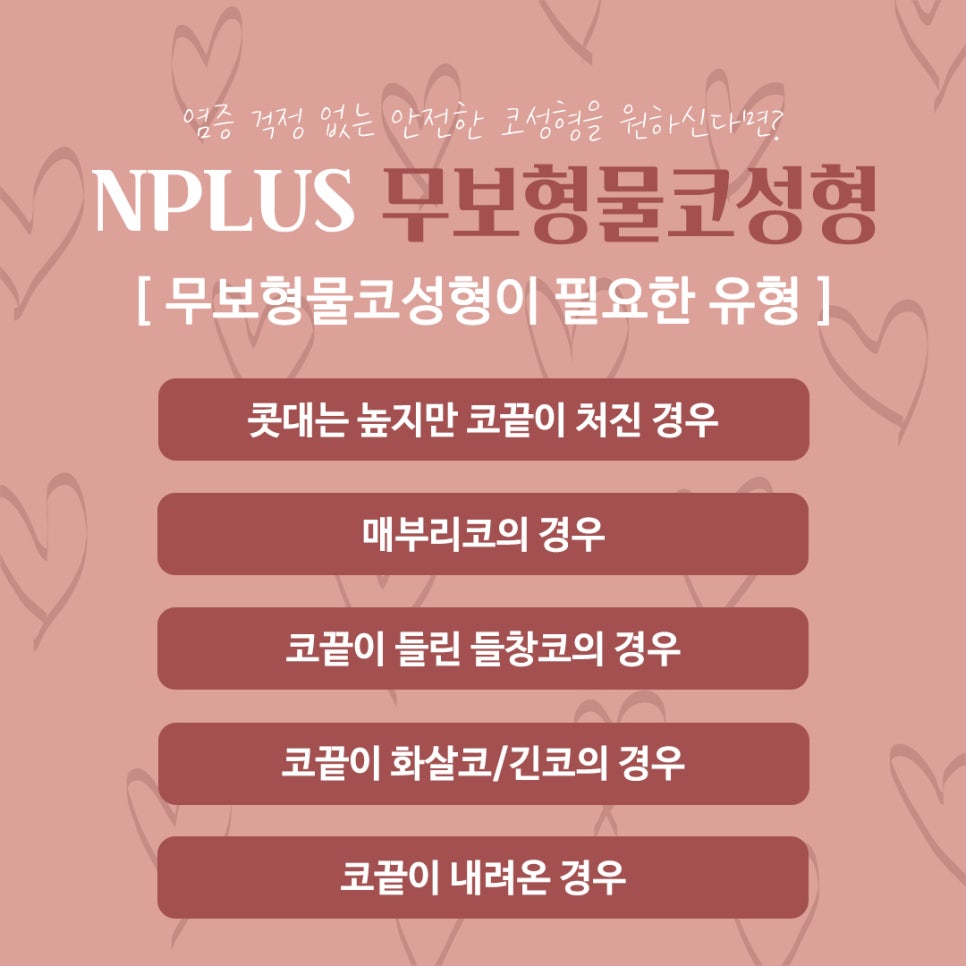
The types of people who need no-implant nose surgery are more diverse than you might think if you look at no-implant nose surgery reviews. These include cases where the bridge is high but the tip is drooping, cases of a hooked nose, cases of an upturned nose with a lifted tip, cases where the tip is a beak-like nose or a long nose, and cases where the tip is drooping.
Therefore, before no-implant nose surgery, a pre-examination is used to harvest the autologous cartilage that suits each person. Autologous cartilage includes septal cartilage, ear cartilage, and autologous costal cartilage. If there is not enough autologous cartilage or it is difficult to harvest, safe donated costal cartilage approved by the FDA is used.
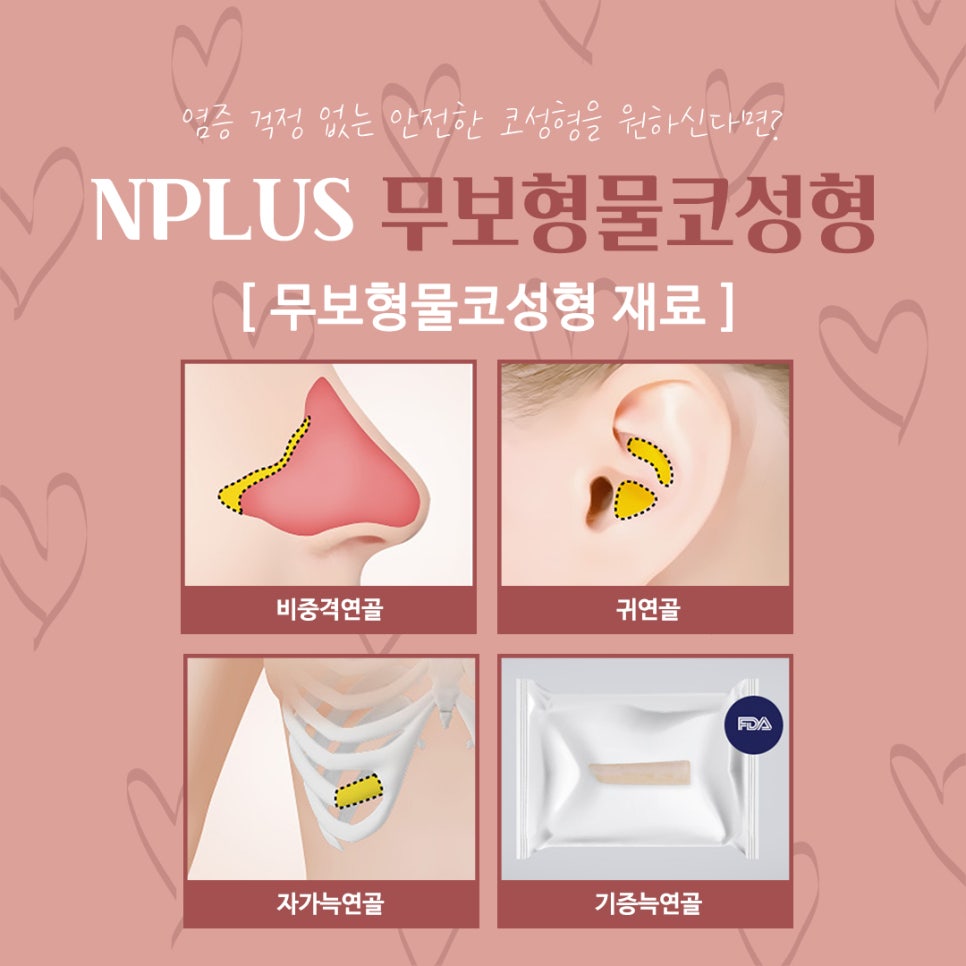
If you look at no-implant nose surgery reviews, you can see that different materials are used for each individual. Septal cartilage is the cartilage that divides the nostrils and supports the nose; it creates a natural nose shape and is firmer than ear cartilage, helping prevent the tip from drooping. Ear cartilage is relatively easy to harvest compared with other cartilage and helps create a natural, refined nose tip. Autologous costal cartilage is cartilage located in the ribs and is used when septal cartilage or ear cartilage is insufficient; because it is large and firm, it is also widely used for first surgeries. Lastly, when autologous cartilage is difficult to harvest, donated costal cartilage is used. Donated costal cartilage approved by the U.S. FDA is used, and because it undergoes special processing, it is used as a substitute for autologous cartilage.
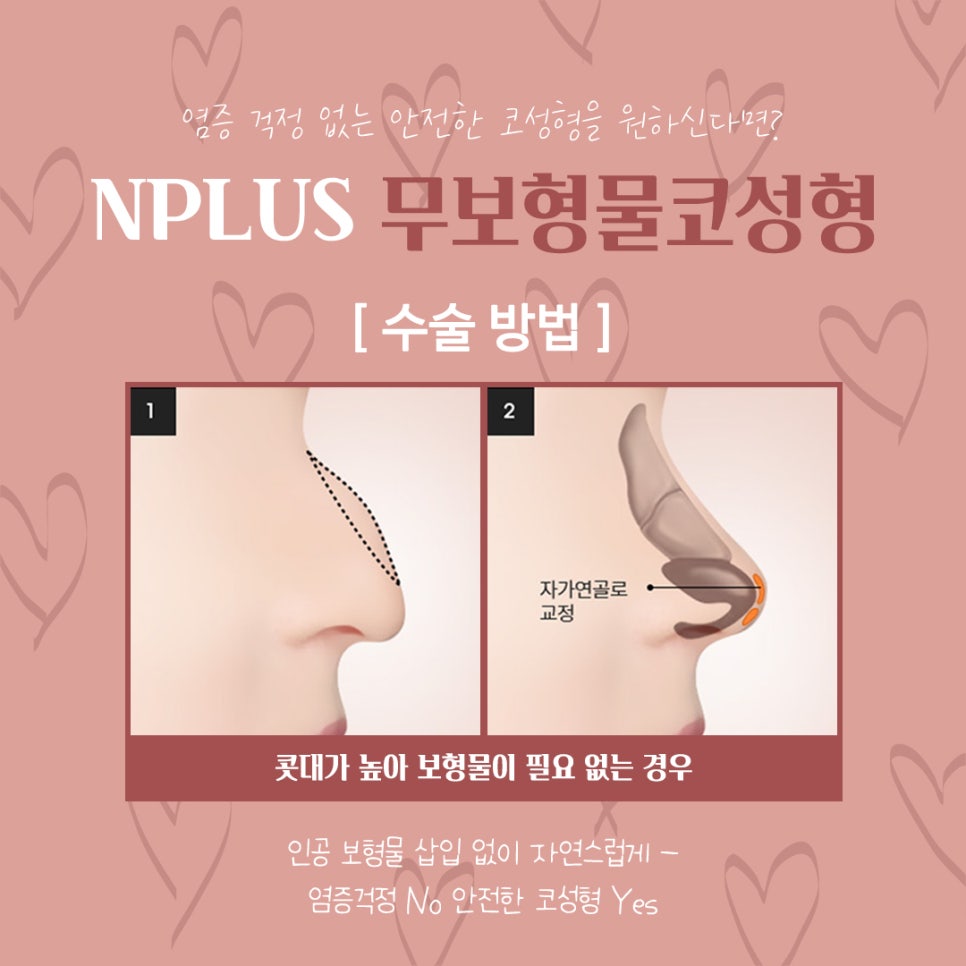
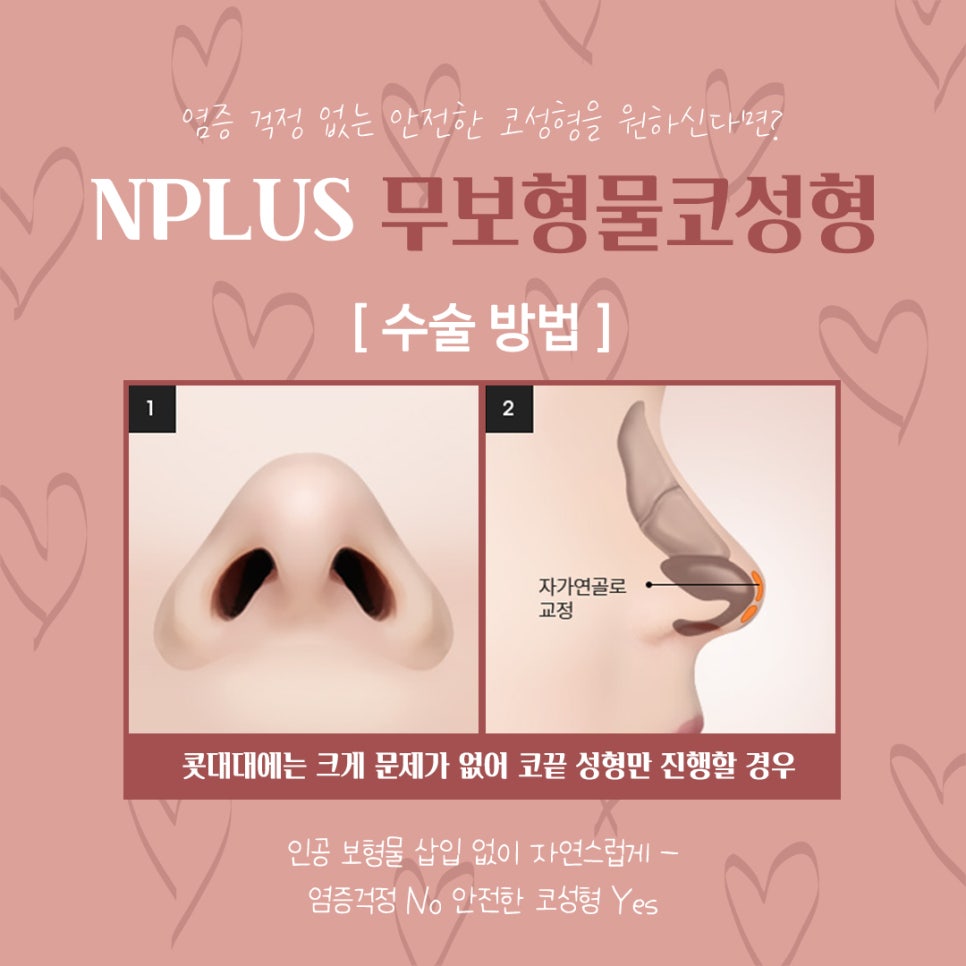
No-implant nose surgery methods are broadly divided into two types. One is when the bridge is high enough that an implant is not needed, and the other is when the bridge is not a major issue and only the tip is corrected. When the bridge is high enough that an implant is not needed, if there is a hump on the bridge, the hump is removed or osteotomy is performed, and the tip is corrected with autologous cartilage. When there is no problem with the bridge, the tip is corrected with autologous cartilage and then connected naturally to the bridge to naturally adjust the nose line.
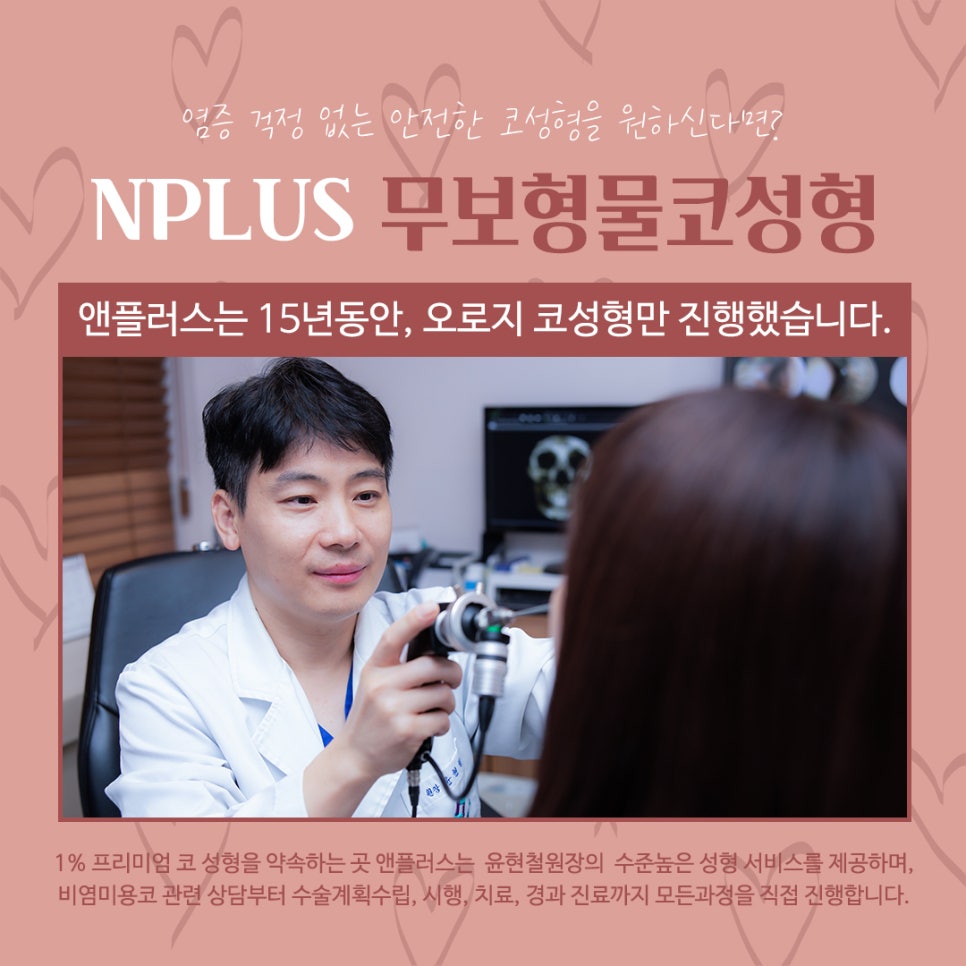
In this way, no-implant nose surgery may reduce the overall burden compared with full rhinoplasty, but it is not a simple surgery. The nose is an important organ responsible not only for aesthetics but also for smell and breathing, and it has a much more complex structure than one might expect, so it is important to learn about it more carefully. Therefore, since it can be said that the surgery is performed with the deep expertise in nasal anatomy and high-level technique of an experienced medical team, accurately checking your own nose before surgery can lead to a satisfying no-implant nose surgery review.
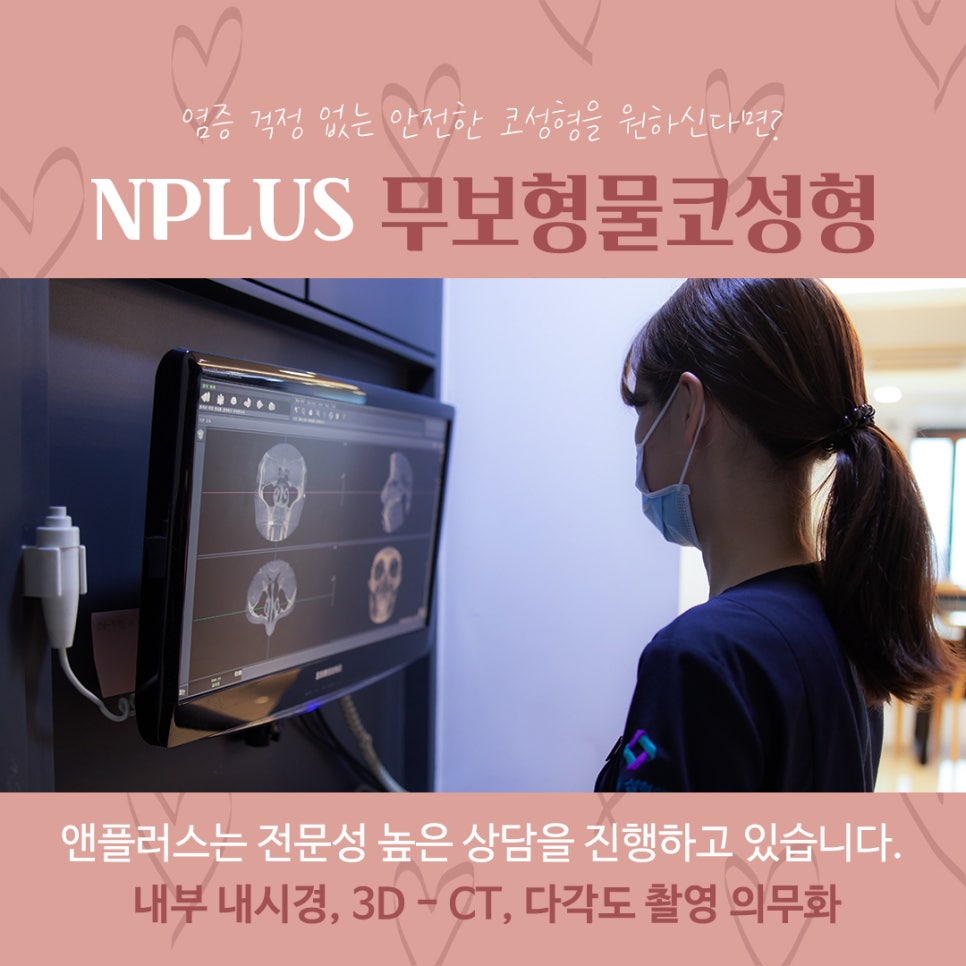
At N+Plus, to help ensure a satisfying no-implant nose surgery review, we take an aesthetic approach while also using 3D-CT scanning and internal endoscopic imaging to accurately identify internal issues before surgery. Based on the examination results data, we provide customized surgery according to each individual's condition.

In addition, Chief Director Yoon Hyun-cheol personally oversees each patient one-on-one and directly handles all processes from surgery planning and execution to treatment and follow-up care. For aftercare, an N+Plus membership card is also issued, and a one-year free after-sales service system after surgery is provided, along with a surgery responsibility guarantee system that prepares for any possible situations such as postoperative pain, inflammation, or dissatisfaction with the shape.
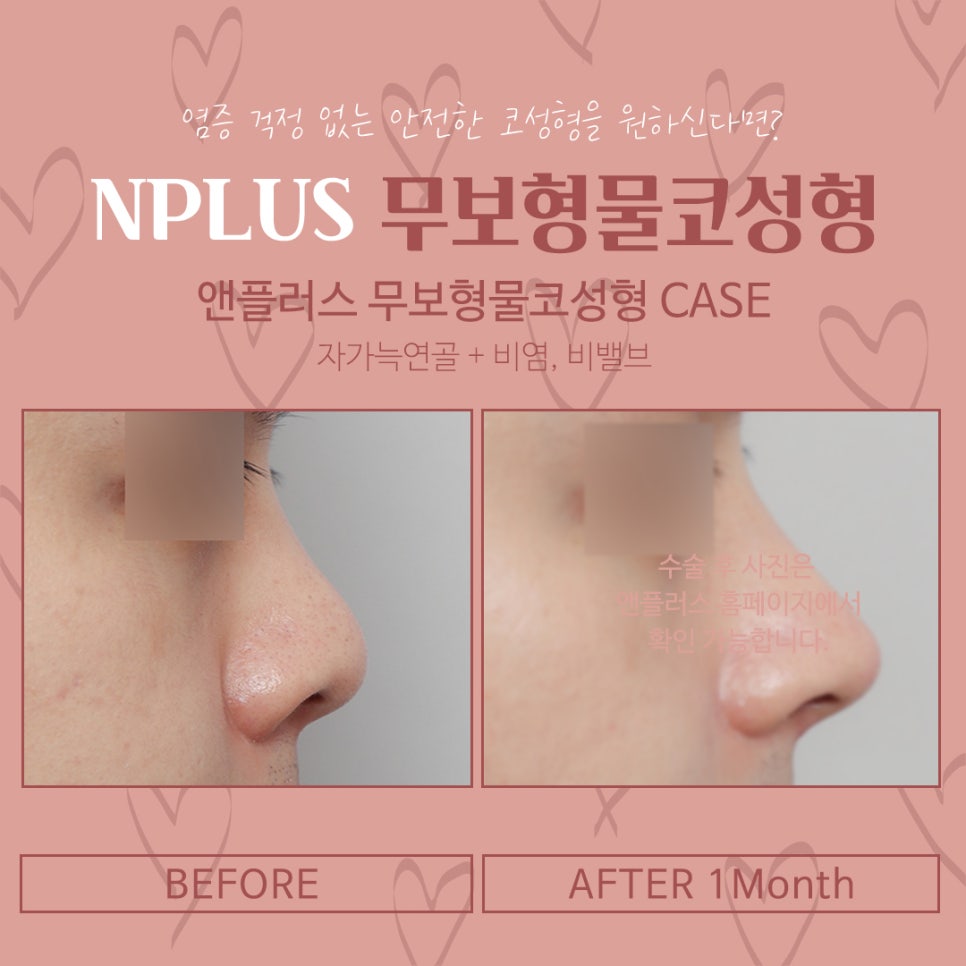
(The images above are actual before-and-after photos from N+Plus no-implant nose surgery reviews.)
That concludes the information on no-implant nose surgery reviews for a natural nose line. I hope this post was helpful for those who want a natural rhinoplasty. Thank you.