Hello. Gangnam Nose Surgery A+Plus has spent the past 16 years focusing only on your beautiful and healthy nose.
This time, we will introduce septoplasty surgery.

In general, many people who search for Gangnam nose surgery are looking to make aesthetic changes to the external appearance of their nose. However, the nose sits at the center of the face and is the most three-dimensional feature, balancing all of the facial features. So it plays an important role aesthetically, and it is also a very important organ functionally because it is responsible for breathing and smell. That is why, when looking into Gangnam nose surgery, it is important to also check the functional aspects.

When looking into Gangnam nose surgery, the functional issue to pay attention to is nasal congestion. Nasal congestion is generally a symptom caused by rhinitis. More than 70% of adults in Korea have this condition, and 20% have allergic rhinitis, while the remaining 80% have structural rhinitis caused by internal structural abnormalities, including septal deviation. In the case of allergic rhinitis, a complete cure is difficult, so improvement can be achieved through consistent medication and strengthening the immune system. However, in the case of septal deviation, because the rhinitis is caused by an internal structural abnormality, improvement can be achieved through surgery. Therefore, people who have nasal congestion caused by rhinitis can look into septoplasty in more detail to improve it.
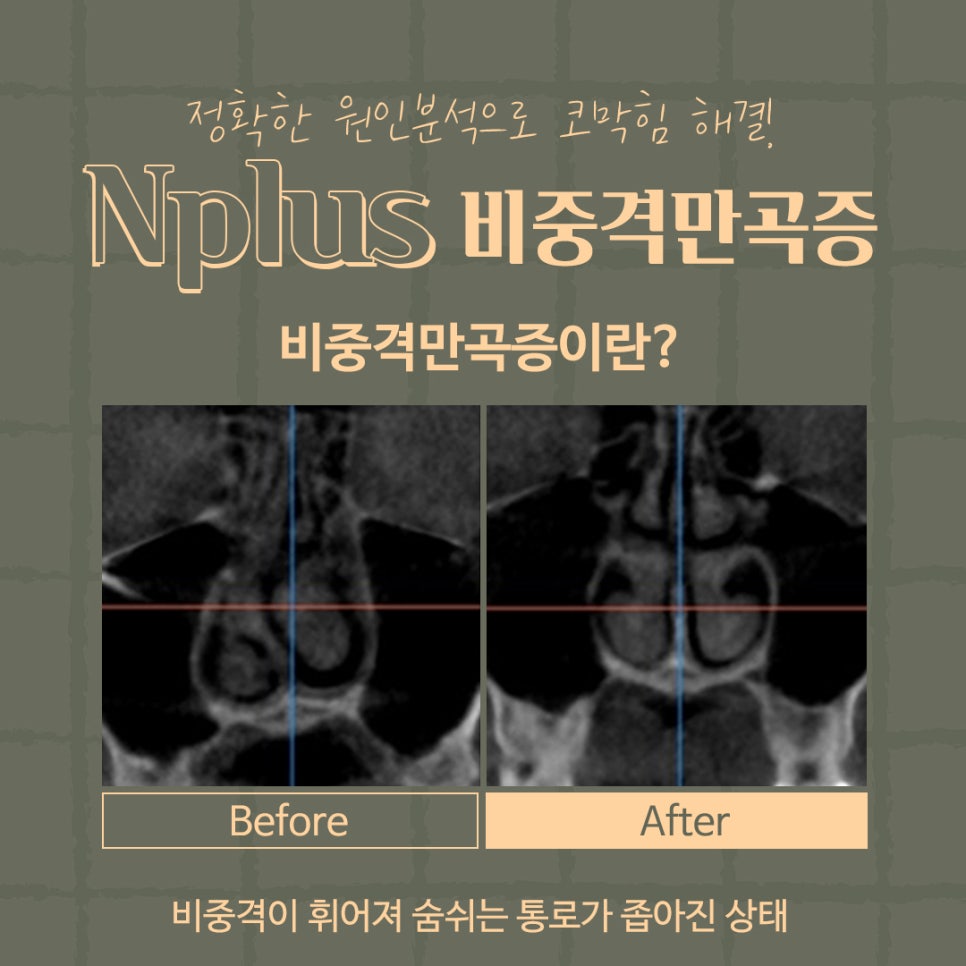
What is septoplasty? It is classified as structural rhinitis caused by internal structural abnormalities among forms of rhinitis. The cartilage that serves as the middle partition dividing our nostrils in two is called the septum, and a bent septum is called septal deviation. The surgery that straightens this cartilage is called septoplasty. Through septoplasty, nasal congestion symptoms can be improved.
The nasal congestion mentioned above is a representative symptom of septal deviation. If the congestion is mild, treatment may not be necessary, but as the symptoms become more severe, it can progress into chronic rhinitis. If left untreated, it may prevent enough oxygen from reaching the brain, leading to headaches, migraines, reduced concentration, and loss of motivation. This can cause significant inconvenience in daily life, so it is important to accurately check the condition of your nose.
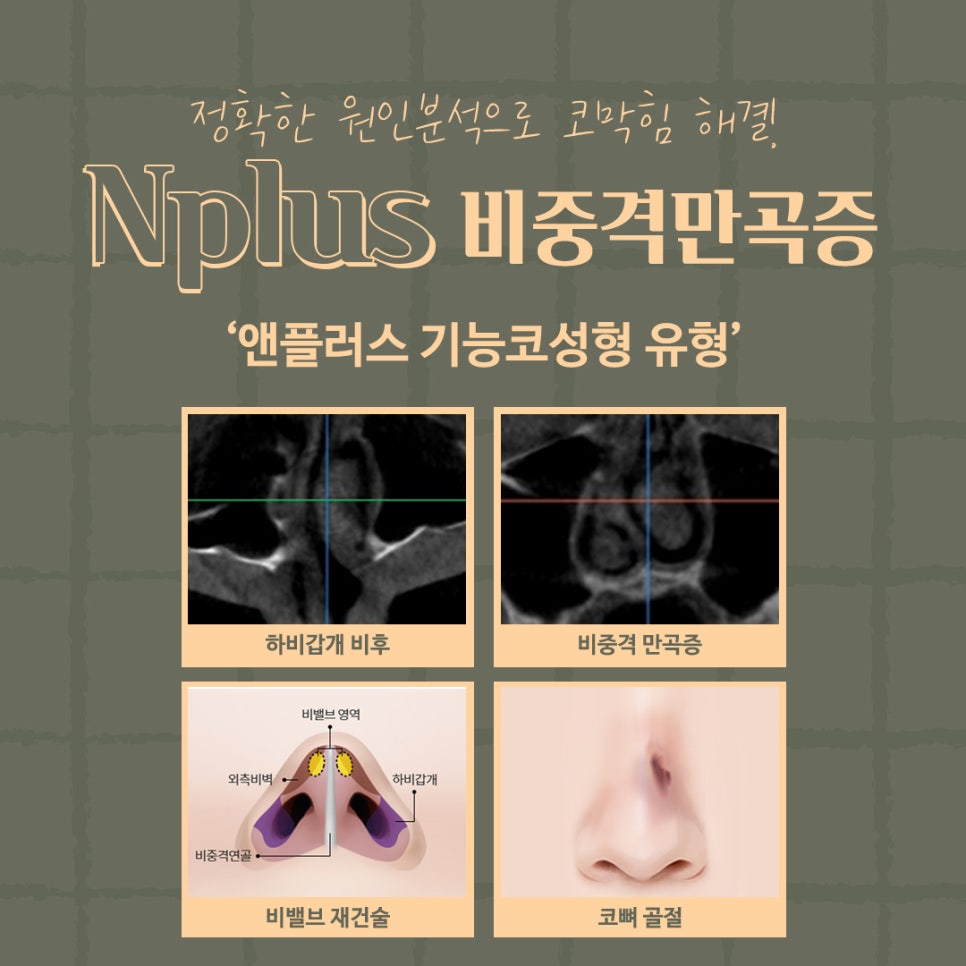
Also, when undergoing septoplasty, septal deviation can sometimes occur on its own, but in most cases there is a high chance that symptoms such as inferior turbinate hypertrophy and nasal valve stenosis will occur together. Therefore, these symptoms must be accurately checked before surgery.
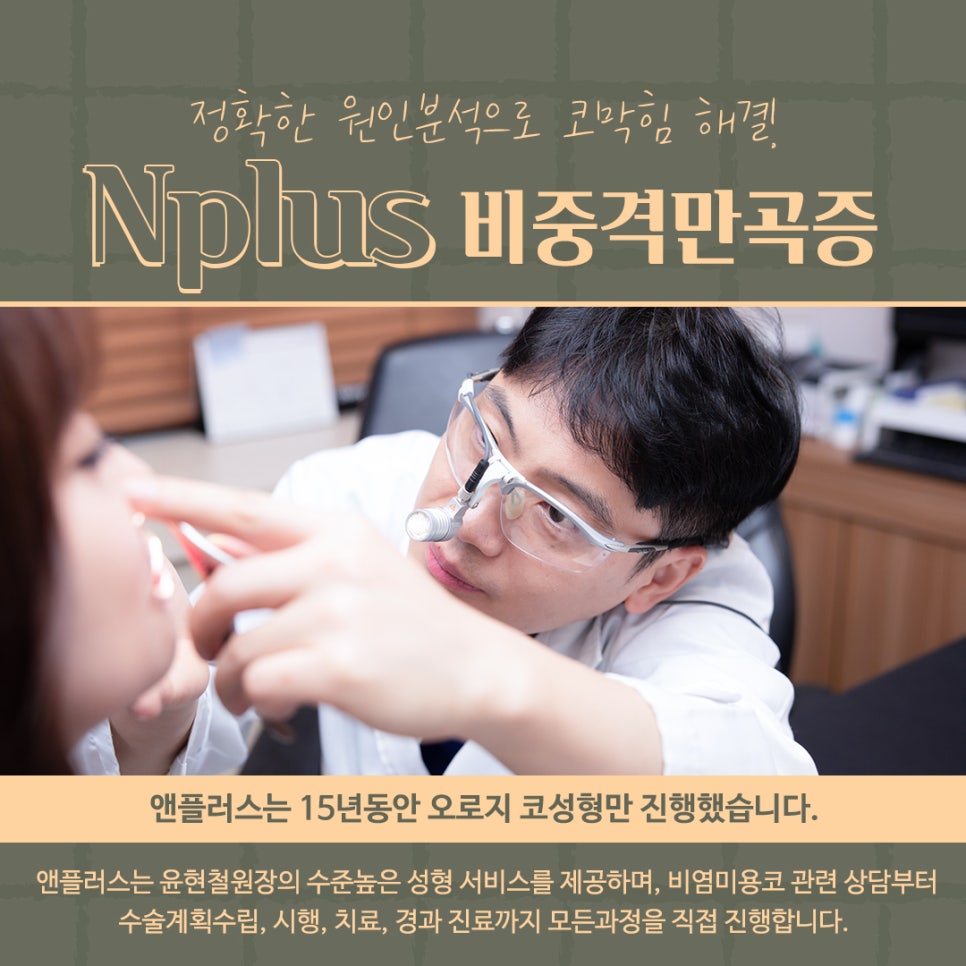
For that reason, you should choose a place where the medical staff have extensive anatomical knowledge of the nose and rich experience and expertise in this surgery, so that the chance of revision surgery can be minimized. If you are looking into septoplasty, we recommend confirming the presence of the accompanying inferior turbinate hypertrophy and nasal valve stenosis mentioned above before proceeding with septoplasty.
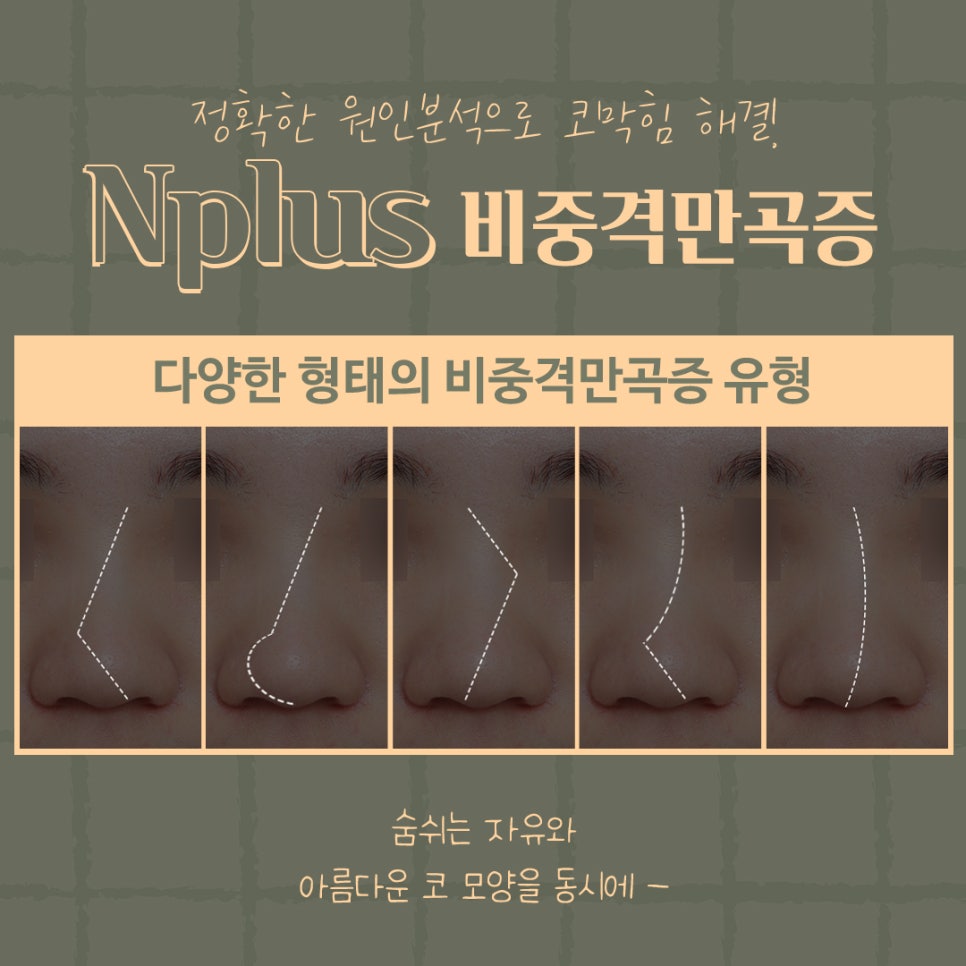
If you are considering septoplasty, of course it is important to refer to reviews, but even if the nose shape looks similar, the symptoms may not be the same. Since each person has different symptoms and different degrees of nasal curvature, it is essential to examine the inside with equipment.
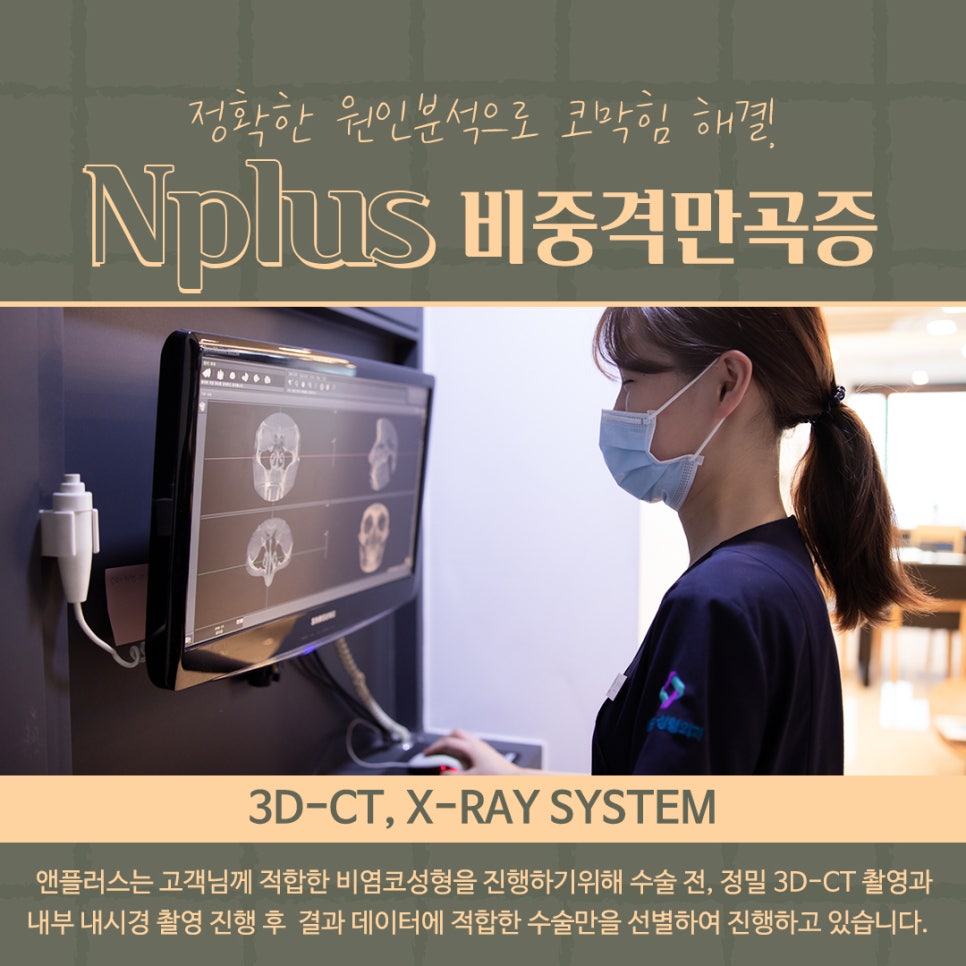
At Gangnam Nose Surgery A+Plus, for a satisfying septoplasty, we precisely determine the degree of cartilage deviation, the position of the cartilage, inferior turbinate hypertrophy, and nasal valve stenosis through preoperative 3D-CT imaging and internal endoscopic imaging, and perform surgery based on the data with a method tailored to each individual.
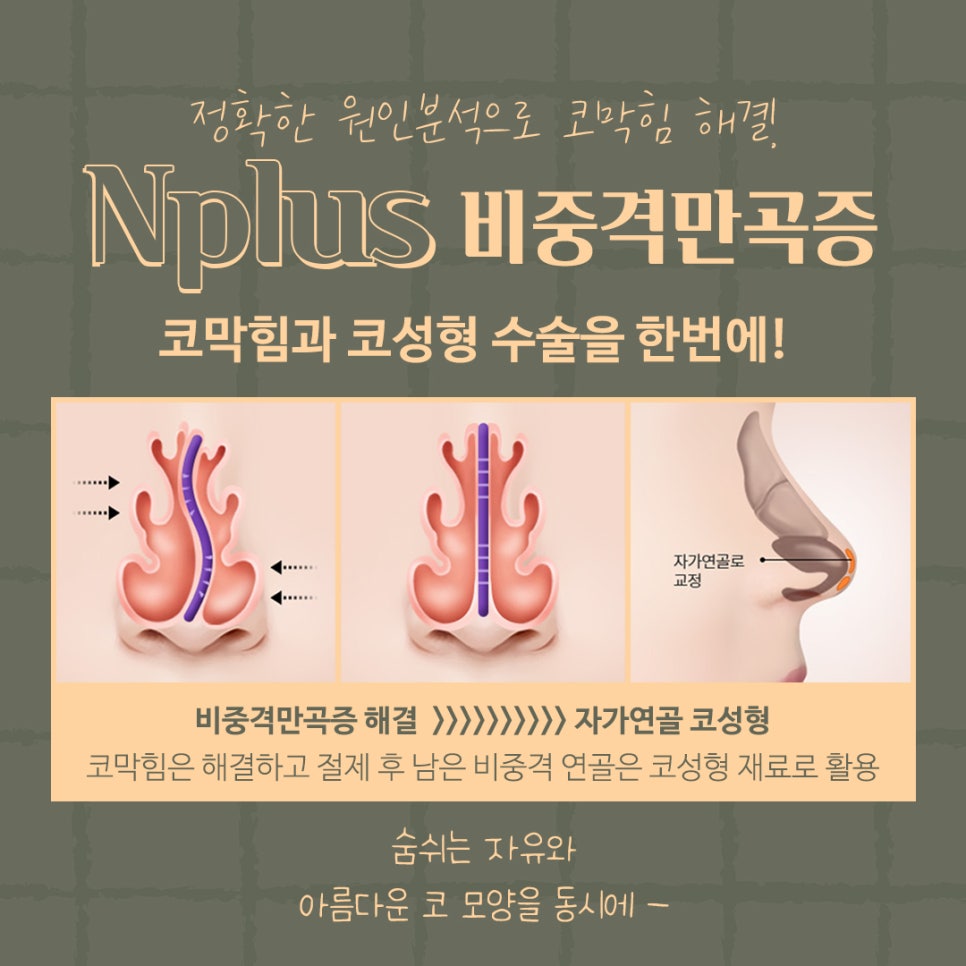
As for the septoplasty method, after preoperative testing accurately determines the degree of septal deviation and whether nasal valve stenosis is present, the deviated septal cartilage is minimally removed and corrected through an incision inside the nose. If inferior turbinate hypertrophy or nasal valve stenosis is present as well, inferior turbinate correction is performed using specialized equipment, and nasal valve stenosis correction is carried out using one of four methods that fits the symptoms.

In addition, during septoplasty, part of the deviated septum is removed. The septal cartilage obtained at this time can be used as a material to shape the nasal tip, so functional nose surgery and aesthetic nose surgery can be performed at the same time, allowing two surgical effects to be achieved in one procedure.

Lastly, at Gangnam Nose Surgery A+Plus, Director Yoon Hyun-cheol personally handles every step one-on-one, from consultation and surgical planning to the procedure, treatment, and follow-up visits. Postoperative care is also provided through the A+Plus membership card, offering a free after-service system for one year after surgery and a surgery responsibility guarantee system prepared for all possible situations, including postoperative pain, inflammation, and dissatisfaction with the result.
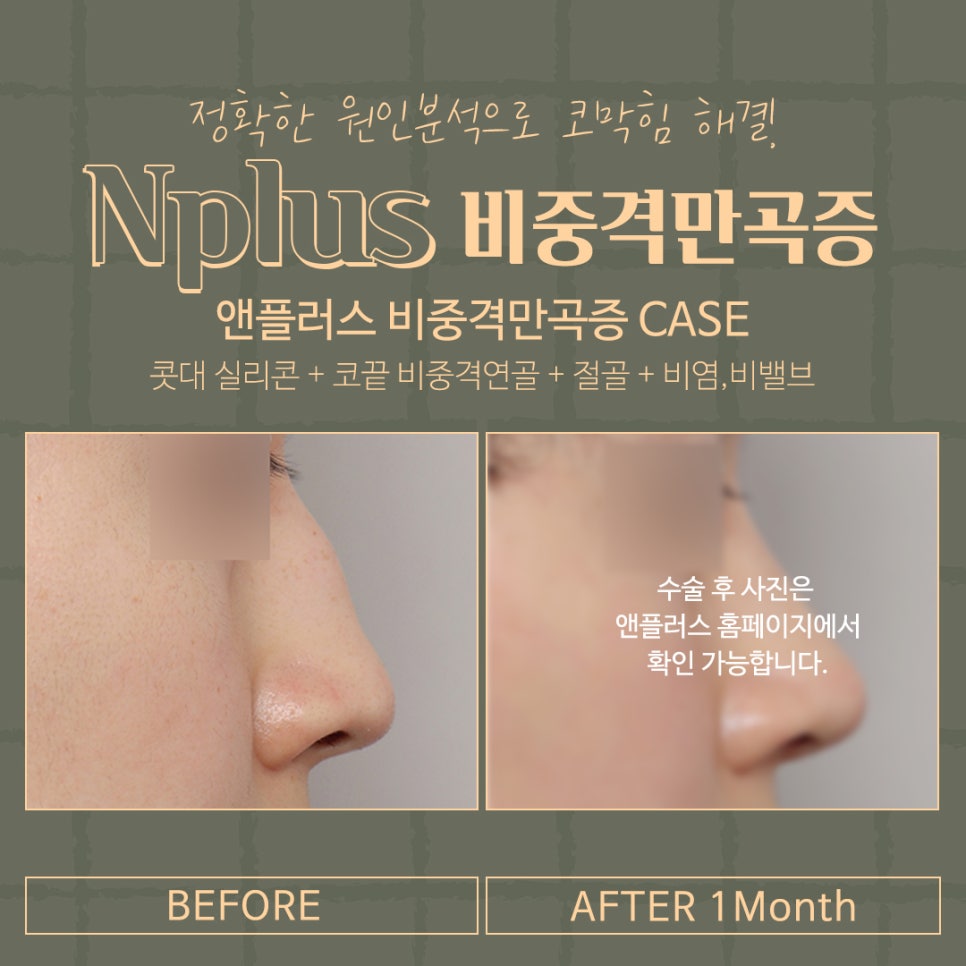
(The image above shows before-and-after photos of septoplasty at Gangnam Nose Surgery A+Plus.)
That concludes the information we shared about septoplasty at Gangnam Nose Surgery A+Plus. We hope this article is of great help to those who are experiencing inconvenience in daily life due to nasal congestion caused by rhinitis. Thank you.