
Hello. This is Ohjico N+ Clinic, which thinks only about your beautiful and healthy nose.
The topic we will introduce this time is septoplasty.

When we think about rhinoplasty, we tend to focus first on improving a nose shape we are not satisfied with, so the cosmetic approach is prioritized. However, when it comes to the nose, it is an important part of the body as a functional organ responsible for breathing and smelling. Therefore, when these functional aspects do not work normally and cause inconvenience in daily life, improvement through rhinoplasty can also be considered.

One condition that can be improved through rhinoplasty in terms of function is rhinitis. Rhinitis is a condition that more than 70% of adults in Korea have; of these, 20% is allergic rhinitis, and the remaining 80% is structural rhinitis caused by abnormalities in the internal structure of the nose. Structural rhinitis includes deviated septum, inferior turbinate hypertrophy, and nasal valve stenosis. In the case of allergic rhinitis, it is difficult to cure completely, so ongoing medication treatment and improvement of immunity are needed. In the case of structural rhinitis such as deviated septum, inferior turbinate hypertrophy, and nasal valve stenosis, symptoms can be relieved through surgery. Therefore, interest in septoplasty, which is the most common among structural rhinitis conditions, can be said to have increased even further.
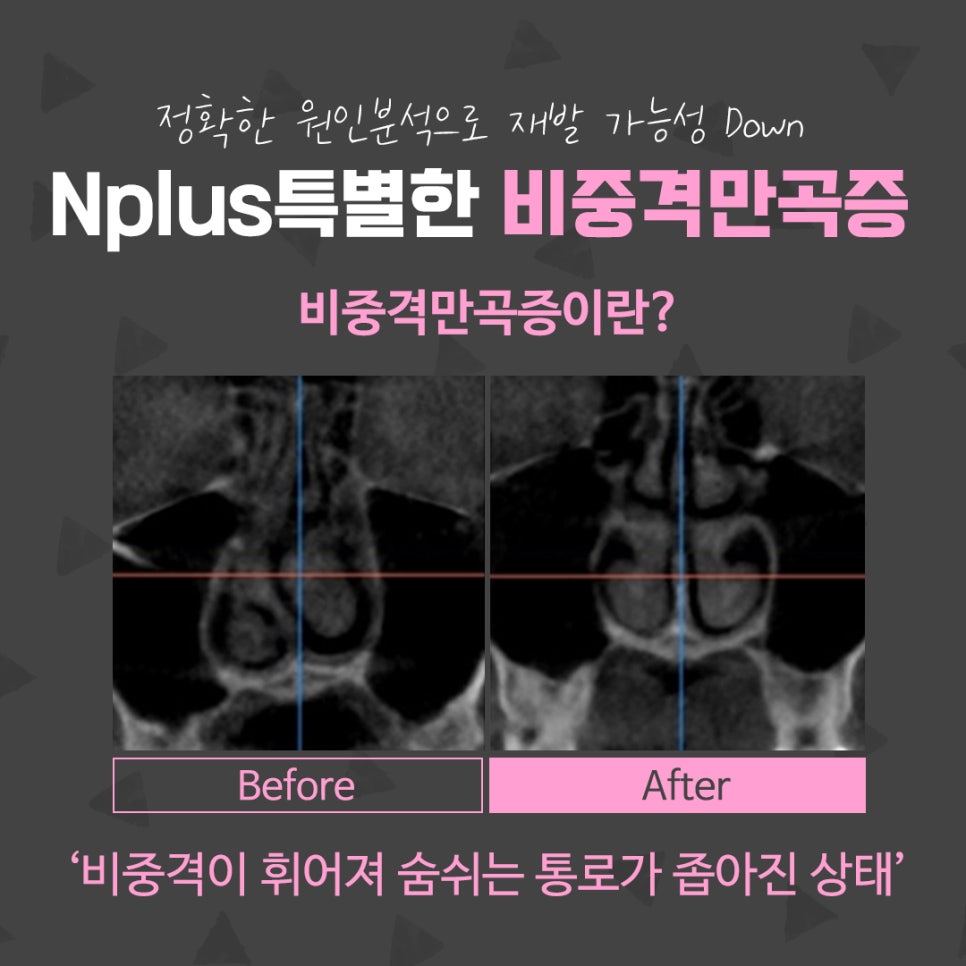
What is a deviated septum? The cartilage-like partition that divides the nostrils into two is called the septum. When this septum is bent, it is called a deviated septum, and the bent septum obstructs the flow of air entering through the nose, causing nasal congestion.
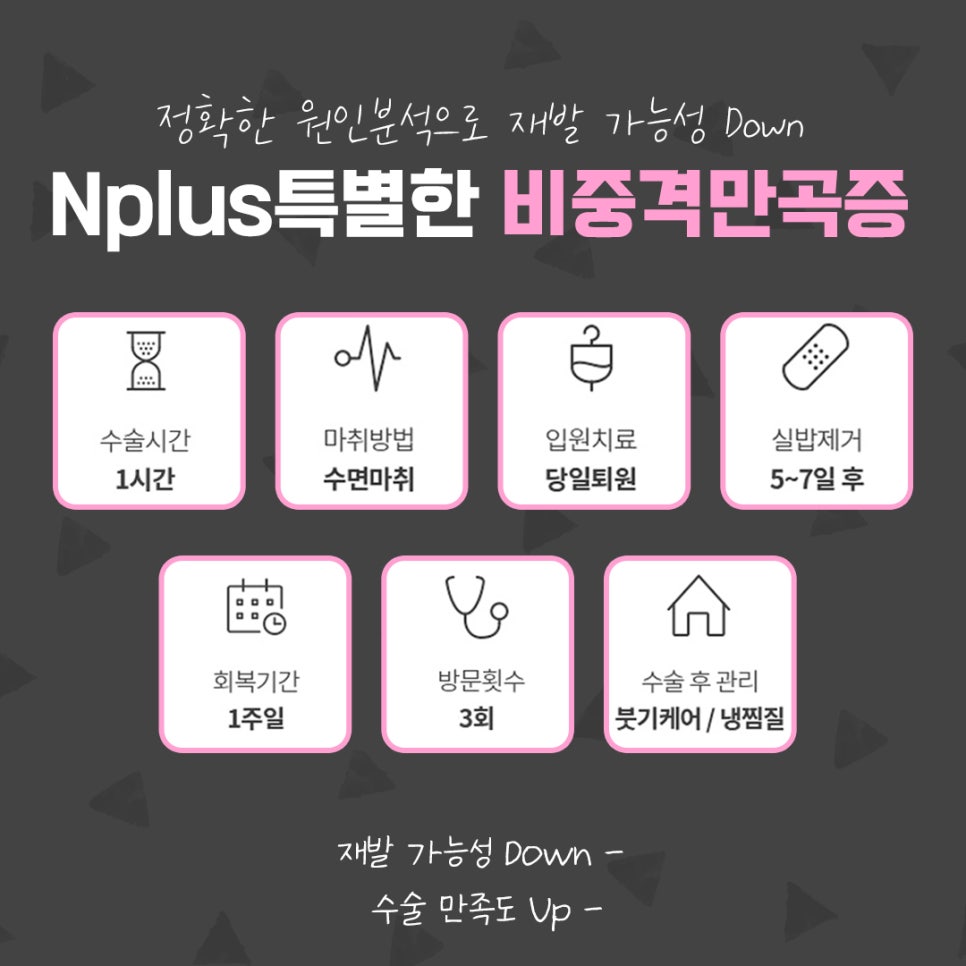
As mentioned earlier, the representative symptom requiring septoplasty is nasal congestion. If the nasal congestion is mild, treatment may not be necessary, but as symptoms become more severe, it can progress to chronic rhinitis. If left untreated, the brain may not receive enough oxygen, which can lead to headaches, migraines, reduced concentration, and loss of motivation. As a result, daily life can become very inconvenient, so even if symptoms are mild, it is important to accurately check the condition of your nose.
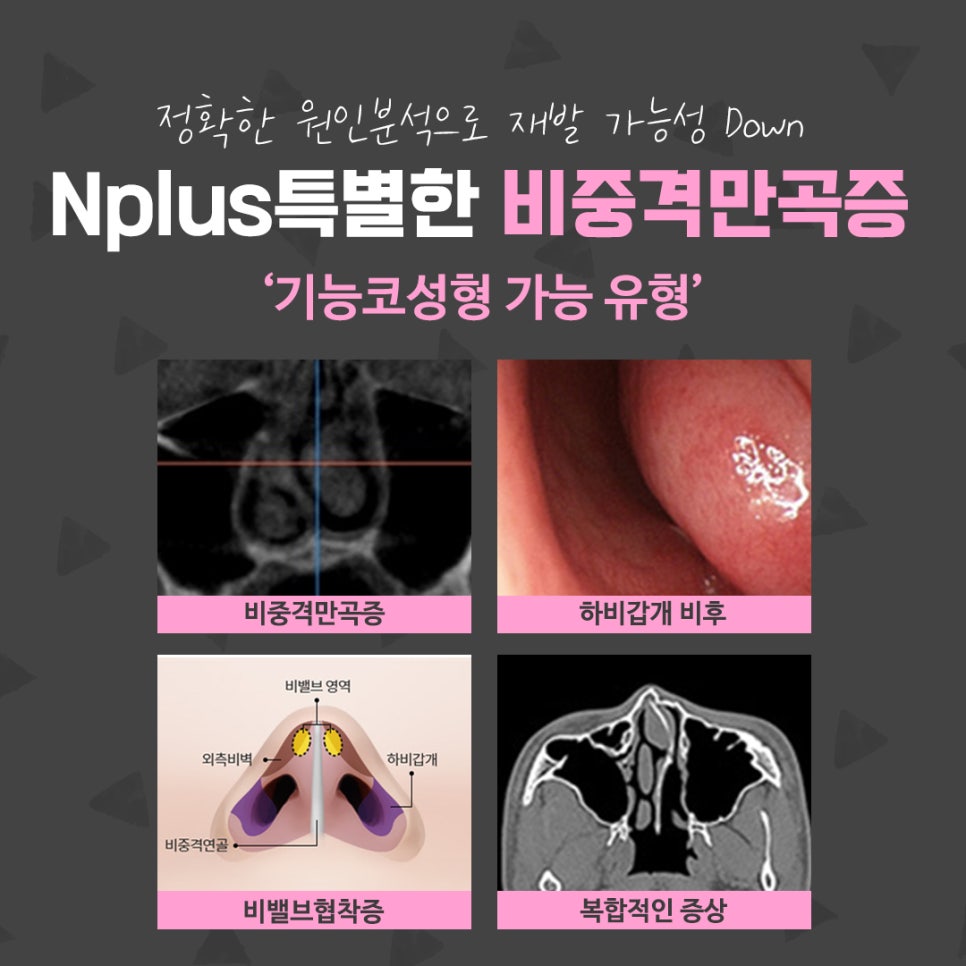
Nasal congestion may sometimes require septoplasty alone, but it can also occur in combination with symptoms such as inferior turbinate hypertrophy and nasal valve stenosis. Inferior turbinate hypertrophy refers to a condition in which the inferior turbinate, the fleshy tissue inside the nose, becomes enlarged and obstructs the flow of air entering through the nose. Nasal valve stenosis is a narrowed condition in which the space of the nasal valve, which serves as the roof of the nose, becomes narrow, and this also obstructs the flow of air entering through the nose.
As such, nasal congestion can have various causes, including allergic rhinitis and structural rhinitis such as deviated septum, inferior turbinate hypertrophy, and nasal valve stenosis. These conditions are difficult to identify with the naked eye, and because secondary surgery can be prevented only when surgery appropriate to the symptoms is performed, it is important to choose a medical team with strong anatomical knowledge of the nose and abundant surgical experience. Therefore, those looking into septoplasty would do well to carefully review the checkpoints before deciding on surgery.
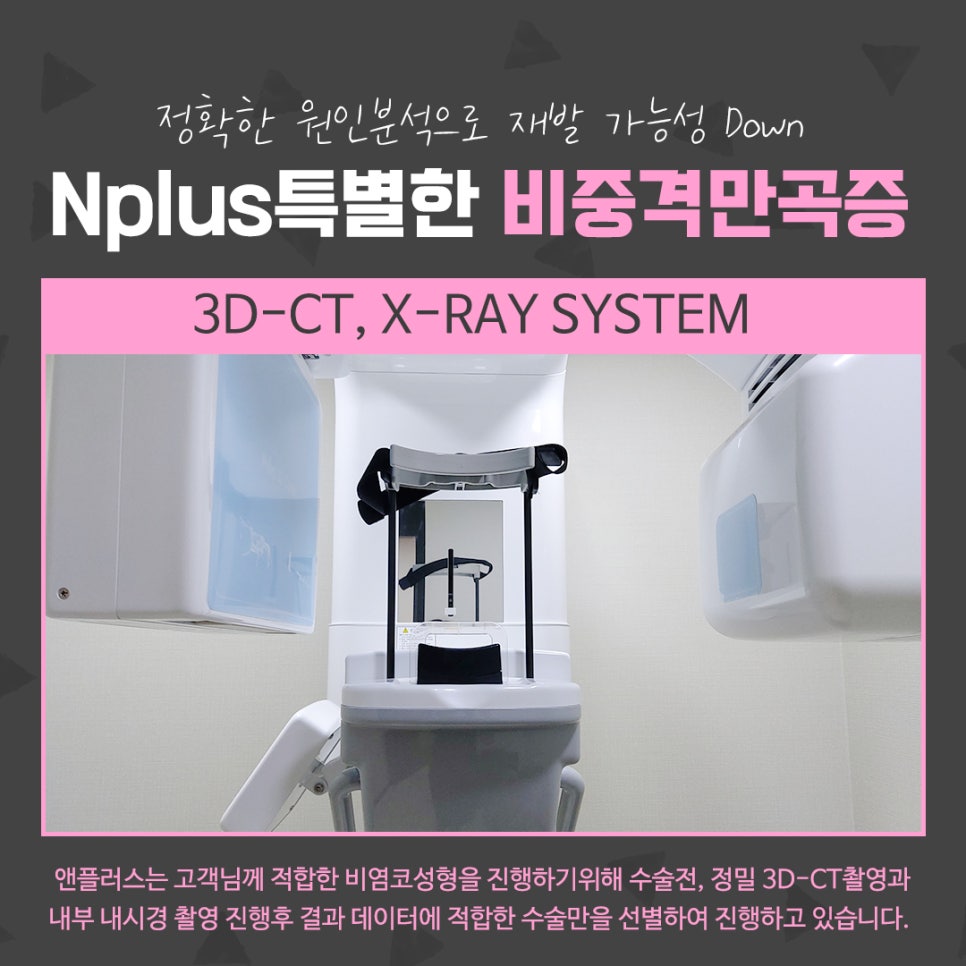
At N+ Clinic, to achieve a satisfactory septoplasty, we identify the cause through various allergy tests, 3D-CT imaging, and internal endoscopic imaging before surgery, then accurately determine the degree of cartilage deviation, the cartilage position, and any combined symptoms. Based on these data, we proceed with a surgical method tailored to each individual.
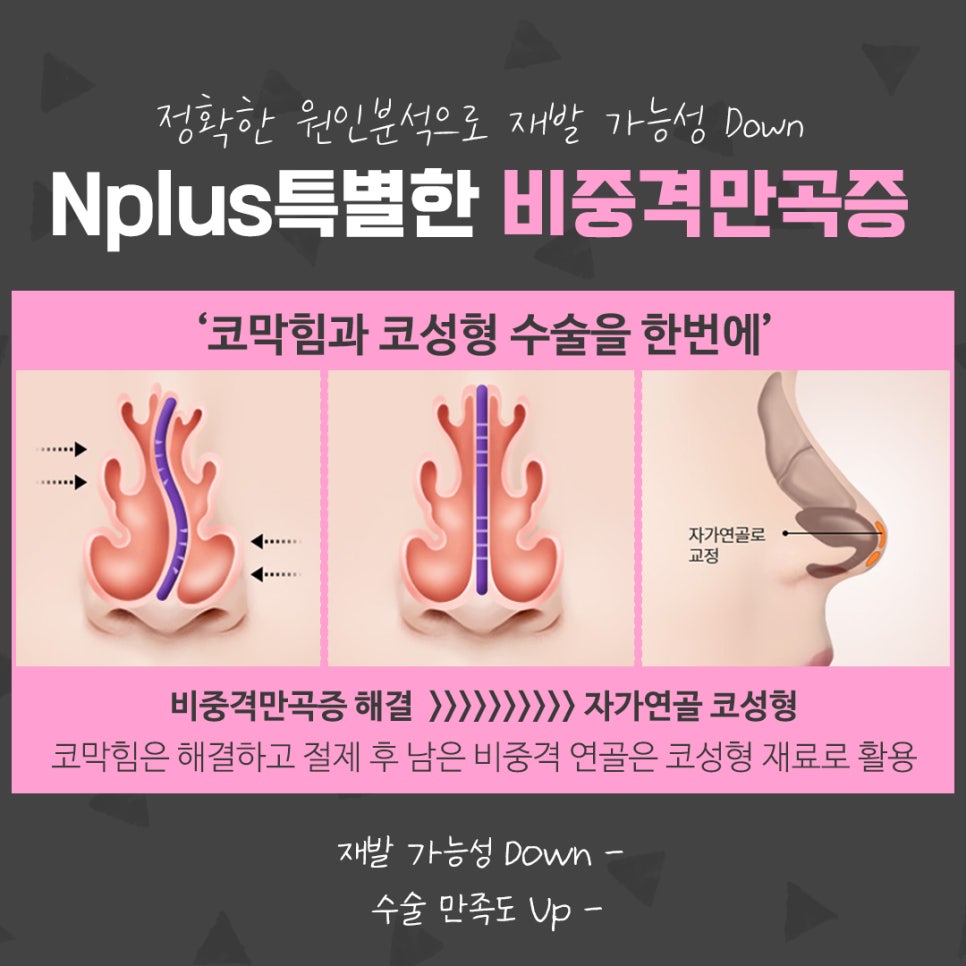
For septoplasty, we accurately determine the degree of septal deviation, whether the inferior turbinate is enlarged, and the extent of nasal valve stenosis through preoperative examinations. Then, by making an incision inside the nose, we minimally remove and straighten the deviated septal cartilage. If necessary, the tip of the nose is also corrected using autologous cartilage. When combined symptoms such as inferior turbinate hypertrophy and nasal valve stenosis occur, additional correction is performed using laser treatment. Depending on the degree of nasal valve stenosis, one of four methods is selected: spreader graft, butterfly graft, upper lateral strut graft, or suspension suture.
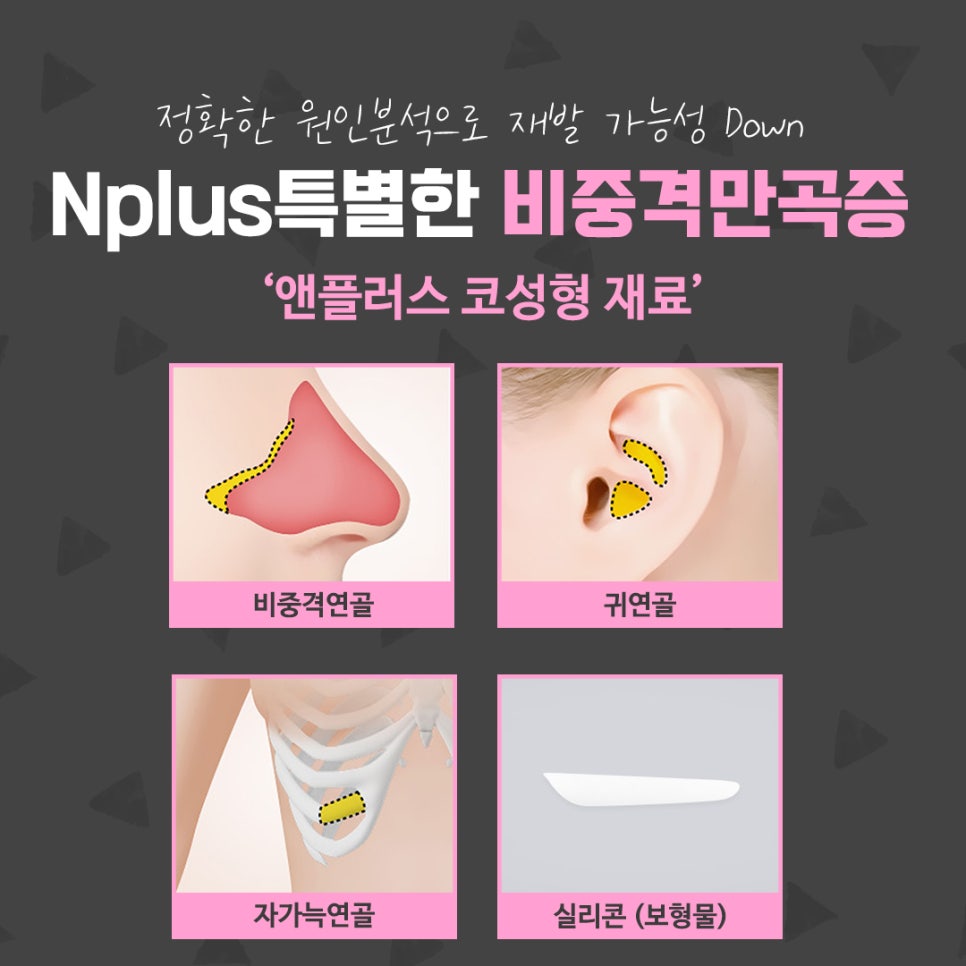
If cosmetic rhinoplasty is additionally performed after septoplasty, inferior turbinate hypertrophy, and nasal valve stenosis correction, silicone is used for the bridge of the nose and autologous cartilage for the nasal tip. Autologous cartilage includes septal cartilage, ear cartilage, and autologous rib cartilage, and surgery is performed with materials suited to the individual after preoperative testing.
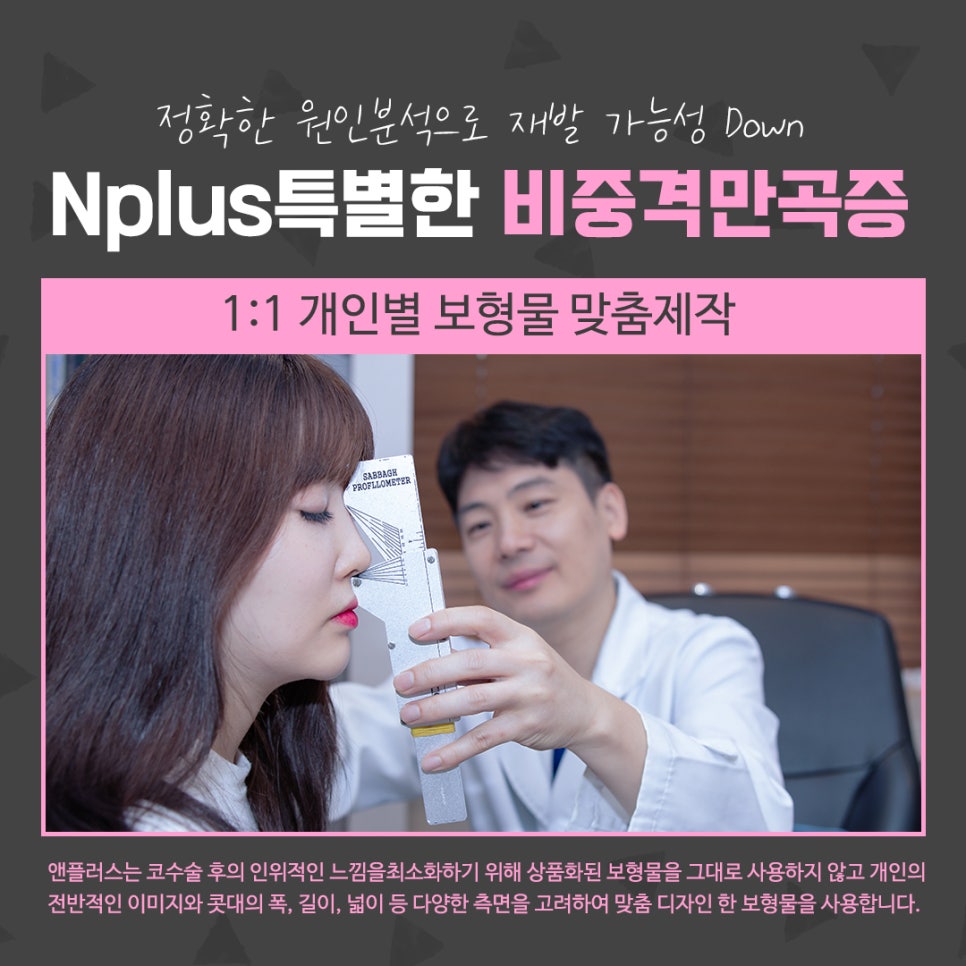
In addition, at N+ Clinic, the silicone used for cosmetic nose surgery after septoplasty was previously focused on creating a high bridge rather than correcting the overall nasal line, but because it gave a strong artificial impression, we now do not use the implant as-is. To minimize the artificial look, we carefully reshape the implant ourselves while considering various aspects such as the individual’s overall image, as well as the width, length, and breadth of the nasal bridge, before use.
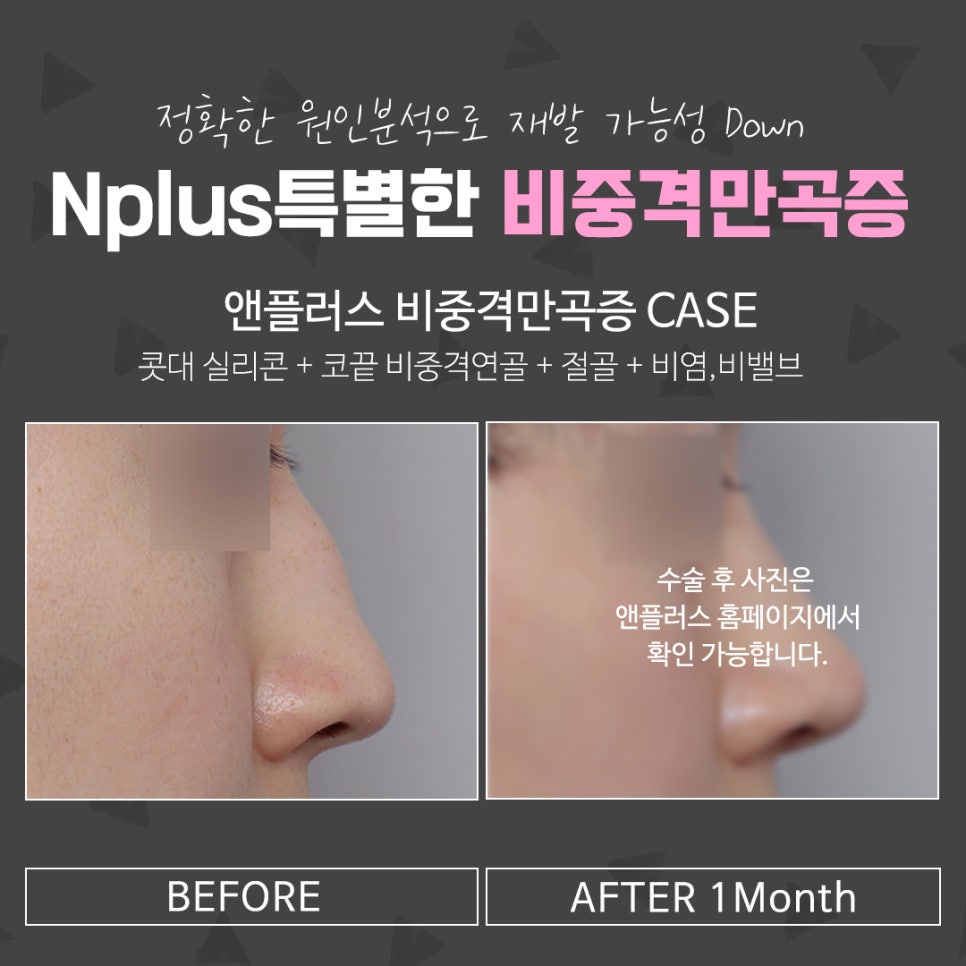
(The image above shows before-and-after photos of an actual septoplasty performed at N+ Clinic.)
Also, septoplasty can be performed alone, but in most cases it involves combined symptoms, as you can see in reviews. Since it is classified as a complex and high-difficulty surgery when two or more procedures are performed at the same time, it can be helpful to thoroughly research and then make your decision.

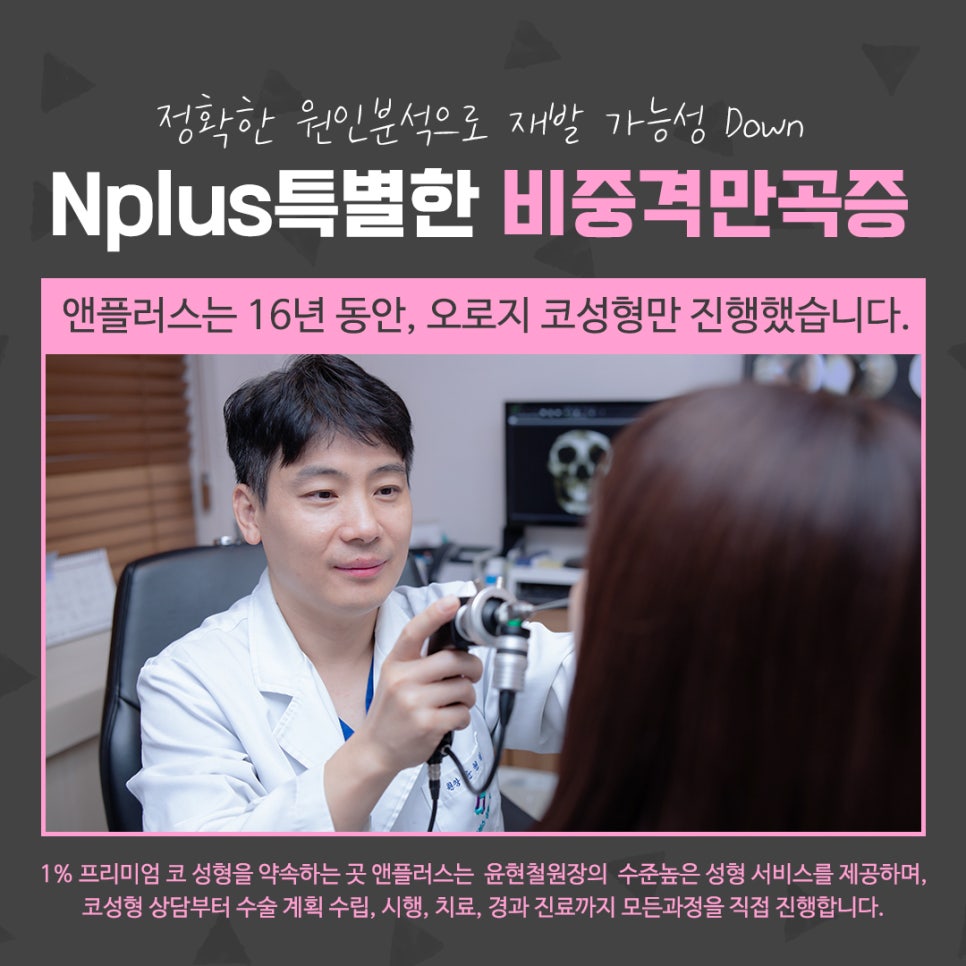
Lastly, at N+ Clinic, CEO Director Yoon Hyun-cheol personally handles every step one-on-one, from septoplasty consultation and surgical planning to the procedure, treatment, and follow-up care. We also provide a free A/S warranty for one year after surgery and operate a surgical responsibility guarantee system that covers every possible situation, including pain, inflammation, and dissatisfaction with the appearance that may arise after surgery, ensuring thorough aftercare.

This concludes the information we have shared about septoplasty at Ohjico N+ Clinic. We hope this post will be very helpful for those who are stressed by nasal congestion caused by rhinitis in their daily lives. Thank you.