
Hello. This is Oji Plastic Surgery and N+Plus, which considers only your beautiful and healthy nose.
What I will introduce this time is about before-and-after rhinoplasty corrected with a refined line.

Our noses differ in shape and form from person to person, and they play a major role in the overall facial features. Therefore, when the nose is too low, bumpy, drooping, or upturned, you can compare similar nose shapes through before-and-after rhinoplasty examples to improve it into a straight and smooth shape.

In general, people looking up before-and-after rhinoplasty are researching surgery, and when they look at before-and-after images, the first priority is usually checking the aesthetic appearance. However, since the nose is also a very important functional organ responsible for breathing and smell, greater caution is needed. Therefore, reviewing functional aspects along with before-and-after rhinoplasty can be helpful when proceeding with surgery.
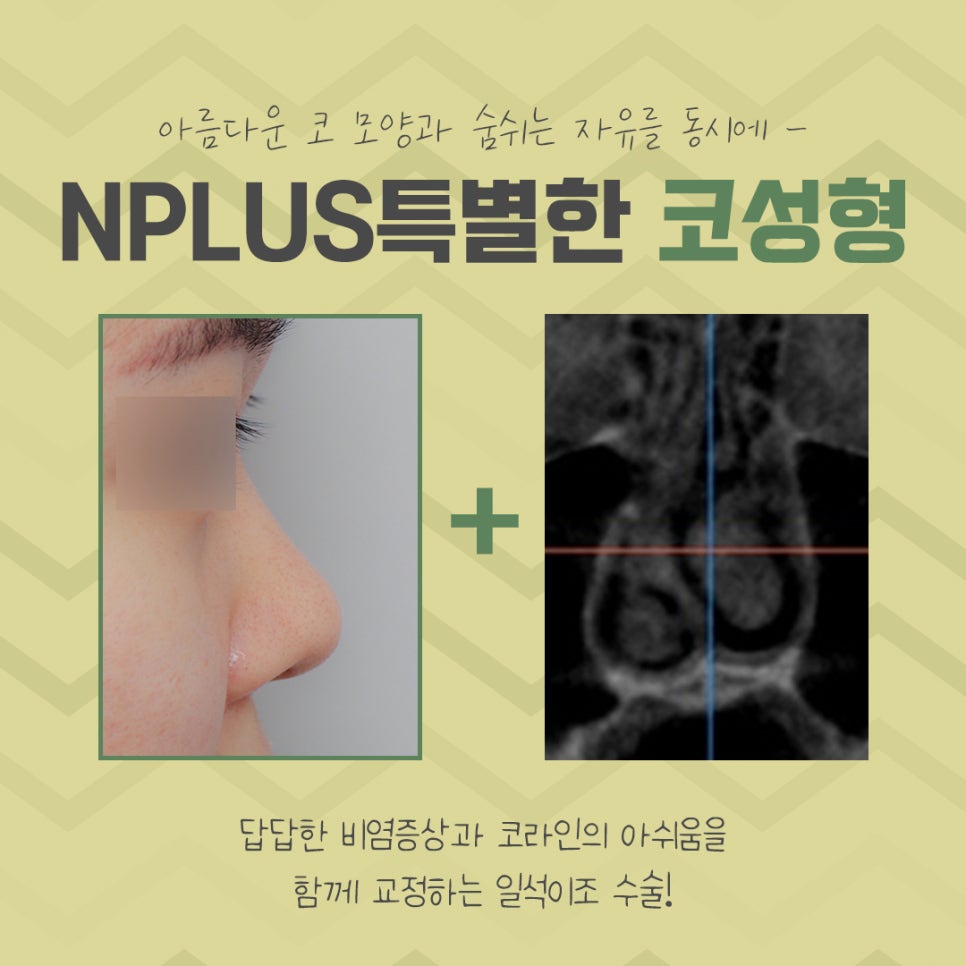
When looking into functional before-and-after rhinoplasty, the most common symptom is nasal congestion, which can be caused by rhinitis. Rhinitis is a common condition affecting more than 70% of adults in Korea and is divided into allergic rhinitis and structural rhinitis caused by internal structural abnormalities. In the case of allergic rhinitis, a cure is difficult, so consistent medication and improved immunity should be prioritized. In the case of structural rhinitis, improvement through surgery is possible, and checking the inside of the nose together with before-and-after rhinoplasty can be very helpful.
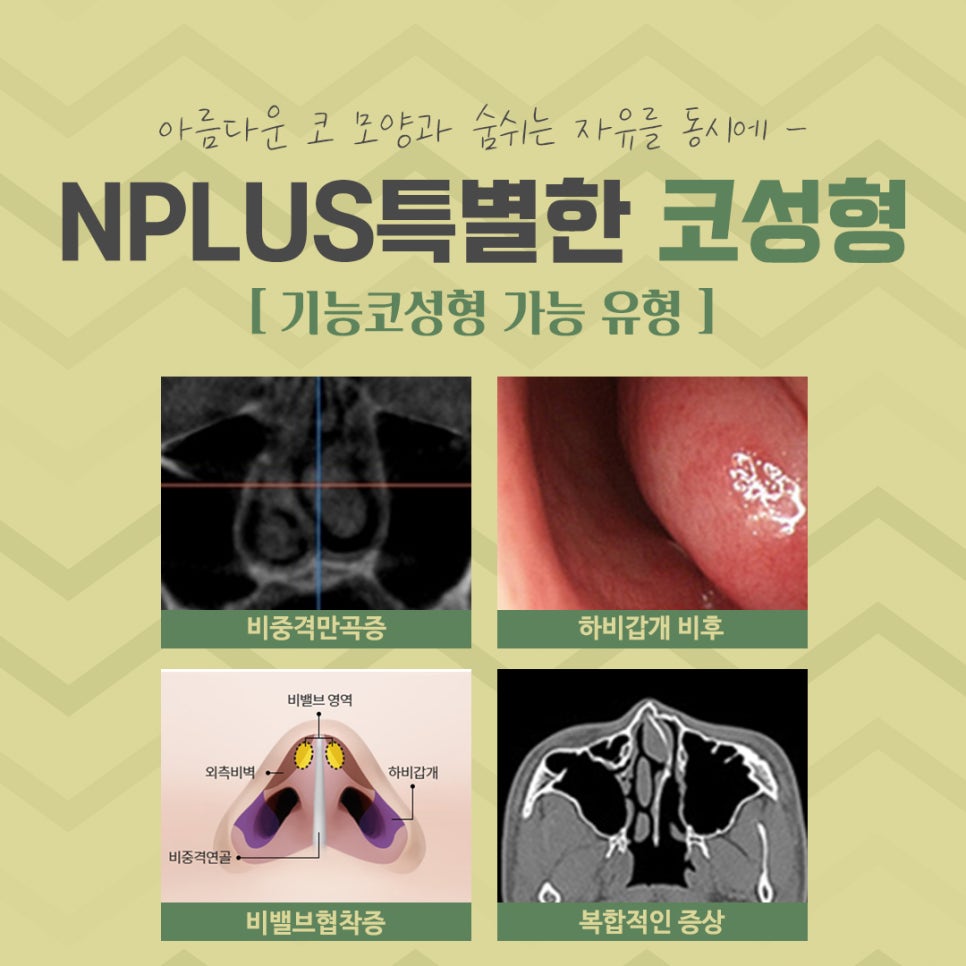
Structural rhinitis includes deviated septum, inferior turbinate hypertrophy, and nasal valve stenosis. A deviated septum refers to a bent septum, the cartilage partition that divides the nostrils into two. Inferior turbinate hypertrophy refers to enlargement of the inferior turbinate, the fleshy tissue inside the nostril. Nasal valve stenosis refers to narrowing of the nasal valve, which is located in the area that acts as the roof of the nose and regulates the flow of air entering through the nose. These three can be seen as causes of structural rhinitis.

However, what you can see from before-and-after rhinoplasty is that while external problems with the shape of the nose can be confirmed visually, in the case of rhinitis it is difficult to tell by appearance whether it is allergic rhinitis or structural rhinitis. Therefore, it is important to accurately check the condition of your nose through medical equipment.
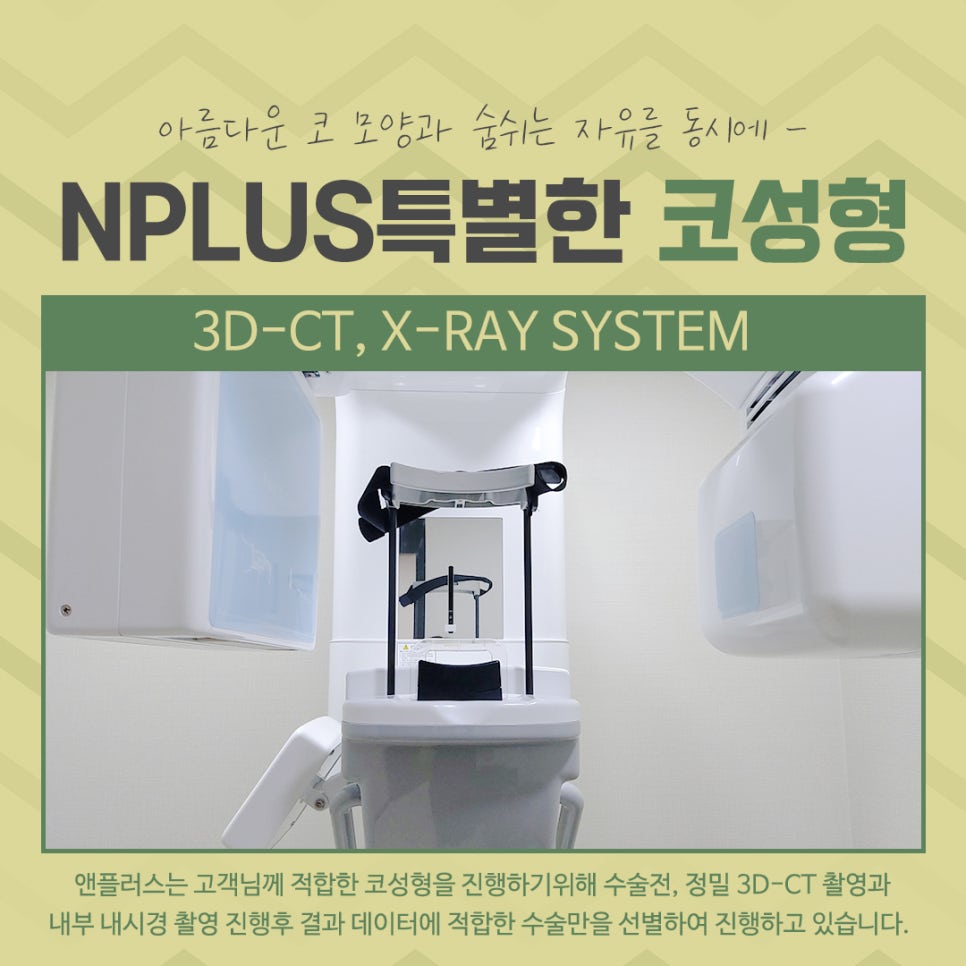
At N+Plus, to achieve proper before-and-after rhinoplasty results, we perform a preoperative 3D-CT scan and internal endoscopic examination to accurately check for the presence of cartilage, the condition of the nasal bones, and internal functional abnormalities, and then carry out surgery tailored to each individual based on the data.

If you look at before-and-after rhinoplasty, you can see that the surgical method differs from person to person. In general, during rhinoplasty, the nasal bridge is corrected with silicone and the nasal tip with autologous cartilage. In addition, if there is a functional problem, functional correction is performed first, followed by aesthetic rhinoplasty.
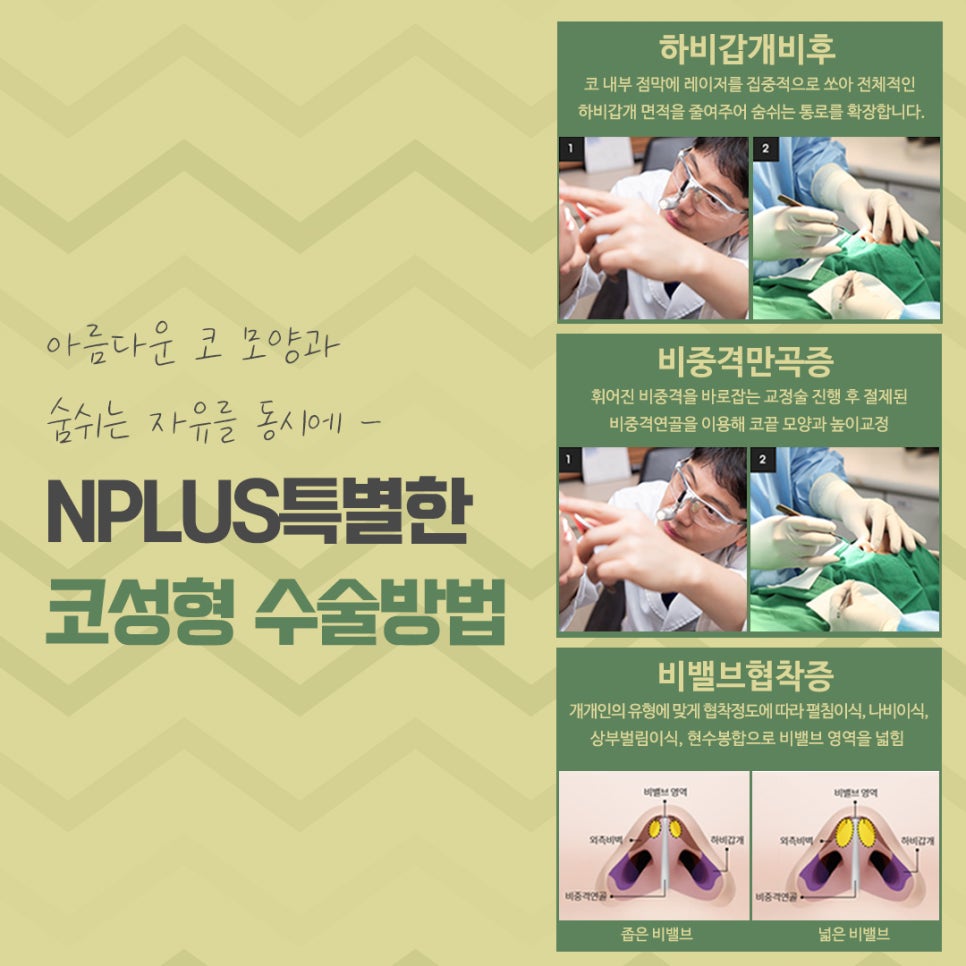
In the case of a deviated septum, the bent septum is straightened properly; in the case of inferior turbinate hypertrophy, the enlarged inferior turbinate is adjusted with a laser; and in the case of nasal valve stenosis, functional surgery is performed first using a surgical method suited to the individual among four methods: spreader graft, butterfly graft, superior strut graft, and suspension suture, followed by aesthetic rhinoplasty.
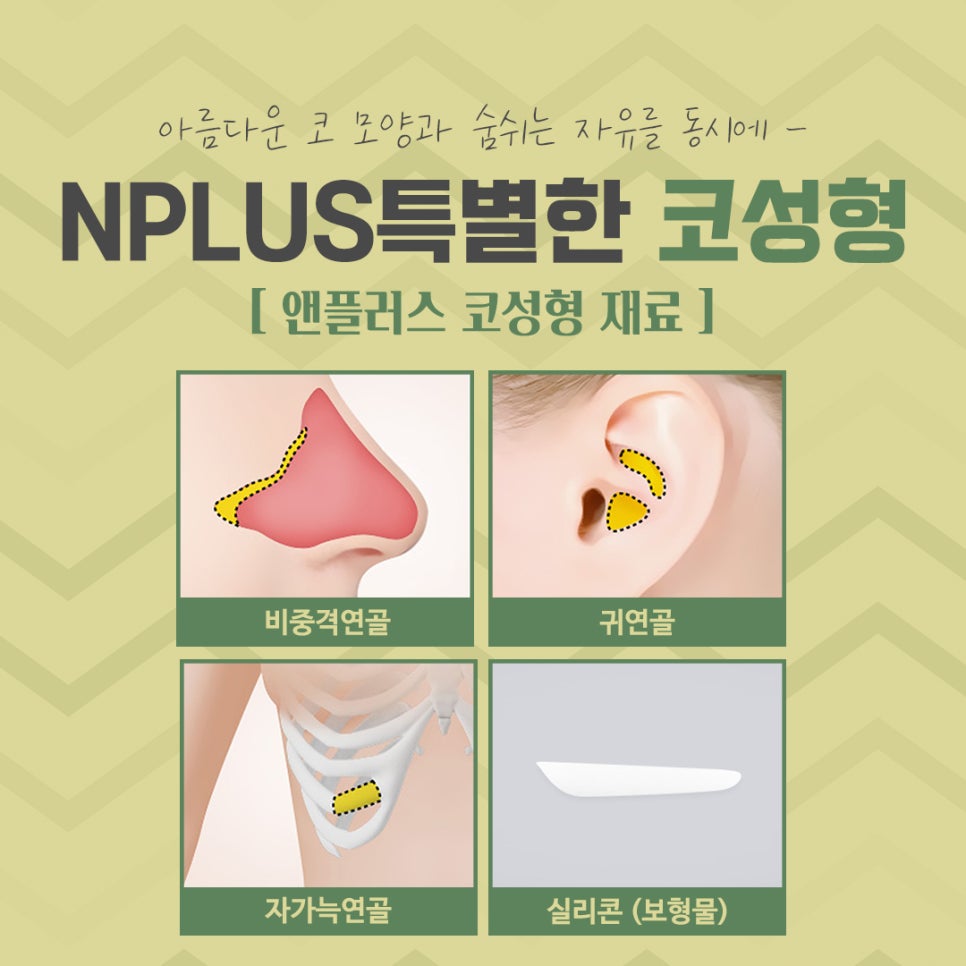
The autologous cartilage used in rhinoplasty includes septal cartilage, ear cartilage, and autologous rib cartilage, while silicone is used for the nasal bridge. If you check the before-and-after rhinoplasty details, you can see that the materials used vary from person to person, and this too is determined through preoperative testing so that the materials are suited to the individual.
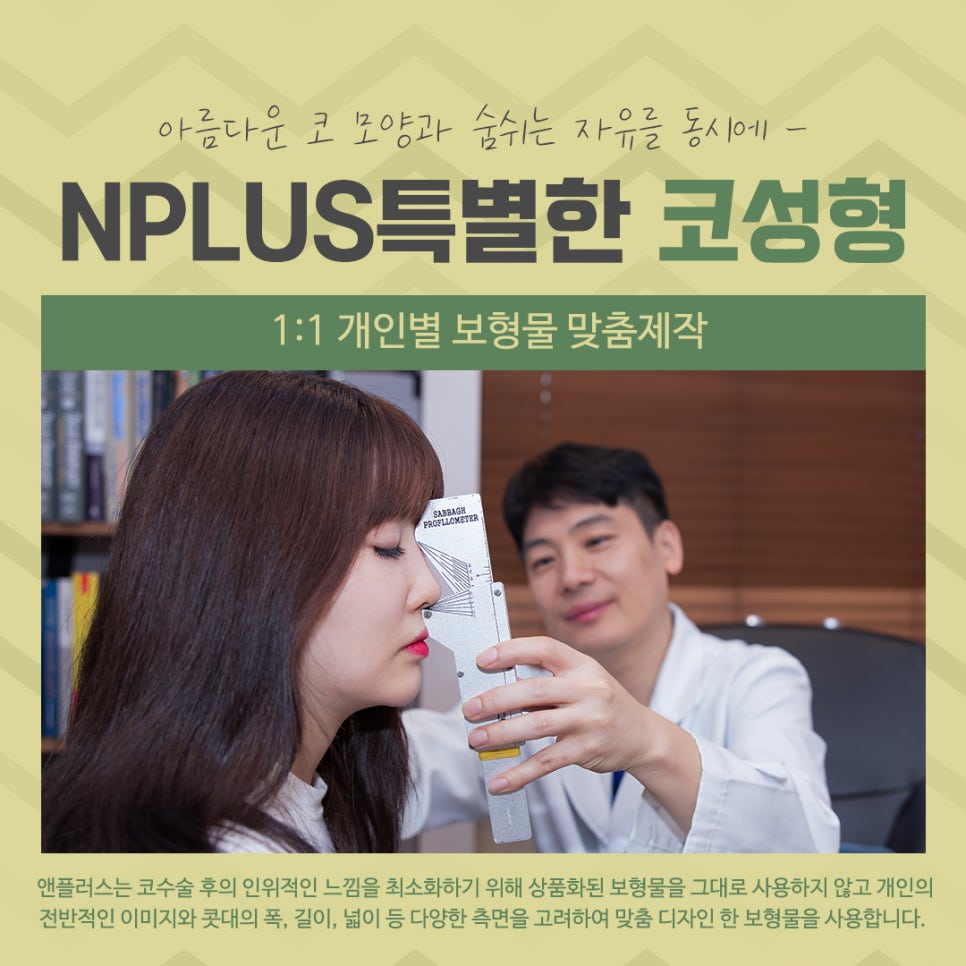
In addition, at N+Plus, the silicone used in rhinoplasty is not a commercially standardized implant used as-is. To minimize an artificial appearance after surgery, we use a custom-designed implant that considers the individual’s overall image as well as various aspects such as the width, length, and breadth of the nasal bridge.
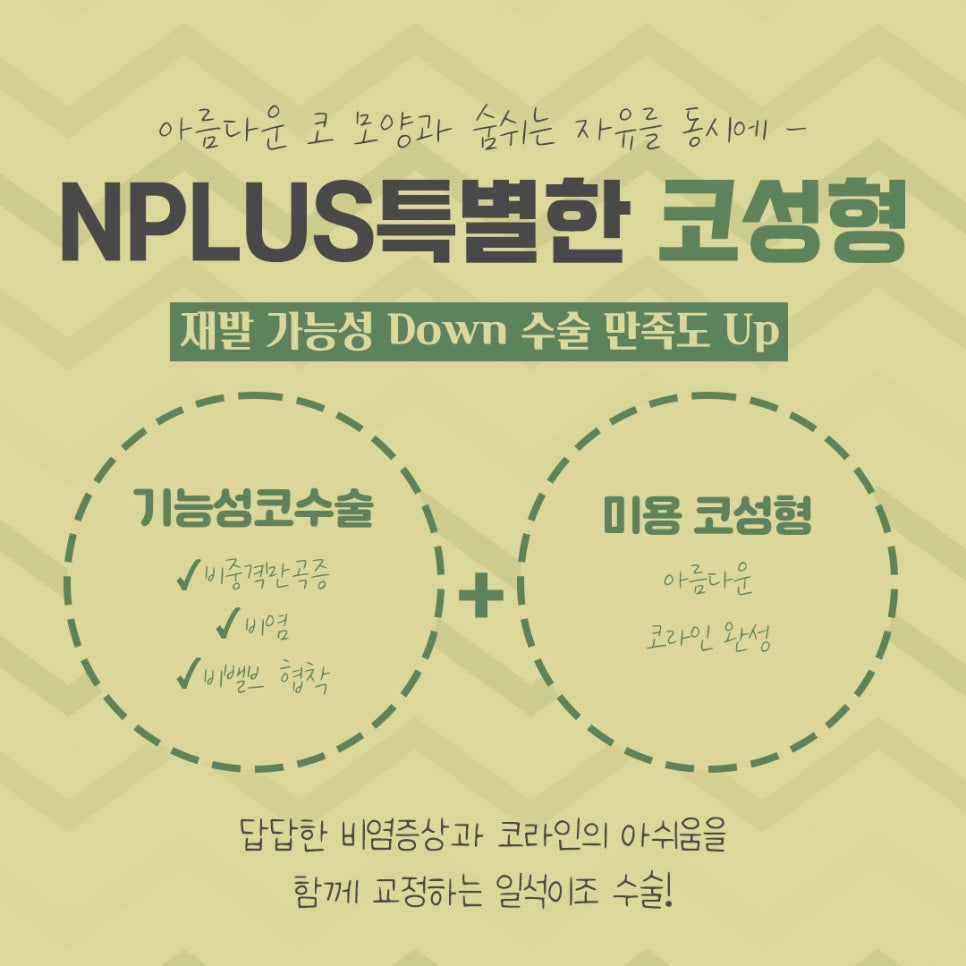
As such, when proceeding with before-and-after rhinoplasty, if you go ahead with surgery without checking the condition of your nose and rely only on aesthetic or cost considerations, it may lead to the need for revision surgery due to functional problems after the operation. Therefore, even if you have no symptoms, we recommend accurately checking the condition of your nose before proceeding with surgery.
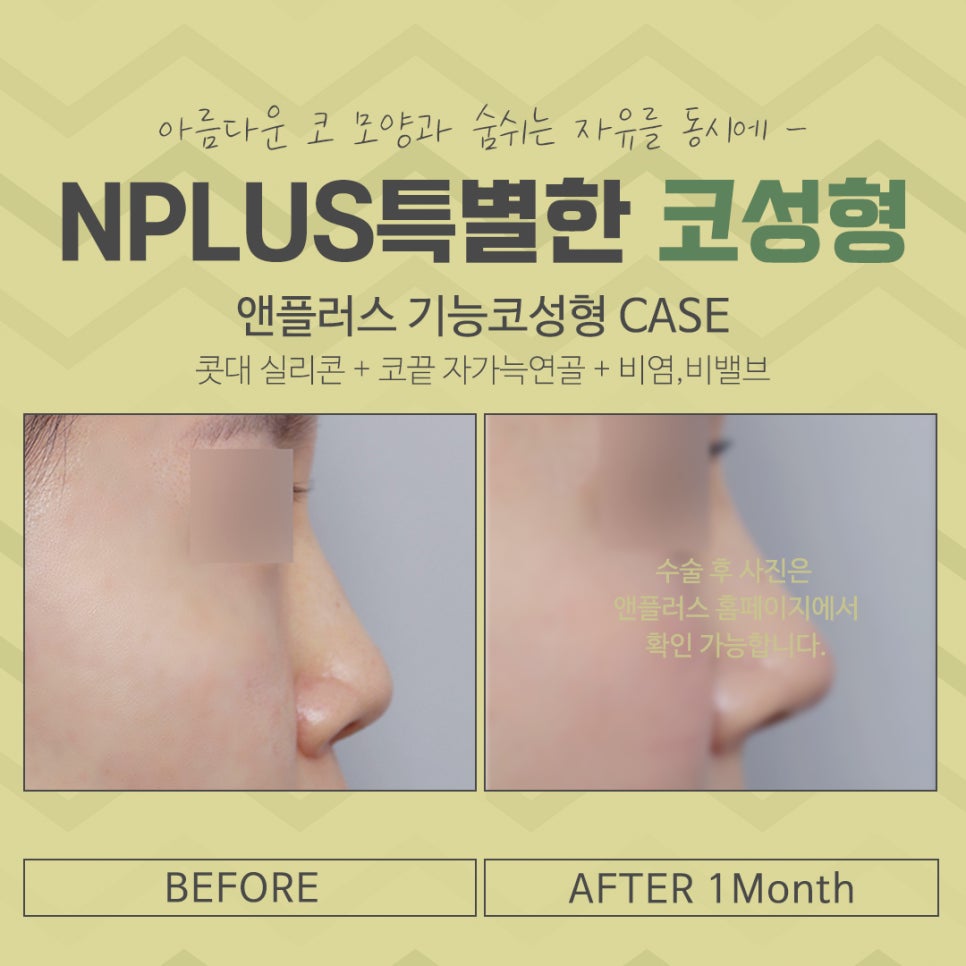
(The image above is a before-and-after rhinoplasty image from Oji Plastic Surgery and N+Plus.)
Also, when looking at before-and-after rhinoplasty, even though rhinoplasty may seem simple on the surface, it is performed with two or more surgical methods applied, and because the inside is a functional organ, its structure is more complex than we think. Therefore, it would be good to choose a medical team with a high level of anatomical knowledge of the nose and abundant surgical experience and expertise to achieve satisfying before-and-after rhinoplasty results.
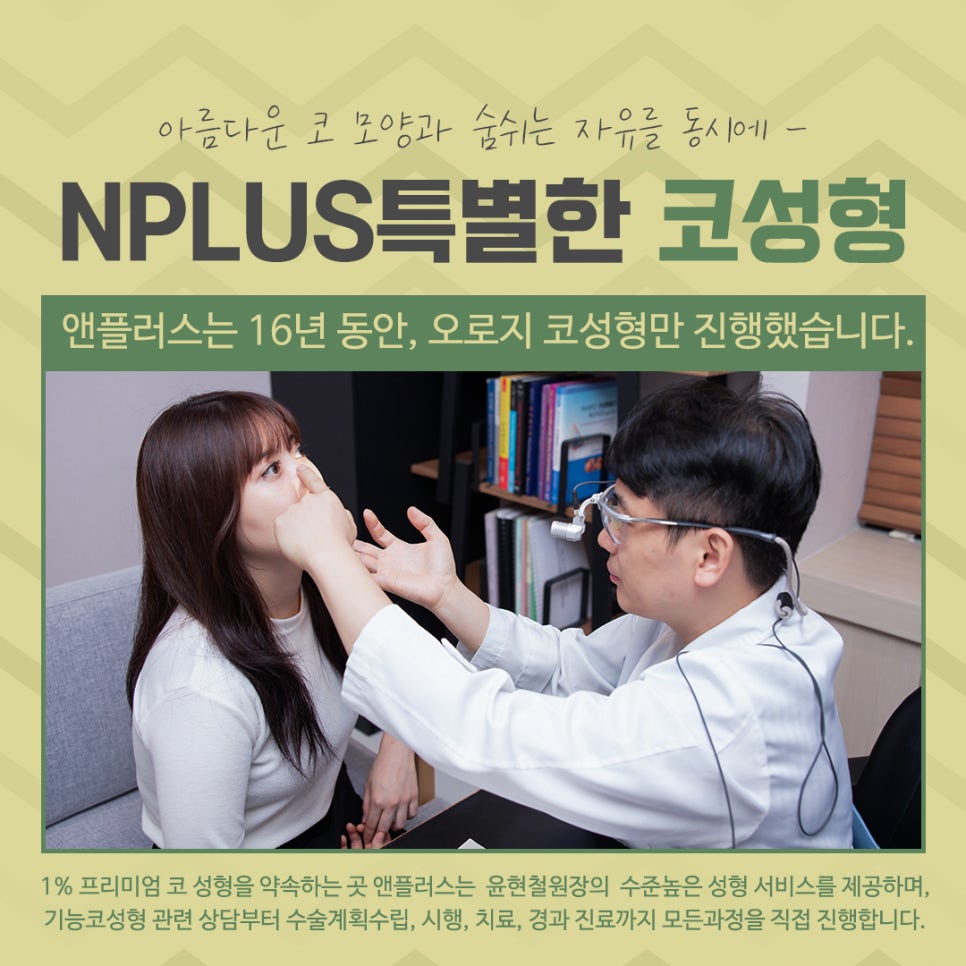
At N+Plus, Director Yoon Hyun-cheol personally handles every step one-on-one, from consultation on before-and-after rhinoplasty to surgical planning, performance, treatment, and follow-up care. In addition, for aftercare, the clinic provides a one-year warranty through its A/S system and operates a surgery responsibility guarantee system in preparation for possible postoperative pain, inflammation, and dissatisfaction with the shape. Members holding an N+Plus membership card can receive aftercare benefits at any time.

That concludes the information we shared about before-and-after rhinoplasty at Oji Plastic Surgery and N+Plus. I hope this article was very helpful for those who are currently stressed about a nose shape they are not satisfied with. Thank you.