
Hello. This is Oji Plastic Surgery & N Plus, which thinks only about your beautiful and healthy nose.
The topic we will introduce this time is autologous rib cartilage rhinoplasty.

Recently, more and more people have been looking to improve their image through rhinoplasty. Because the nose is located at the center of the face, even a small change can have a significant effect, making it a popular plastic surgery procedure. However, since each person has a different nose shape, bone size, cartilage condition, skin tissue condition, and even the materials and surgical methods used in rhinoplasty vary, we recommend carefully reviewing the various factors rather than thinking about it too simply and making a decision cautiously.

Among the various factors, many people are especially interested in the materials used in rhinoplasty. In general, rhinoplasty involves using silicone for the bridge and autologous cartilage for the tip. Autologous cartilage includes ear cartilage, septal cartilage, and autologous rib cartilage. Today, we have prepared information about autologous rib cartilage rhinoplasty, which has the advantages of being large in size and firm.
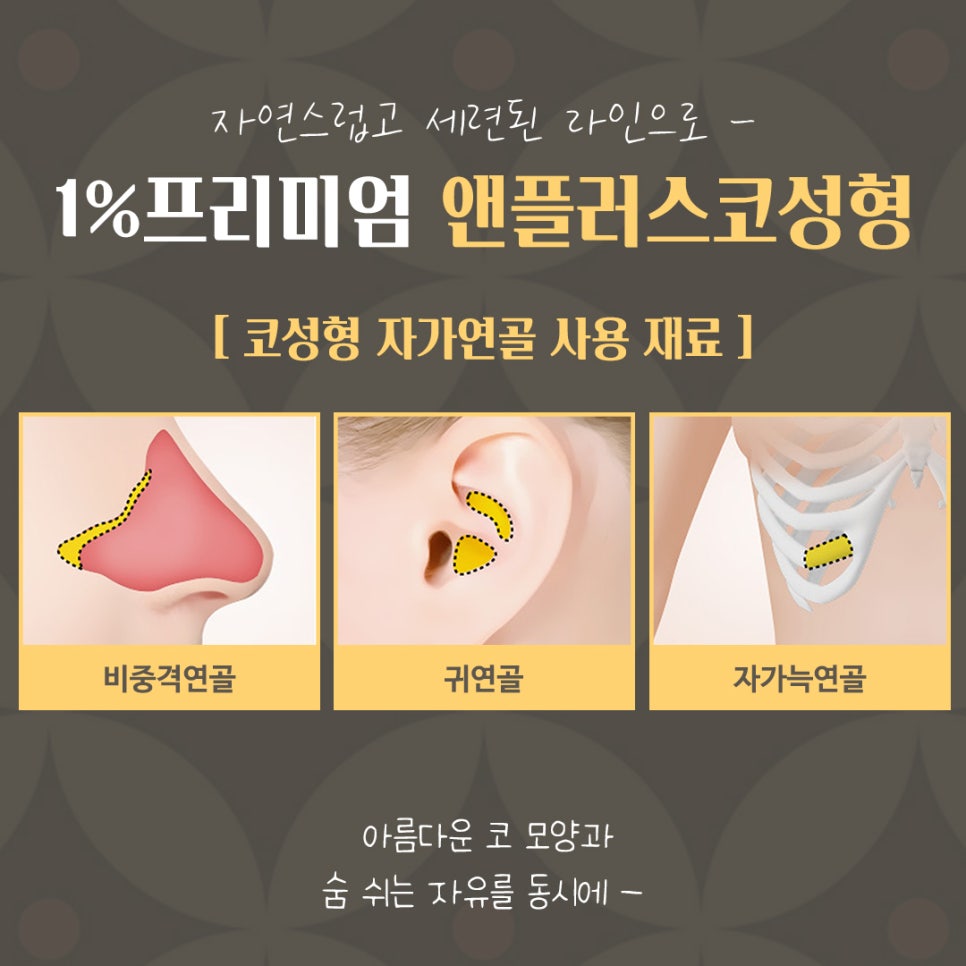
To briefly explain the autologous cartilage used in rhinoplasty: septal cartilage refers to the cartilage that acts as a partition dividing the nostrils in half, and ear cartilage refers to the small cartilage located inside the ear. Lastly, autologous rib cartilage refers to the soft cartilage located in the ribs.

The cases in which autologous rib cartilage rhinoplasty is needed include, first, when ear cartilage or septal cartilage is insufficient due to revision rhinoplasty, and second, when the nose is small, low, and upturned.
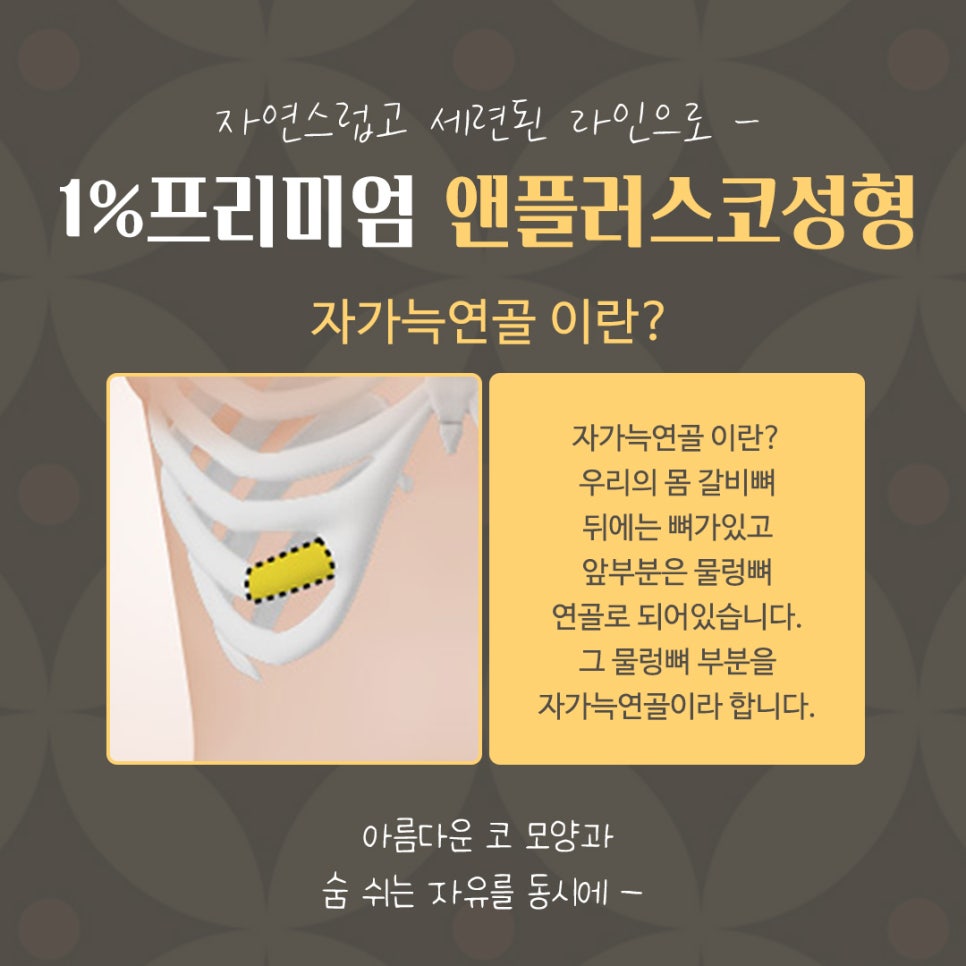
What is autologous rib cartilage rhinoplasty? The back part of our ribs contains bone, while the front part is made of soft cartilaginous tissue. In the case of a first rhinoplasty, most procedures use septal cartilage, ear cartilage, and silicone to add volume to the nose. Autologous rib cartilage rhinoplasty is commonly performed in revision rhinoplasty when there is a lack of cartilage, but it is also used in primary rhinoplasty to minimize inflammation and side effects, and because it is large and firm, it can be used even when cartilage is insufficient.
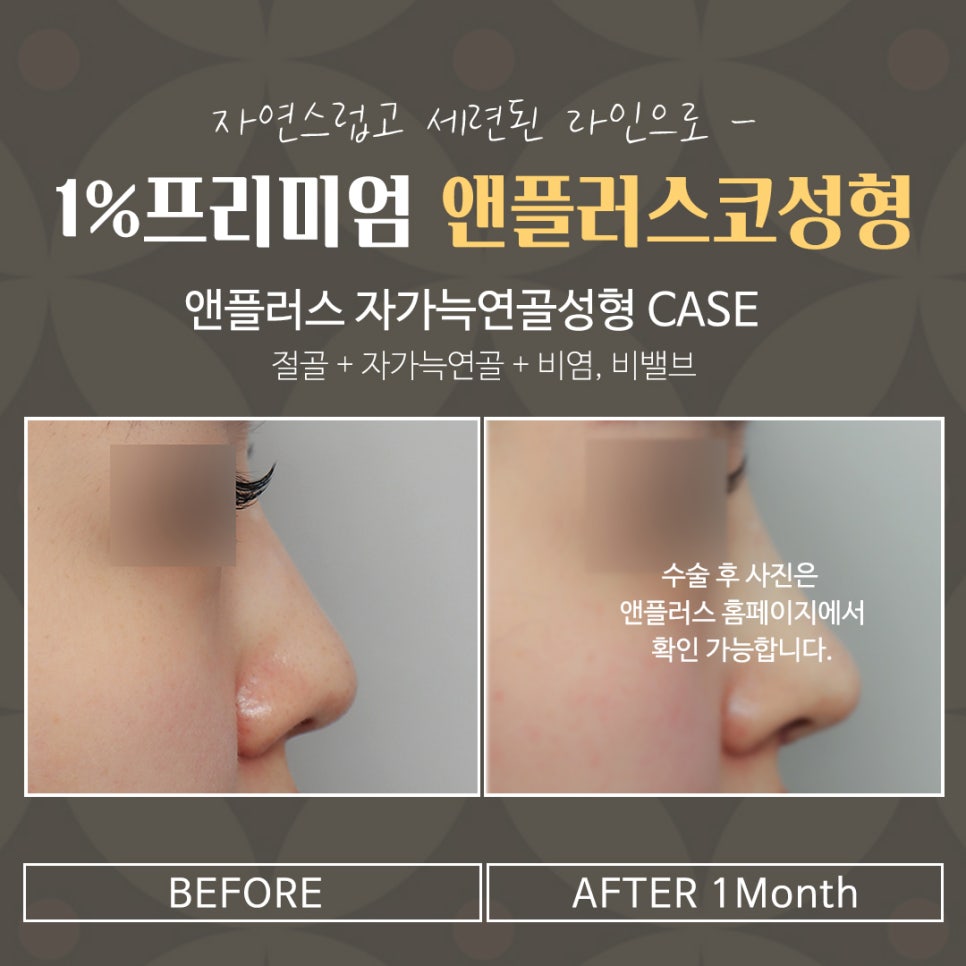
(The image above shows actual before-and-after photos of autologous rib cartilage rhinoplasty at Oji Plastic Surgery & N Plus.)
Autologous rib cartilage rhinoplasty can be broadly divided into three types: when only the bridge is low, when both the bridge and the tip are low, and when only the tip is low.

First, when only the bridge is low, it is corrected by inserting a custom implant into the bridge.
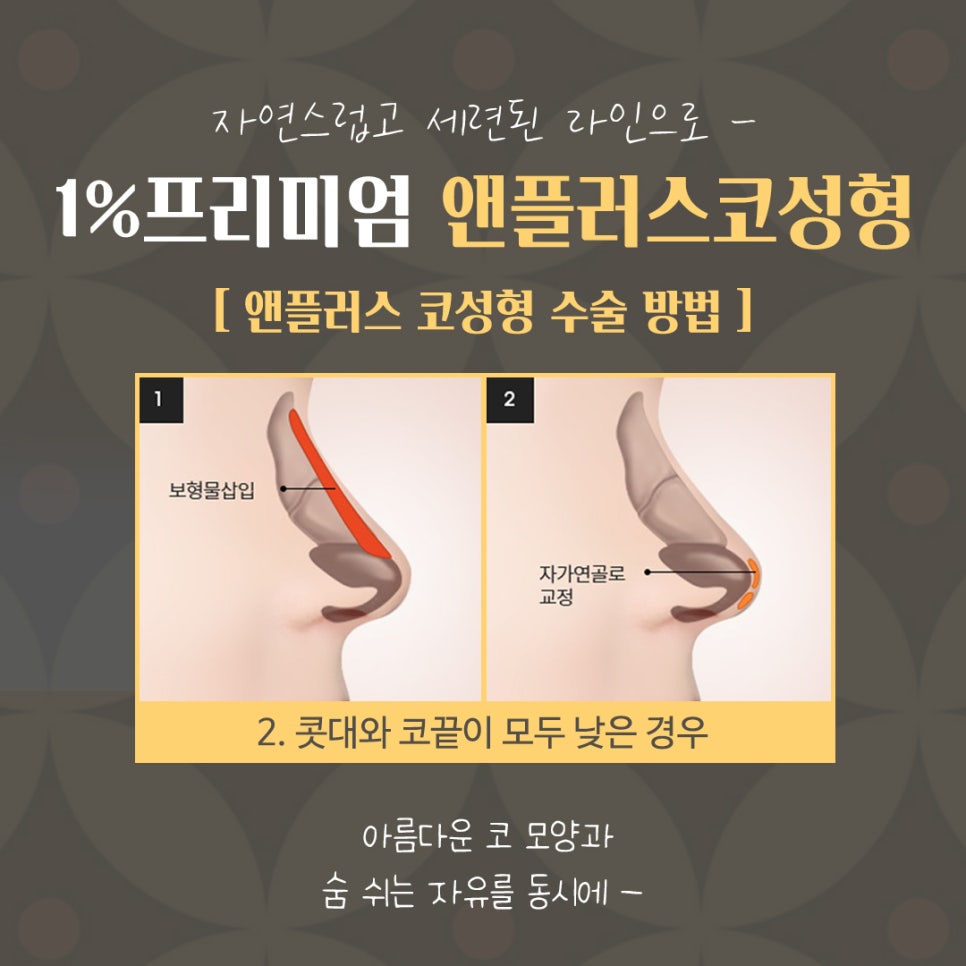
Second, when both the bridge and the tip are low, a custom implant is inserted into the bridge, and autologous rib cartilage or other autologous cartilage is grafted to the tip to perform the rhinoplasty.
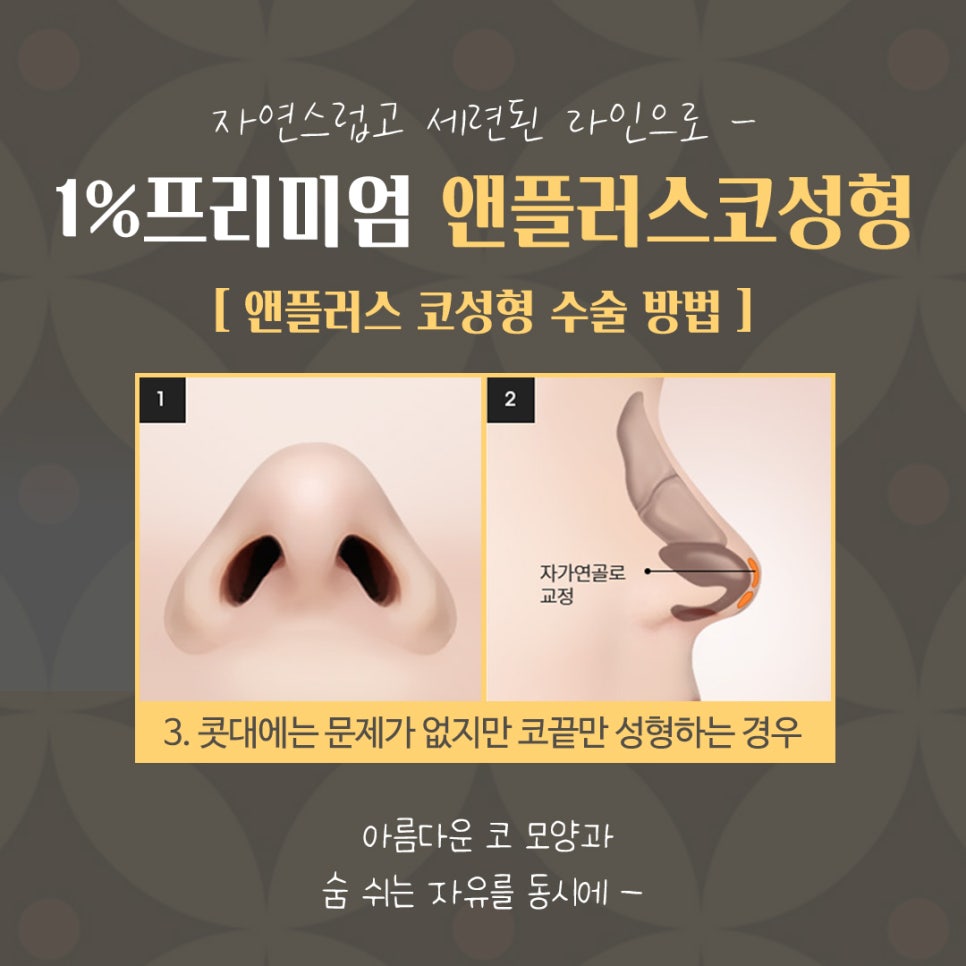
Lastly, this is the case where the bridge has no issues and only the tip is corrected. After performing tip surgery by grafting autologous rib cartilage or other autologous cartilage, the connecting area between the bridge and the tip is also smoothly connected using autologous rib cartilage or other autologous cartilage so that the nasal line is not uneven.

In addition, at Oji Plastic Surgery & N Plus, the implants used in nose surgery are not used as mass-produced products as they are, in order to minimize an artificial look after surgery. Instead, custom-designed implants are used after considering various aspects such as the individual’s overall image, the width of the nasal bridge, length, and breadth.

However, even though autologous rib cartilage rhinoplasty uses an excellent and safe material, if the procedure is approached only from an aesthetic or cost perspective, functional aspects may be overlooked, which can lead to revision surgery. Therefore, you must first accurately check the condition of your nose and undergo surgery using the material and method that suit you best in order to achieve a satisfactory rhinoplasty.
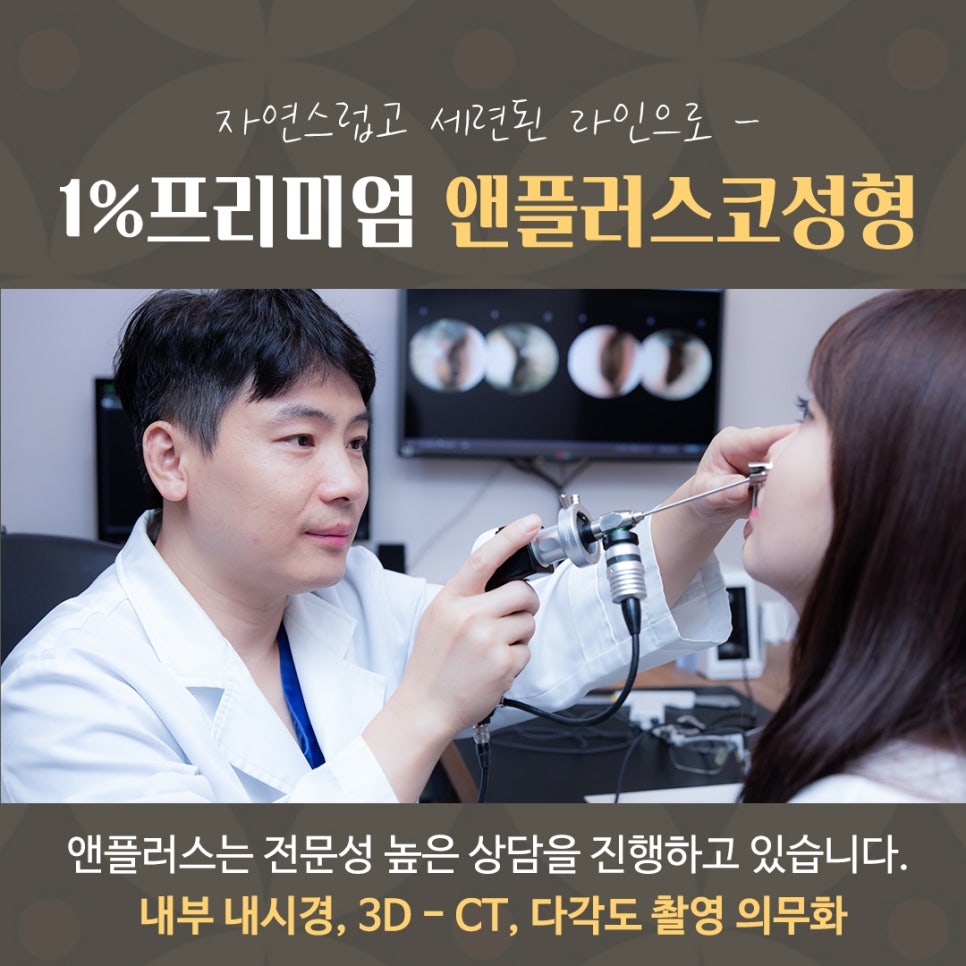
At Oji Plastic Surgery & N Plus, to ensure safe autologous rib cartilage rhinoplasty, we check in advance whether cartilage is present, functional issues, and the condition of the nasal bone in various ways through 3D-CT imaging and internal endoscopic imaging, and then proceed with the material and surgical method suited to each individual based on accurate data.

In addition, CEO surgeon Yoon Hyun-cheol personally handles every step one-on-one, from consultation regarding autologous rib cartilage rhinoplasty to surgical planning, execution, treatment, and follow-up care. Postoperative care is also supported through an after-service system that guarantees care for one year after surgery, and a surgery responsibility guarantee system is in place to prepare for any postoperative pain, inflammation, or dissatisfaction with the appearance that may arise. Therefore, if you are considering autologous rib cartilage rhinoplasty, it is necessary to carefully check whether the clinic is equipped with devices that can assess your nose, whether the medical team has strong anatomical knowledge of the nose, whether they have extensive surgical experience and expertise, and whether post-treatment care is provided before making a decision.

This concludes the information about autologous rib cartilage rhinoplasty at Oji Plastic Surgery & N Plus. I hope this post is of great help to those who are currently considering rhinoplasty because they are unhappy with the shape of their nose. Thank you.