
Hello. This is Ojiko Hospital N+Plus, where we think only about your beautiful and healthy nose.
The topic introduced this time is small nose surgery.

It can be said that people judge others through first impressions. Although appearance should not be the 기준 when judging a person, many people consider plastic surgery in order to improve their appearance because they want themselves to be seen more favorably through self-satisfaction. However, comprehensive plastic surgery can be burdensome in reality, so rhinoplasty can be said to be more popular than procedures for other areas.

Those considering rhinoplasty usually look into it when their nose is low, upturned, has a hump, or droops. Among these cases, when the nose is small or low, the whole face may look flat and lack dimension, so interest in small nose surgery is high as a way to improve this.

Because the nose is located at the center of our face, even a slight change can make the image look different, so many people try it. In the case of a small and low nose, many people think there are limits and therefore search for information about small nose surgery. Looking at images such as reviews is also important, but confirming the condition of your own nose accurately before proceeding with a consultation can help solve your concerns.

Therefore, people considering small nose surgery usually want to change a flat impression caused by a low nasal bridge and tip into a more refined, dimensional image with a higher bridge and tip. However, in the case of a small nose, there may be limits to the process of adding volume to the nose depending on each person's skin condition and cartilage condition. If you judge only by review images or decide on surgery based on cost, it can lead to revision surgery. That is why it is important to accurately assess the current condition of the nose before proceeding with surgery.
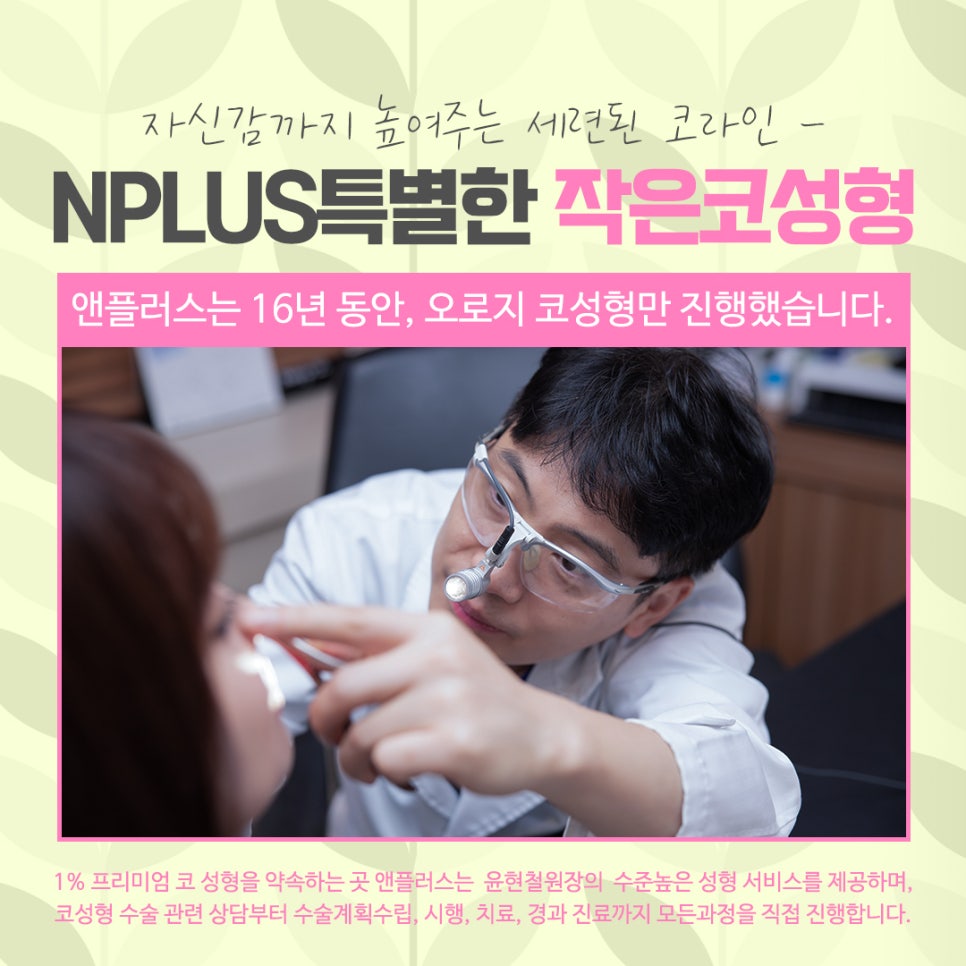
The nose plays an important role not only in adjusting the balance of facial features through appearance, but also as an organ responsible for breathing and the sense of smell. Therefore, for those looking into small nose surgery, rather than relying only on review images or proceeding simply because the cost is low, it is better to carefully and thoroughly check for a place where the medical staff have a high level of anatomical knowledge of the nose, extensive surgical experience and a proven track record, and where various surgical cases and aftercare are firmly guaranteed. After that, you can choose with more confidence for a satisfying small nose surgery.
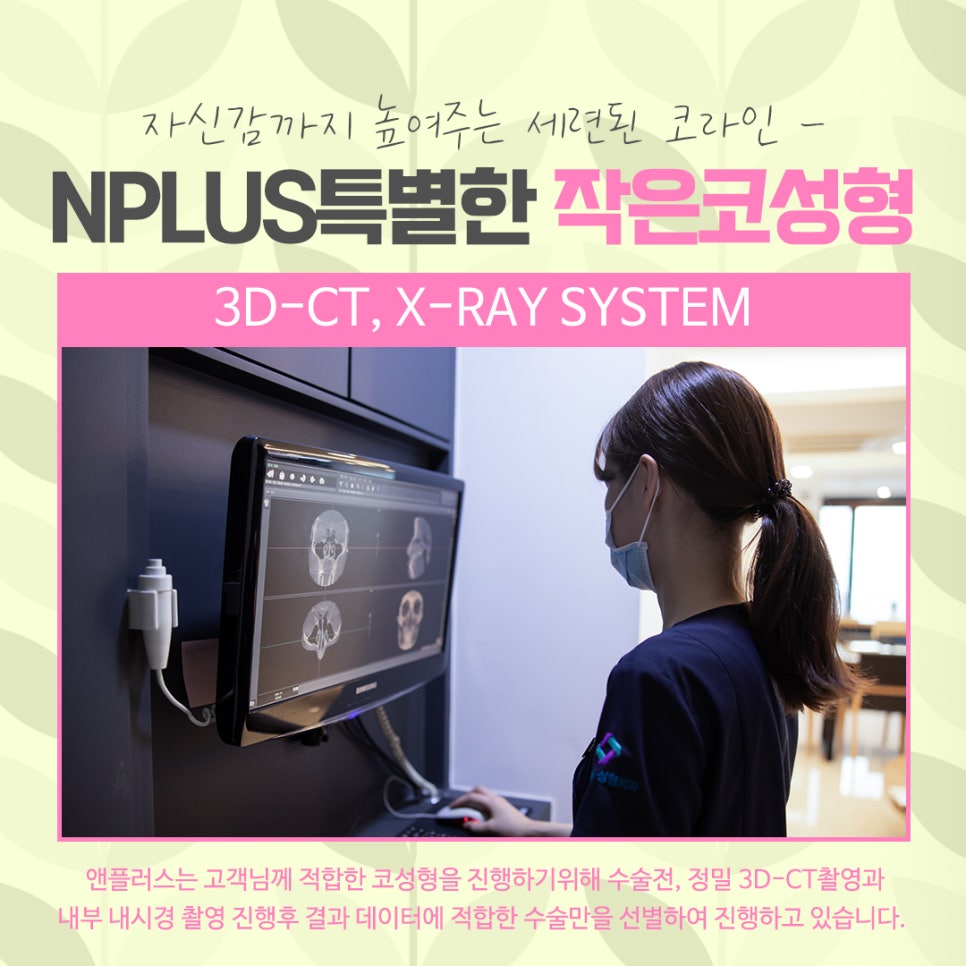
At Ojiko Hospital N+Plus, to help ensure satisfying small nose surgery, we accurately assess the inside and outside of the nose before surgery through 3D-CT scanning and internal endoscopic imaging. We check for internal nasal issues, the presence or absence of cartilage, the position of the nasal bone, the skin condition, and more, and carry out surgery tailored to each individual.

In the case of small nose surgery, it often involves a low bridge or a short tip, so the procedure can be considered highly difficult. This is because the nose itself is small, the skin is often thin, or the tip is often upturned. The surgical methods are broadly divided into two types: cases where both the bridge and tip are low, and cases where only the bridge is low.
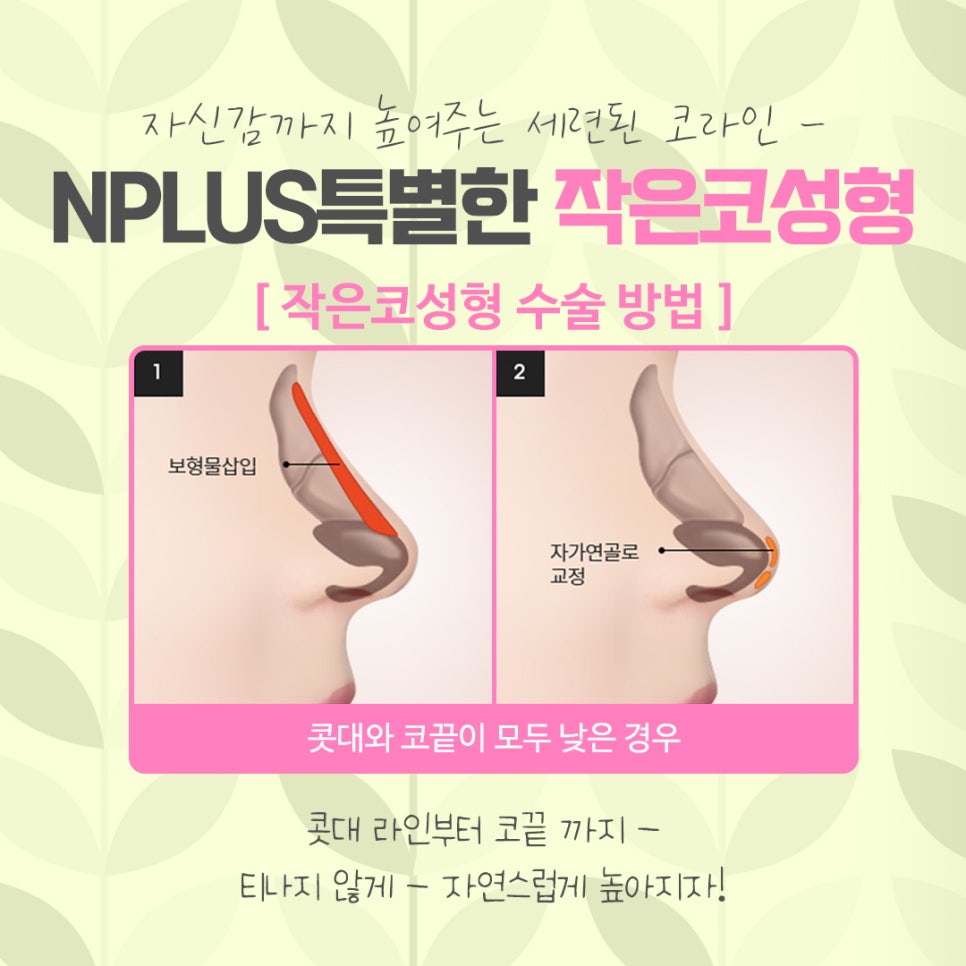
In small nose surgery where both the bridge and tip are low, the bridge is augmented with an implant and the tip is corrected using autologous cartilage.
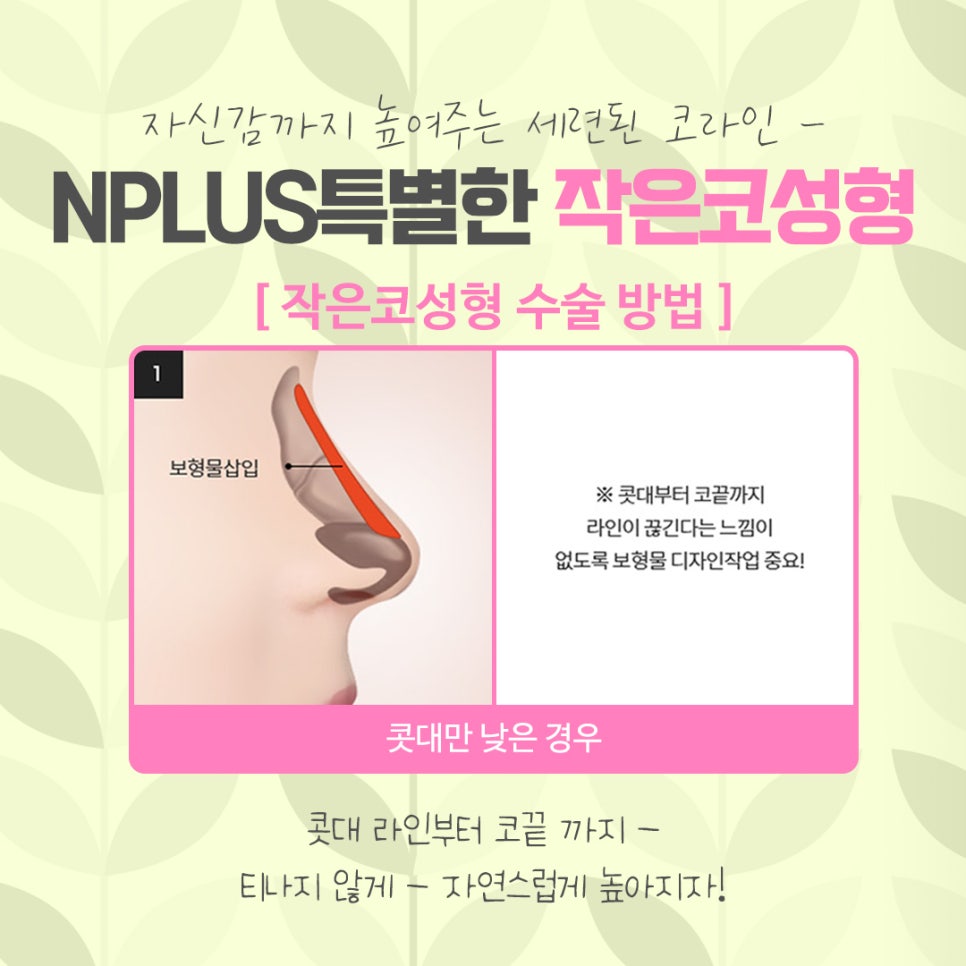
When only the bridge is low, an implant is used so that the line from the bridge to the tip does not feel interrupted.
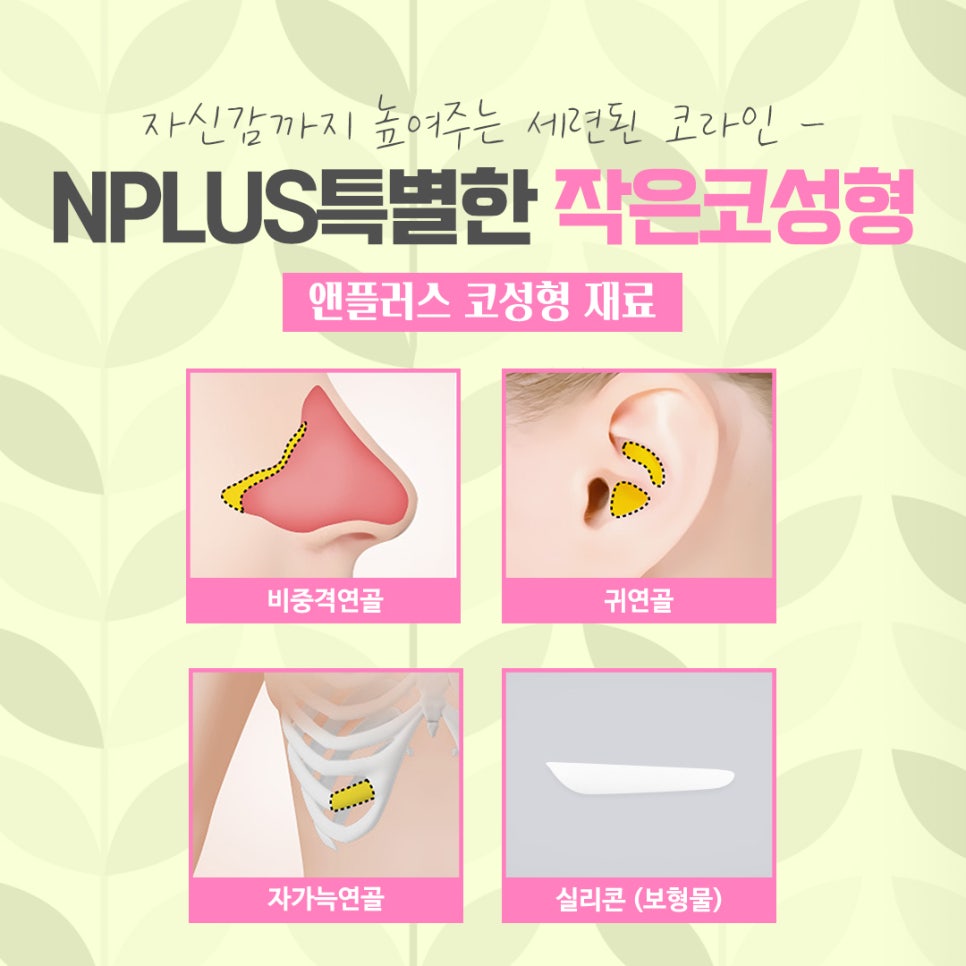
The materials used in small nose surgery include silicone for the bridge and autologous cartilage for the tip. In the case of autologous cartilage for the tip, ear cartilage, septal cartilage, and autologous rib cartilage are used. The materials are also selected through preoperative examinations so that the surgery is carried out with materials suitable for each person.
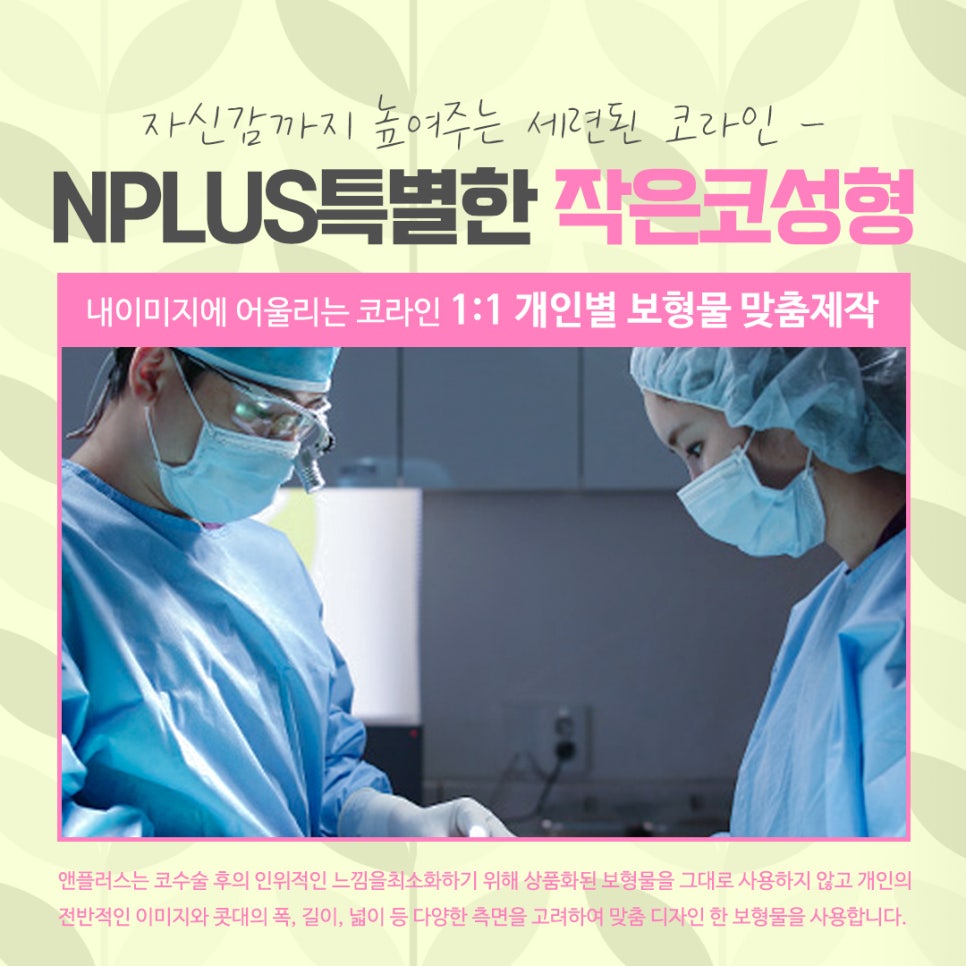
Also, for the silicone inserted into the bridge, rather than relying on a high bridge alone, the silicone is carefully hand-shaped after considering various factors such as each person's bridge width, length, and overall breadth, and then used in surgery to fit the individual.

In addition, at Ojiko Hospital N+Plus, Chief Director Yun Hyun-cheol personally handles every step one-on-one, from consultation for small nose surgery to surgical planning, the procedure itself, and follow-up treatment. Through the aftercare system that guarantees support for one year after surgery, the hospital is preparing for possible pain, inflammation, or dissatisfaction with the shape by implementing a surgery responsibility guarantee system, aiming for even more satisfying small nose surgery.
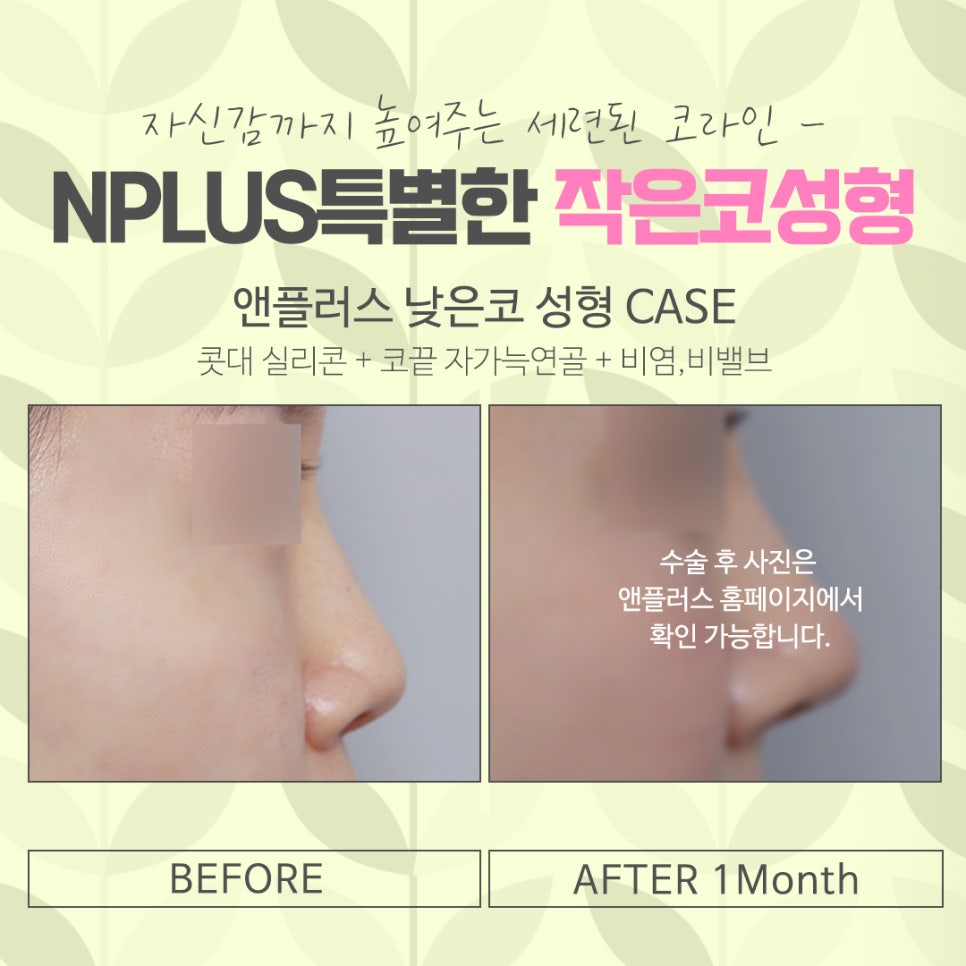
(The image above shows before-and-after photos of small nose surgery performed at Ojiko Hospital N+Plus.)
That concludes the explanation of small nose surgery at Ojiko Hospital N+Plus. I hope this article is of great help to those who are stressed in daily life because their nose is small or their nose is short. Thank you.