Hello. This is Oziko Plastic Surgery & N+Plus, where we focus only on your healthy and beautiful nose.
Today, we are introducing no-implant nose surgery that corrects the nose into a natural line.

Recently, standards of appearance have become higher, and accordingly, people of all ages and genders have become more interested in plastic surgery as a way to improve their image. People considering plastic surgery are often doing so to overcome stress and low self-esteem caused by complexes about their appearance, and among these procedures, the nose can have a major effect on improving one’s image even with a small change. That is why many people take a detailed look at nose surgery.

However, if nose lines in the past tended to favor only a high bridge and could feel artificial, nowadays people prefer a nose shape that suits them while reflecting their individuality and face shape. In general, when we think of rhinoplasty, the bridge is often addressed with silicone and the tip with autologous cartilage. But rather than pursuing such a dramatic change, some people want an image improvement through a natural and attractive nose line without using implants, using their own cartilage. For them, no-implant nose surgery can be an appealing option.
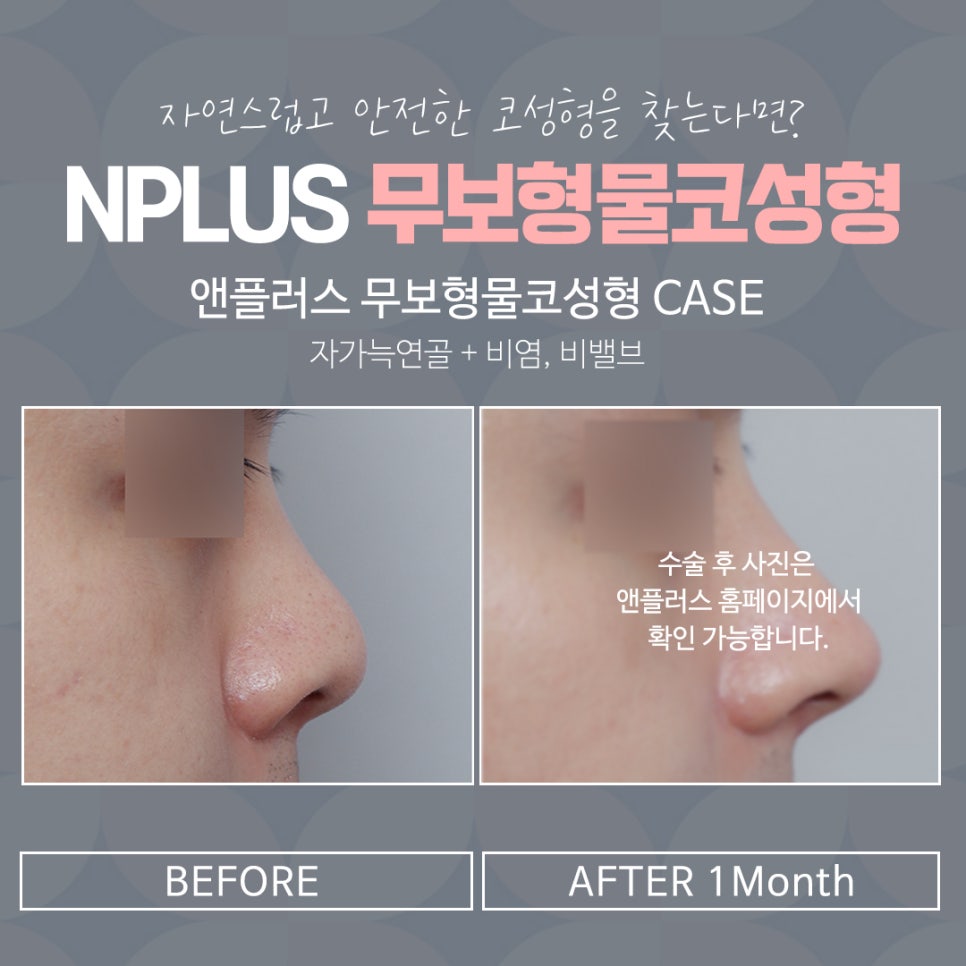
(The images above are actual before-and-after photos of no-implant nose surgery at Oziko Plastic Surgery & N+Plus.)
What is no-implant nose surgery? It is a procedure that corrects the nose line using autologous cartilage at the tip without using artificial implants such as silicone in the bridge. Because this surgery uses the patient’s own cartilage, the chance of inflammation is relatively low, making it suitable for people who are concerned about inflammatory reactions or who want a more natural rhinoplasty result.
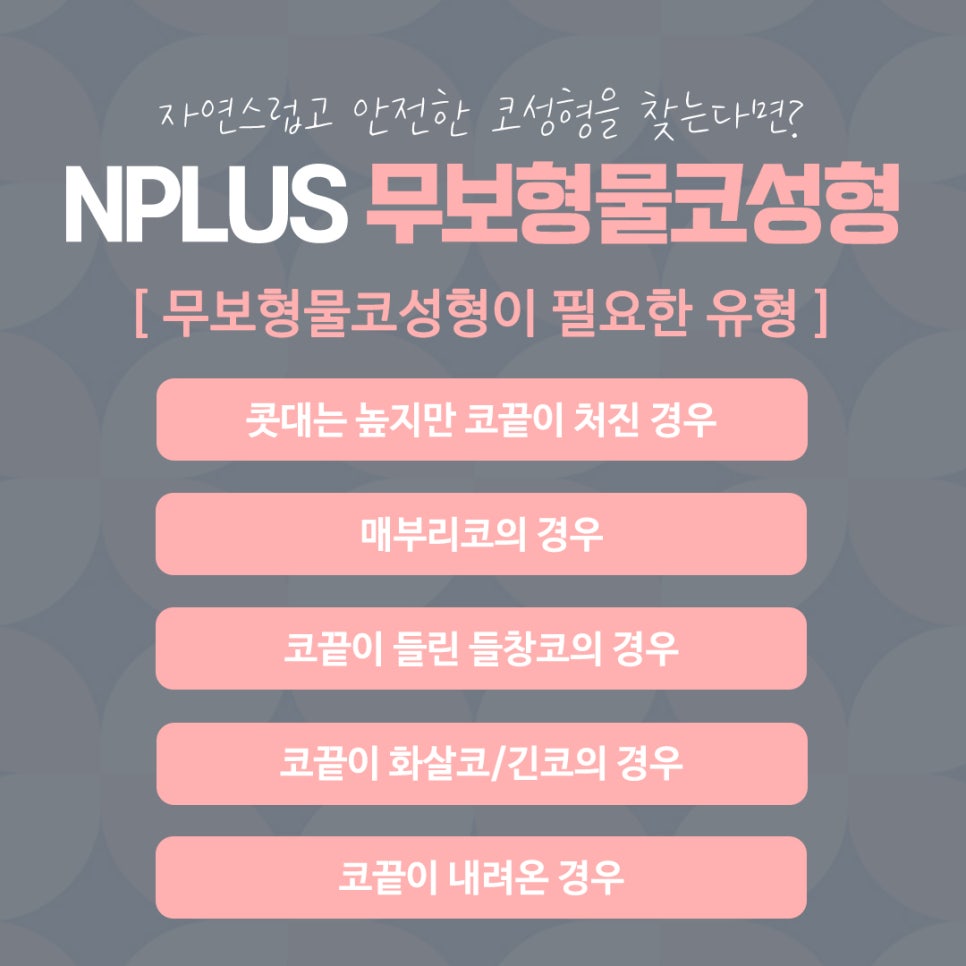
Types that may need no-implant nose surgery include a high bridge with a drooping tip, a hump nose, a upturned nose with a lifted tip, a hooked or long nose with a downward tip, and other variations. The surgical methods also vary accordingly.
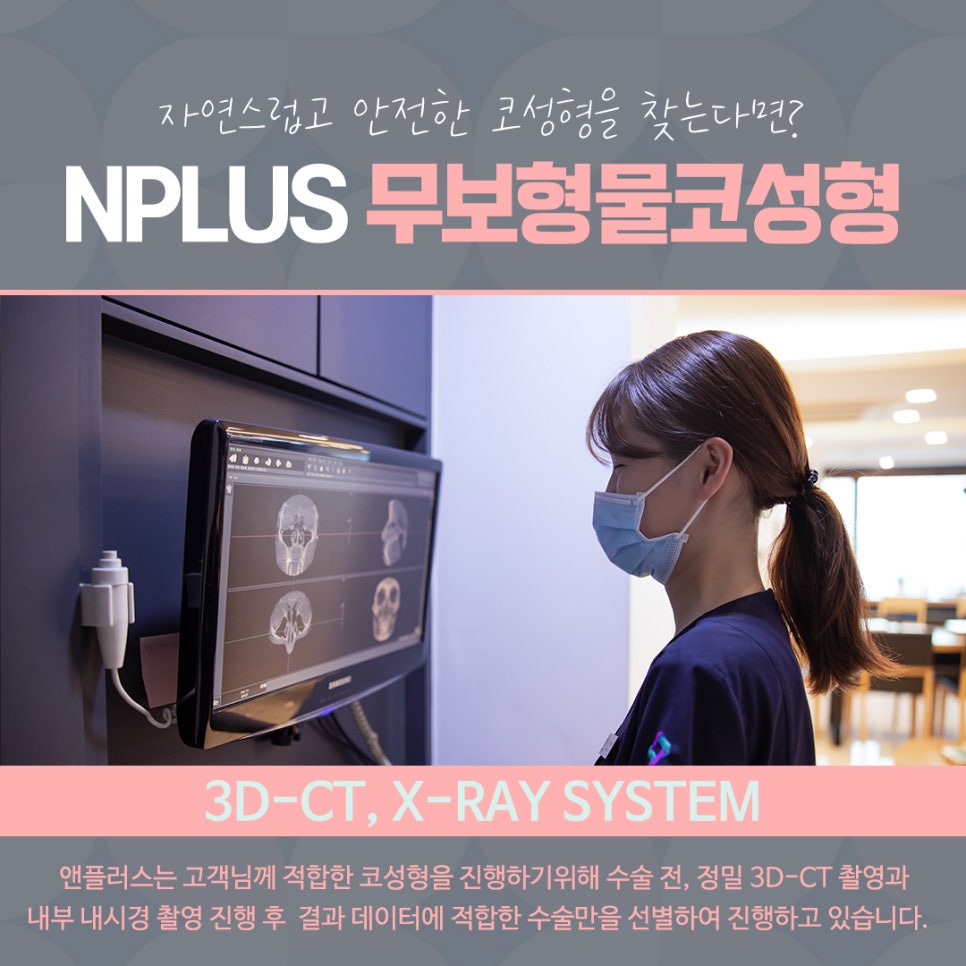
Therefore, before performing no-implant nose surgery, Oziko Plastic Surgery & N+Plus uses 3D-CT imaging and internal endoscopic imaging to assess the condition of the nasal bones, internal functional issues, the presence or absence of cartilage, and other factors. Based on the data results, the surgical method is planned, and the procedure is carried out according to the patient’s condition.
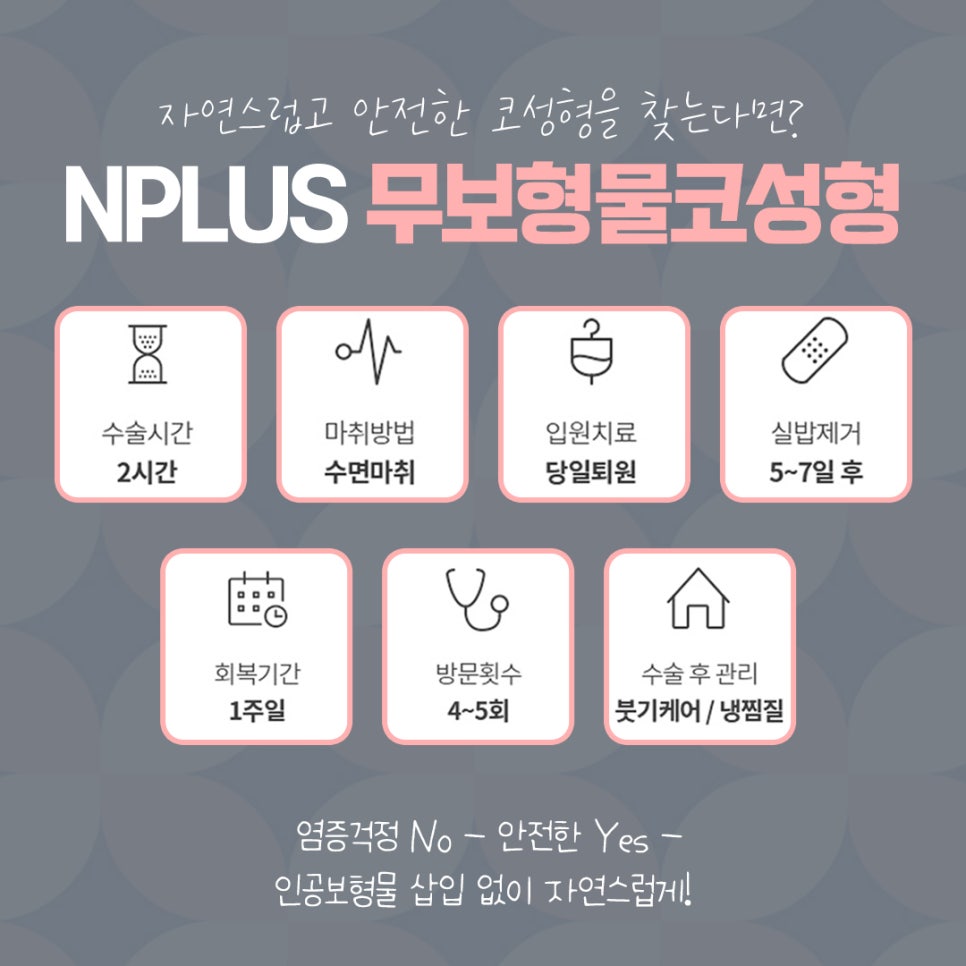
There are broadly two methods of no-implant nose surgery. One is when the bridge is high enough that an implant is not needed, and the other is when the bridge is not a major issue and only the tip is corrected.
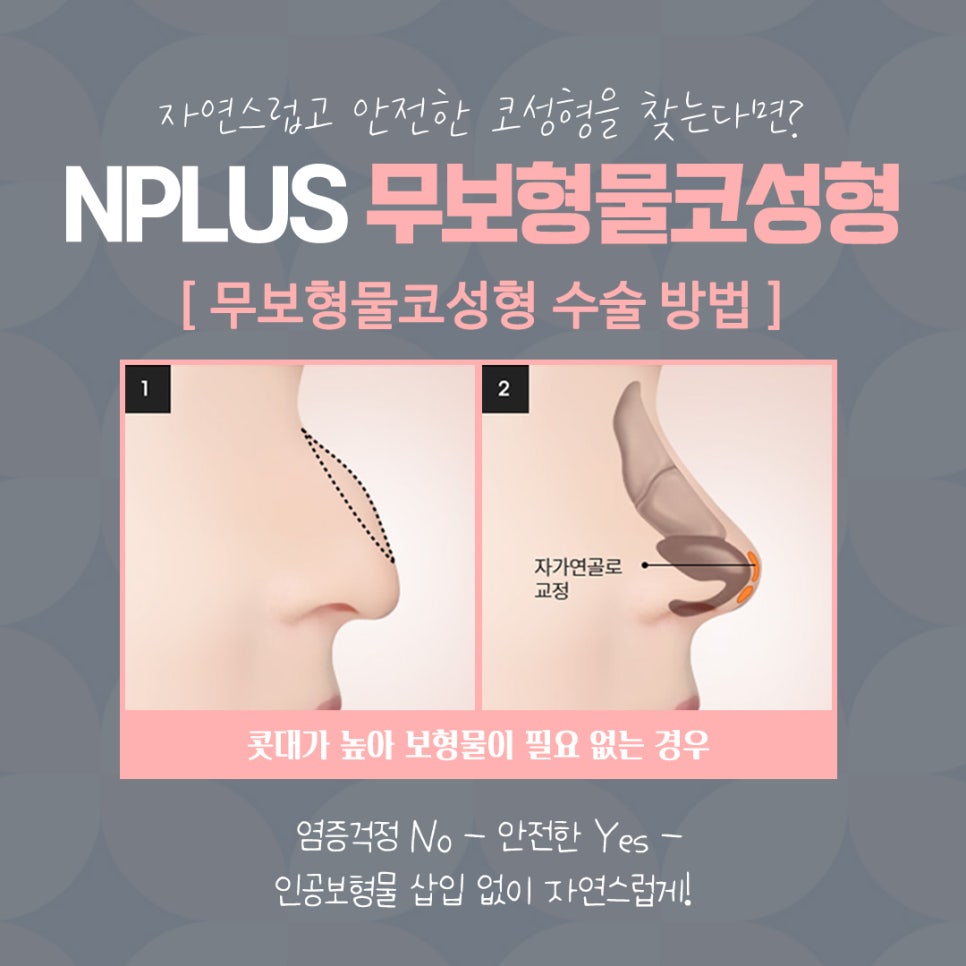
First, when the bridge is high and an implant is unnecessary, if there is a hump on the bridge, the hump is removed or the bridge is corrected through osteotomy, and then the tip is corrected with autologous cartilage.
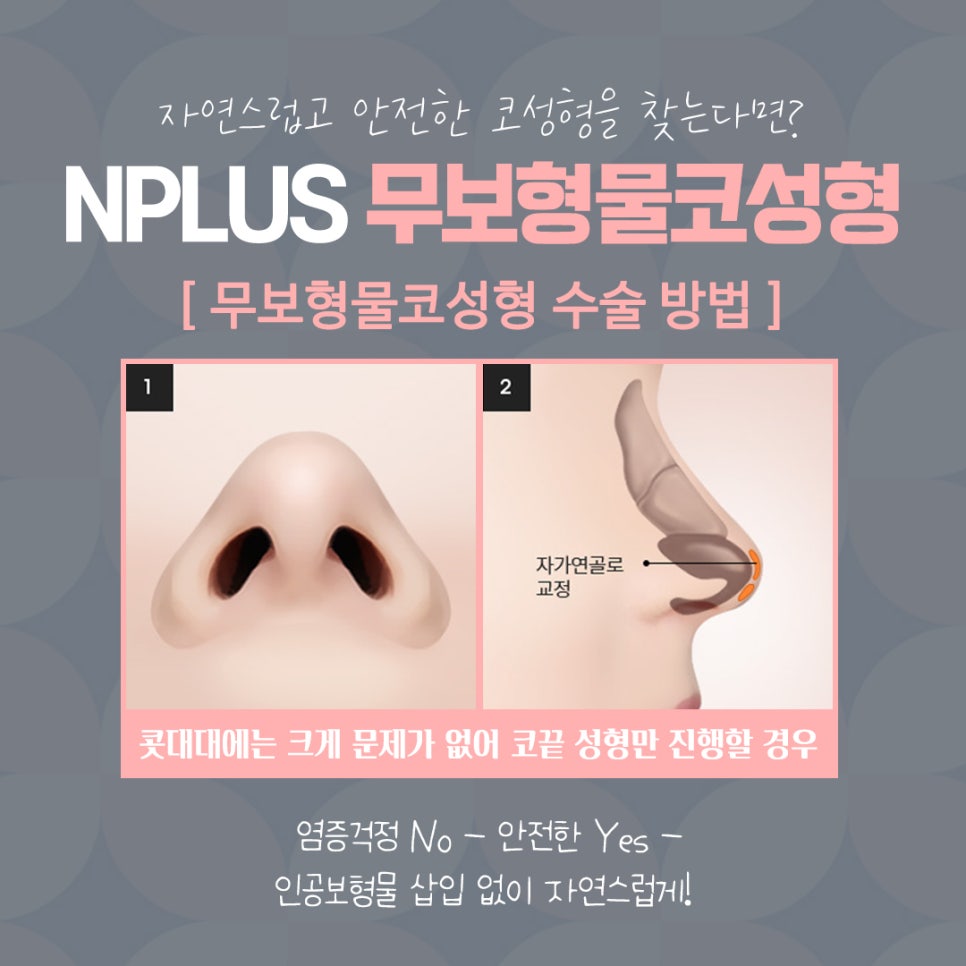
Second, if the bridge does not have major issues and only tip surgery is performed, the tip is corrected with autologous cartilage and naturally connected to the bridge. In addition, the connecting area is also smoothed using autologous cartilage.
In this way, no-implant nose surgery reduces the burden of using silicone and aims to correct the overall nose line through autologous cartilage. Since silicone is not used, it may seem like a simple procedure externally, but the nose is not only important for appearance; it is also an internal organ responsible for breathing and smelling. It is much more complex than it may seem, so it is important to have the surgery performed after accurately assessing your nose’s condition at a clinic with strong anatomical knowledge of the nose and abundant experience and expertise. Doing so can lead to greater satisfaction with no-implant nose surgery.
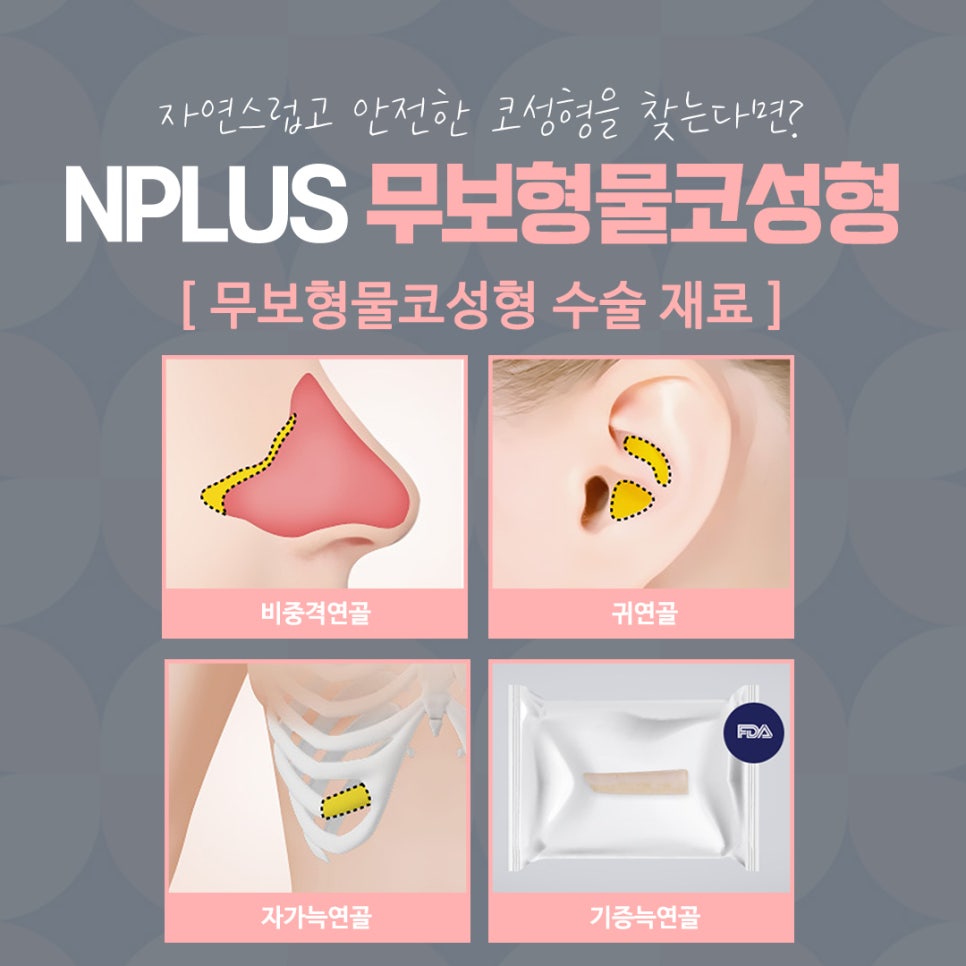
In addition, the autologous cartilage used in no-implant nose surgery includes septal cartilage, ear cartilage, and autologous rib cartilage. Septal cartilage is the cartilage that acts as the partition dividing the nostrils into two; ear cartilage is the cartilage located inside the ear; and autologous rib cartilage is the soft-cartilage tissue located in the ribs. The material used for autologous cartilage in no-implant nose surgery is selected through preoperative testing to match the individual. If the use of autologous cartilage is inevitably difficult, safe donated rib cartilage that has been approved by the U.S. FDA and specially processed is used as a substitute for autologous cartilage.

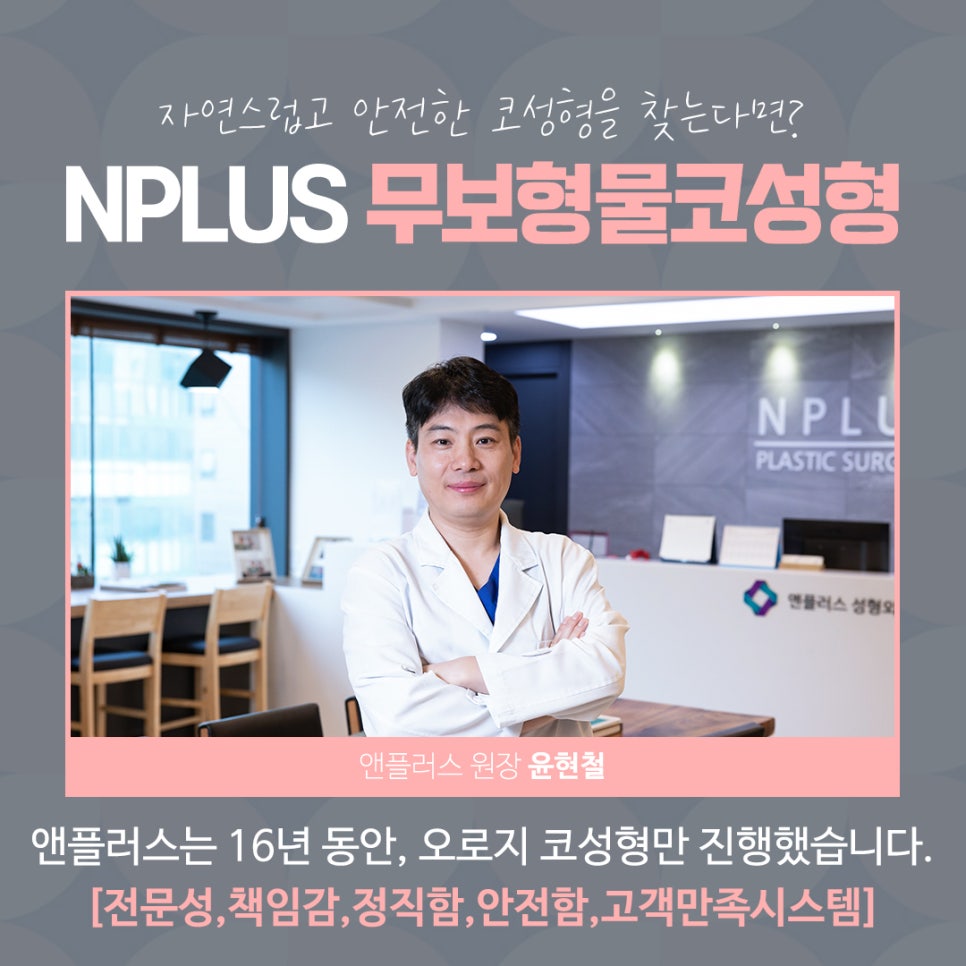
Lastly, at Oziko Plastic Surgery & N+Plus, CEO Surgeon Yoon Hyun-cheol personally handles the entire process one-on-one, from consultation about no-implant nose surgery to surgical planning, the procedure itself, treatment, and follow-up care. Aftercare is also supported through the issuance of an N+Plus membership card, with a one-year warranty after surgery and a surgical responsibility guarantee system prepared for any possible situations such as inflammation, pain, or dissatisfaction with the shape. Therefore, those who have an N+Plus membership card can receive aftercare benefits at any time.
That concludes our summary of no-implant nose surgery at Oziko Plastic Surgery & N+Plus. We hope this post is helpful for those looking into nose surgery because they are unhappy with the shape of their nose. Thank you.