
Hello, we are OJIKO N+ Plus Clinic, where we have spent the past 16 years focusing solely on your beautiful and healthy nose.
The content we prepared this time is about rhinitis nose surgery.

Korea has the advantage of being able to clearly experience all four seasons—spring, summer, fall, and winter—throughout the year. However, for some people, as the seasons change and the transitional period between seasons arrives, rhinitis causes nasal congestion, runny nose, and sneezing, which can make daily life uncomfortable.

In general, nasal congestion, runny nose, and sneezing that occur during seasonal transitions are symptoms caused by rhinitis, and among these, nasal congestion is often the symptom that causes the greatest inconvenience in daily life. Nasal congestion can sometimes be temporary, but in some cases it persists. If it becomes severe or lasts for a long time, the stuffy nose can cause not only stress but also chronic fatigue, headaches, migraines, sinusitis, and reduced concentration. Therefore, people who experience inconvenience in daily life due to these symptoms often seek information about rhinitis nose surgery.

When nasal congestion appears, people often self-diagnose it as a cold or allergic rhinitis and leave the symptoms untreated. However, rhinitis is a common condition affecting more than 70% of adults in Korea. Among these cases, allergic rhinitis, which many people are familiar with, accounts for 20%, while structural rhinitis caused by internal structural abnormalities accounts for 80%. Because rhinitis is difficult to identify externally from symptoms such as nasal congestion, if symptoms appear, it is advisable to visit a clinic, have the condition of the nose accurately examined, and then receive consultation about treatment appropriate to the symptoms or rhinitis nose surgery.
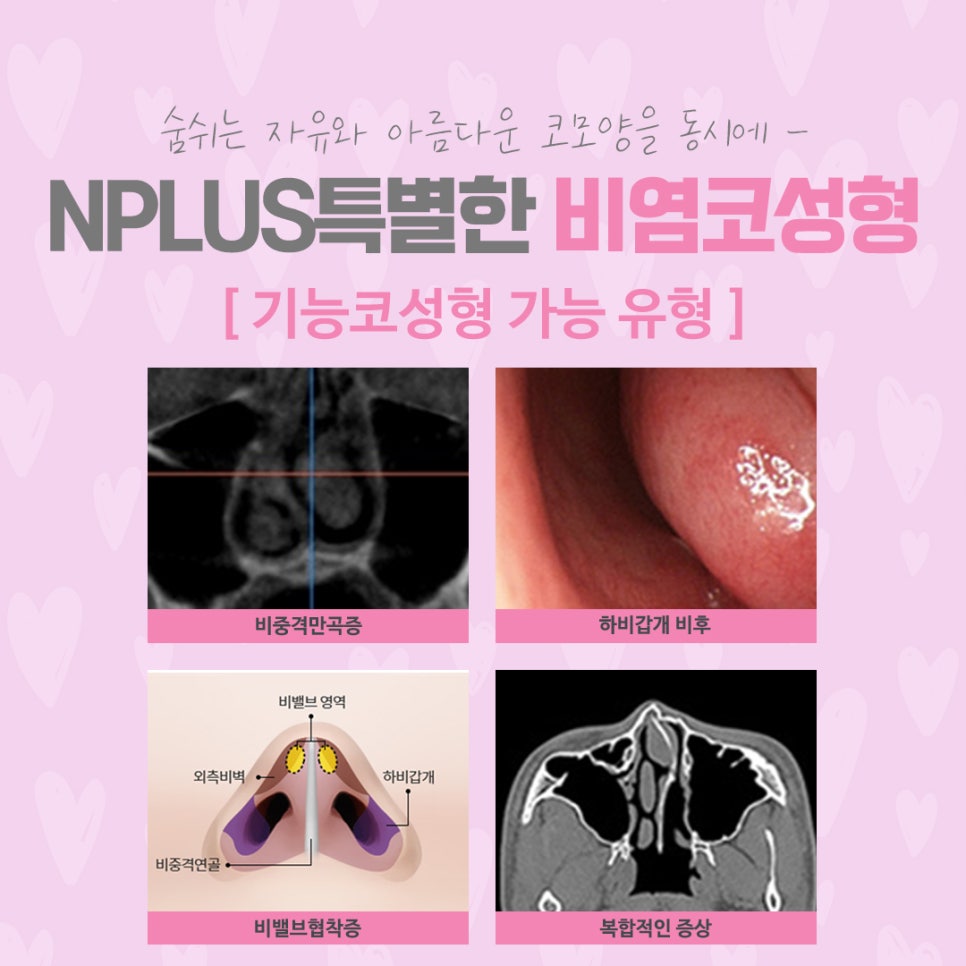
#Types of Rhinitis Nose Surgery Available at OJIKO N+ Plus Clinic
The rhinitis mentioned above is broadly divided into allergic rhinitis and structural rhinitis caused by internal structural abnormalities. In the case of allergic rhinitis, because it reacts to specific substances or weather conditions, it can be said that a complete cure is difficult. However, symptom improvement can be expected through ongoing immune enhancement and medication treatment to prevent it from developing into chronic rhinitis. In the case of structural rhinitis caused by internal structural abnormalities, there are a deviated septum, nasal valve stenosis, and inferior turbinate hypertrophy. Structural rhinitis causes nasal congestion by obstructing the flow of air into the nose, and unlike allergic rhinitis, medication cannot change the structure. Therefore, nasal congestion can be improved through rhinitis nose surgery.
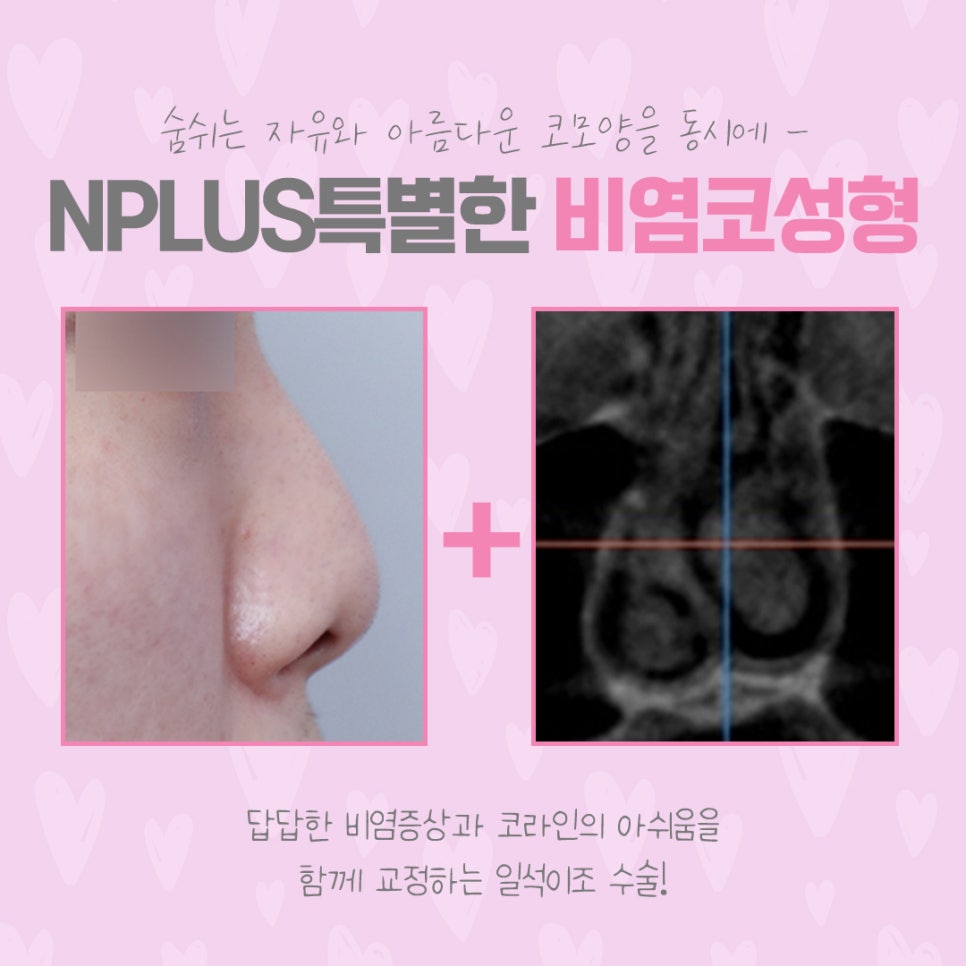
What is rhinitis nose surgery? Structural rhinitis caused by nasal functional abnormalities includes a deviated septum, nasal valve stenosis, and inferior turbinate hypertrophy. These structural conditions commonly obstruct airflow into the nose and cause nasal congestion. Rhinitis nose surgery refers to a procedure in which the factors obstructing airflow into the nose are corrected through different surgical methods, and cosmetic rhinoplasty to improve the nose shape that has previously been a concern is performed at the same time.
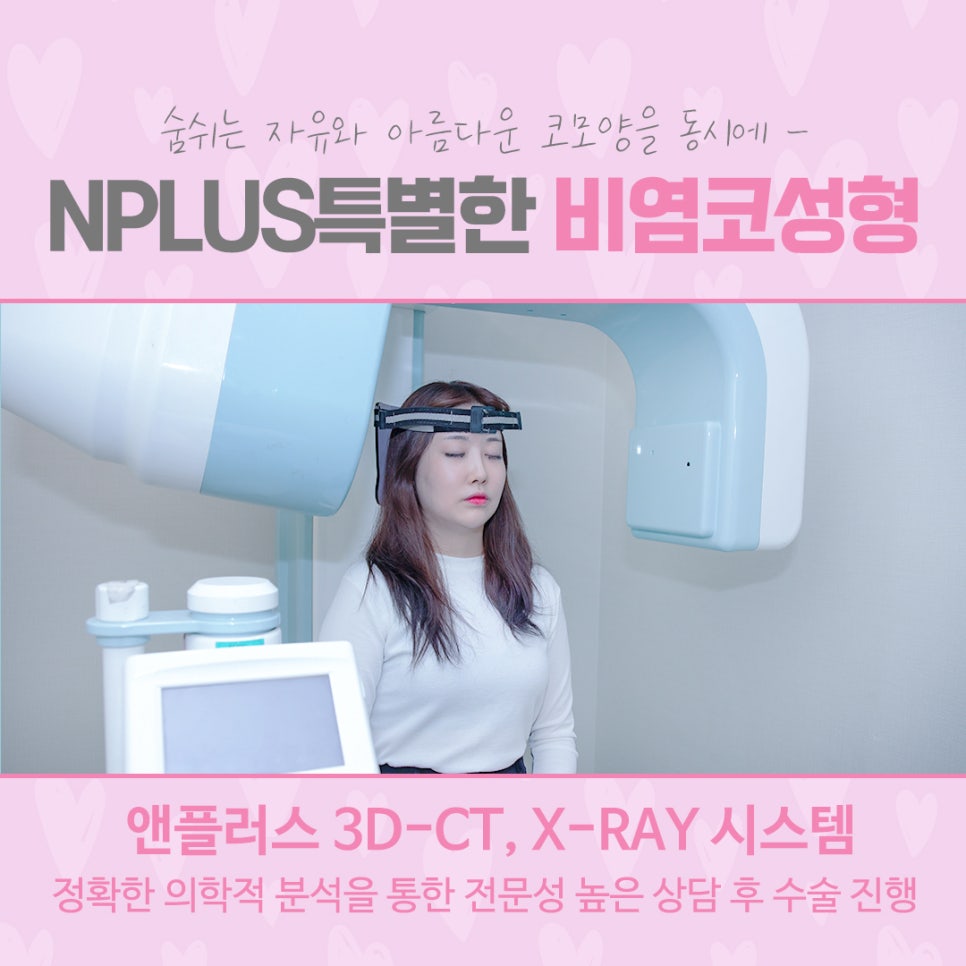
At OJIKO N+ Plus Clinic, to prevent rhinitis from recurring, various allergy tests, 3D-CT imaging, and internal endoscopy are performed before rhinitis nose surgery to determine the exact cause of nasal congestion, including whether there are allergies, the condition of the nasal bones, and the condition of the cartilage. Based on the collected data, and through sufficient consultation, rhinitis nose surgery is performed using a surgical method tailored to the individual.
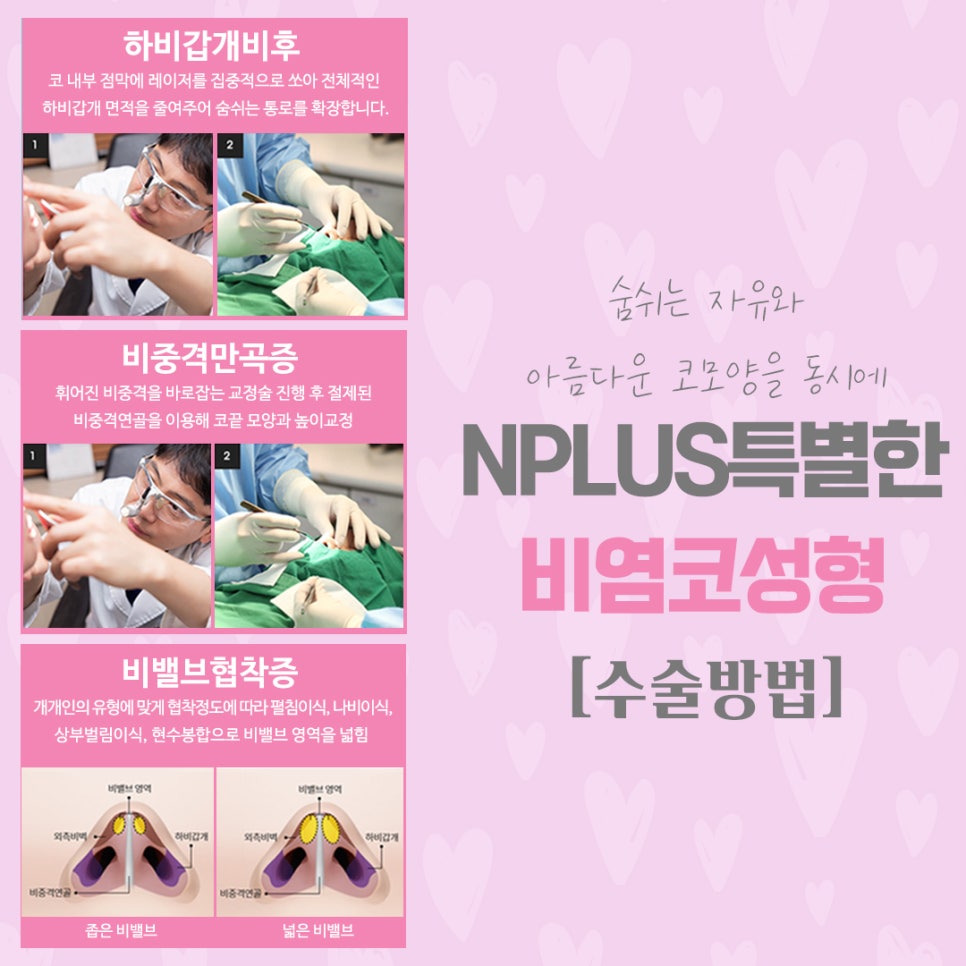
#Rhinitis Nose Surgery Methods at OJIKO N+ Plus Clinic
The methods used for rhinitis nose surgery vary depending on the cause of the nasal congestion. A deviated septum is corrected by straightening the bent septum, inferior turbinate hypertrophy is treated with a laser, and nasal valve stenosis is corrected using one of four surgical methods appropriate to the symptoms. Therefore, rhinitis nose surgery is a procedure that widens the airway into the nose to improve nasal congestion according to the individual's symptoms. After addressing these symptoms first, cosmetic rhinoplasty is performed using silicone for the bridge and the patient's own cartilage for the tip.
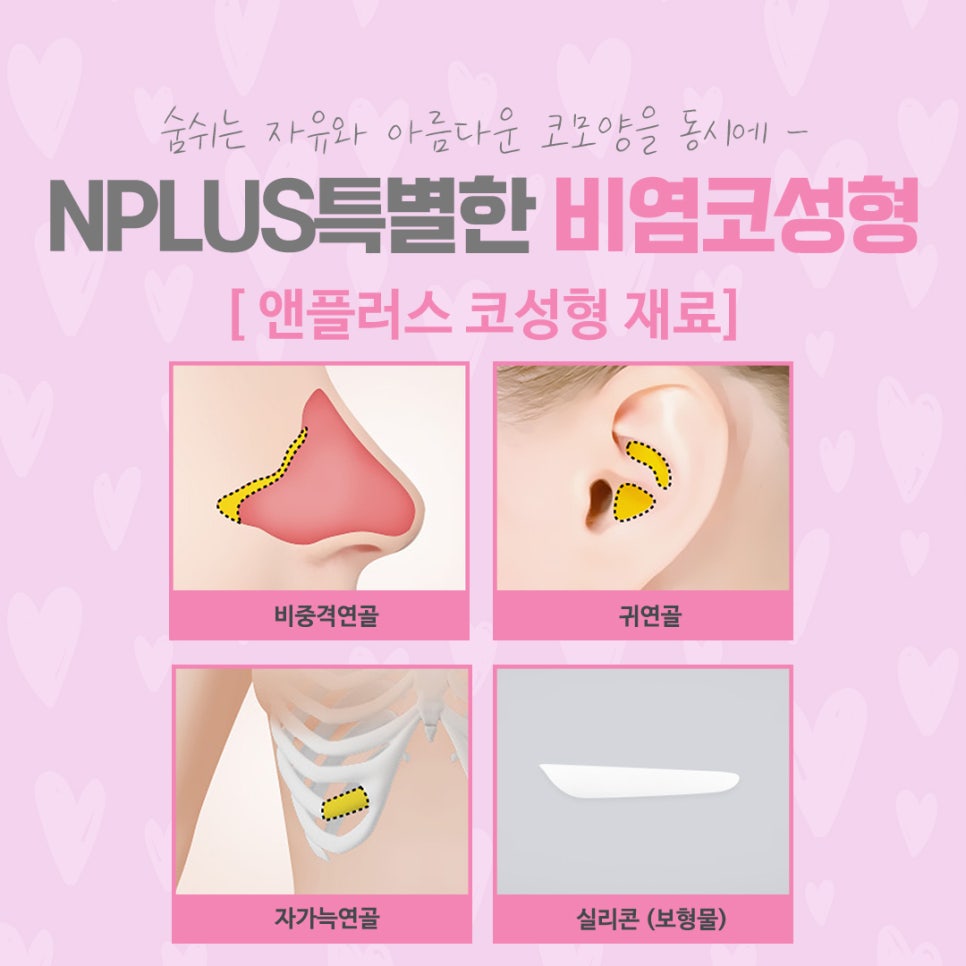
#Materials Used in Rhinitis Nose Surgery at OJIKO N+ Plus Clinic
Additionally, when rhinitis nose surgery and cosmetic rhinoplasty are performed at the same time, the septal cartilage obtained during the process of removing septal cartilage in rhinitis nose surgery can be used as material for the nasal tip during cosmetic rhinoplasty. If there is insufficient septal cartilage, correction may be performed using other autologous cartilage, ear cartilage, or autologous rib cartilage. Silicone is inserted into the nasal bridge to add volume.
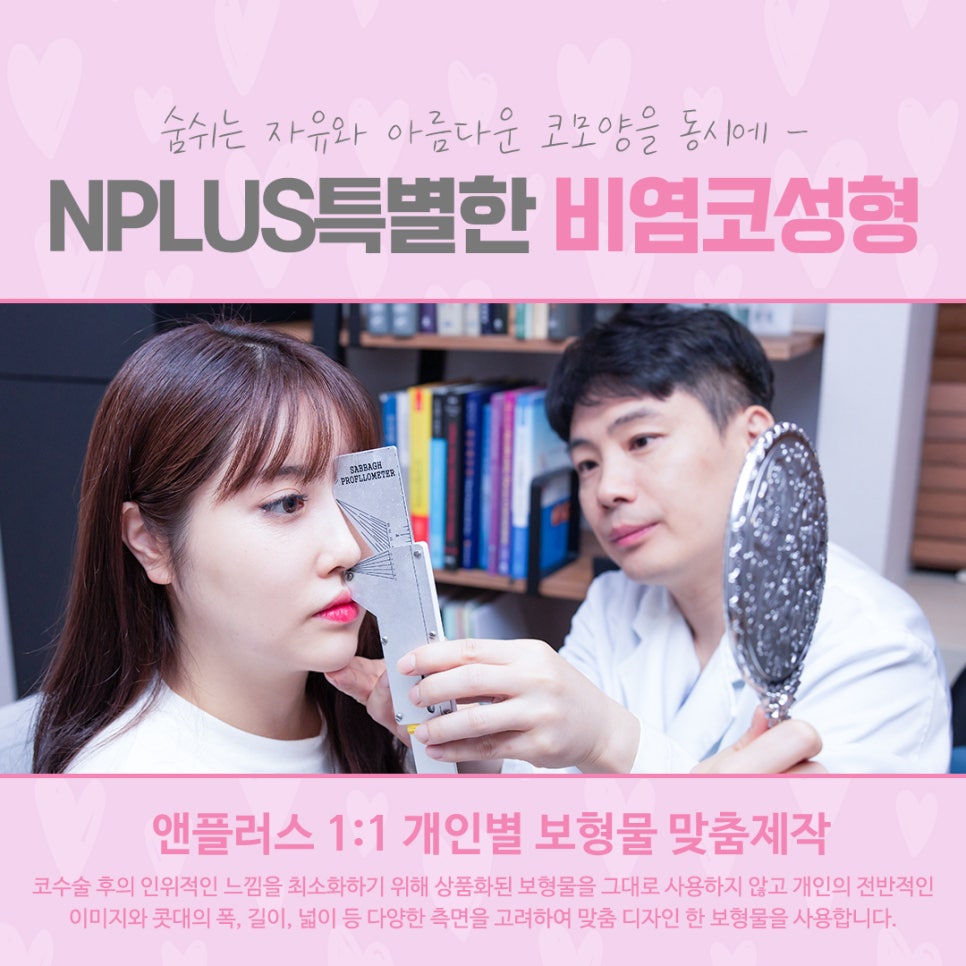
#Rhinitis Nose Surgery at OJIKO N+ Plus Clinic
Regarding the silicone used for the nasal bridge, OJIKO N+ Plus Clinic does not use commercially available silicone as-is in order to minimize an artificial feeling after surgery and to create a design suited to the individual's face. Instead, the silicone is carefully and directly shaped by hand, taking into account various aspects such as the person's overall image, the width, length, and breadth of the nasal bridge, and then inserted. In this way, the materials used in rhinitis nose surgery are also applied differently for each individual, and surgery is performed using materials suited to the person after preoperative examinations.

Therefore, because the surgical method and materials used in rhinitis nose surgery differ depending on the individual's symptoms, if surgery that does not match the symptoms is performed or if only cosmetic surgery is performed, it may lead to worsened nasal congestion. Since two or more surgical methods are applied, it is important to research carefully and proceed only after 충분한 consultation. It is also wise to make a careful decision by checking various points, such as whether the medical staff have a high level of anatomical knowledge of the nose, whether they have extensive experience and expertise, and whether equipment is available to accurately examine the condition of your nose.
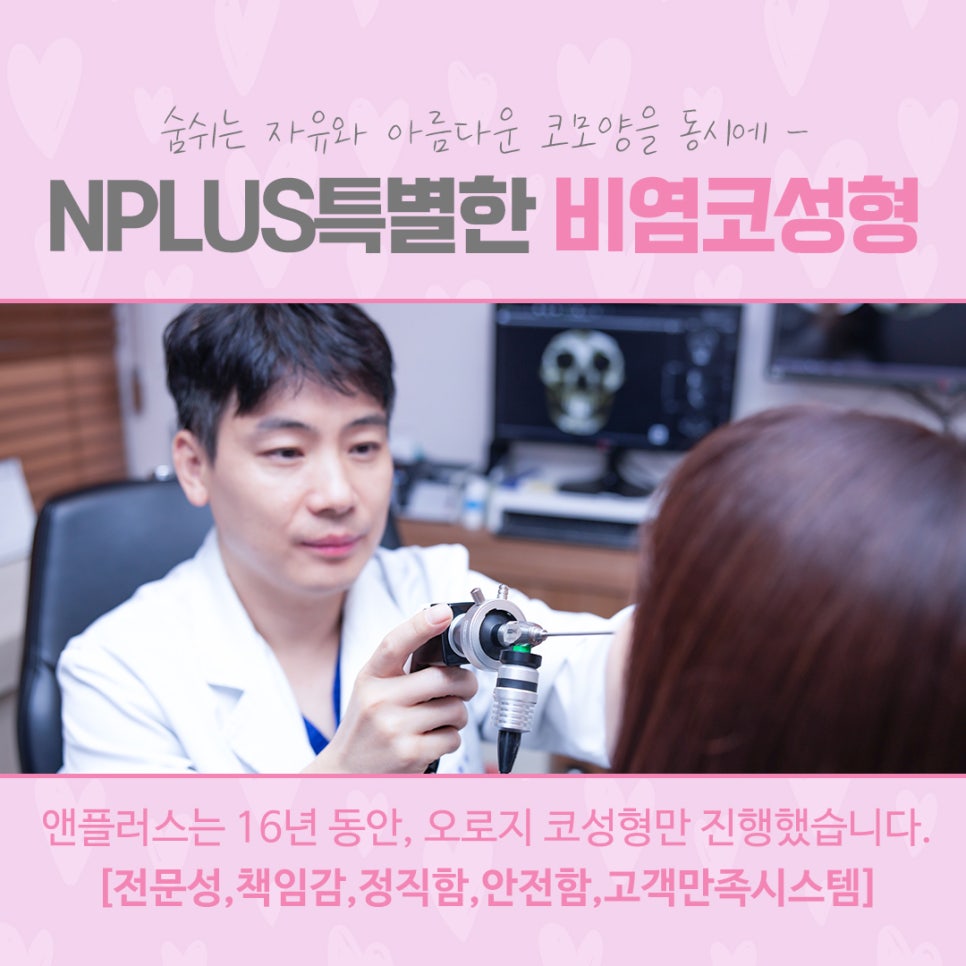
#Rhinitis Nose Surgery at OJIKO N+ Plus Clinic
At OJIKO N+ Plus Clinic, to ensure a satisfying rhinitis nose surgery experience, Director Yoon Hyun-cheol personally handles every step one-on-one, from consultation for rhinitis nose surgery to surgical planning, the procedure itself, treatment, and follow-up care.

#Rhinitis Nose Surgery Membership Card at OJIKO N+ Plus Clinic
Postoperative care is also covered through an A/S system guaranteed for one year after surgery, and an N+ Plus membership card is issued. A surgical responsibility guarantee system is in place to prepare for any postoperative pain, inflammation, or dissatisfaction with the appearance that may occur, so those who hold an N+ Plus Clinic membership card can receive post-treatment benefits at any time.
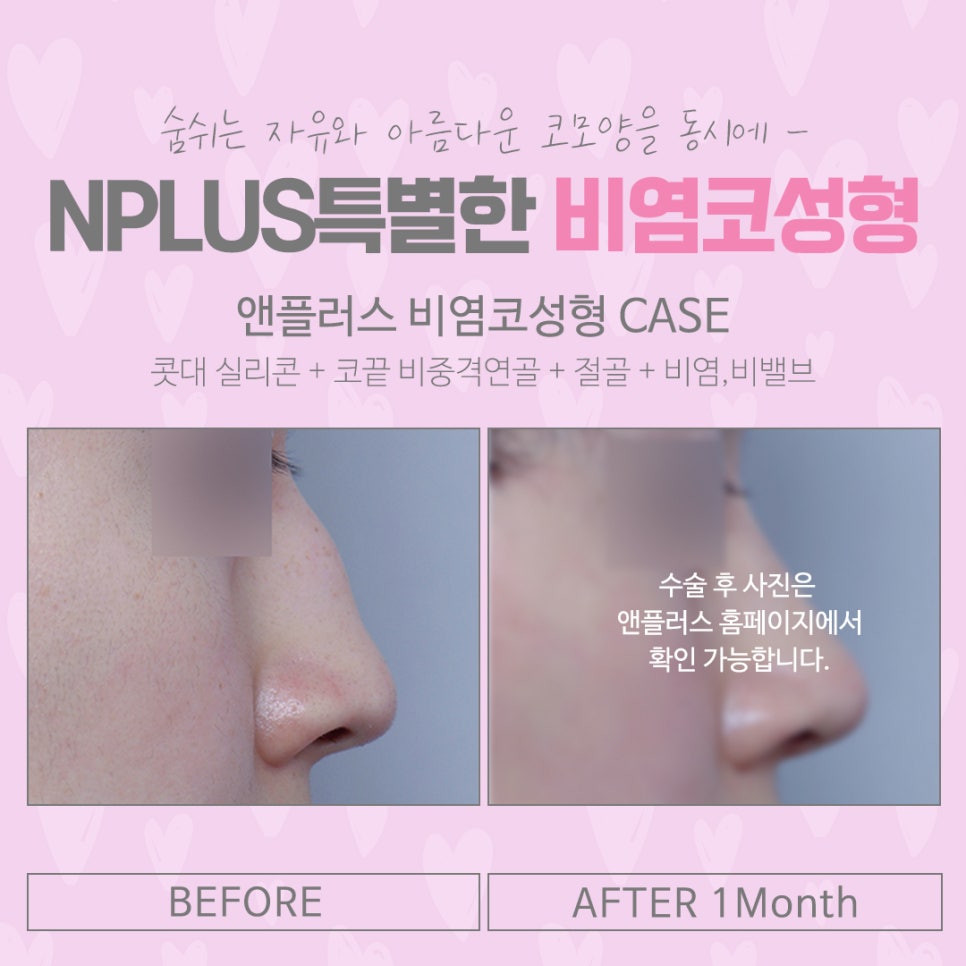
(The image above shows before-and-after photos of rhinitis nose surgery at OJIKO N+ Plus Clinic.)
That concludes the information we shared about rhinitis nose surgery at OJIKO N+ Plus Clinic. We hope this article is very helpful for those who are experiencing inconvenience in daily life due to nasal congestion caused by rhinitis and are looking for information about rhinoplasty. Thank you.