Hello. This is OjiKo N Plus Clinic, which thinks only about your beautiful and healthy nose.
The content introduced this time is about short nose surgery.

The reason we want to change our appearance is not only for our own satisfaction, but also to appear more likable to others. As standards of appearance change over time and beauty standards become higher, our own individuality can sometimes feel like a complex. To resolve such concerns, people try various methods such as dieting, changing hairstyles, or improving their appearance through makeup. Even so, it is difficult to change the shape of the nose, so interest in nose surgery is especially high.
The nose is located at the center of the face and is the most three-dimensional feature, helping balance all the facial features. Because even a small change can create a large effect, people seek more detailed information about nose surgery. Everyone prefers a nose that is high and straight. However, because the shape of each person’s nose is different, the concerns they have are also different. Among them, for cases where the nose is short or upturned, I would like to explain short nose surgery in detail.
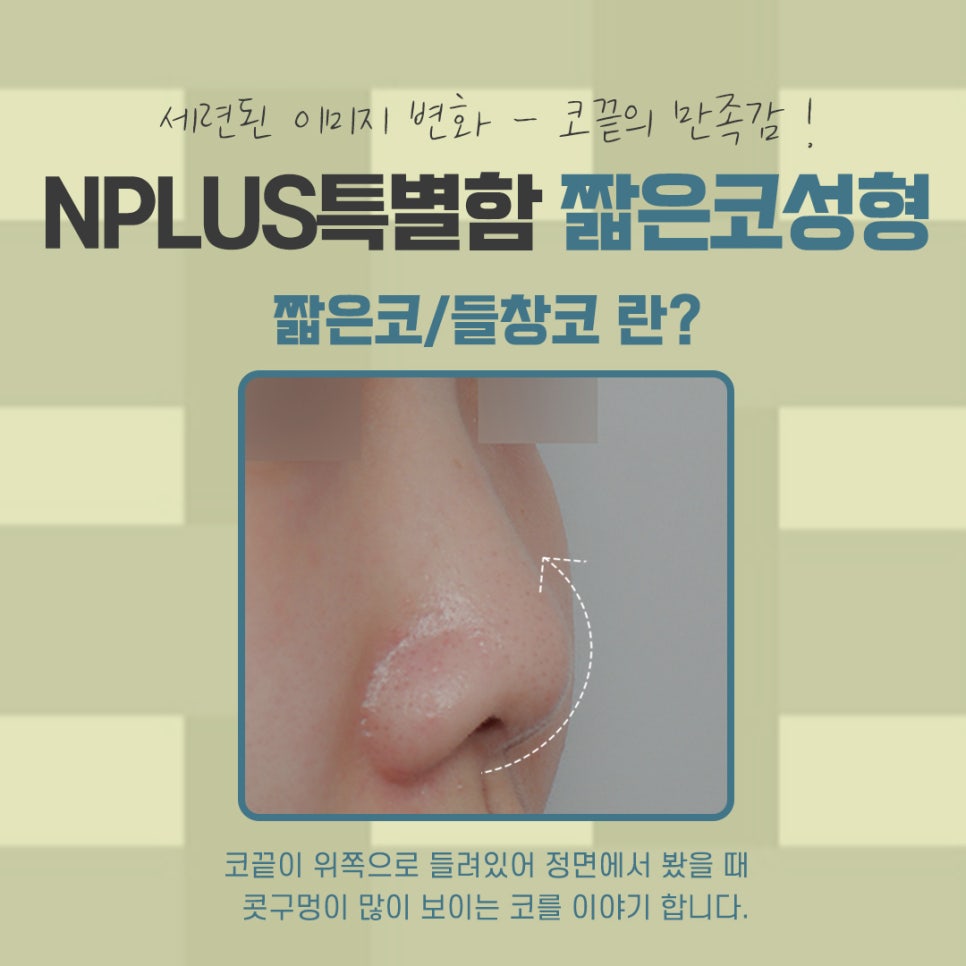
What is short nose surgery? It refers to a nose whose tip is turned upward, making the nostrils very visible from the front. Causes of a short nose can be congenital, and there can also be acquired causes, such as contracture after nose surgery, where the tip shrinks and becomes shorter. Through short nose surgery, the columellar support is built up or the skin is lengthened to lower the tip of the nose.
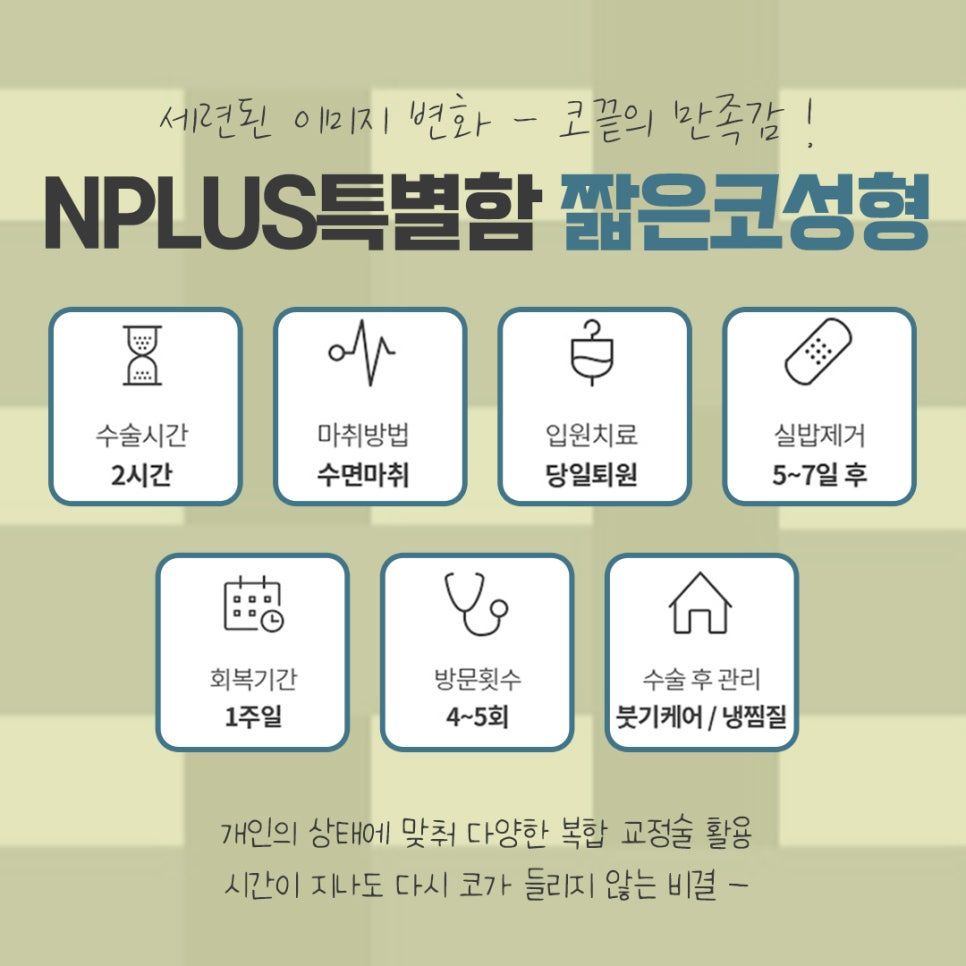
Usually, people who look into short nose surgery have a short tip, a low bridge, and an overall small nose shape, so concerns about the nose’s volume tend to be significant. However, while these cosmetic external aspects are very important, the nose is also an organ responsible for breathing and smell. If surgery is performed only for cosmetic purposes without considering function, it can lead to revision surgery due to functional problems after the operation. Therefore, it is recommended to check the inside of the nose before proceeding with surgery.
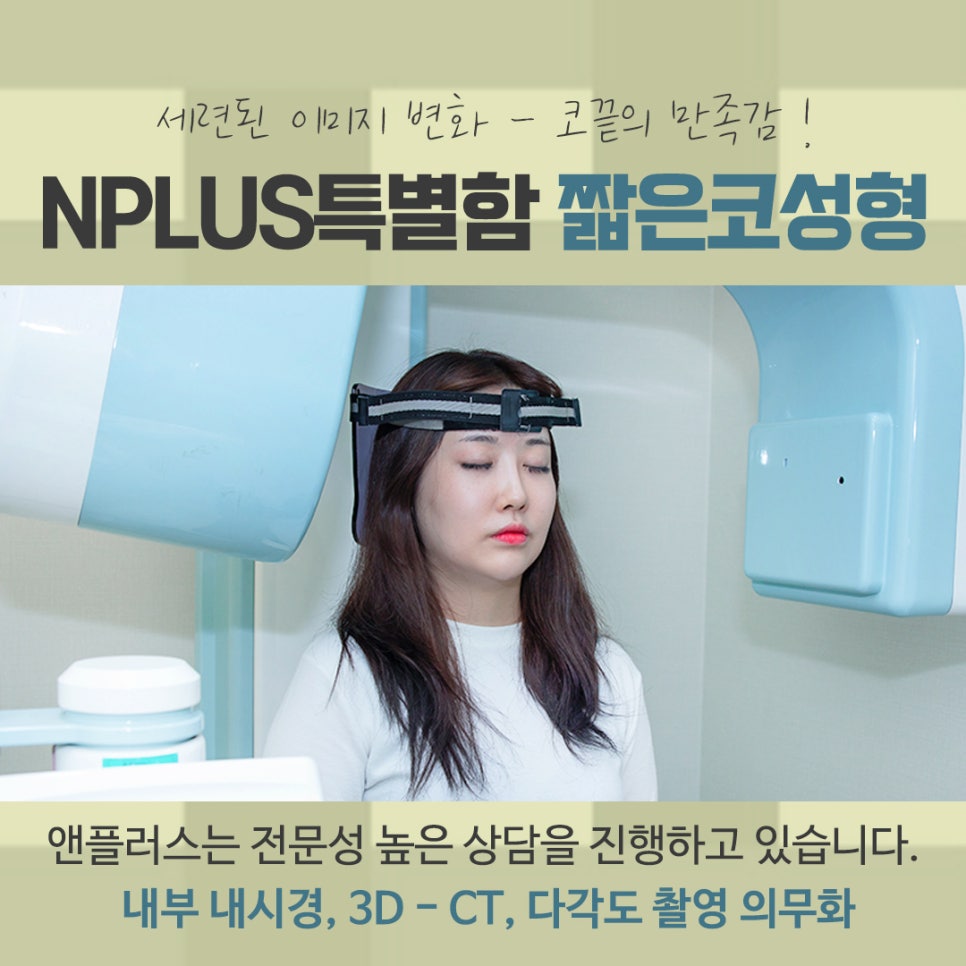
At OjiKo N Plus Clinic, to achieve satisfying short nose surgery, we perform a 3D-CT scan and internal endoscopic examination before surgery to accurately identify the condition of the nasal bone, the presence of cartilage, the position of the cartilage, and any internal functional abnormalities. Based on the extracted data, we proceed with short nose surgery.
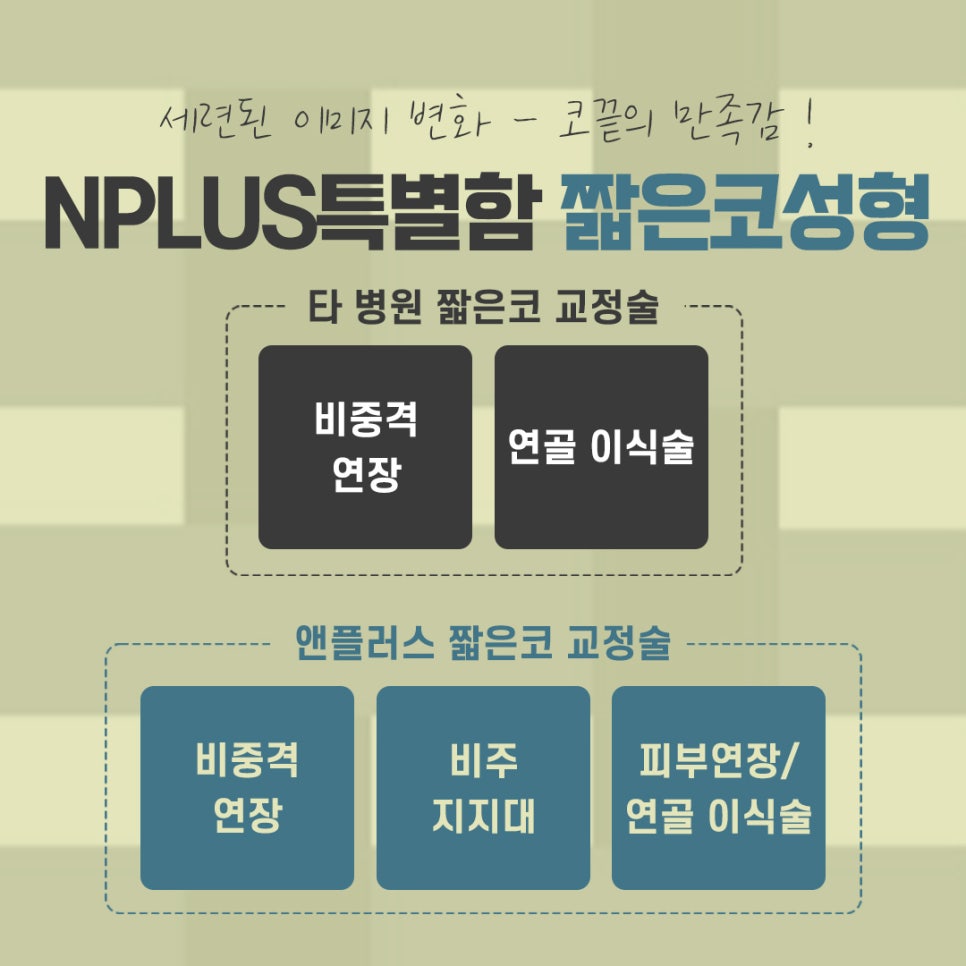
There are broadly two short nose surgery methods, depending on whether the tip lift is mild or severe.
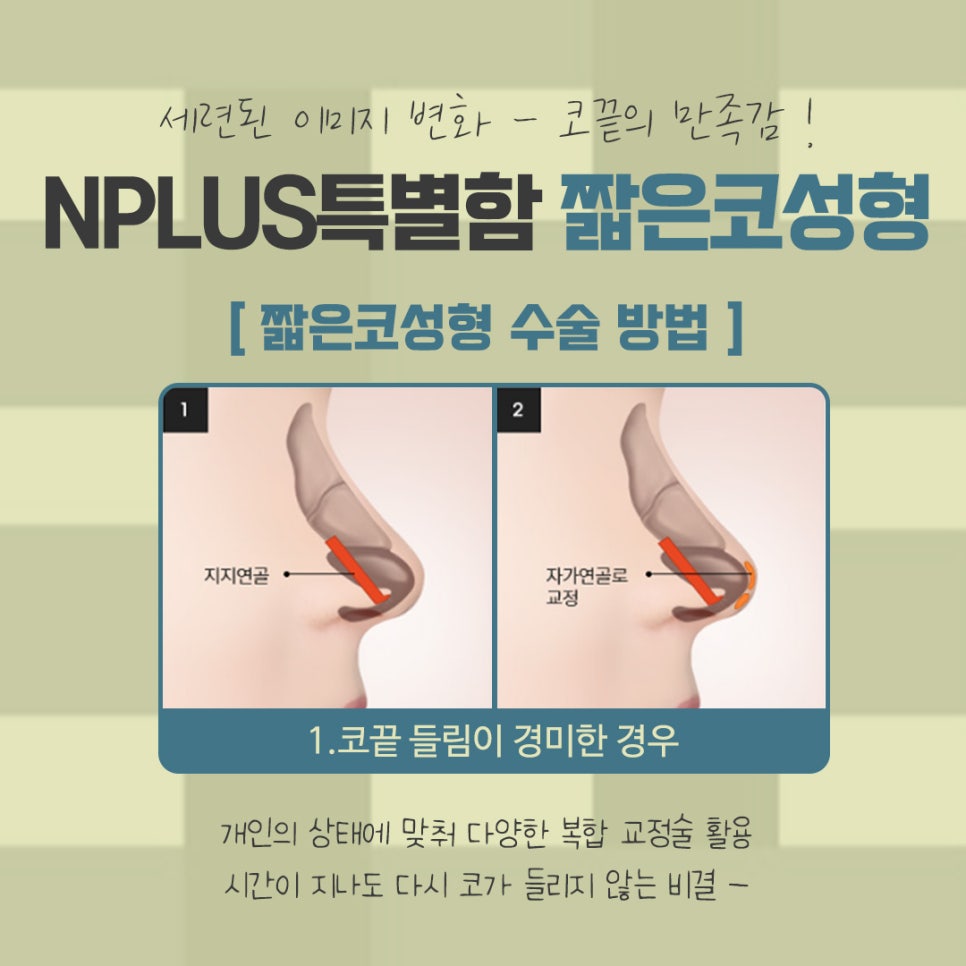
First, when the tip lift is mild, a sturdy support cartilage is grafted between the columella to create a columellar support, after which the tip cartilage is firmly fixed so it does not move. Then, autologous cartilage is grafted to the tip to refine and correct the overall nasal line.
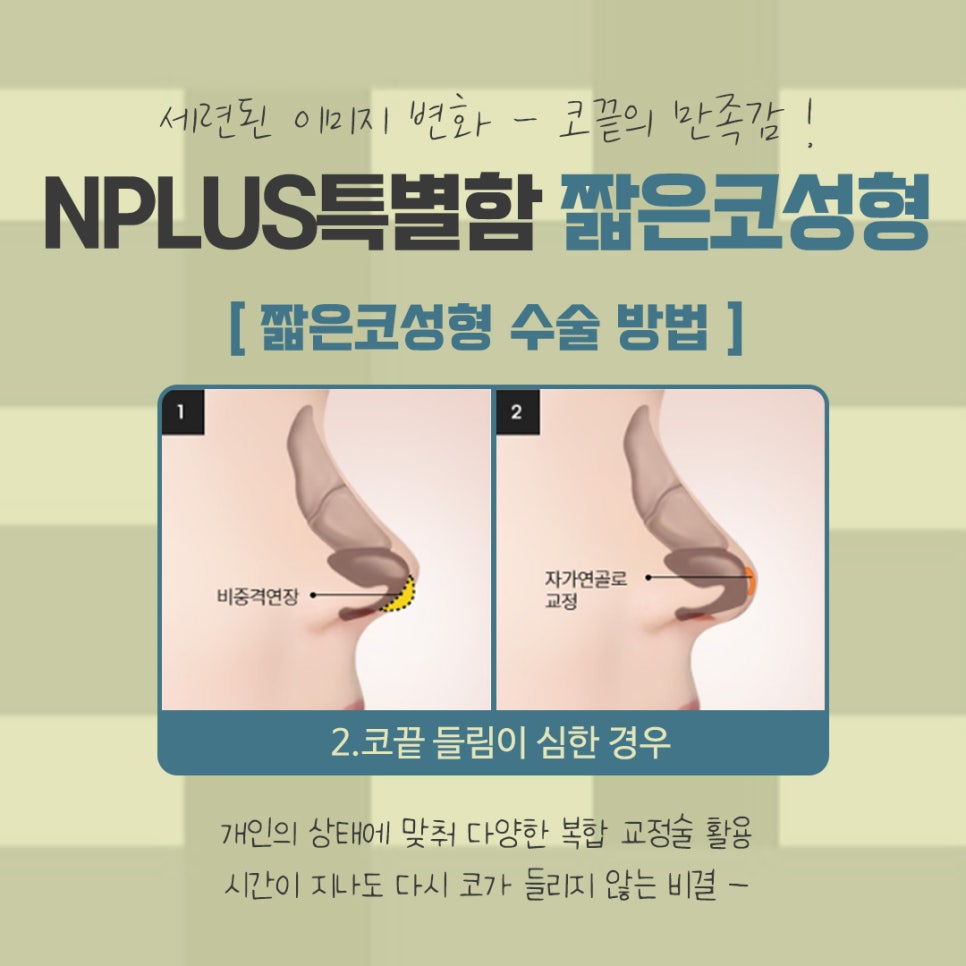
Second, when the tip lift is severe, sufficient septal extension is performed at the tip using strong autologous cartilage, and then autologous cartilage is grafted to the tip to refine and correct the overall nasal line.
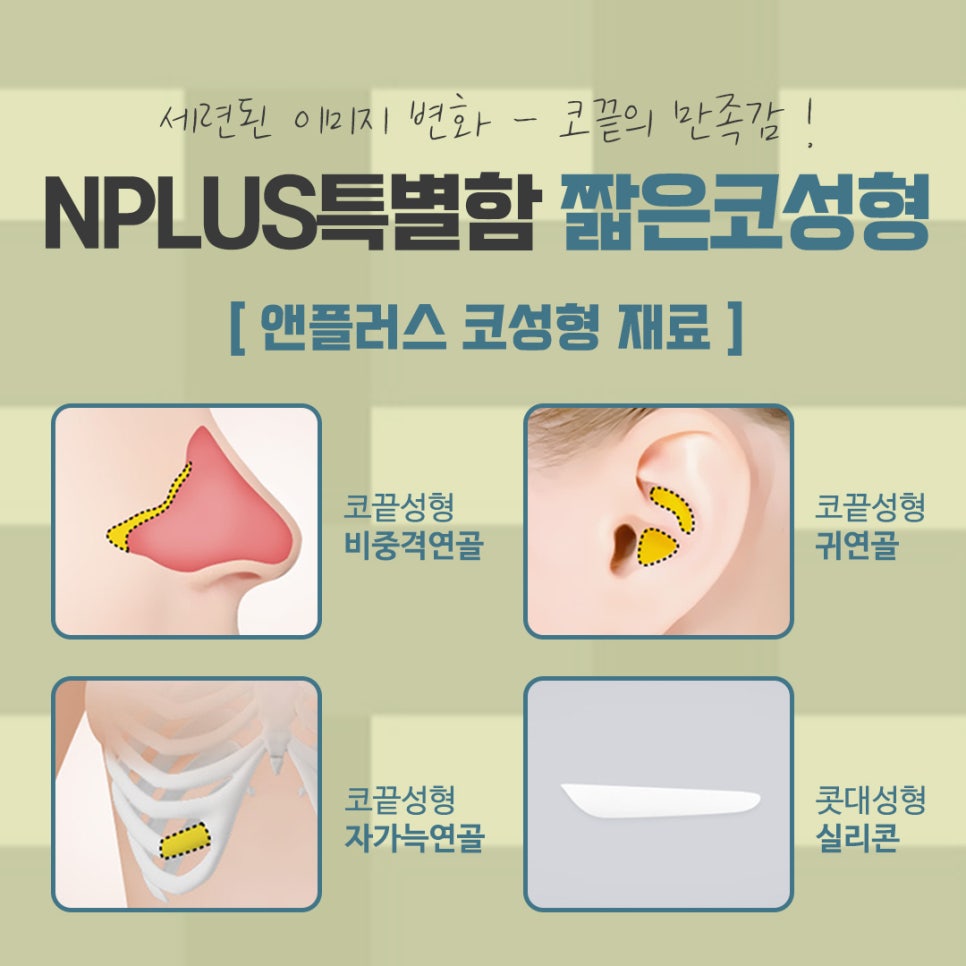
The materials used in short nose surgery include silicone for the nasal bridge and autologous cartilage for the tip. The autologous cartilage used for the tip can be ear cartilage, septal cartilage, or autologous rib cartilage, and the materials are selected according to each individual through preoperative examinations.
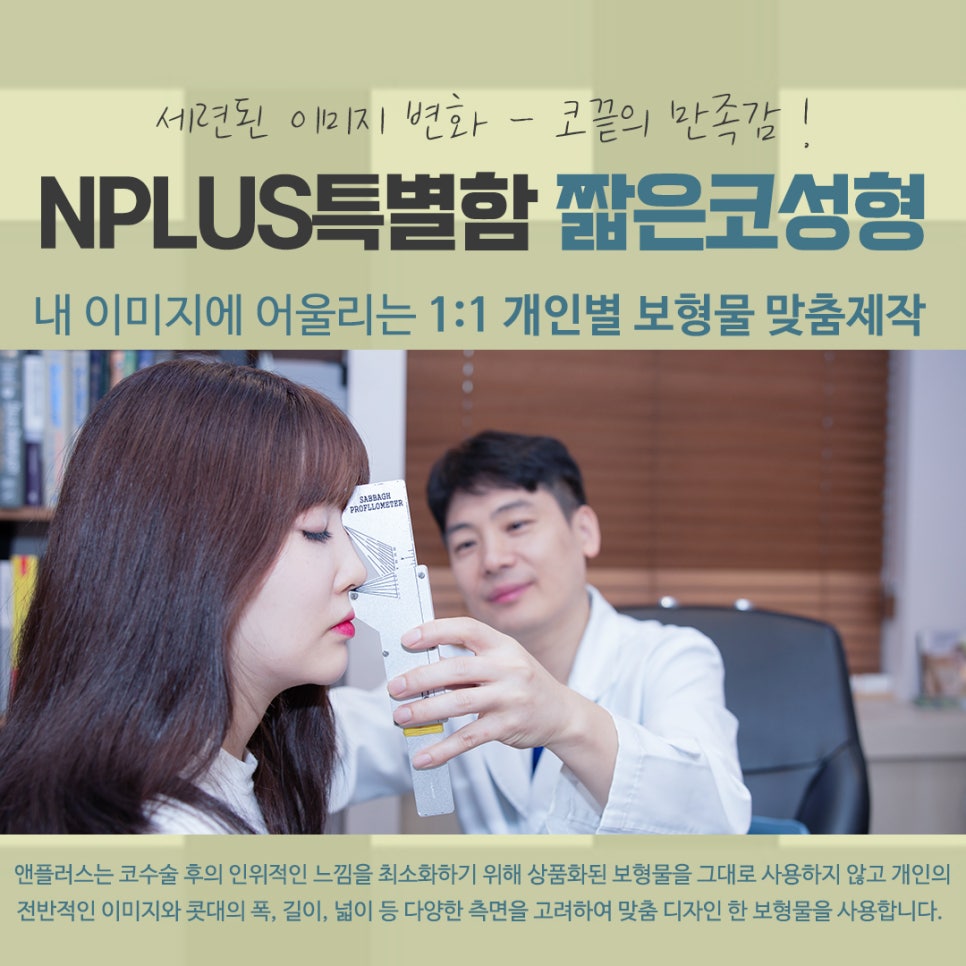
When performing short nose surgery and the nasal bridge is low, silicone is used. In this case, instead of focusing only on creating a higher bridge, and in order to minimize an artificial appearance after nose surgery, pre-made silicone is not used as-is. Instead, the silicone is manually shaped after considering various aspects such as the individual’s overall image and the width, length, and breadth of the bridge.
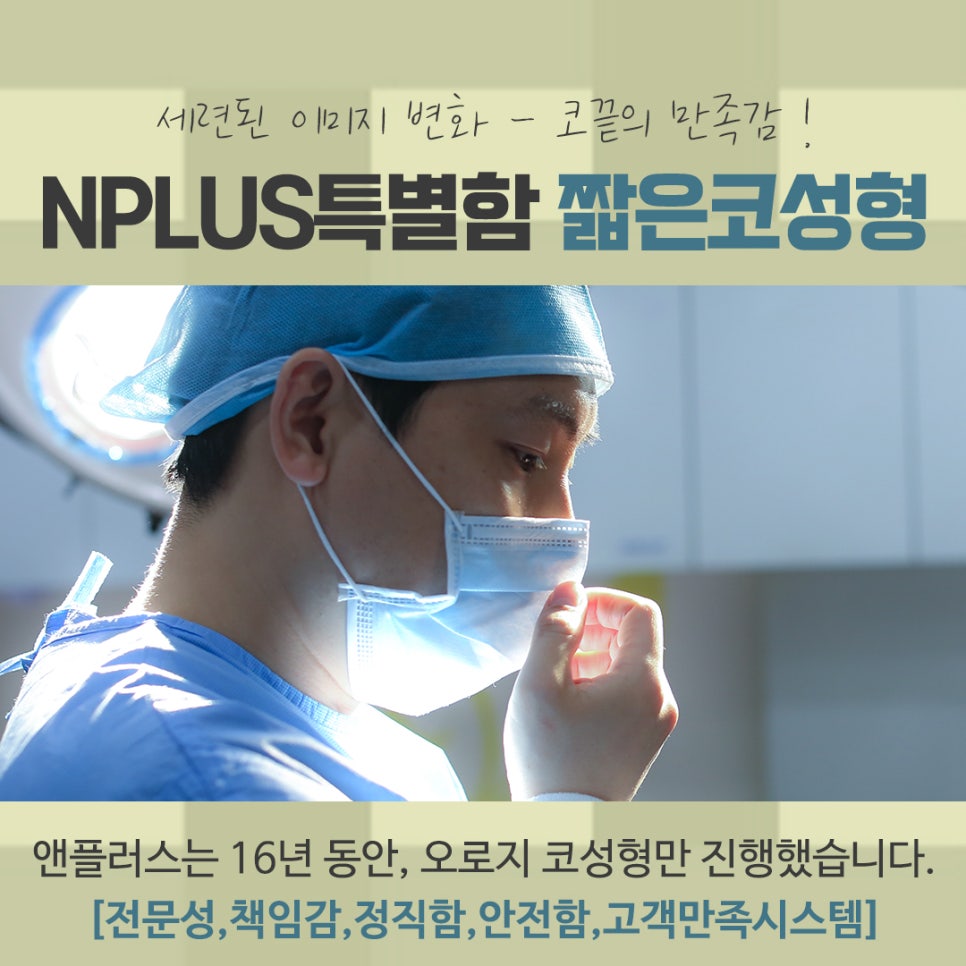
In addition, at OjiKo N Plus Clinic, Director Yoon Hyun-cheol personally handles every step of short nose surgery one-on-one, from consultation to establishing the surgical plan, performing the procedure, treatment, and follow-up care.

For aftercare, a membership card is issued by N Plus Clinic. The clinic operates an after-service system guaranteed for one year after surgery, as well as a surgical responsibility guarantee system in preparation for any postoperative pain, inflammation, shape dissatisfaction, and other possible situations. Customers who hold an N Plus Clinic membership card can receive aftercare benefits from N Plus Clinic at any time, resulting in a more satisfying short nose surgery experience.
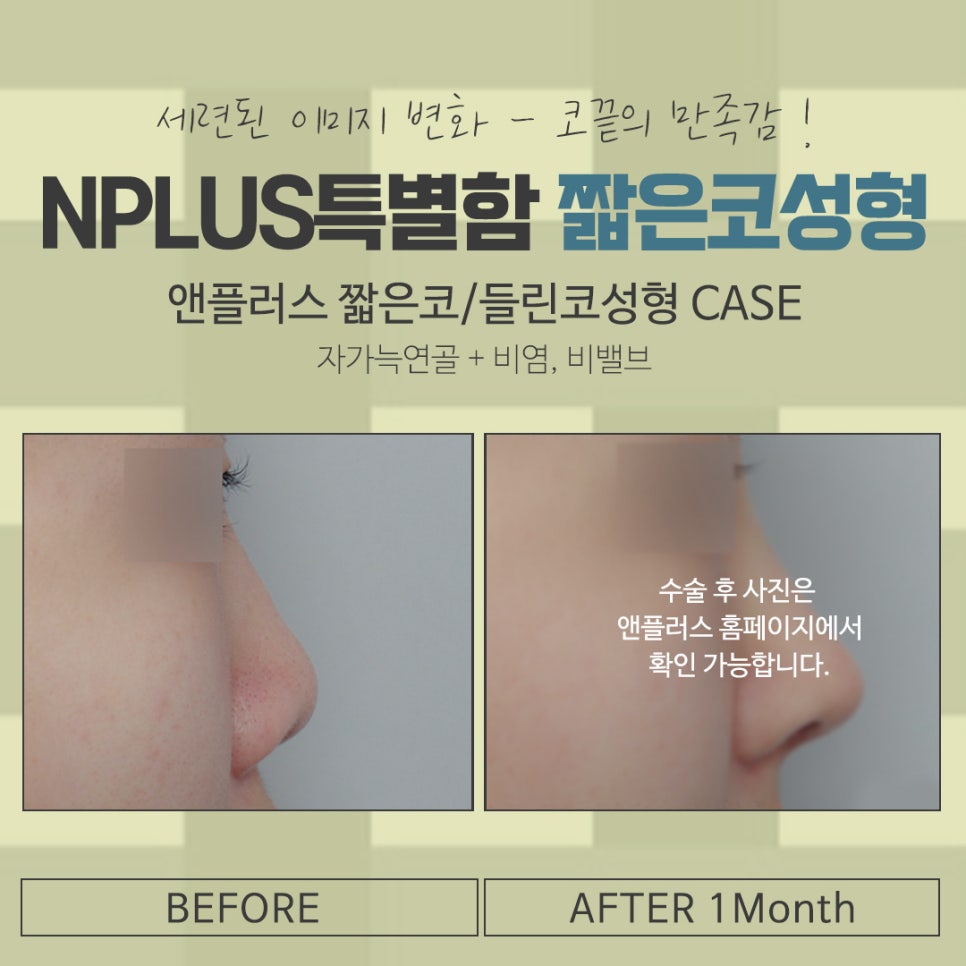
(The above image is an actual before-and-after photo of short nose surgery at OjiKo N Plus Clinic.)
That concludes the information about short nose surgery at OjiKo N Plus Clinic. I hope this article is very helpful for those who are considering nose surgery because their current nose is upturned, short, low, or has a contracted shape. Thank you.