
Hello. We are OjiKo Hospital N+Plus, devoted for 16 years only to your beautiful and healthy nose.
The content prepared this time is about autologous rib cartilage rhinoplasty.

The nose is located at the center of our face and is the most three-dimensional feature, playing a role in balancing all of our facial features. For that reason, many people have become more interested in rhinoplasty. In particular, even a small change in the nose can have a big effect on the overall image. On the other hand, when people feel that the shape of their nose falls short of the standard, it can look even more prominent and give off a harsh or old-fashioned impression. That is why many people look into rhinoplasty information as a way to improve their image.

However, the nose is not simply an organ that determines outward appearance; it is also an important organ in our body responsible for breathing and smelling. In addition, because each person has different nose shape, size, cartilage condition, skin tissue condition, and internal structural issues, we recommend using before-and-after photos and reviews only as reference even if the nose shape seems similar to yours. Based on the points above, the surgical method and materials will differ, so it is important to accurately check the condition of your own nose before deciding on surgery.
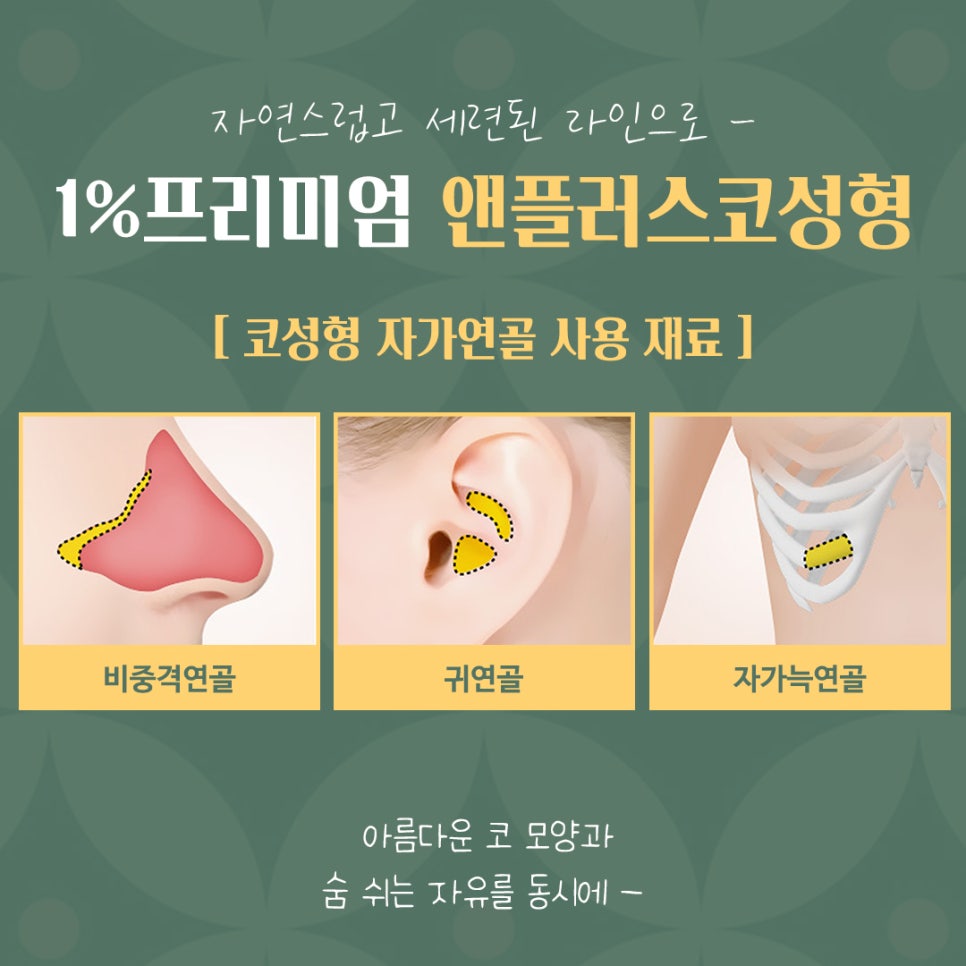
When we think of rhinoplasty, the bridge is usually improved with silicone, while the tip is treated using autologous cartilage. Autologous cartilage includes ear cartilage, septal cartilage, and autologous rib cartilage, and the most commonly used materials are ear cartilage or septal cartilage. Many people know autologous rib cartilage as a material often used in revision surgery. Among these various conditions, many people have become interested in the materials used, so today we have prepared a more detailed look at autologous rib cartilage rhinoplasty, which is known for its larger size and firmness.
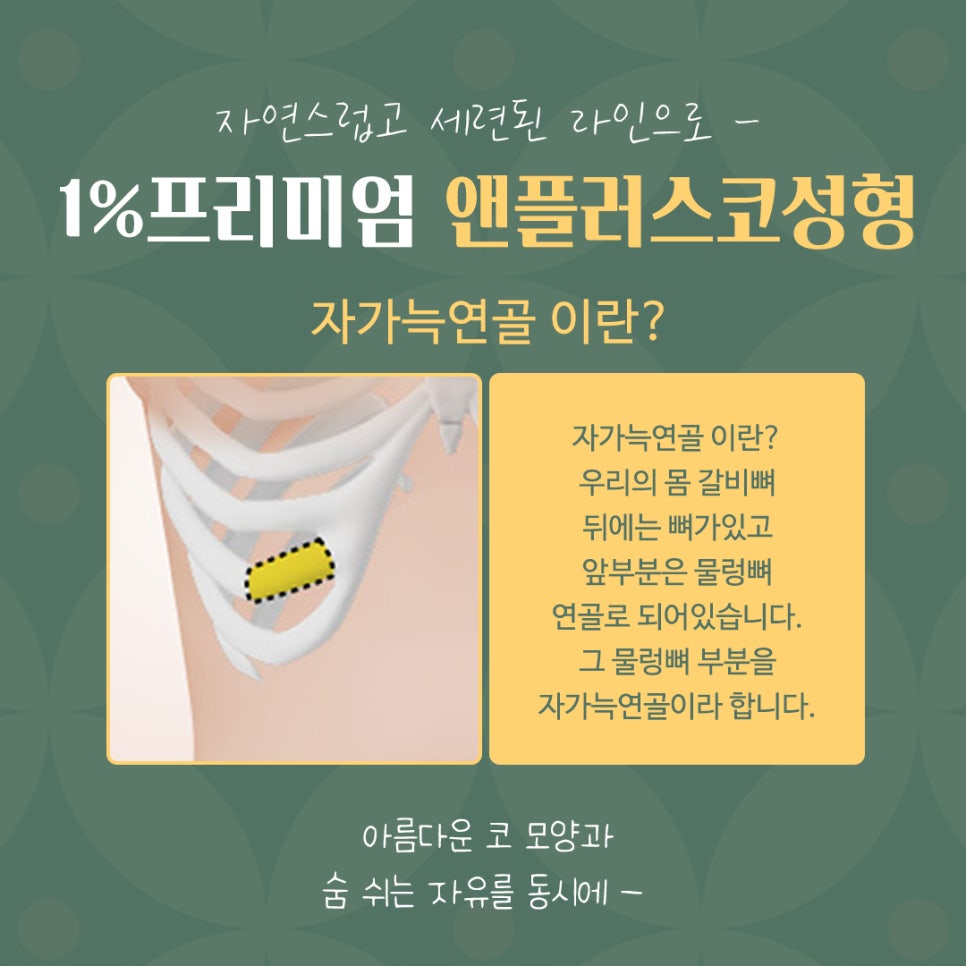
What is autologous rib cartilage rhinoplasty? If you look at the ribs in our body, the back part is bone, while the front part is soft cartilage. That soft cartilage is called autologous rib cartilage, and this refers to rhinoplasty using autologous rib cartilage. In general, autologous rib cartilage rhinoplasty is often used when there is not enough cartilage for revision surgery, but it is also used in primary rhinoplasty to minimize inflammation and side effects, and because it is large and firm, it is also used when ear cartilage or septal cartilage is insufficient.
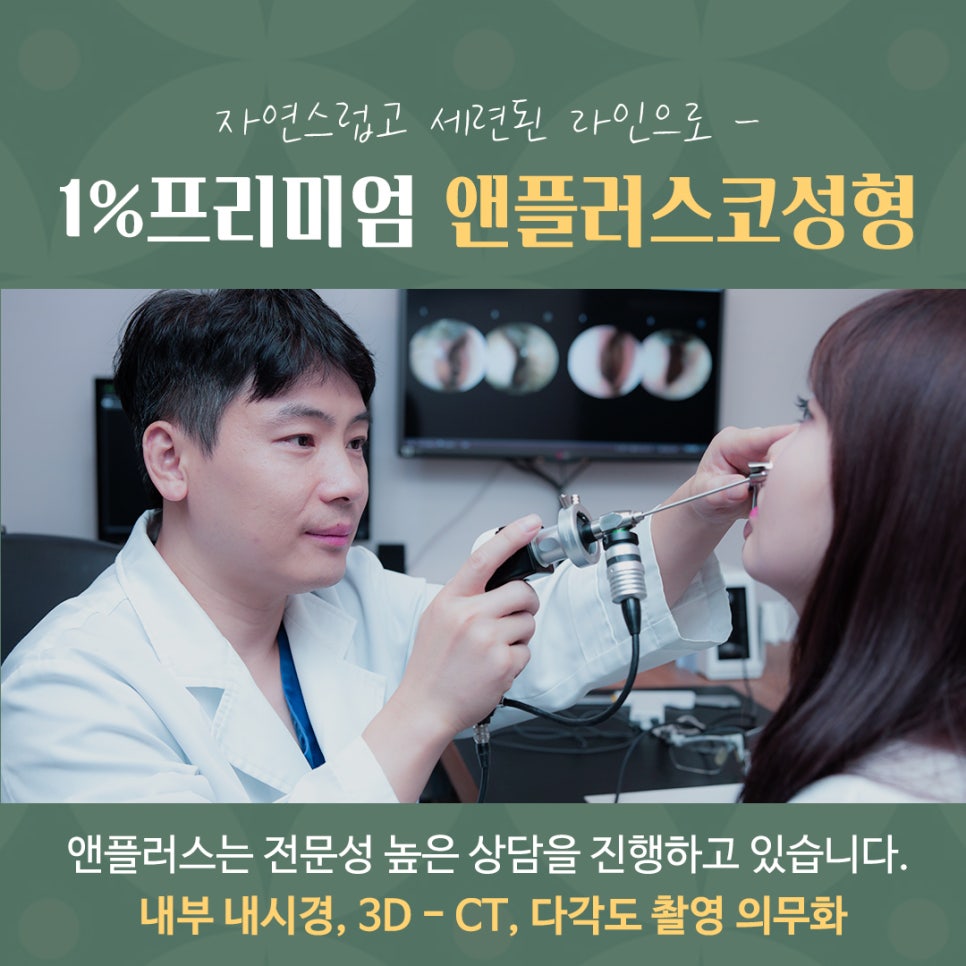
At OjiKo Hospital N+Plus, to ensure safe and satisfying autologous rib cartilage rhinoplasty, we perform preoperative 3D-CT scans and internal endoscopic examinations to accurately assess the condition and position of the nasal bones, internal nasal function, and cartilage condition. Based on these data, we establish a surgical plan, confirm whether autologous rib cartilage will be used, and proceed with surgery using the materials and method that best suit each individual.

There are broadly three types of autologous rib cartilage rhinoplasty: cases where only the bridge is low, cases where both the bridge and tip are low, and cases where only the tip is low.
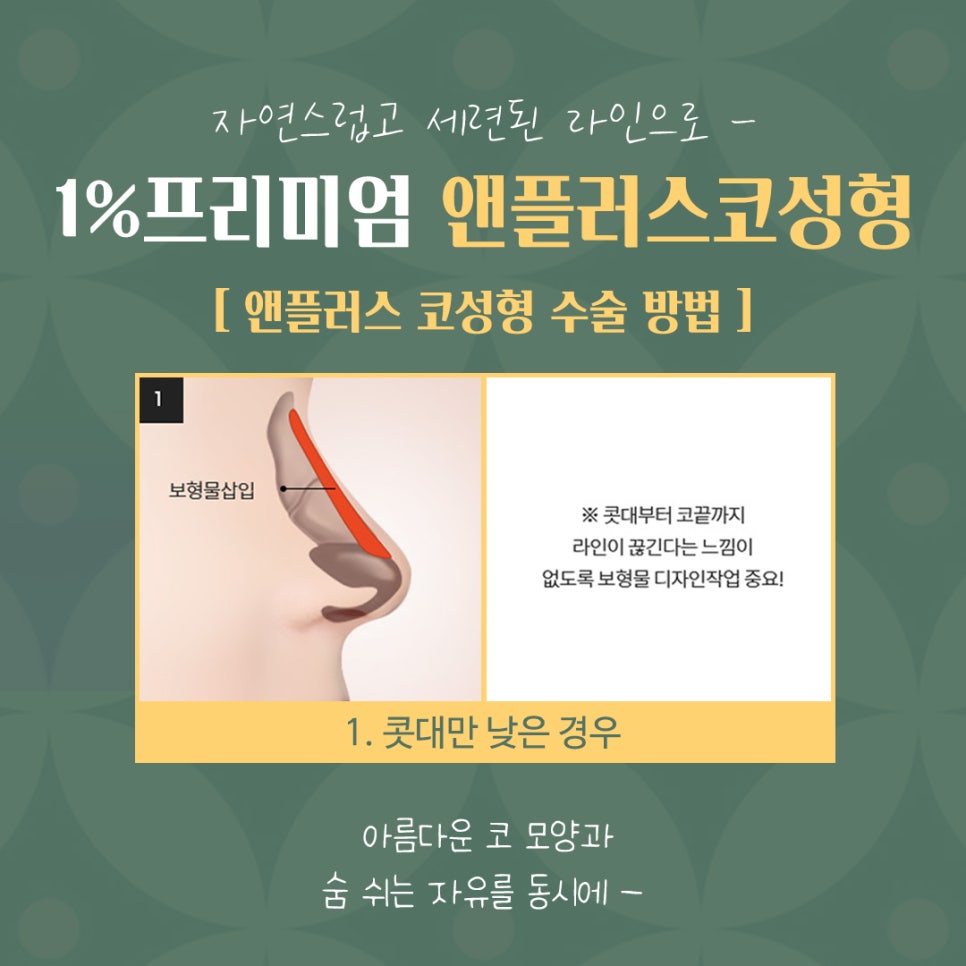
First, when only the bridge is low, correction is performed by inserting a custom implant into the bridge.
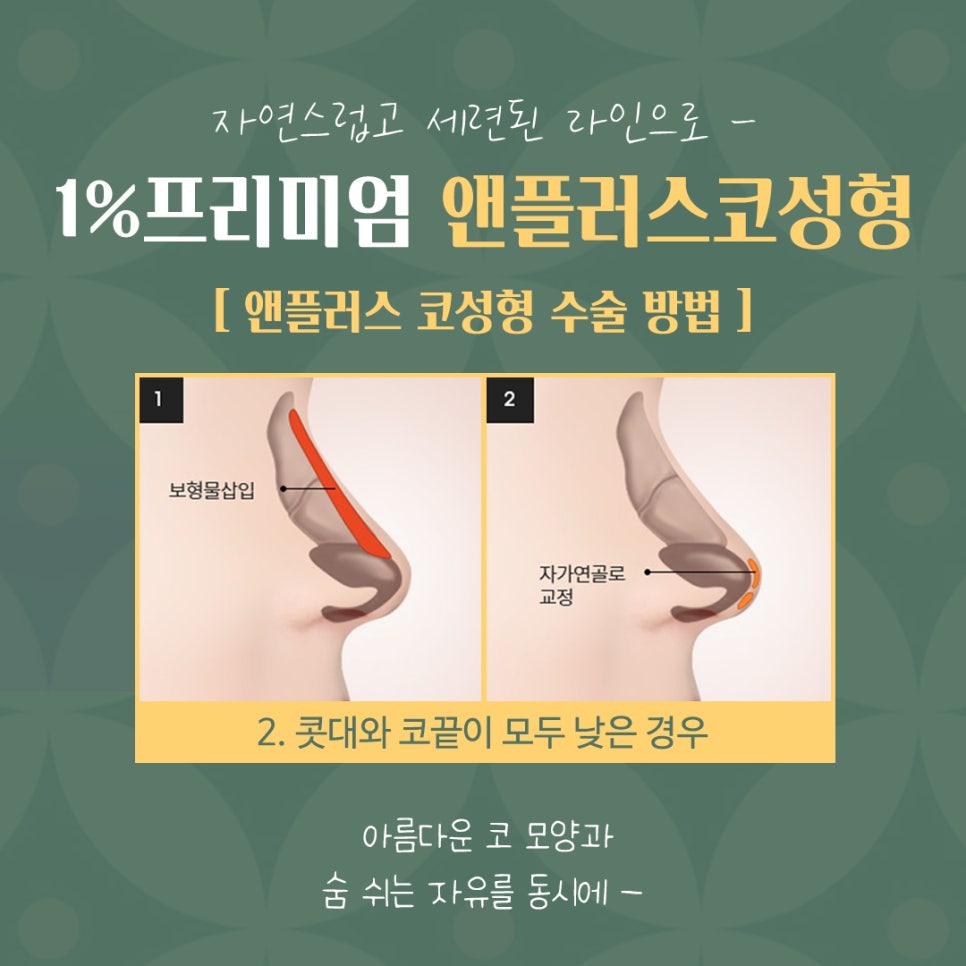
When both the bridge and the tip are low, the bridge is corrected with silicone, while the tip is corrected using autologous rib cartilage or other autologous cartilage.
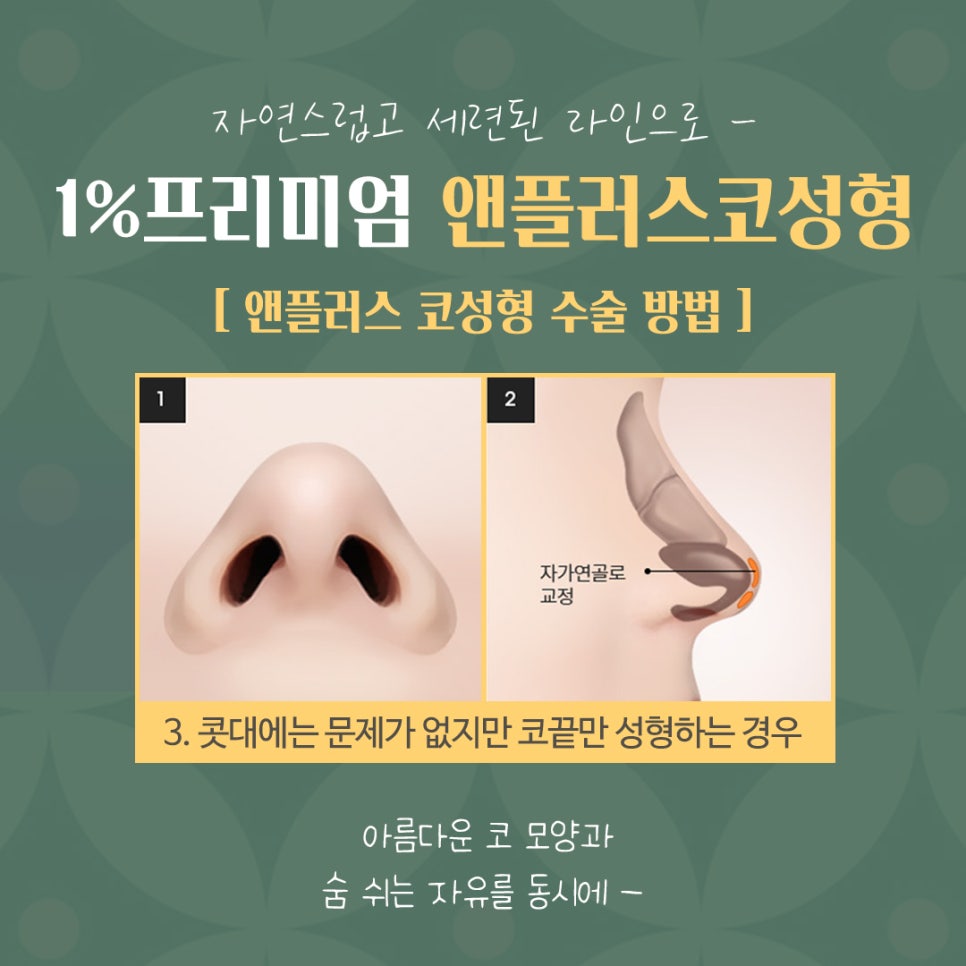
When only the tip is low, correction is performed using autologous rib cartilage or other autologous cartilage so that it connects smoothly with the bridge.

In addition, the implant used for the bridge is not simply a pre-made commercial product inserted as is. Instead, it is carefully hand-shaped to consider the patient’s overall image as well as the width, length, breadth, and height of the bridge before insertion, which can lead to an even more satisfying autologous rib cartilage rhinoplasty review.

However, when performing autologous rib cartilage rhinoplasty, even if autologous rib cartilage is an excellent and safe material, if surgery is performed only from an aesthetic standpoint without checking the inside of the nose, the functional aspects may be overlooked, which can lead to revision surgery. Therefore, it is essential to check the inside of the nose before surgery so that the result can be satisfying.

Accordingly, we recommend carefully checking whether the medical staff have strong anatomical knowledge of the nose, whether they have abundant relevant experience and expertise, whether equipment is available to accurately assess the condition of your nose, and whether post-operative care can be provided reliably before proceeding with surgery.

At OjiKo Hospital N+Plus, Director Yoon Hyun-cheol personally handles every stage one-on-one, from consultation related to rhinoplasty, to surgical planning, performance of the procedure, treatment, and follow-up visits. We strive for safe and satisfying autologous rib cartilage rhinoplasty, and you can receive high-level medical services.

For post-operative care as well, an N+Plus membership card is issued, and the hospital operates an after-sales service system that guarantees support for one year after surgery, along with a surgical responsibility guarantee system prepared for any situation that may arise after surgery, such as pain, inflammation, or dissatisfaction with the shape, so that this can become an even more satisfying autologous rib cartilage rhinoplasty review.
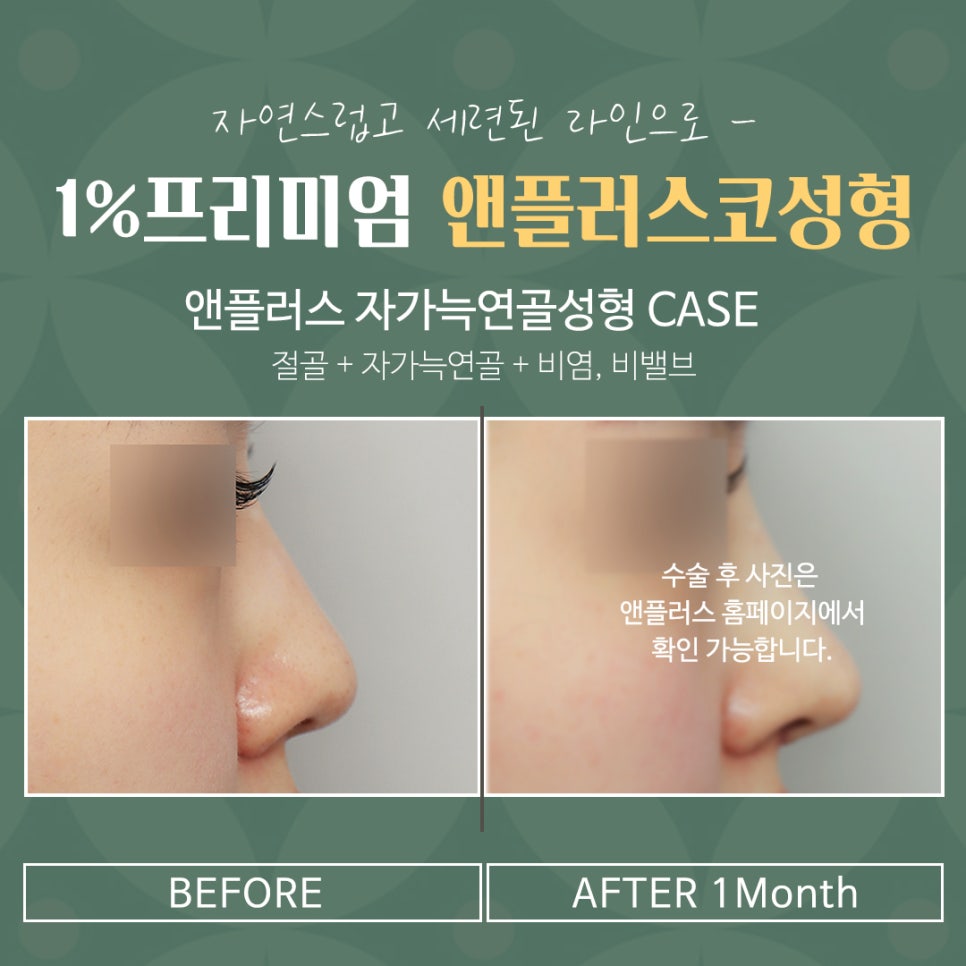
(The image above shows actual before-and-after photos of autologous rib cartilage rhinoplasty performed at OjiKo Hospital N+Plus.)
This concludes the information about autologous rib cartilage rhinoplasty at OjiKo Hospital N+Plus. We hope this article was very helpful for those who are considering rhinoplasty because they are unhappy with the shape of their nose. Thank you.