Considering function as well in autologous rib cartilage nose surgery

Hello. We are OJICO Hospital & N+ Clinic, where we have spent 16 years focusing only on your beautiful and healthy nose. The topic prepared this time is autologous rib cartilage nose surgery.

In the past, rhinoplasty often prioritized an external approach and focused on improving appearance. However, as more people learned about functional nose surgery, which improves both nasal function and cosmetic appearance, interest in surgical materials naturally increased through diagnosis and consultation about the internal condition of the nose.

First, in the case of nose shapes among Koreans, many people have the characteristics of East Asians: a low bridge, a blunt and broad tip, and a bulbous nose shape. In rhinoplasty, the bridge is commonly augmented with silicone, while the tip is often treated with autologous cartilage.
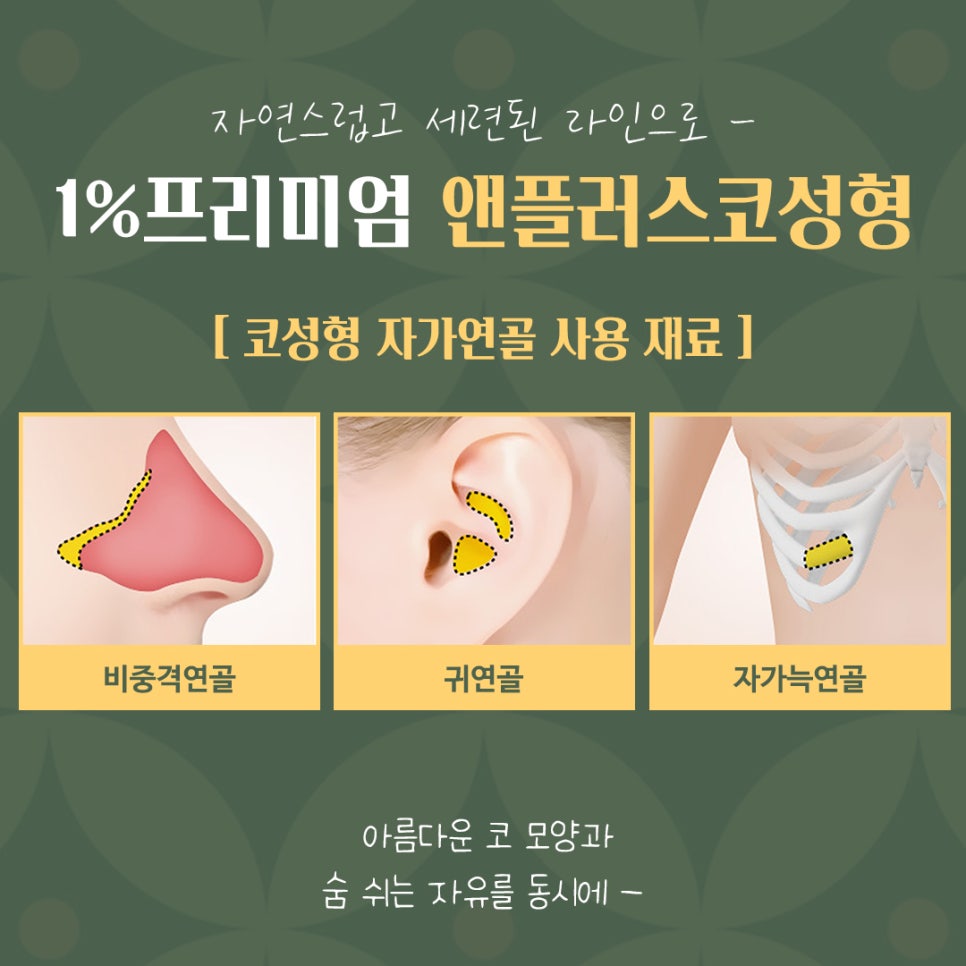
The autologous cartilage used for the tip includes ear cartilage, septal cartilage, and autologous rib cartilage. Ear cartilage is located on the inner side of the ear, is easy to harvest, and helps create a natural nose line. Septal cartilage is the cartilage that acts as a partition dividing our nostrils into two, and it has the advantage of being firmer than ear cartilage. Autologous rib cartilage is cartilage from the ribs; it is used when ear cartilage or septal cartilage is insufficient, and it has the advantages of being large and firm.
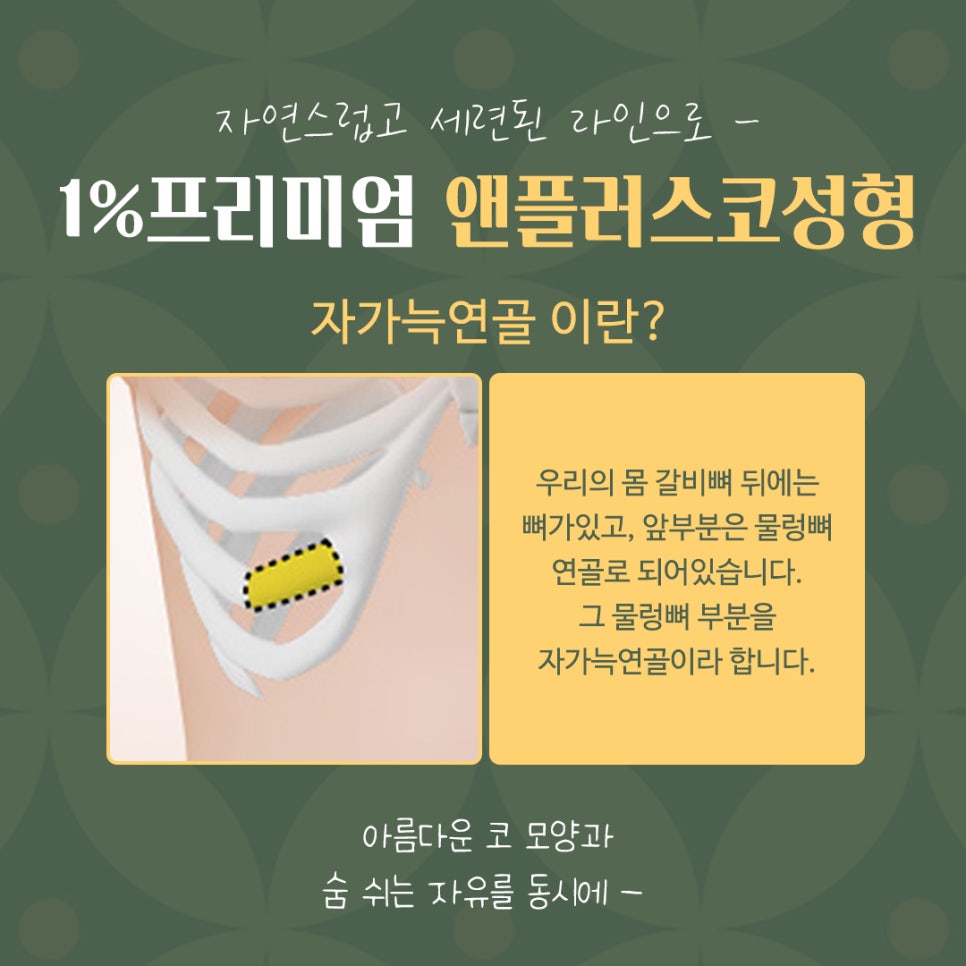
Among these, we have prepared more detailed information about autologous rib cartilage nose surgery, which uses a larger and firmer material. What is autologous rib cartilage nose surgery? Autologous rib cartilage is located in the ribs. Our ribs have bone at the back and cartilage at the front, and that cartilage is reprocessed and used as material for the bridge or tip of the nose. Autologous rib cartilage is generally known as a material often used in revision surgery. Because it is large and firm, it is used for revision procedures, but it is also often used for short noses or upturned noses.

The types of people who look into autologous rib cartilage nose surgery can include those who lack ear cartilage or septal cartilage due to revision rhinoplasty, or those with a small, low, or upturned nose. Therefore, because the surgical method and materials vary depending on the nose shape, the condition of the cartilage, the condition of the nasal bone, and the condition of the skin, we recommend confirming the exact condition of the nose before proceeding with surgery.
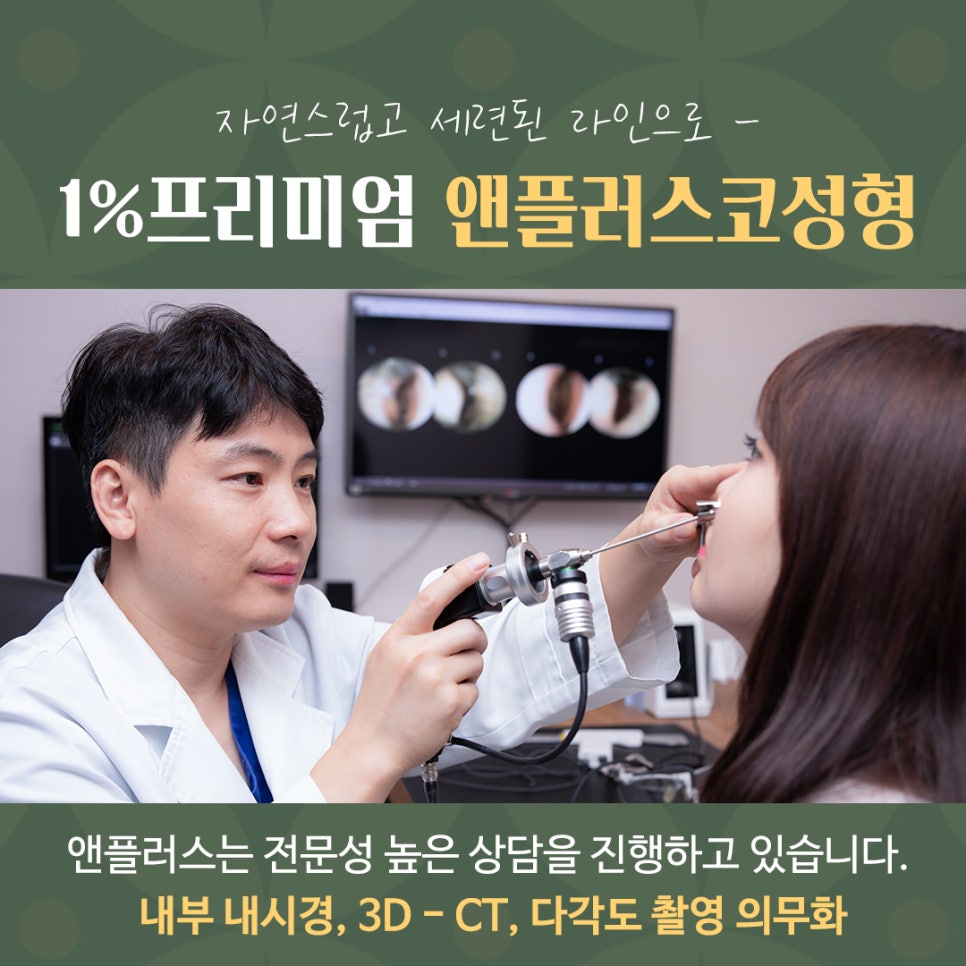
At OJICO Hospital & N+ Clinic, to ensure safe and satisfying autologous rib cartilage nose surgery, we accurately assess the internal nasal problems, cartilage condition, nasal bone condition, and skin condition through preoperative 3D-CT imaging, internal endoscopic imaging, nasal function testing, allergy testing, and more. Based on the collected data, we determine the surgical method and materials before proceeding.

The methods of autologous rib cartilage nose surgery can be broadly divided into three types: when both the bridge and tip are low, when only the tip is low, and when only the bridge is low.
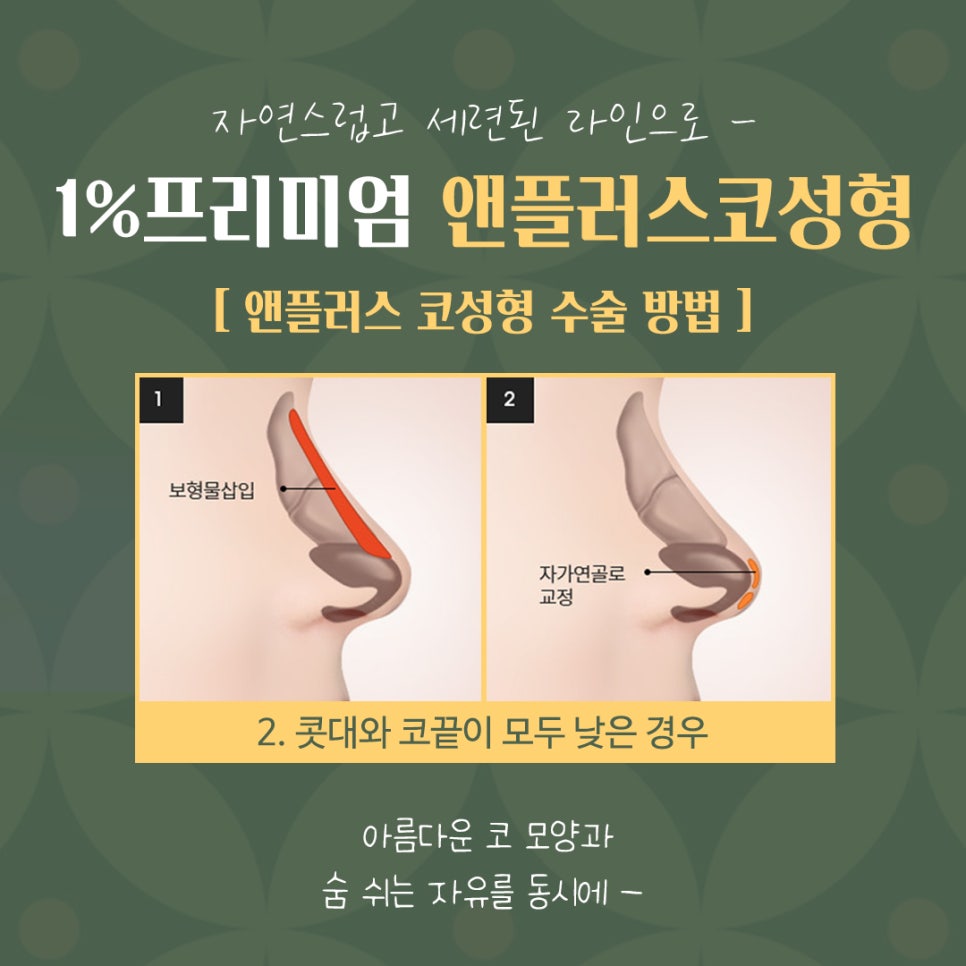
First, when both the bridge and tip are low, surgery is performed by inserting silicone into the bridge and firmly fixing the tip with autologous rib cartilage.
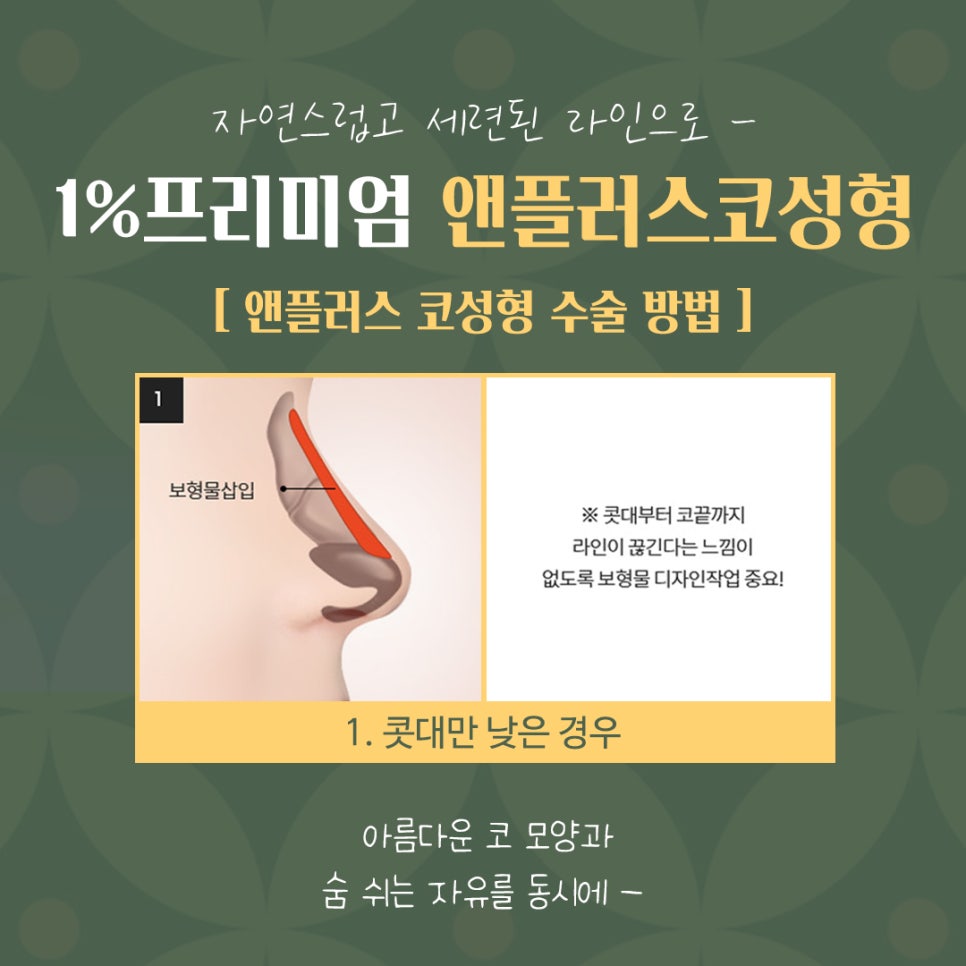
When only the bridge is low, a customized implant or autologous rib cartilage is used to add volume to the bridge, and the overall design ensures that the tip and line are not interrupted.
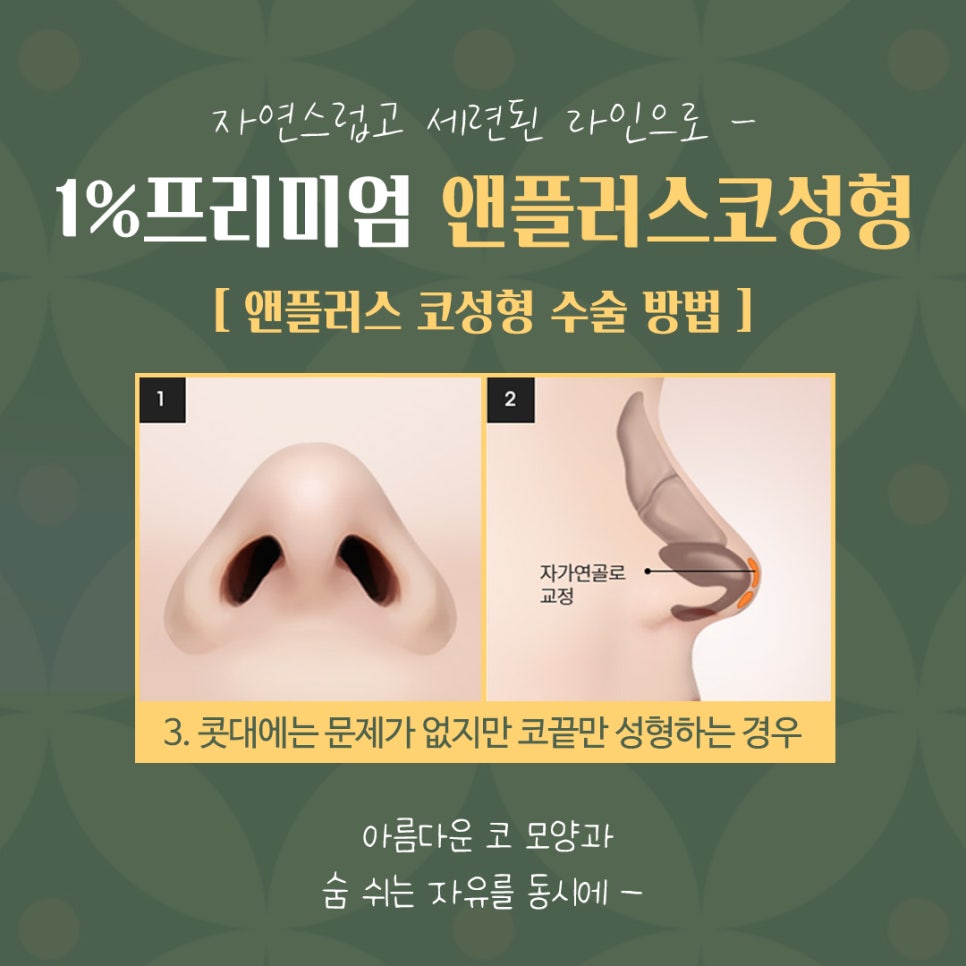
When only the tip is low, volume is added to the tip with autologous rib cartilage, and the overall line is designed so that it does not feel disconnected from the bridge.

Also, in the case of silicone used for the bridge, it is not used as a pre-made commercial silicone product as is. Instead, after carefully refining it by hand while considering the individual’s overall appearance and the bridge’s width, length, breadth, and height, autologous rib cartilage nose surgery is performed.

If you are considering autologous rib cartilage nose surgery, it may be helpful to carefully check whether the medical staff have a high level of anatomical knowledge of the nose, whether they have sufficient experience and expertise, whether they have equipment that can accurately assess the condition of your nose, and whether aftercare is clearly available. Rather than choosing based only on the appearance in before-and-after photos, it is important to consider both the internal and external aspects of the nose.

At OJICO Hospital & N+ Clinic, Director Yoon Hyun-cheol personally handles every step one-on-one, from consultation for autologous rib cartilage nose surgery to surgical planning, procedure, treatment, and follow-up care, allowing you to receive high-level medical service.

For aftercare, an N+ membership card is issued, providing a one-year warranty after surgery through the A/S system. In addition, the hospital operates a surgery responsibility guarantee system to prepare for any post-surgery pain, inflammation, or dissatisfaction with the appearance that may occur, making autologous rib cartilage nose surgery even safer and more satisfying.
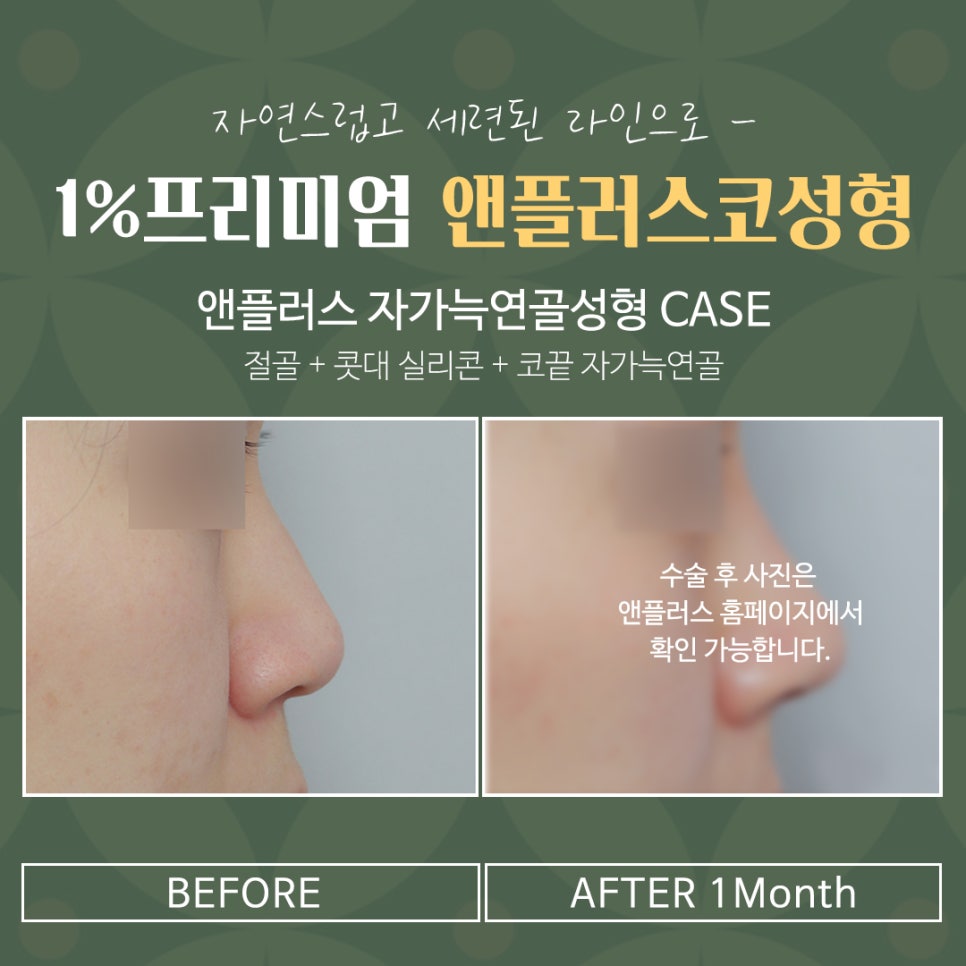
(The images above are actual before-and-after photos of autologous rib cartilage nose surgery at OJICO Hospital & N+ Clinic.)
This concludes the information about autologous rib cartilage nose surgery at OJICO Hospital & N+ Clinic. We hope this article is very helpful for those currently considering revision surgery or looking into rhinoplasty to improve a small or upturned nose. Thank you.