Hello. This is Oji Plastic Surgery & Nplus, where we think only about your healthy and beautiful nose.
The content we prepared this time is about crooked nose surgery carried out by correctly identifying the problem.

One of the consistently popular cosmetic procedures for our face is rhinoplasty. The nose is the central and three-dimensional part of the face, so even a small change can have a big effect on the overall image. For that reason, it is popular. However, when the shape of the nose deviates even slightly from the standard, the balance of the entire face can be disrupted, so rhinoplasty is performed as a way to improve this. Since no one’s facial symmetry is perfectly aligned, especially when the nose is crooked, the asymmetry becomes more noticeable. Therefore, to restore facial balance caused by a crooked nose, we can take a closer look at crooked nose surgery.

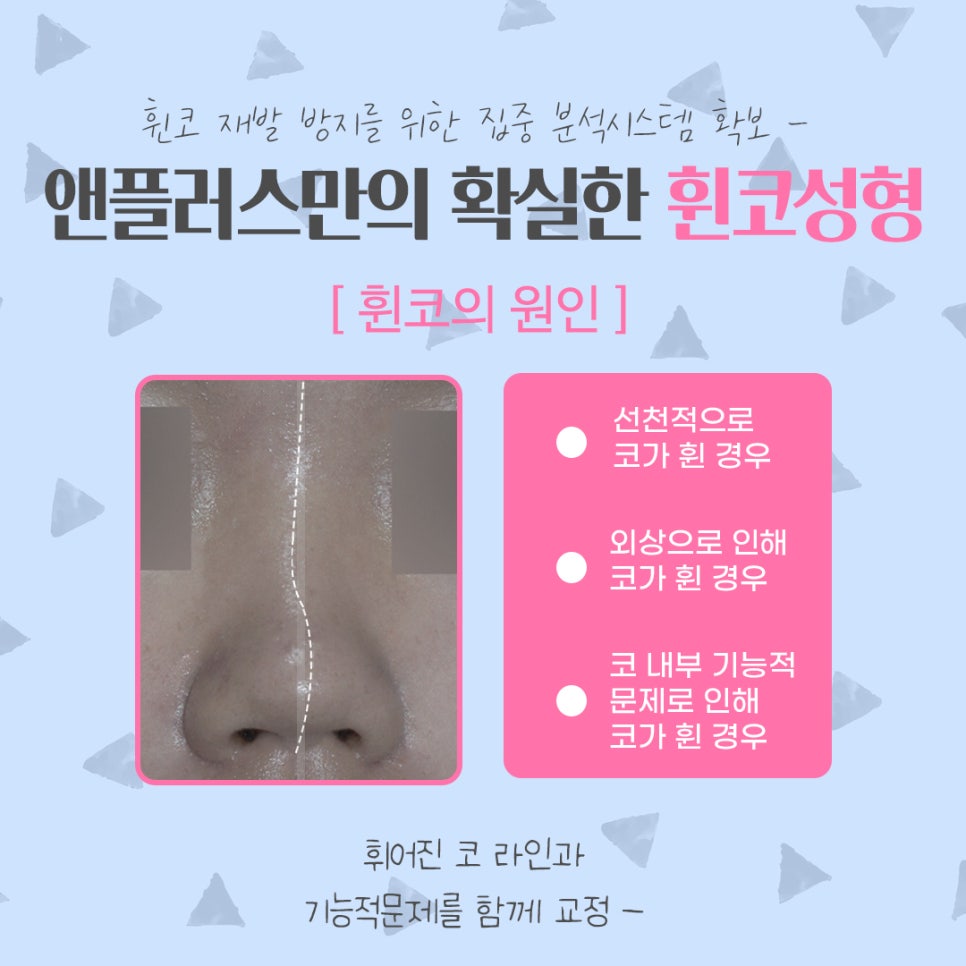
Usually, people looking into crooked nose surgery do not know the cause of why their nose has become crooked. The causes of a crooked nose can be broadly divided into three categories: congenital causes, causes due to later accidents or trauma, and causes related to internal nasal function problems.
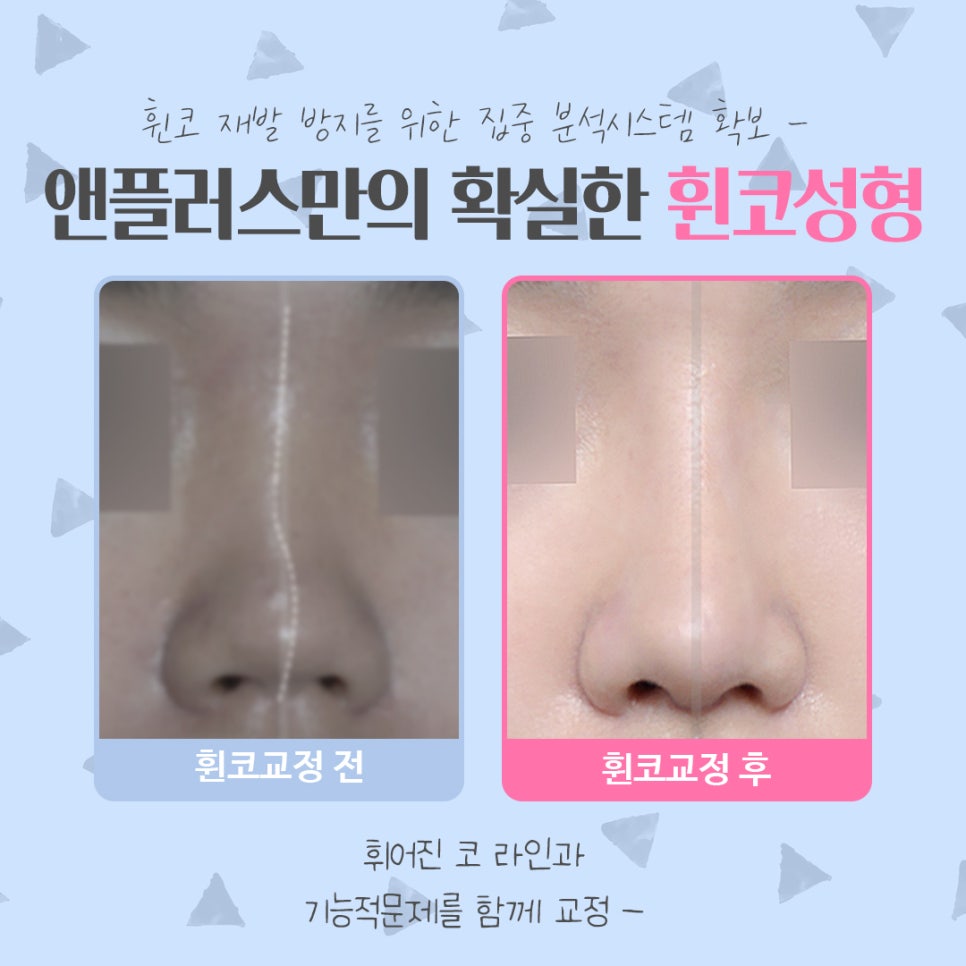
Therefore, rather than judging crooked nose surgery based only on before-and-after images, it is important to accurately identify the current condition through consultation and analysis of the cause of the crooked nose. Surgery should then be performed using methods and materials suited to each individual for satisfying results.
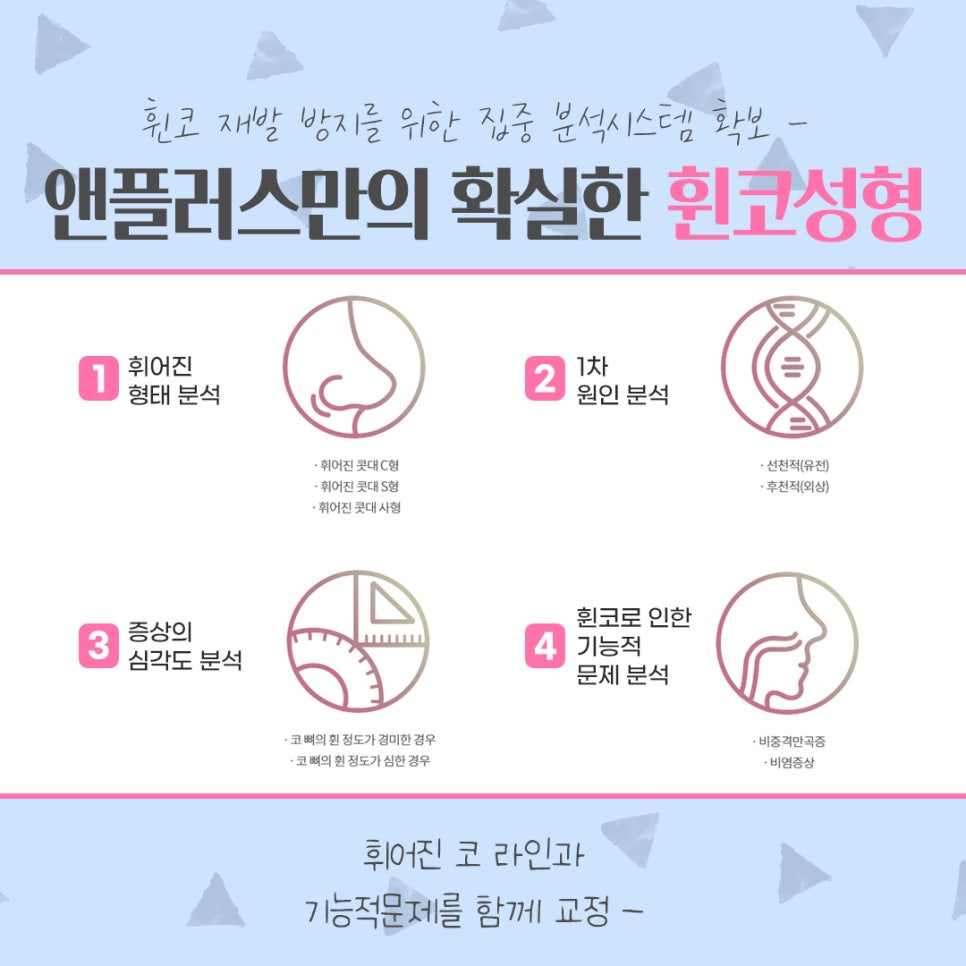
Many people looking into crooked nose surgery can visually confirm that their nose is crooked, so the procedure may be approached purely from a cosmetic standpoint. However, the nose plays an important external role, but it is also responsible for breathing and smell. In particular, cases of a crooked nose often involve internal functional problems, so it is essential to check the inside of the nose before surgery. This can help prevent revision surgery due to functional issues after the operation.
Types that can be treated with crooked nose surgery include cases where the nose is bent, asymmetrical, bent with a dorsal hump, or bent due to a functional nasal problem such as a deviated septum. Therefore, in crooked nose surgery, it is important to check both the cause of the crooked nose and the internal functional aspects.
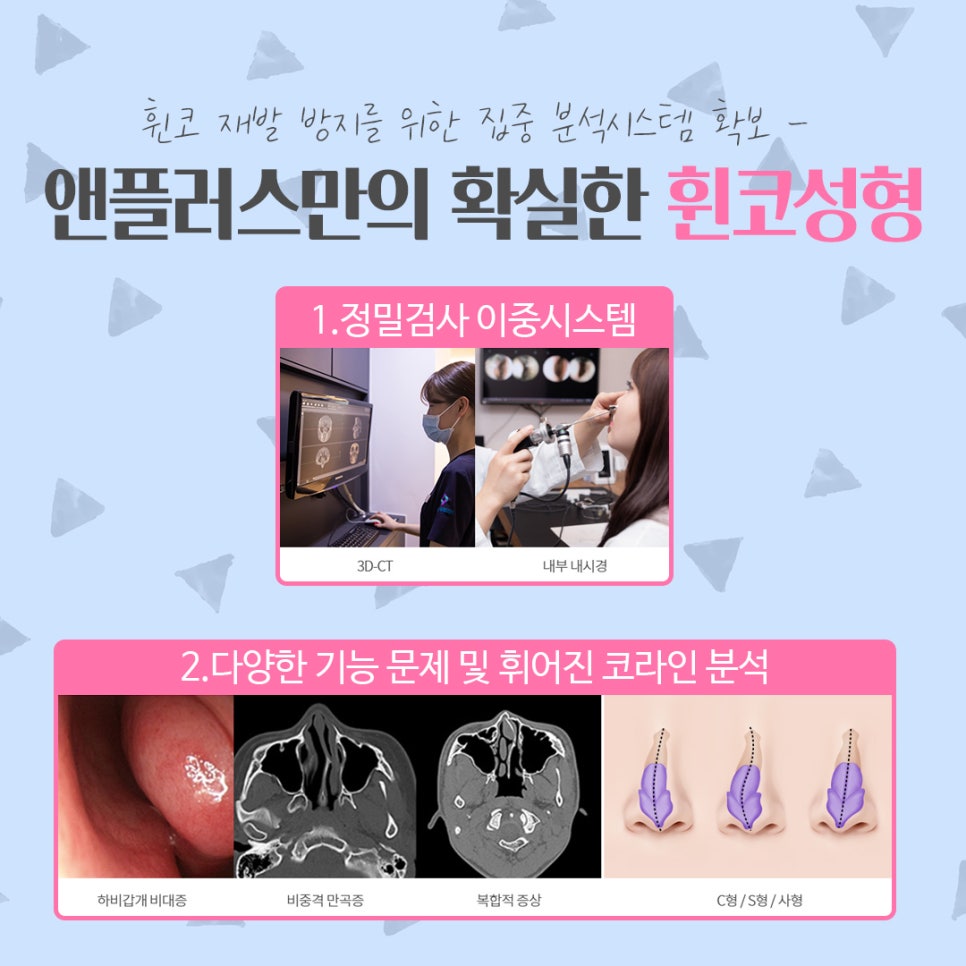
At Oji Plastic Surgery & Nplus, to ensure safe and satisfying crooked nose surgery, we accurately identify the cause of the crooked nose through preoperative 3D-CT scanning, internal endoscopic imaging, various allergy tests, and internal nasal function tests. Based on the collected data, we establish a plan and proceed with surgery using methods and materials tailored to each individual.
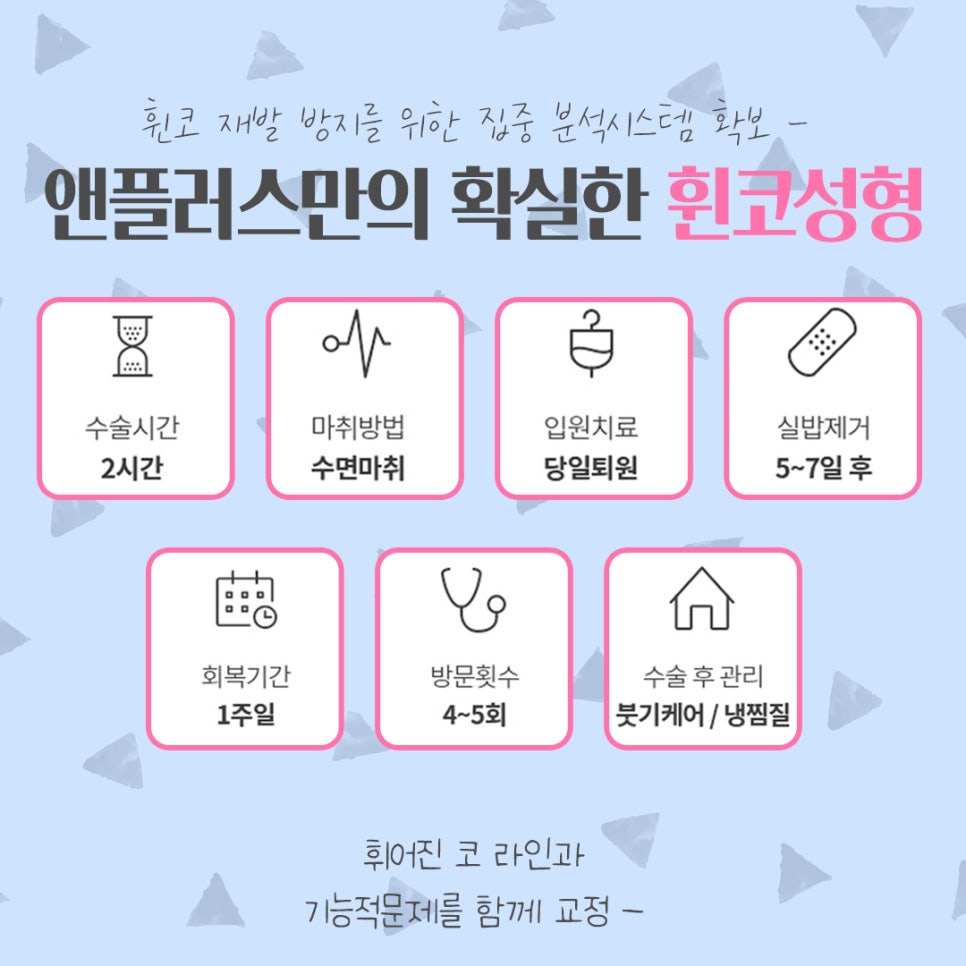
Crooked nose surgery is broadly classified into three methods and performed according to each person’s condition: when the degree of deviation is mild, when the degree of deviation is severe, and when functional problems are present.
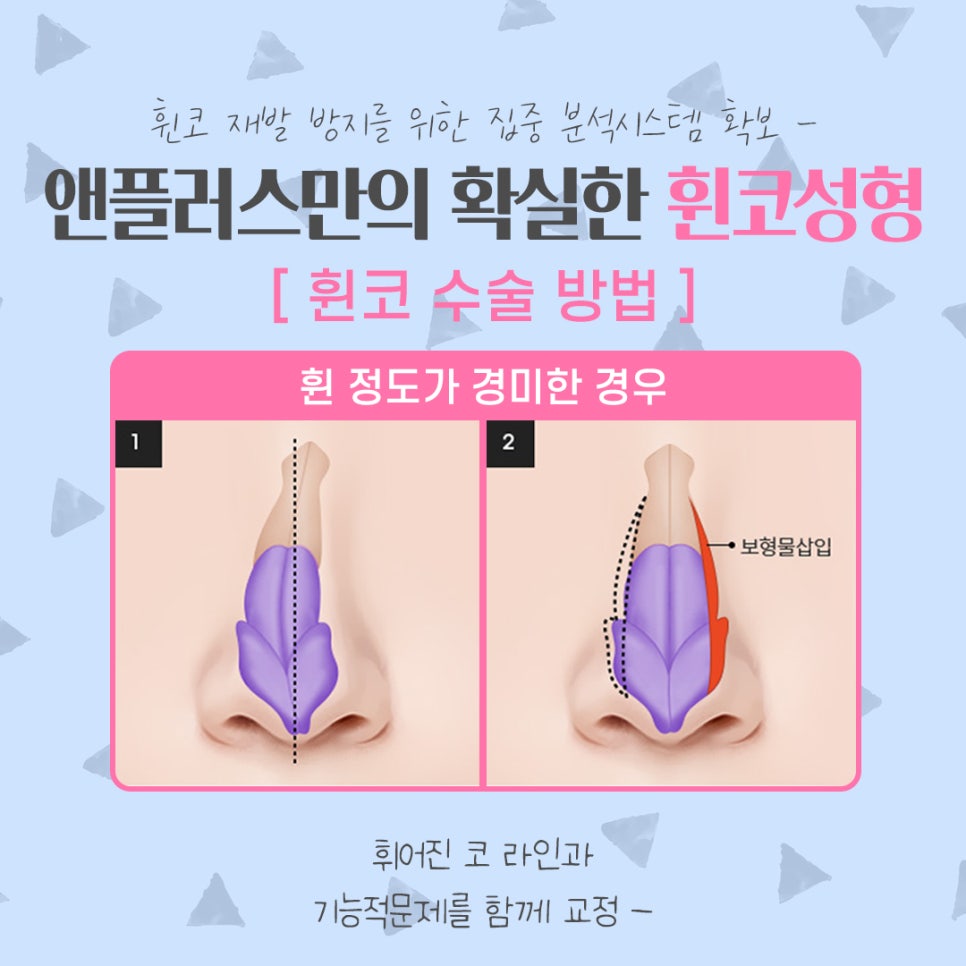
In cases where the deviation is mild, the cause and degree of the crooked nose are analyzed accurately, and after correction, an implant is custom-made in the opposite direction of the deviation and inserted so that the nose can appear straight.
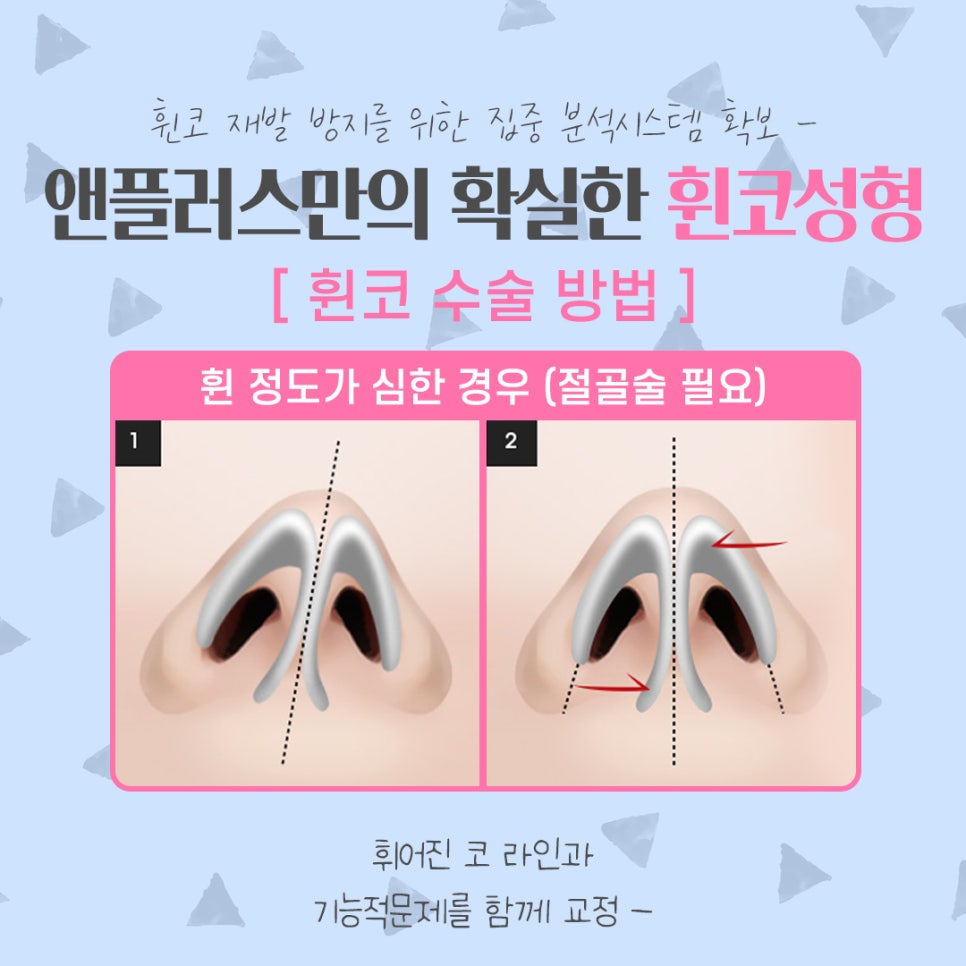
When the degree of nasal deviation is severe, the cause and extent of the crookedness are analyzed accurately to determine which parts need correction. The nasal bones bent inward are cut and moved outward, while the nasal bones bent outward are cut and moved inward for correction.
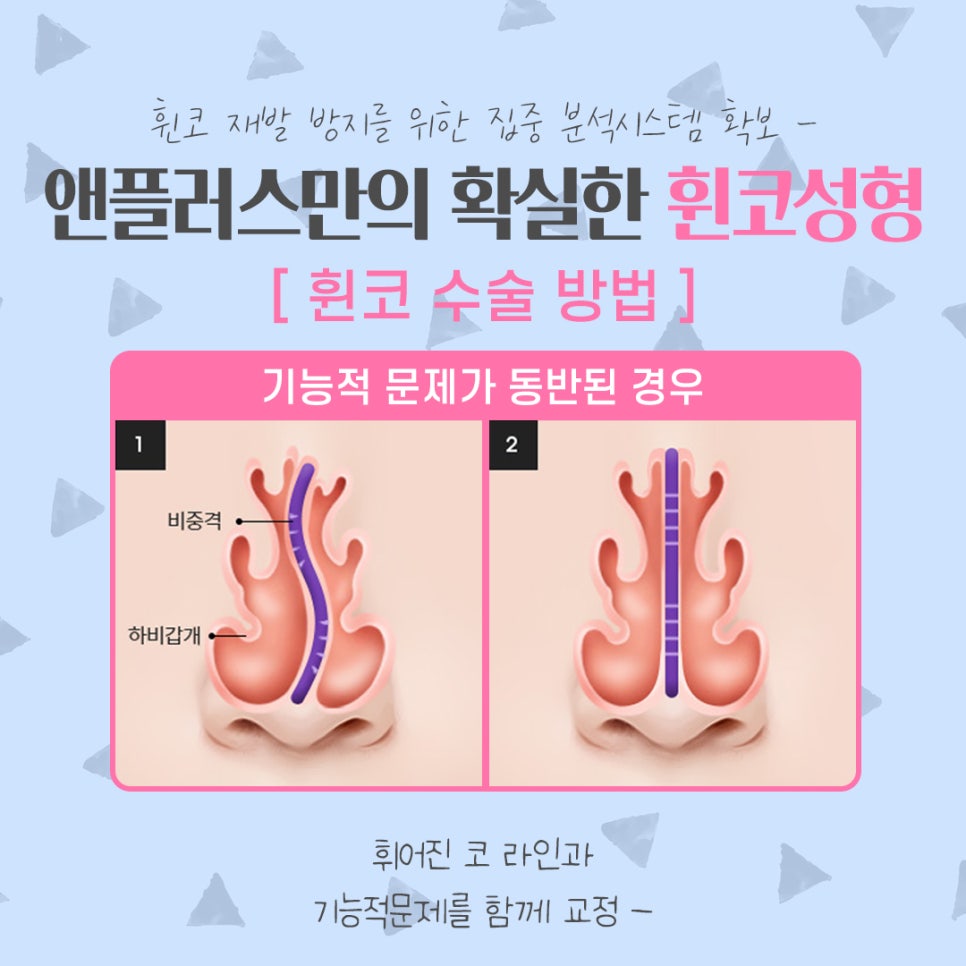
Lastly, when the nose is crooked and functional problems are present, the deviated septal cartilage is corrected first. If inferior turbinate hypertrophy or nasal valve stenosis is also present, additional surgery or procedures are performed for correction. Depending on the degree of nasal deviation, a custom-made implant may be used, or additional osteotomy may be performed.
As such, in crooked nose surgery, even if the nose looks similar to yours in before-and-after photos, the surgical method will differ depending on whether there are internal functional issues, the condition of the nasal bones, and the degree of deviation. Therefore, to perform an accurate operation, the inside and outside of the nose must both be examined. For those looking into crooked nose surgery, it may be helpful to carefully check whether the medical staff have strong anatomical knowledge of the nose, whether they have sufficient experience and expertise, whether equipment is available to accurately assess your nose’s condition, and whether thorough aftercare is guaranteed before making a choice.

At Oji Plastic Surgery & Nplus, Chief Surgeon Yoon Hyun-cheol personally handles everything one-to-one, from consultation regarding crooked nose surgery to surgery planning, implementation, treatment, and follow-up care, so you can receive safe and high-quality medical services.

Aftercare is also provided through an after-sales service system guaranteed for one year after surgery, as well as a surgery responsibility guarantee system prepared for all possible post-operative situations such as pain, inflammation, or dissatisfaction with the result. Customers who have an Nplus membership card can receive aftercare benefits at any time.
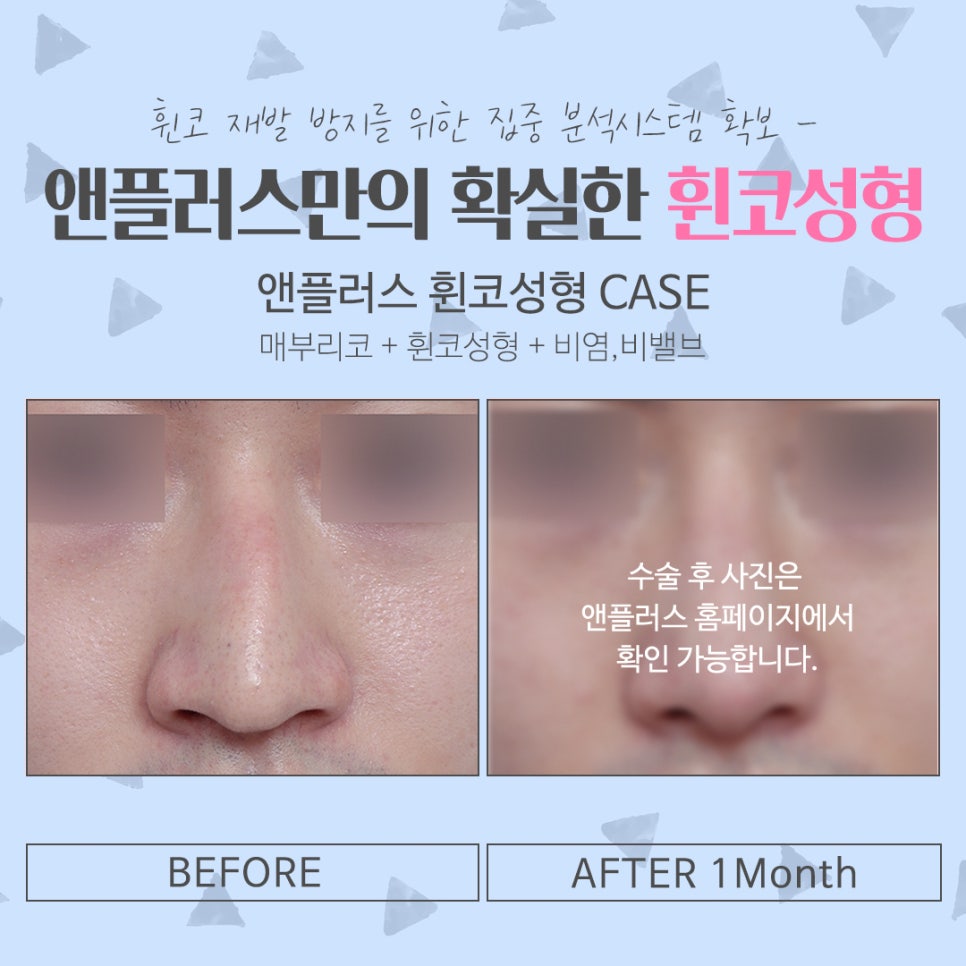
(The image above shows actual before-and-after photos of crooked nose surgery at Oji Plastic Surgery & Nplus.)
This concludes the information about crooked nose surgery at Oji Plastic Surgery & Nplus. I hope this article is very helpful for those whose nose is currently crooked or who are looking into crooked nose surgery because of nasal congestion caused by structural abnormalities inside the nose. Thank you.