
Hello. We are OJIKO Hospital and N+ Clinic, always thinking only about your beautiful and healthy nose.
This post is about hump nose correction.

In modern times, many people address concerns about aspects of their appearance through cosmetic surgery. Among these, nose surgery is especially popular. The nose is located at the center of the face and is one of the most three-dimensional features, so even a small change to its shape can greatly alter the impression. On the other hand, if the nose shape is even slightly out of balance, the harmony of the entire face may be disrupted. For this reason, many people who want to correct the nose into a straight, refined line look into nose surgery information.

Therefore, people who are researching nose surgery often want to correct noses that are too low, upturned, crooked, bumpy with a hump, or drooping into a straight and proper shape. In particular, if a noticeable hump is present, the image may seem sharp or strong, so those who want to improve to a softer impression may look into hump nose correction in more detail.
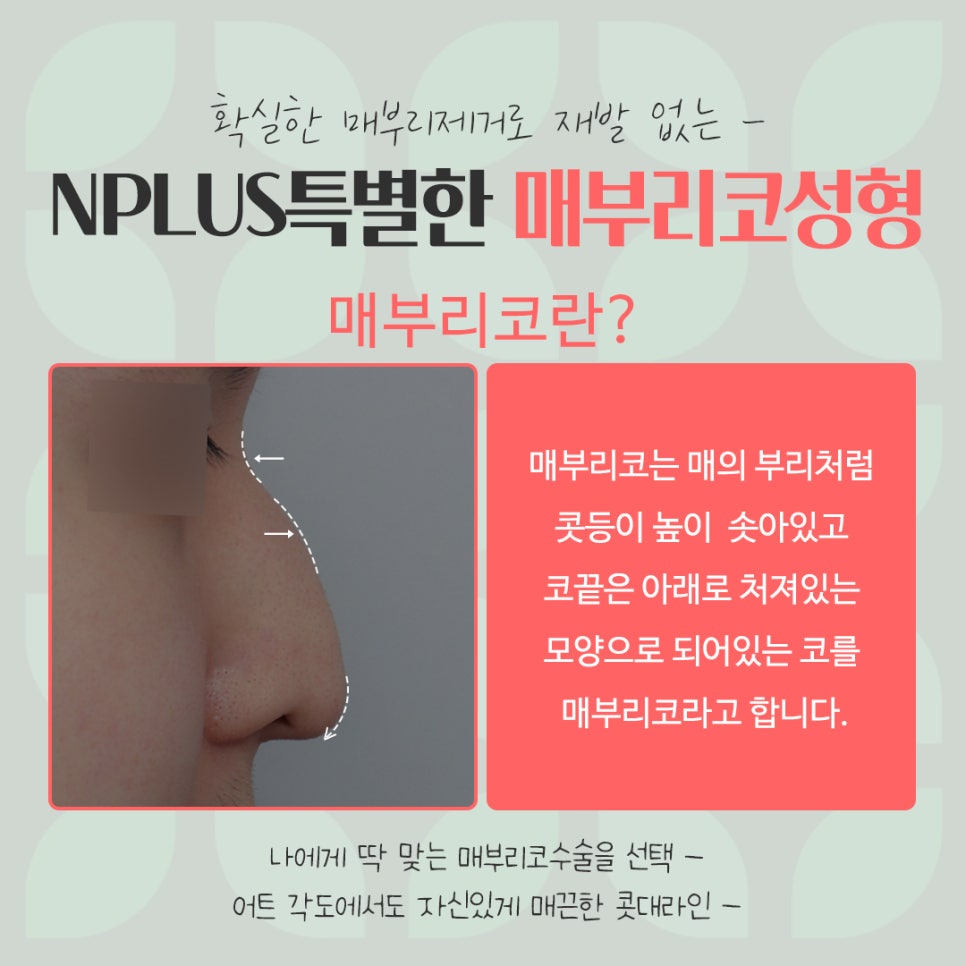
What is hump nose correction? A hump nose refers to a nose shape in which the tip droops like an eagle’s beak, the bridge is crooked, or the bridge has a bumpy protrusion. The causes of a hump nose can be divided into congenital and acquired cases. In congenital cases, genetics plays a major role, while in acquired cases, a hump can develop due to trauma. On average, hump noses often result from acquired trauma, and hump nose correction smooths the bridge through osteotomy and resection, while lifting the drooping tip.

Types of patients who look into hump nose correction include those with a drooping or upturned tip, a crooked bridge, a wide nasal bone, an aquiline nose, a mild or severe hump, or an overly high bridge. Also, depending on the type of hump nose, the surgical method and materials may differ. In some cases, the hump can be clearly seen with the naked eye, but because internal conditions and functional issues are difficult to confirm visually, surgery should be performed only after checking the inside as well. This can help prevent the hump from recurring.

Because the nose is located at the center of the face and is one of the most three-dimensional features, a hump can stand out even more, making the overall image seem stronger or sharper. For this reason, many people first look into hump nose correction from an aesthetic perspective. However, the nose also plays a major role in smell and breathing, so it is an organ that performs important functional roles throughout the body. That is why it is important to check both the aesthetic and functional aspects. Even if there is no functional problem, if surgery is performed only for cosmetic reasons, postoperative functional issues may lead to revision surgery. Therefore, hump nose correction should be performed at a place that can check the internal condition of the nose.
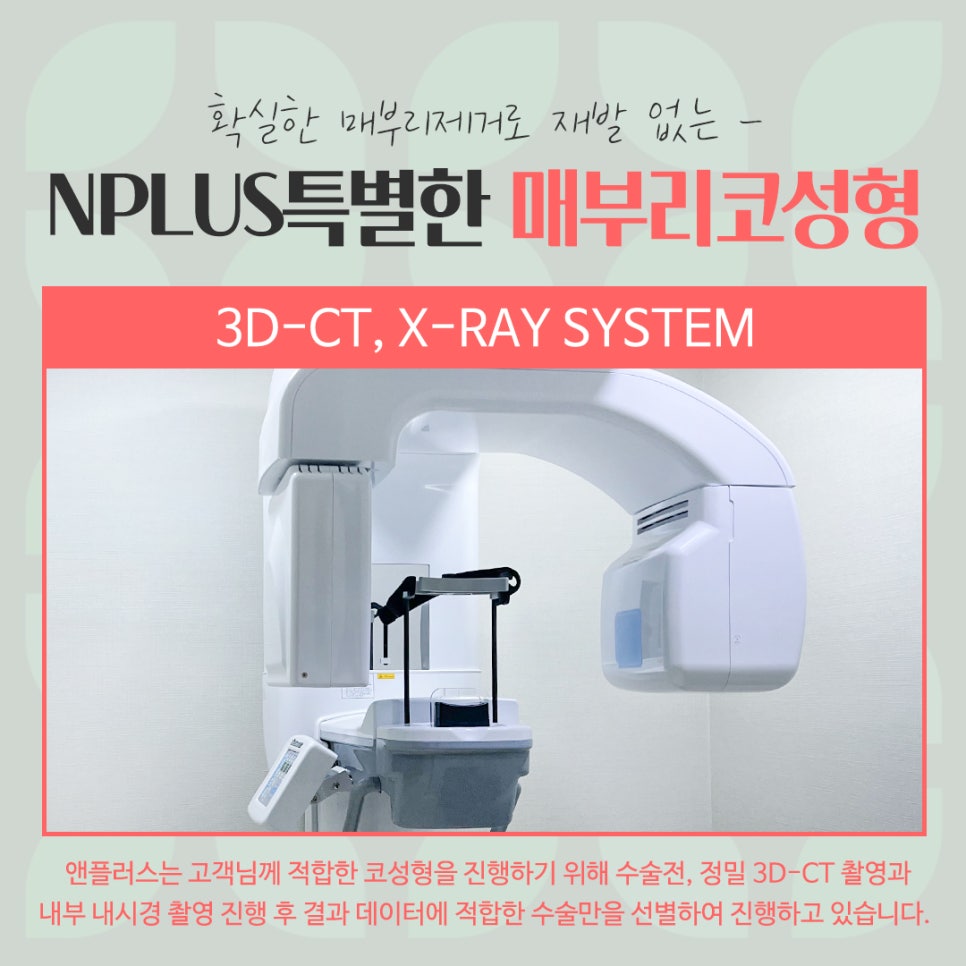
At OJIKO Hospital and N+ Clinic, to ensure safe and satisfying hump nose correction, we precisely assess the degree of the hump, the condition of the nasal bone, and whether there are any nasal function issues through preoperative 3D-CT imaging, internal endoscopy, various allergy tests, and nasal function tests. Based on the collected data, customized hump nose correction is performed according to each individual’s condition.

The surgical methods used for hump nose correction are broadly divided into three categories: cases with a high bridge and hump, cases with a low bridge and hump, and cases with only a very mild hump.
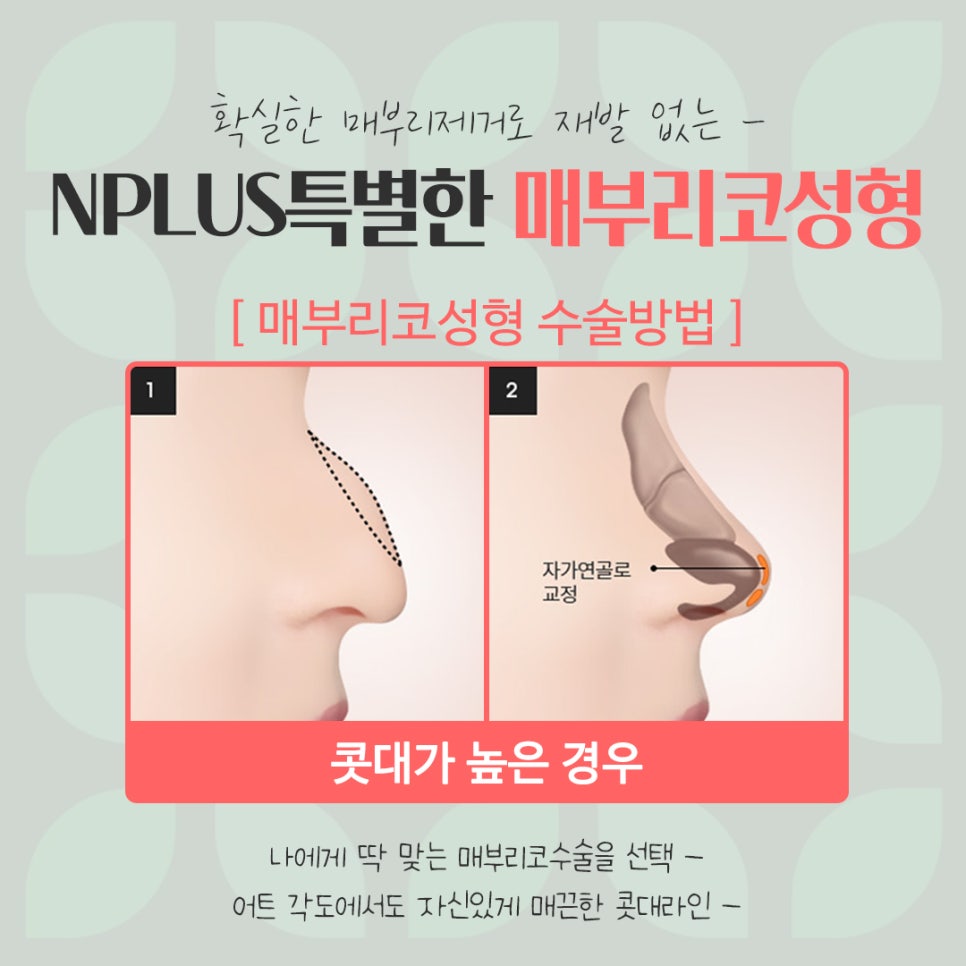
In cases of a high bridge with a hump, after removing the bridge hump or performing osteotomy, no silicone is used on the bridge, and only the tip is corrected using autologous cartilage to improve the overall nasal line.
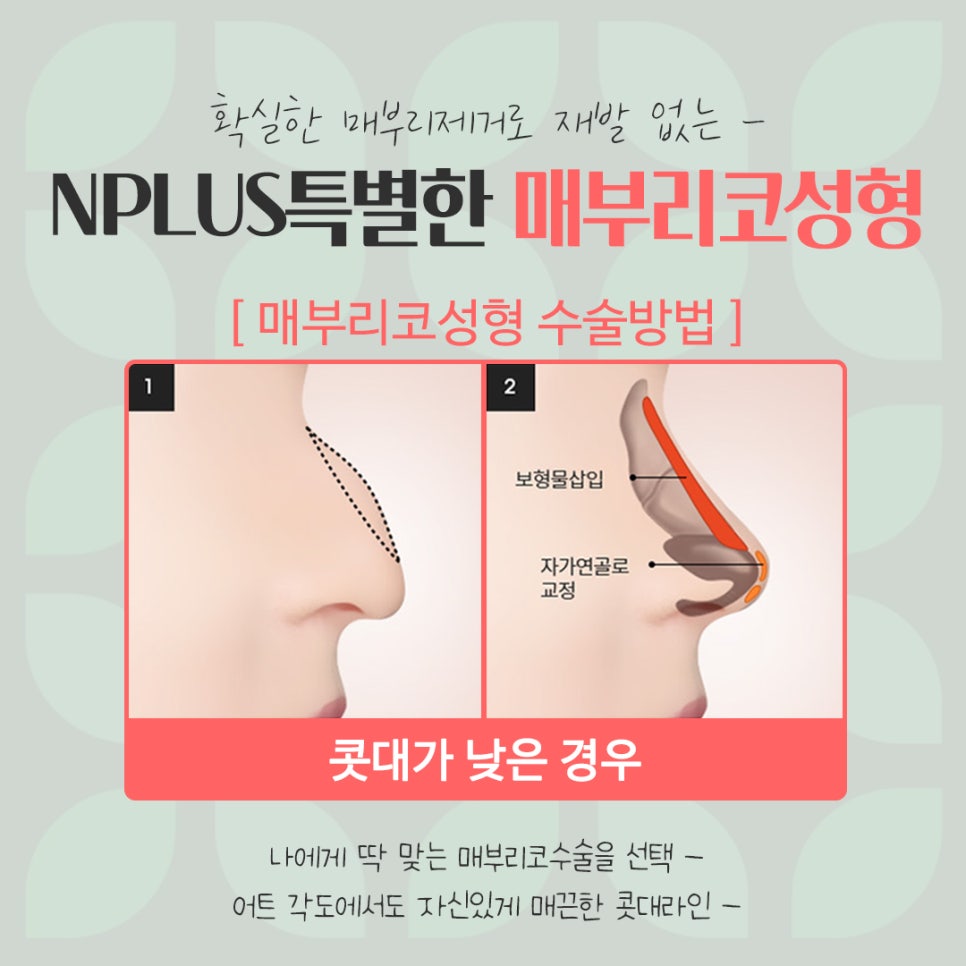
In cases of a low bridge with a hump, after removing the bridge hump or performing osteotomy, silicone is inserted into the bridge, and the tip is corrected using autologous cartilage to improve the overall nasal line.
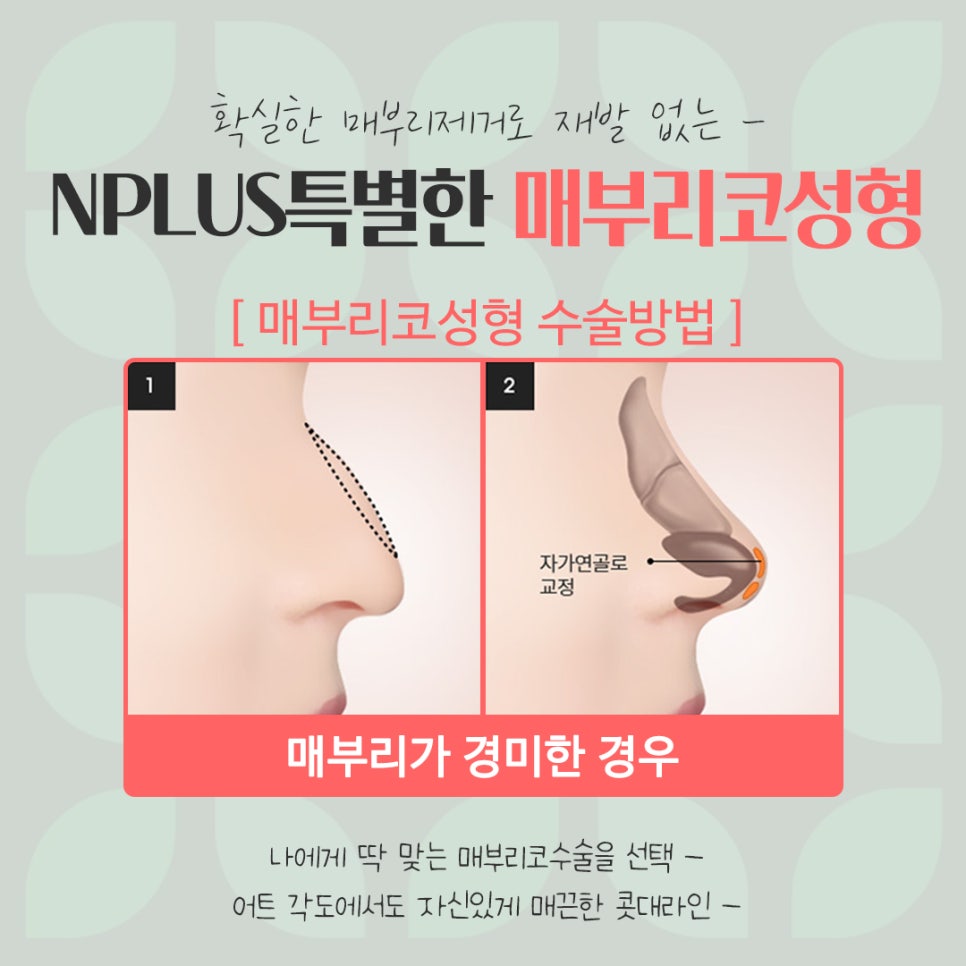
Lastly, in cases of a mild hump, the bridge hump is removed and the tip is corrected with autologous cartilage so that it connects naturally with the bridge.
As such, hump nose correction is performed using different surgical methods depending on the size of the hump, the condition of the nasal bone, and its location. The key to hump nose correction is to remove the hump cleanly, which helps prevent recurrence after surgery and allows for a more satisfying result.
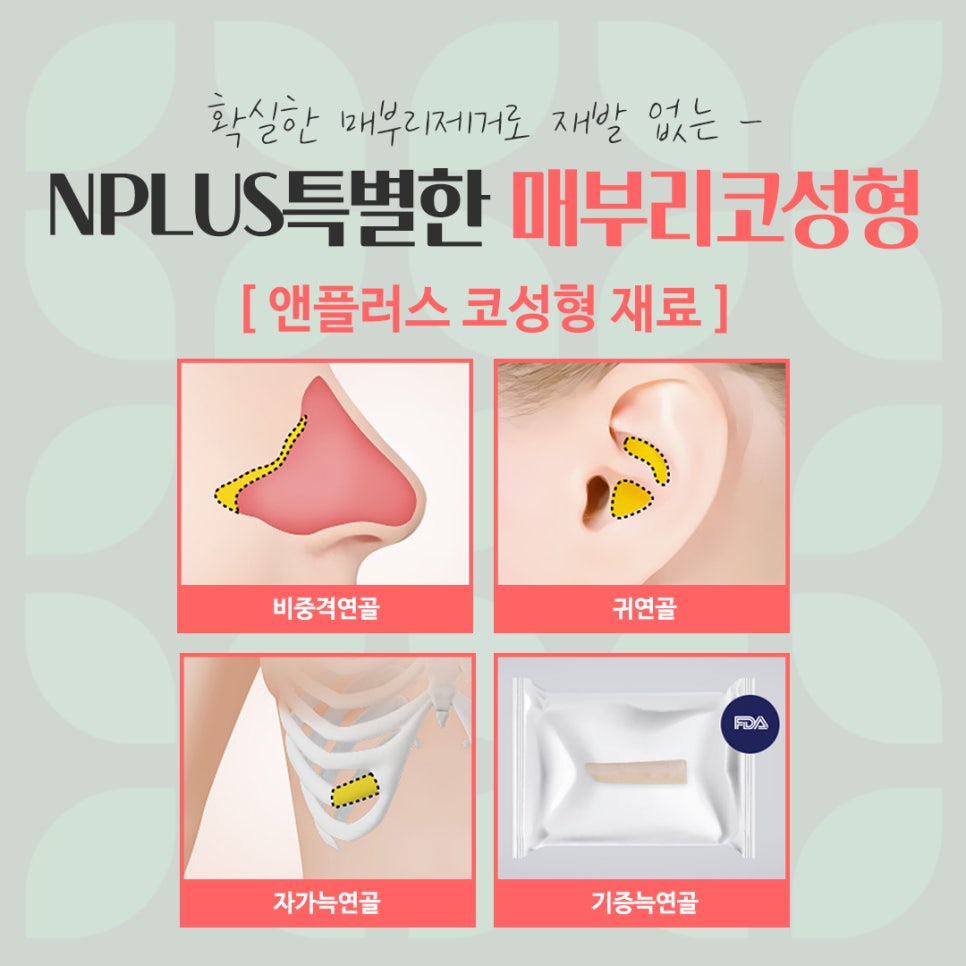
The materials used in hump nose correction include silicone for the bridge and autologous cartilage for the tip. For the tip, autologous cartilage may include ear cartilage, septal cartilage, or autologous costal cartilage, and the choice of material is customized based on preoperative testing to suit the individual. If autologous cartilage cannot be used, FDA-approved donated costal cartilage from the U.S. may be used as an alternative.
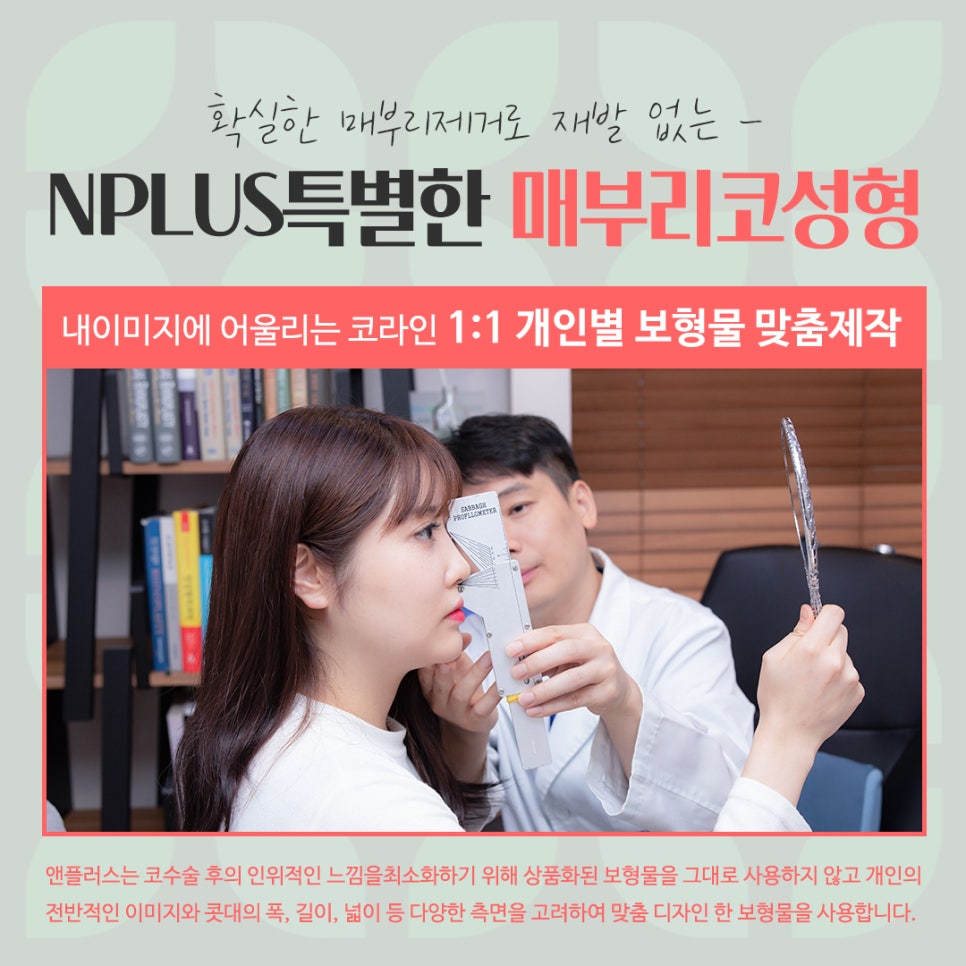
In the case of silicone used for the bridge, previously commercially available silicone was used, which could create a strong artificial look. To minimize this, the silicone is carefully and precisely shaped by hand, taking into account the person’s overall image as well as the width, length, breadth, and height of the nasal bridge before insertion.
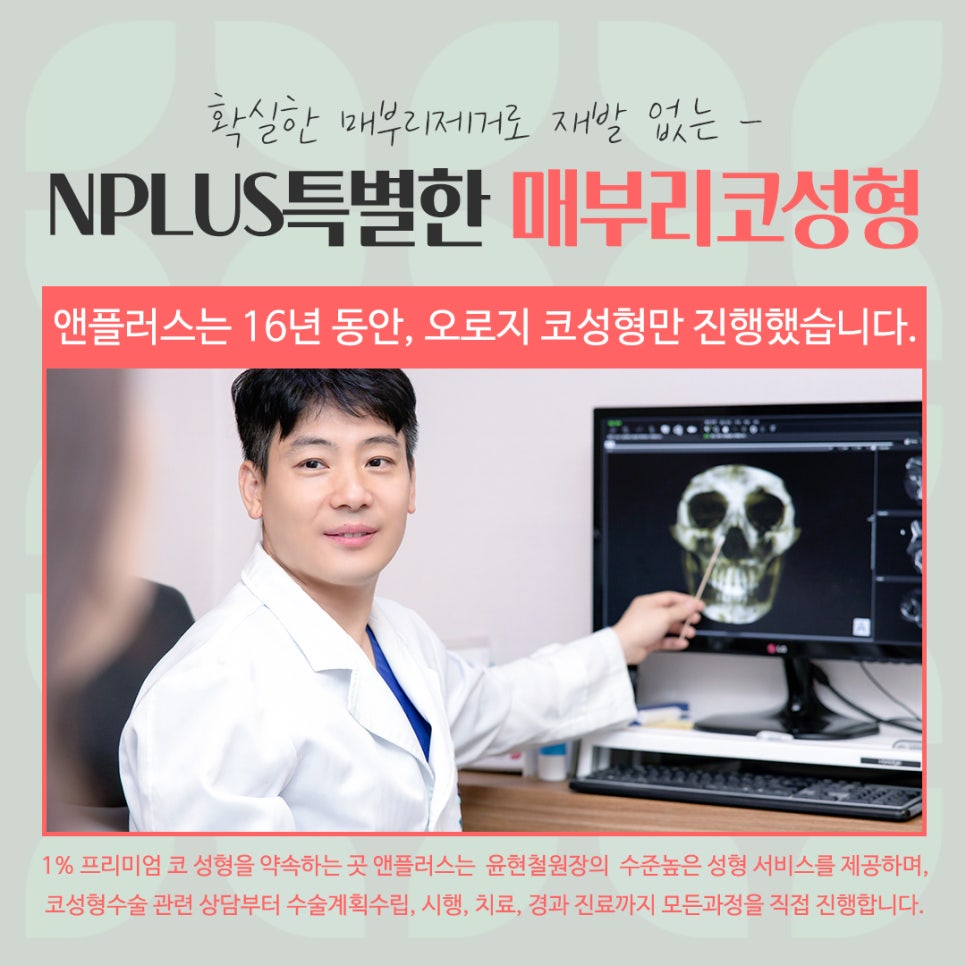
At OJIKO Hospital and N+ Clinic, Director Yoon Hyun-cheol personally oversees every step one-to-one, from hump nose correction consultation to surgical planning, procedure, treatment, and follow-up visits. We strive to provide safe and satisfying hump nose correction.

For aftercare, we provide an after-sales service system that guarantees support for one year after surgery, as well as a surgical responsibility guarantee system prepared for all possible post-surgery situations such as pain, inflammation, and dissatisfaction with the shape. Those who have an N+ membership card can receive high-level medical services through aftercare as well.
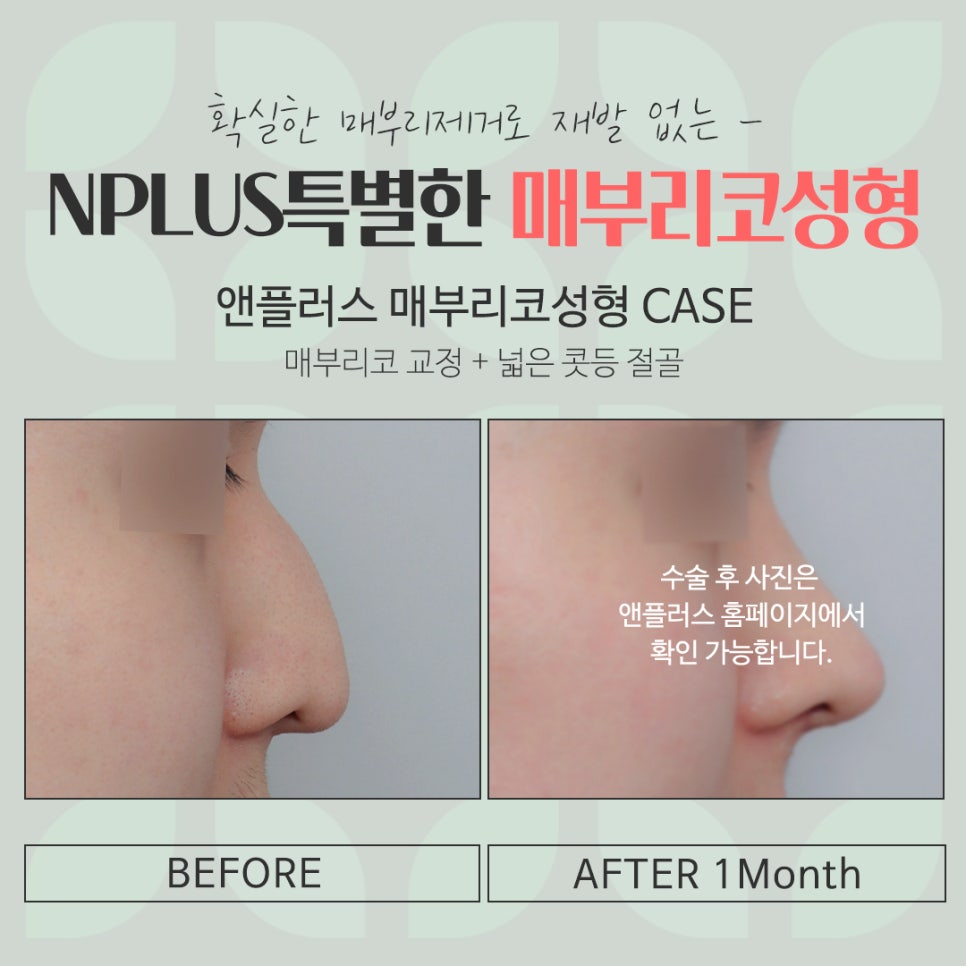
(This is a real before-and-after photo of hump nose correction at OJIKO Hospital and N+ Clinic.)
That concludes our summary of hump nose correction at OJIKO Hospital and N+ Clinic. We hope this article is of great help to those who are currently stressed about a hump nose and are looking into hump nose correction. Thank you.